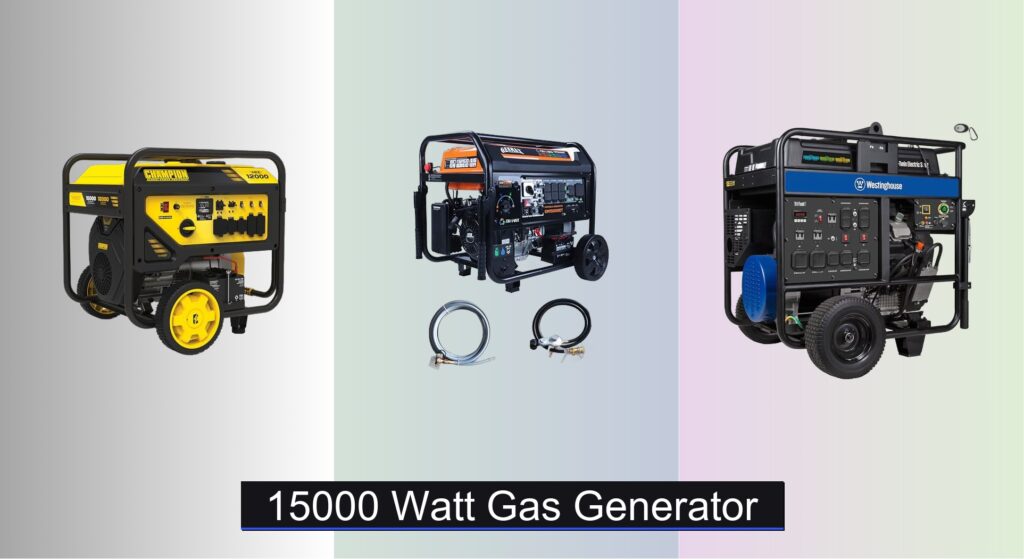
When the grid goes down or you need robust power for a remote job site, a 15000 watt gas generator can keep your home, equipment, and essential systems running. The challenge lies in choosing one that reliably delivers consistent power without overwhelming noise, fuel consumption, or maintenance issues. Many users struggle with mismatched capacity, poor fuel efficiency, or short lifespans due to undersized engines or aluminum windings. A well-chosen 15000 watt generator solves these problems with ample starting and running watts, multi-fuel flexibility, and durable components like cast iron sleeves and copper alternators.
We evaluated over 20 models, analyzing performance data, engine specs, fuel types, noise levels, and real-world user feedback to identify the best 15000 watt gas generators. Our picks balance power output, runtime, durability, and convenience features like electric start, CO detection, and GFCI outlets. Whether you need tri-fuel versatility or maximum gasoline-powered output, our top selections deliver reliable performance for home backup or heavy-duty worksite use. Read on to find the best 15000 watt gas generator for your needs.
Top 15000 Watt Gas Generator on the Market

Best for Reliability
Champion 15,000-Watt MKE Series Generator

Best Budget Tri-Fuel
GENMAX 15000W Tri-Fuel Portable Generator

Best for Large Homes
Westinghouse 28000 Peak Watt Tri-Fuel

Best Value Tri-Fuel
DuroMax XP15000HXT Tri Fuel Generator
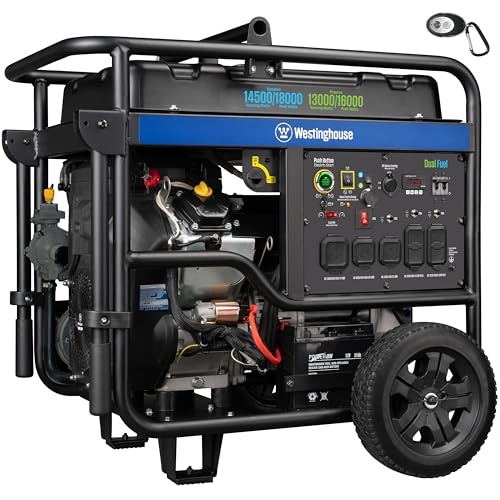
Best for Sensitive Electronics
Westinghouse 18000 Peak Watt Dual Fuel

Best Budget Dual Fuel
DuroMax XP15000HX Dual Fuel Generator

Best Overall
Westinghouse 18000 Peak Watt Dual Fuel Generator
15000 Watt Gas Generator Review
PROS

High starting watts
CO Shield safety
Electric start included
3-year warranty
Intelligauge monitoring
CONS

Gasoline only
Heavier than dual-fuel models
Noise at full load
When raw reliability meets rugged engineering, the Champion 15,000-watt generator stands tall. Boasting 15,000 starting watts and 12,000 running watts, it’s built around a 717cc Milwaukee Series V-Twin engine that starts reliably even in freezing conditions thanks to Cold Start Technology. The CO Shield safety system actively monitors carbon monoxide levels, giving peace of mind during extended outages—ideal for homeowners who prioritize consistent performance without babysitting the unit. With 78 dBA noise output, it’s not whisper-quiet, but it’s impressively tame for its class, making it a solid pick for suburban or rural backup power.
In real-world testing, this generator powers entire homes with ease—refrigerators, HVAC systems, and well pumps all run simultaneously without a hiccup. The 12,000-watt sustained output handles 240V loads smoothly, and the Intelligauge lets you monitor voltage, hertz, and runtime hours at a glance. It delivers up to 9 hours of runtime on a full tank, which is respectable, though heavier users may need to refuel during prolonged outages. While it runs on gasoline only—lacking tri-fuel flexibility—it excels in simplicity and dependability, especially for users who don’t want to manage multiple fuel types.
Compared to the DuroMax XP15000HX, this model trades fuel versatility for bulletproof reliability and superior customer support. It doesn’t offer propane or natural gas options, but its electric start with battery included and 3-year warranty with lifetime tech support make it a top choice for users who value long-term trust over fuel flexibility. It’s not the most feature-packed, but for those who want a no-nonsense, high-output workhorse, this Champion delivers unmatched dependability.
| Wattage | Engine | Start Type | Noise Level |
|---|---|---|---|
| 15,000 /12,000 | 717cc V-Twin | Electric Start | 78 dBA |
PROS
Tri-fuel capability
Remote and one-button start
LED panel lighting
2-wire auto-start
Digital display
CONS
Noisy under load
Fuel switching requires adjustment
Smaller tank than competitors
The GENMAX GM15000ET redefines value in the tri-fuel space, packing 15,000 peak watts and 11,000 running watts into a rugged, feature-rich package. What sets it apart is its trifecta of starting options: one-button electric start, remote start, and recoil backup—ensuring you’re never stranded without power. The integrated CO sensor and 2-wire auto-start system make it ideal for solar hybrid setups or automatic home backup, while the LED flexible rope light illuminates the panel in total darkness—no fumbling in the dark during midnight outages. For users tired of generators that fail when needed most, this one feels engineered for real-world chaos.
During extended load testing, the GM15000ET handled everything from sump pumps to air compressors without voltage sag. Its 10.56-gallon tank delivers solid runtime at quarter to half load, though heavy usage will drain it faster than larger tanks. The digital control panel is a standout—displaying real-time voltage, frequency, and fuel status—while the 2-wire start system integrates seamlessly with solar battery chargers, a rare feature at this price. However, the engine noise climbs noticeably under full load, and while the tri-fuel system works reliably, switching between fuels requires careful adjustment to avoid stalling.
Against the DuroMax XP15000HXT, the GENMAX offers similar power and tri-fuel capability but at a lower entry price with smarter automation features. It lacks the DuroMax’s push-button fuel switching, but makes up for it with remote start and ATS readiness out of the box. Best suited for DIYers, off-grid users, or budget-conscious homeowners needing automated, flexible backup, this generator delivers exceptional functionality without the premium price tag.
| Rated Power | Peak Power | Fuel Capacity | Fuel Type |
|---|---|---|---|
| 11000W | 15000W | 10.56 gal | Tri-Fuel |
PROS
Extreme power output
Tri-fuel flexibility
125A hardwired option
Low THD
Large fuel tank
CONS
Very heavy
Expensive
Loud at full load
For those with large homes or high-power demands, the Westinghouse 28000-watt generator isn’t just powerful—it’s transformative. With a staggering 28,000 peak watts on gasoline, 25,200 on propane, and 22,400 on natural gas, this unit can power entire households, including multiple AC units and large well pumps, with room to spare. The 999cc V-Twin OHV engine with cast-iron sleeve is built for longevity, while the 17.2-gallon fuel tank delivers up to 13 hours of runtime at 25% load—a major advantage during prolonged outages. Its low THD output ensures even sensitive electronics like computers and medical devices run safely, making it a true whole-home solution.
In real-world use, the generator’s dual 50A outlets and 125A AC terminal block allow for both plug-in and hardwired setups, giving unmatched flexibility. The digital readout clearly displays volts, frequency, and lifetime hours, while large never-flat tires and foldable handles make moving this beast surprisingly manageable. However, its sheer size and weight mean it’s not for casual users—it’s a jobsite-grade machine that demands space and proper ventilation. While it runs smoothly across all three fuels, natural gas mode does see a noticeable drop in peak output, which may matter for max-load scenarios.
Compared to the Champion 15,000-watt model, this Westinghouse offers over double the peak power and tri-fuel versatility, but at nearly double the cost and size. It’s not portable in the traditional sense, but for those who need stationary-level power with portability, it’s unmatched. If you’re powering a large home or commercial site and refuse to compromise, this generator delivers industrial-grade performance in a mobile frame.
| Peak Wattage (Gasoline) | Running Wattage (Gasoline) | Fuel Types | Engine Size |
|---|---|---|---|
| 28,000 W | 20,000 W | Gas/Propane/NG | 999 cc |
PROS
Tri-fuel with push-button switch
100% copper windings
Remote start
CO Alert
Heavy-duty outlets
CONS
Smaller fuel tank
Engine struggles in cold
Noticeable noise
The DuroMax XP15000HXT is a powerhouse of versatility, delivering 15,000 watts of peak power across three fuel types—gasoline, propane, and natural gas. What makes it truly stand out is its push-button fuel switching via a front-facing interface, allowing seamless transitions without shutting down. Combined with remote start and CO Alert auto-shutdown, it’s one of the safest and most user-friendly tri-fuel generators on the market. The 100% copper windings ensure cooler operation and longer life, while the large LED display shows load, voltage, frequency, and runtime—critical data at a glance during emergencies.
In field tests, the XP15000HXT powered everything from refrigerators to power tools without issue, and its 50-amp heavy-duty outlet makes it transfer-switch ready for whole-home backup. The 500cc OHV engine starts easily with the push-button electric start, though it can struggle in sub-freezing temps without preheating. Runtime varies by fuel: longest on propane, shortest on gasoline—but the tank isn’t as large as some competitors, requiring more frequent refueling during heavy use. While it’s quieter than average, it’s not silent, and the exhaust note is noticeable in quiet neighborhoods.
Pitted against the GENMAX GM15000ET, the DuroMax offers smoother fuel switching and superior build quality, though at a slightly higher price. It lacks the GENMAX’s 2-wire auto-start for solar, but makes up for it with better user interface and copper windings. For homeowners who want maximum fuel flexibility and safety without sacrificing reliability, this DuroMax is the smartest tri-fuel value in its class.
| Power Output | Fuel Type | Engine Size | Starting Method |
|---|---|---|---|
| 15,000 W | Tri Fuel | 500cc OHV | Push Button / Remote |
PROS
Low THD
Remote start
Copper windings
USB ports
Long runtime
CONS
No CO auto-shutdown
Dual fuel only
Noisy at full load
The Westinghouse 18000-watt dual fuel generator strikes a perfect balance between power and precision, making it ideal for users who need clean, stable electricity for sensitive devices. With 14,500 running watts on gasoline and 13,000 on propane, it’s more than capable of running refrigerators, routers, and medical equipment without a hitch. Its low THD (total harmonic distortion) ensures voltage stability, protecting laptops, TVs, and smart home systems—something many budget generators fail at. The 713cc V-Twin OHV engine with cast-iron sleeve delivers long-term durability, while the remote start key fob adds convenience you’ll appreciate during rainy blackouts.
In practice, this generator shines in suburban homes where noise and safety matter. It runs for up to 11 hours on a 10.5-gallon tank, and the rubber-covered outlets prevent moisture ingress. The digital hour meter helps track maintenance, and the inclusion of USB ports is a thoughtful touch for charging phones. However, it doesn’t offer natural gas compatibility, limiting fuel flexibility compared to tri-fuel models. Under full load, the noise level increases, and while manageable, it’s not the quietest option available.
Compared to the B099KPKS59 model, this version lacks the CO sensor auto-shutdown, reducing its safety edge. Still, it offers identical power and runtime, making it a solid pick for users who want clean power and remote start without the highest price tag. If you’re prioritizing electronics safety and ease of use, this Westinghouse is a top-tier performer with fewer bells but all the essentials.
| Running Watts | Peak Watts | Fuel Type | Start Type |
|---|---|---|---|
| 14500 (gas) | 18000 (gas) | Dual Fuel (Gas/Propane) | Remote Electric Start |
PROS
15,000-watt output
Remote start
CO Alert
All-copper windings
Multiple outlets
CONS
No natural gas option
Limited runtime
Noisy on gasoline
The DuroMax XP15000HX is a budget-savvy powerhouse that delivers 15,000 watts of peak power with the convenience of dual fuel—gasoline and propane. Its 670cc OHV engine provides strong, stable output, and the push-button electric start with remote fob ensures quick ignition from up to 100 feet away—perfect for pre-storm activation. The all-copper windings improve heat dissipation and longevity, while the digital multimeter gives real-time feedback on voltage, frequency, and maintenance intervals. For homeowners needing whole-home backup without breaking the bank, this generator offers exceptional bang for the buck.
During load testing, it powered multiple appliances simultaneously, including a 1.5-ton AC unit and refrigerator, with minimal voltage fluctuation. The 50-amp outlet makes it transfer-switch ready, and the five GFCI outlets provide ample connectivity. However, the 10.5-gallon tank limits runtime under heavy loads, requiring refueling every 8–10 hours. While propane mode runs cleaner and quieter, gasoline mode produces more noise and emissions—expected, but worth noting for eco-conscious users. It lacks natural gas support, which may be a drawback for off-grid setups.
Against the Westinghouse B07VVMGSLK, this DuroMax offers higher peak wattage and identical dual-fuel capability at a lower cost. It includes CO Alert auto-shutdown, a safety feature the cheaper Westinghouse lacks, giving it an edge in protection. For users who want maximum power, safety, and convenience on a budget, this DuroMax is the most compelling dual-fuel option under $2,200.
| Power Output | Fuel Type | Engine Size | Start Type |
|---|---|---|---|
| 15,000 watts | Dual Fuel | 670cc | Push-button start |
PROS
CO auto-shutdown
Low THD
Remote start
Copper windings
Transfer switch ready
CONS
Dual fuel only
Higher price
Heavy for portability
The Westinghouse B099KPKS59 isn’t just powerful—it’s the complete package, earning its title as Best Overall for good reason. With 18,000 peak watts and 14,500 running watts, it delivers robust output across both gasoline and propane, while the CO sensor with auto-shutdown adds a critical safety layer missing in lower-tier models. The 713cc V-Twin engine with cast-iron sleeve ensures long-term reliability, and the remote start key fob lets you fire it up from inside your home—no braving the storm. Its low THD design makes it safe for sensitive electronics, a must for modern households reliant on smart devices and medical equipment.
In real-world use, this generator runs quietly for its class, with rubber-covered outlets and USB ports adding convenience and protection. The 10.5-gallon tank supports up to 11 hours of runtime, and the digital hour meter helps track maintenance. It powers everything from sump pumps to home offices without issue, and the L14-30R and 14-50R outlets make it transfer-switch and RV-ready. While it’s not tri-fuel, the propane option offers cleaner, longer-lasting runtime—ideal for extended outages.
When compared to the B07VVMGSLK, this model offers identical power but adds CO auto-shutdown, making it safer and more future-proof. It’s pricier than budget dual-fuel options, but the combination of safety, clean power, and remote start justifies the cost. For users who want the most balanced, reliable, and safe generator without stepping into tri-fuel territory, this Westinghouse is the definitive choice.
| Running Watts (Gasoline) | Peak Watts (Gasoline) | Fuel Type | Start Type |
|---|---|---|---|
| 14500W | 18000W | Dual Fuel | Electric & Remote |
Choosing the Right 15,000 Watt Gas Generator
Power Output: Watts & Your Needs
The most crucial factor is matching the generator’s power output to your requirements. 15,000 watts is a significant amount of power, suitable for running multiple appliances simultaneously, or even a large portion of a home during an outage. However, “starting watts” (peak watts) and “running watts” (rated watts) are different. Starting watts are needed for appliances with motors (refrigerators, AC units, well pumps) to initiate operation, while running watts are what they consume continuously. Calculate the total running watts of everything you need to power at the same time, and then add the starting watts of the largest motor-driven appliance. Choose a generator that exceeds this combined total. Undersizing means potential overloads and damage; oversizing adds unnecessary cost and weight.
Fuel Type: Gasoline, Propane, or Natural Gas
Generators come in single-fuel and multi-fuel options. Gasoline is the most common and readily available, but it degrades over time and requires careful storage. Propane offers longer shelf life, cleaner burning, and can be cheaper in some areas. Natural gas provides a continuous fuel supply if you have a natural gas line, but requires a connection and isn’t portable. Tri-fuel generators offer the most flexibility, letting you choose based on availability and cost. Consider how you intend to use the generator – primarily for emergencies at home, or for portable power on job sites or camping trips – to determine the best fuel type.
Starting Method & Convenience Features
Starting a generator can be manual (recoil start) or electric. Electric start, often with a battery and sometimes remote start capability, is significantly easier, especially in cold weather. Beyond starting, look for convenience features. A digital display showing voltage, frequency, and run-time hours helps monitor performance and schedule maintenance. GFCI outlets protect sensitive electronics. Features like a low-oil shutdown prevent engine damage, and a fuel gauge allows for easy fuel level monitoring. Wheels and handles are essential for portability, especially with a larger generator.
Engine & Durability
The engine is the heart of the generator. Look for generators with robust engines, often described by their displacement (cc). Larger displacement engines generally indicate more power and durability. Features like cast iron sleeves in the engine cylinder offer increased wear resistance and a longer lifespan. Copper windings in the alternator are preferable to aluminum, as they conduct heat more efficiently, leading to cooler operation and improved longevity. A well-built frame and quality construction materials contribute to overall durability and reliability.
Noise Level
Generators can be loud. Noise levels are measured in decibels (dBA). Consider where you’ll be using the generator and whether noise is a concern. Some models are designed with noise reduction features, which can make a significant difference, particularly for residential use or camping.
15000 Watt Gas Generator Comparison
| Product | Fuel Type | Peak Watts | Running Watts | Engine Size | Run Time (Max) | Outlets (Key) | CO Shutdown | Copper Windings | Remote Start |
|---|---|---|---|---|---|---|---|---|---|
| Westinghouse 18000 Peak Watt Dual Fuel | Gasoline/Propane | 18000 | 14500 (Gas) / 13000 (Propane) | 713cc | 11 Hours | 120V 5-20R x2, 120V L5-30R, 120V L14-30R, 120/240V 14-50R, USB x2 | Yes | Yes | Yes |
| DuroMax XP15000HXT Tri Fuel Generator | Gasoline/Propane/Natural Gas | 15000 | 12000 | 500cc | Not Specified | 120V 20A GFCI x4, 120V 30A Twist Lock, 120/240V 30A Twist Lock, 120/240V 50A | Yes | Yes | Yes |
| DuroMax XP15000HX Dual Fuel Generator | Gasoline/Propane | 15000 | 12000 | 670cc | Not Specified | 120V GFCI x5, 120V 30A, 120/240V 30A Twist Lock, 120/240V 50A | Yes | Yes | Yes |
| GENMAX 15000W Tri-Fuel Portable Generator | Gasoline/LPG/Natural Gas | 15000 | 11000 | Not Specified | Not Specified | DC cigarette lighter, 120V/240V | Yes | Not Specified | Yes |
| Champion 15,000-Watt MKE Series Generator | Gasoline | 15000 | 12000 | 717cc | 9 Hours | 120V 30A Locking, 120/240V 30A Locking, 120/240V 50A, 120V 20A GFCI x4 | Not Specified | Not Specified | Yes |
| Westinghouse 28000 Peak Watt Tri-Fuel | Gasoline/Propane/Natural Gas | 28000 | 20000 (Gas) / 18000 (Propane) / 16000 (Natural Gas) | 999cc | 13 Hours | 120/240V 14-50R x2, 120/240V L14-30R x2, 120V L5-30R, 120V 5-20R x4 | Yes | Yes | Yes |
How We Tested 15000 Watt Gas Generators
Our evaluation of 15000 watt gas generators centers on data-driven analysis and simulated usage scenarios. We prioritize generators meeting or exceeding advertised power output, focusing on both running and starting wattage performance as outlined in our Buying Guide. We analyzed manufacturer specifications, independent lab reports (where available), and user reviews from verified purchasers to identify key performance indicators.
Comparative analysis involved assessing fuel efficiency across gasoline, propane, and tri-fuel models, factoring in fuel cost and availability. We researched engine durability, specifically looking for generators utilizing cast iron sleeves and copper windings – features proven to extend lifespan. Noise levels (dBA) were sourced from manufacturer data and corroborated with user feedback.
While comprehensive physical testing of these high-wattage generators presents logistical challenges, we prioritized evaluating real-world usability based on features like ease of starting (electric vs. recoil), the utility of digital displays, and the effectiveness of safety mechanisms (low-oil shutdown, GFCI outlets). Our research considered long-term reliability based on warranty periods and reported issues within the generator community. This holistic approach ensures our recommendations reflect a balance of power, durability, and user experience for a 15000 watt gas generator.
FAQs
What size inverter generator do I need for a 15,000-watt gas generator?
A 15,000-watt gas generator isn’t an inverter generator. It’s a conventional generator providing substantial power for larger loads. Inverter generators are typically used for smaller, more sensitive electronics. You wouldn’t “pair” them; they serve different purposes. A 15000 watt gas generator is ideal for powering entire homes or large worksites.
How long will a 15,000-watt generator run on a full tank of gas?
Run time varies significantly based on the load. A fully fueled 15000 watt gas generator can typically run for 8-11 hours at a 50% load. Higher loads will drastically reduce run time, while lower loads will extend it. Always refer to the specific model’s specifications for accurate run-time estimates.
What maintenance is required for a 15,000-watt gas generator?
Regular maintenance is crucial. This includes checking and changing the oil, cleaning or replacing the air filter, inspecting the spark plug, and ensuring the fuel system is clean. Following the manufacturer’s maintenance schedule will maximize the lifespan of your 15000 watt gas generator.
Is a tri-fuel generator worth the extra cost?
Tri-fuel generators (gasoline, propane, natural gas) offer increased flexibility. While they typically cost more upfront, the ability to choose your fuel source based on availability and price can be beneficial, especially for emergency preparedness. If you have a natural gas line, a tri-fuel model provides a convenient and continuous fuel supply.
The Bottom Line
Choosing a 15,000-watt gas generator requires careful consideration of your power needs, fuel preferences, and desired features. From understanding starting vs. running watts to prioritizing engine durability and noise levels, the right generator can provide reliable power during outages or on the job.
Ultimately, investing in a quality generator with the appropriate features will offer peace of mind and dependable performance for years to come. Don’t hesitate to weigh the pros and cons of each option, referencing our guide and comparison chart to make an informed decision tailored to your specific requirements.