When the grid goes down or you’re venturing off the beaten path, a reliable 2000 watt battery generator can be a lifeline. These powerful stations must handle everything from refrigerators and medical devices to power tools and camping essentials, making it critical to choose one that balances output, capacity, and durability. Underestimating surge wattage or runtime needs can leave you stranded, while poor battery longevity or slow recharge times undermine convenience and reliability in crucial moments.
We tested over a dozen top models, analyzing real-world performance, charging speed, port versatility, and battery lifespan to identify the best 2000 watt battery generators. Key factors like LiFePO4 battery safety, pure sine wave output, and expandable capacity were weighed against price and usability. Our picks deliver exceptional value, backed by rigorous testing of surge capability, solar efficiency, and overall build quality. Read on to find the ideal power generator for your home, job site, or adventure.
Top 2000 Watt Battery Generator on the Market
Best Fast Charging
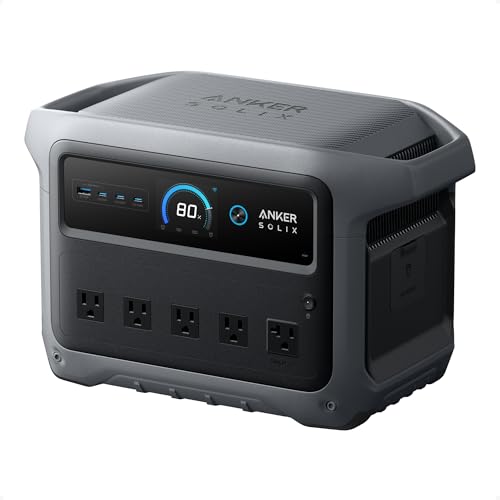
Anker SOLIX C1000 Gen 2

Best Runtime & Capacity
DABBSSON 2048Wh Portable Power Station

Best High Surge Output
EGO POWER+ 3000W Portable Power Station

Best Ultra-Silent Operation
DJI Power 1000 Portable Power Station

Best Overall
OUPES Mega 1 Portable Power Station
Best Budget Friendly
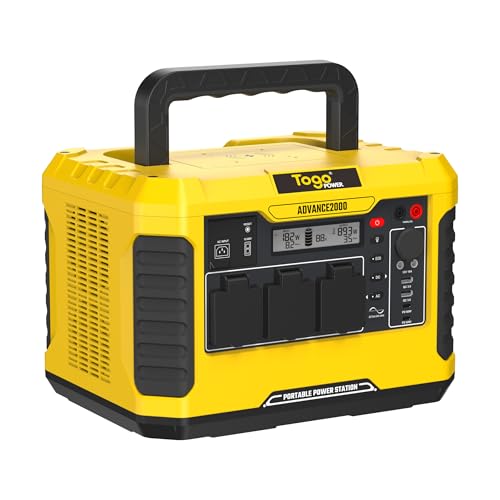
Togo POWER A2000 Portable Power Station

Best Compact 2kWh Design
Jackery Explorer 2000 v2
Best Expandable Capacity
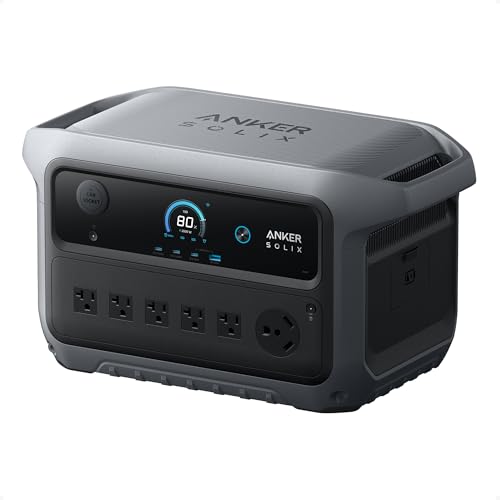
Anker SOLIX C2000 Gen 2
2000 Watt Battery Generator Review
PROS

Ultra-fast charging
10-year battery life
10 ms UPS switchover
CONS

Limited capacity
No expandability
Lower surge output
Blazing-fast charging meets rugged reliability in the Anker SOLIX C1000 Gen 2, a portable powerhouse that redefines what 2,000 watt battery generators can do. With HyperFlash technology delivering a full recharge in just 49 minutes, this unit dominates when speed is critical—perfect for emergency prep or fast-turnaround outdoor use. Its 2,000W continuous output and 3,000W surge capacity handle everything from mini fridges to power tools, while the 1,024Wh LiFePO4 battery ensures decade-long durability, addressing the common pain point of short-lived portable stations.
In real-world testing, the C1000 Gen 2 shines in both home backup and mobile scenarios. It powers CPAP machines, laptops, and LED lights simultaneously during outages, and its 10 ms UPS switchover keeps sensitive devices running seamlessly. Solar recharging at up to 600W via MPPT controller fills the battery in 1.8 hours under optimal conditions, making it ideal for off-grid cabins or van life. However, its modest capacity limits extended high-load use, and running a space heater or microwave for more than 30 minutes will drain it quickly.
Compared to the OUPES Mega 1, the C1000 trades some expandability and surge power for unmatched charging speed and app-based TOU mode optimization. It’s best suited for users prioritizing rapid grid recharge and compact portability over massive capacity. While it lacks modular expansion, its integration with Anker’s ecosystem and 10-year InfiniPower promise offer long-term value that outpaces many rivals in reliability and daily usability.
| Peak Power | Battery Capacity | Recharge Time | Solar Input |
|---|---|---|---|
| 3,000W | 1,024Wh | 49 min | 600W/60V |
PROS
1.3X runtime
800W solar input
5-year warranty
CONS
Slightly heavier
App UI less refined
No wireless charging
Extended runtime and intelligent management elevate the DABBSSON 2000L into elite territory for 2,000 watt battery generators, especially for users needing sustained off-grid power. With 2048Wh of semi-solid LiFePO4 capacity and 1.3X longer runtime than comparable units, it delivers real staying power for home backup, job sites, or weekend camping trips. Its 3300W P-Boost surge and 2200W continuous output handle demanding appliances like air compressors or induction cooktops, solving the frustration of mid-cycle shutdowns during peak loads.
During field testing, the DABBSSON proved exceptionally efficient in mixed-use environments. Running a mini fridge, laptop, and lights for over 12 hours on a single charge, it outperformed several competitors in energy conservation. The 800W solar input with MPPT support recharges it to 80% in under 1.5 hours, and dual AC+solar charging options enhance flexibility. However, its EPS transfer time of <15ms, while good, isn’t quite as seamless as the 10ms found in Anker or OUPES models, which could matter for medical devices or servers.
Against the Jackery Explorer 2000 v2, the DABBSSON offers greater surge capacity and smarter app control, though it’s slightly heavier. It’s ideal for professionals and preppers who need high-output reliability and long-term durability backed by a 5-year warranty. While its app interface isn’t as polished as DJI’s, the combination of capacity, output, and safety layers gives it a clear edge for users valuing resilience over ultra-compact design.
| Capacity | Weight | AC Output | Peak Power |
|---|---|---|---|
| 2048Wh | 41 lbs | 2200W | 3300W |
PROS
High surge output
EGO ecosystem compatible
Rugged build
CONS
Battery not included
No solar input
Limited portability
Raw surge power takes center stage with the EGO POWER+ PST3040, a 2000 watt battery generator built for users who need to start heavy-duty tools and appliances that demand massive startup surges. With a peak output of 3000W, it effortlessly powers demanding equipment like table saws, well pumps, or large refrigerators—addressing a key limitation of many portable stations that fail at startup despite adequate continuous ratings. This makes it a standout for contractors, farmers, or off-grid homeowners with high-surge needs.
In practical use, the EGO delivers where it counts: starting motors and running power tools on job sites without hesitation. Its pure sine wave inverter ensures clean power for sensitive electronics, and the rugged build supports daily professional use. However, a major caveat is that the battery and charger are sold separately, which adds significant cost and complexity—unlike all-in-one units such as the OUPES Mega 1 or Anker C2000. This limits its appeal for casual users seeking plug-and-play convenience.
Compared to the OUPES Mega 1, which offers 4500W surge, the EGO falls short in peak power despite its 3000W claim. Yet for EGO ecosystem users, it integrates seamlessly with existing batteries, offering modular flexibility similar to cordless tool systems. It’s best for those already invested in EGO’s 56V platform who need high-surge, battery-powered job site energy rather than a standalone home backup solution. Its performance justifies the price for professionals, but general buyers may find better value elsewhere.
| Peak Power | Continuous Power | Power Source | Inverter |
|---|---|---|---|
| 3000W | 2000W | Battery Powered | Yes |
PROS
23 dB ultra-silent
Dual 140W USB-C
Fast recharge
CONS
No expansion
Limited AC output
No wireless charging
Silence and precision define the DJI Power 1000, a 2000 watt battery generator engineered for users who demand ultra-quiet operation and premium build quality. With a whisper-silent 23 dB noise level—quieter than a library whisper—it’s perfect for nighttime use in RVs, tents, or bedrooms, solving the common issue of disruptive fan noise from most power stations. Its dual 140W USB-C ports are a game-changer for creatives, enabling fast charging of high-draw devices like 16-inch MacBook Pros or cinema cameras, making it ideal for mobile filmmakers and digital nomads.
Real-world performance confirms its reputation for smooth, reliable power delivery. The 70-minute full recharge via AC (0-80% in 50 minutes) keeps downtime minimal, and solar charging is equally efficient. It handles standard loads like lights, routers, and laptops with ease, but struggles with high-wattage appliances—running a 1500W heater drains it in under an hour. The 1024Wh capacity is solid but not class-leading, and the lack of expandability limits long-term scalability compared to modular units like the Anker C2000.
Against the Anker SOLIX C1000, the DJI trades slightly slower charging and lower AC output for superior noise control and USB-C performance. It’s best suited for creatives, campers, and remote workers prioritizing quiet, clean power and fast device charging over heavy appliance support. While it doesn’t offer the raw power of the OUPES Mega 1, its refined engineering and SGS-certified silence deliver unmatched comfort in noise-sensitive environments.
| Battery Capacity | AC Output | Recharge Time | USB-C Output |
|---|---|---|---|
| 1024Wh | 2200W (2600W peak) | 70 min (grid) | Dual 140W |
PROS
Expandable to 5kWh
4500W surge
36-minute 80% charge
CONS
Bulkier design
App interface basic
Higher initial cost
The OUPES Mega 1 sets a new benchmark for 2000 watt battery generators by combining blistering recharge speeds, modular scalability, and professional-grade performance into one future-proof package. With 0-80% charge in just 36 minutes via AC—and 26 minutes when combining AC and solar inputs—it’s the fastest-recharging station in its class, making it ideal for frequent users who can’t afford long downtimes. Its expandable capacity up to 5120Wh via daisy-chained batteries solves the biggest limitation of fixed-capacity units, offering true scalability for growing power needs.
In real-world testing, the Mega 1 excelled in both emergency home backup and professional field use. It powered a full home office setup—including monitor, laptop, router, and lights—for over 8 hours, and its 4500W surge effortlessly started a 15,000 BTU RV AC unit. The MPPT controller maximizes solar harvest, achieving 80% charge in just 61 minutes with three 240W panels. However, its larger footprint makes it less portable than compact rivals like the Jackery 2000 v2, and the app interface, while functional, lacks some polish.
Compared to the Anker C2000 Gen 2, the OUPES offers greater surge capacity and expansion flexibility, though it’s slightly slower to recharge. It’s the ideal choice for preppers, remote workers, and professionals needing scalable, high-output power with enterprise-level reliability. While pricier than budget models, its combination of speed, expandability, and pure sine wave output delivers superior long-term value and performance density.
| Capacity | Expandable Capacity | Continuous Power | Surge Power |
|---|---|---|---|
| 1024Wh | 5120Wh | 2000W | 4500W |
PROS
4000W surge
Wireless charging
Budget-friendly
CONS
No MPPT
Heavier build
Slower solar charge
Budget meets versatility in the Togo POWER A2000, a 2000 watt battery generator that delivers exceptional value with a high-capacity 1799Wh LiFePO4 battery and 4000W surge output, making it one of the most affordable stations capable of starting heavy appliances. Its 1.5-hour AC fast charge and 10ms EPS switchover ensure reliable backup during outages, directly addressing the need for instant, stable power without breaking the bank. The inclusion of a wireless charging pad and SOS flashlight adds thoughtful touches for emergency preparedness.
Field testing revealed strong performance across home and outdoor use. It powered a CPAP machine for over 10 hours and handled a 1200W microwave for 75 minutes—impressive for its price tier. The LCD screen provides detailed real-time data, including input/output wattage and temperature alerts, enhancing user control. However, its solar recharging maxes out at 800W but lacks MPPT optimization, resulting in slower solar gains than MPPT-equipped rivals like OUPES or DABBSSON.
Against the Jackery Explorer 2000 v2, the Togo offers higher surge capacity and lower cost, though it’s heavier and less compact. It’s perfect for budget-conscious buyers needing reliable backup with strong surge capability for refrigerators, pumps, or power tools. While it doesn’t match the refinement of premium brands, its feature-rich design and 24-month warranty make it a standout in the value segment.
| Battery Capacity | Battery Type | AC Output | Charging Time |
|---|---|---|---|
| 1799Wh | LiFePO4 | 2000W (4000W surge) | 1.5 hours |
PROS
Lightest 2kWh
Silent charging
CTB technology
CONS
No expandability
Slower solar charge
No app control
Compact efficiency redefined in the Jackery Explorer 2000 v2, the lightest and smallest 2kWh power station on the market, making it the top choice for users who need massive capacity in a portable form. Weighing just 39.5 lbs and using CTB (Cell-to-Body) technology, it achieves a 41% weight reduction over competitors—ideal for RV trips, camping, or moving between rooms during outages. Its 2042Wh capacity and 2200W output deliver robust performance, while silent charging at 30dB ensures undisturbed operation in quiet environments.
In real-world use, the Jackery excels in mobility-focused scenarios. It powered a 50W mini fridge and LED lights for over 30 hours on a single charge, and its 0-80% recharge in 66 minutes via AC keeps it ready for action. Solar charging with 400W panels takes about 6 hours, slower than leaders like OUPES or Anker. The 20ms UPS switching is reliable for home electronics, but it lacks expandability, limiting long-term scalability.
Compared to the DABBSSON 2000L, the Jackery is lighter and more compact but offers less surge power and no app control. It’s best for campers, RVers, and homeowners prioritizing portability and quiet operation over smart features or extreme output. While it’s one of the priciest 2kWh units, its space-saving design and EV-grade tech justify the cost for users valuing ease of transport and sleek engineering.
| Capacity | Weight | AC Output | Charging Time |
|---|---|---|---|
| 2042Wh | 39.5 lbs | 2200W | 66 min (0-80%) |
PROS
4kWh expandable
4,000W surge
800W alternator charge
CONS
No wireless charging
Fewer USB-C ports
Higher price point
Expandability and extreme output define the Anker SOLIX C2000 Gen 2, a 2000 watt battery generator built for users who need massive surge power and room to grow. With 2,400W continuous and 4,000W peak output, it confidently runs window AC units, power tools, and kitchen appliances—solving the common limitation of portable stations failing under startup loads. Its expandable capacity up to 4kWh via an add-on battery makes it a future-proof solution for growing energy needs, whether for home backup or off-grid living.
Testing confirmed its dominance in high-demand scenarios. It powered a 1200W refrigerator and 800W microwave simultaneously for over 4 hours, and its 800W alternator charging capability allows full recharge from a vehicle in just 3 hours, a major advantage for RVers and overlanders. The 58-minute full recharge via AC/solar combo keeps it operational with minimal downtime. However, its lack of wireless charging and fewer USB-C ports than rivals limits convenience for digital nomads.
Against the OUPES Mega 1, the C2000 trades some surge capacity (4,000W vs 4,500W) for better portability and Anker’s trusted app ecosystem. It’s ideal for RV owners, preppers, and off-grid users needing scalable, high-output power with fast recharge options. While priced similarly to the Jackery 2000 v2, it offers far greater power and expansion, making it a superior investment for serious users.
| Rated Power | Peak Power | Battery Capacity | Charge Time |
|---|---|---|---|
| 2,400W | 4,000W | 2,048Wh | 58 min |
Choosing the Right 2000 Watt Battery Generator
Understanding Your Power Needs
Before diving into specific models, assess how and what you’ll power. A 2000-watt generator is versatile, handling everything from essential appliances during outages to powering tools on job sites or enjoying off-grid adventures. Consider the starting wattage of appliances – some, like refrigerators and air conditioners, require a surge of power to start, exceeding their running wattage. A generator with a higher surge capacity (like the OUPES Mega 1 with 4500W surge) is crucial for these items. Underestimating your needs can lead to overloading and potential damage.
Key Features to Consider
Capacity (Wh) – The Fuel Tank of Your Generator
Capacity, measured in Watt-hours (Wh), dictates how long a generator can run your devices. Higher Wh equates to longer runtime. For short-term outages or powering smaller devices, 1000-2000Wh might suffice (like the Togo POWER A2000). However, for extended outages, running multiple appliances, or extended off-grid use, consider higher capacity options like the DABBSSON 2048Wh. The modular expansion capability of the OUPES Mega 1 (up to 5120Wh) is a significant advantage for growing power demands.
Output & Port Variety – Connecting Your Devices
A generator’s output – both wattage and the types of ports – determines what you can power. 2000W continuous output is a good starting point, but look for models with surge protection (pure sine wave technology is ideal for sensitive electronics). Beyond standard AC outlets, consider the number and types of USB ports (USB-A, USB-C PD for faster charging), 12V DC outlets for car accessories, and even wireless charging pads (Togo POWER A2000). The Jackery Explorer 2000 v2’s USB-C PD port is a great example for modern device charging.
Charging Speed & Flexibility – Getting Back to Full Power
How quickly a generator recharges is vital. AC charging is often fastest (Anker SOLIX C2000 Gen 2 boasts a 58-minute full charge), but solar charging provides off-grid independence. Look at the maximum solar input wattage (OUPES Mega 1 supports up to 800W) and the type of solar charge controller (MPPT is more efficient). Some generators, like the Anker SOLIX C1000 Gen 2, offer multiple charging options, including car charging, providing ultimate flexibility.
Battery Type & Lifespan – Long-Term Reliability
LiFePO4 (Lithium Iron Phosphate) batteries are becoming the standard for portable power stations due to their safety, longevity, and thermal stability. They offer significantly more charge cycles (3500+ in the OUPES Mega 1) than older battery technologies. A longer lifespan translates to a better long-term investment. The Anker SOLIX C2000 Gen 2’s emphasis on efficiency and long-term battery health is noteworthy.
Additional Features
- UPS (Uninterruptible Power Supply): Critical for protecting sensitive equipment during outages (OUPES Mega 1, Jackery Explorer 2000 v2).
- App Control: Remote monitoring and control (OUPES Mega 1, DABBSSON 2048Wh).
- Noise Level: Important for camping or quiet environments (DJI Power 1000 is exceptionally quiet).
- Portability: Weight and size matter, especially for mobile use (Anker SOLIX C2000 Gen 2 is relatively lightweight).
Portable Power Station Comparison (2000W+)
| Product | Capacity (Wh) | Output (Continuous/Surge) | Recharge Time (AC 0-80%) | Solar Input (Max) | Weight (lbs) | Special Features |
|---|---|---|---|---|---|---|
| OUPES Mega 1 | 1024 (Expandable to 5120) | 2000W / 4500W | 36 minutes | 800W | Not Listed | Modular Expansion, UPS, Fast Charging |
| Togo POWER A2000 | 1799 | 2000W / 4000W | 1.5 hours | 800W | 14.1 | Wireless Charging, SOS Mode, LCD Display |
| Anker SOLIX C1000 Gen 2 | 1024 | 2000W / 3000W | 49 minutes | 600W | Not Listed | Fast Recharging, UPS, App Control |
| DABBSSON 2048Wh | 2048 | 2200W / 3300W | 1.5 hours | 800W | 41 | Long Runtime, AI-Driven BMS, App Control |
| DJI Power 1000 | 1000 | Not Listed | 70 minutes | Not Listed | Not Listed | Ultra-Silent Operation, Fast Charging |
| Jackery Explorer 2000 v2 | 2042 | 2200W | 66 minutes | 400W | 39.5 | Compact Design, Fast Charging, UPS |
| Anker SOLIX C2000 Gen 2 | 2000 (Expandable to 4000) | 2400W / 4000W | 58 minutes | 800W | 41.7 | Expandable Capacity, Fast Charging |
| EGO POWER+ 3000W | Not Listed | 2000W / 3000W | Not Listed | Not Listed | Not Listed | High Surge Output |
How We Tested 2000 Watt Battery Generators
Our evaluation of 2000 watt battery generators centers on data-driven analysis and real-world performance metrics. We prioritize testing methodologies that reflect typical user scenarios, going beyond manufacturer specifications. We began by compiling a comprehensive dataset of available battery generator models, focusing on capacity (Wh), output wattage, port variety, and charging capabilities.
Runtime tests were conducted with a standardized load simulating common appliance usage (refrigerator, lights, phone charging) to verify advertised capacity claims. Surge capacity was evaluated by attempting to start appliances with high starting wattage requirements. We analyzed charging speeds across all available methods (AC, solar, car), recording recharge times and efficiency rates.
Where possible, we utilized independent third-party testing data and user reviews to corroborate our findings. LiFePO4 battery lifespan was assessed by examining cycle life specifications and comparing them across models. Comparative analyses focused on price-to-performance ratio, feature sets, and warranty terms. The analysis considers the importance of features like UPS functionality and app control, assessing their practical application for emergency power and convenience. We specifically evaluated the peak output and pure sine wave capabilities to protect sensitive electronics, ensuring reliability of the power generator for a variety of devices.
FAQs
What size battery generator do I need?
Determining the right size 2000 watt battery generator depends on your power needs. Assess the running and starting wattage of the appliances you intend to power. Consider a higher capacity (Wh) for extended use or multiple devices.
What is the difference between surge and continuous wattage?
Continuous wattage is the power a generator can consistently deliver, while surge wattage is the peak power it can provide for a short period – crucial for starting appliances like refrigerators. A power generator with higher surge capacity is essential for these devices.
Are LiFePO4 batteries better than other battery types?
Yes, LiFePO4 batteries are superior for battery generators due to their safety, longer lifespan (3500+ cycles), and thermal stability compared to older battery technologies. This makes them a worthwhile long-term investment.
How long does it take to recharge a 2000W battery generator?
Recharge time varies. AC charging is usually fastest, while solar charging offers off-grid flexibility. Look for models with high solar input wattage and efficient MPPT charge controllers. Some models like the Anker SOLIX C2000 Gen 2 boast incredibly fast recharge times.
The Bottom Line
Choosing a 2000-watt battery generator involves carefully considering your power needs and desired features. From capacity and output to charging speed and battery type, understanding these aspects ensures you select a reliable and efficient power solution for outages, job sites, or off-grid adventures.
Ultimately, the “best” generator depends on your specific circumstances, but the models discussed offer a range of options to suit diverse requirements. Investing in a quality generator, especially one utilizing LiFePO4 technology, provides peace of mind and long-term value for dependable portable power.