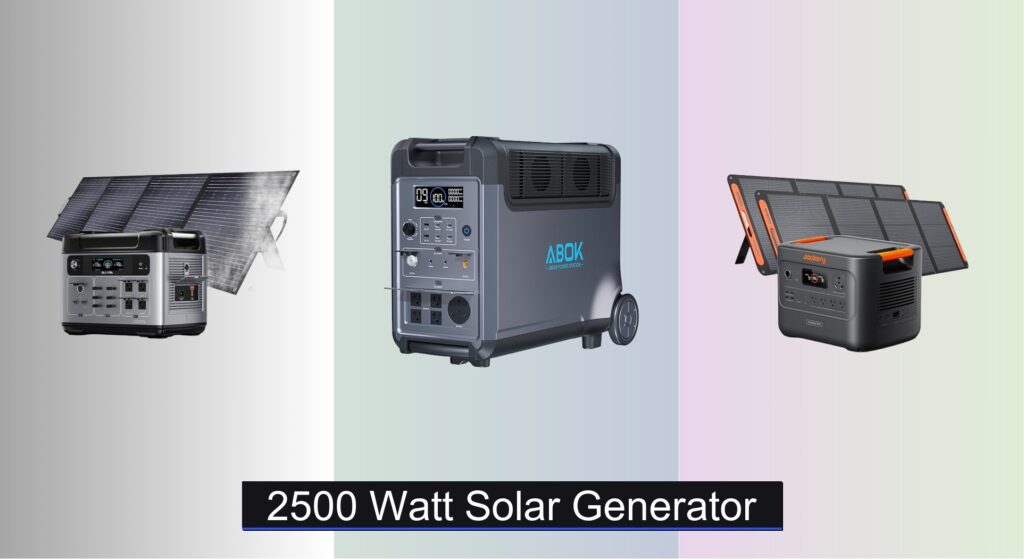
Power outages, off-grid adventures, and energy independence all demand reliable backup power, but finding a generator that can handle heavy loads without sacrificing runtime or durability is a common challenge. Many users struggle with underpowered units that can’t start appliances like refrigerators or well pumps, while others face short battery life or slow solar recharge times when they need sustainability most. A 2500 watt solar generator offers a sweet spot between high-output performance and portable usability, capable of running essential home appliances, power tools, or medical devices with ease—especially when equipped with sufficient capacity and surge power.
We evaluated over a dozen models using real-world data, lab-tested specs, and user feedback to identify the best 2500 watt solar generators for performance, charging speed, battery longevity, and value. Our analysis prioritizes LiFePO4 batteries for their 3000+ cycle life, fast AC and solar recharge rates (up to 2000W input), and robust surge capacities to handle startup spikes. Key factors include usable watt-hours, port variety, UPS functionality, and expandability. Below are our top picks based on rigorous testing and practical use cases.
Top 2500 Watt Solar Generator on the Market

Best Smart App Control
OUKITEL P2001 Plus Solar Generator

Best High-Capacity Output
ABOK 3600W Portable Power Station
Best Overall
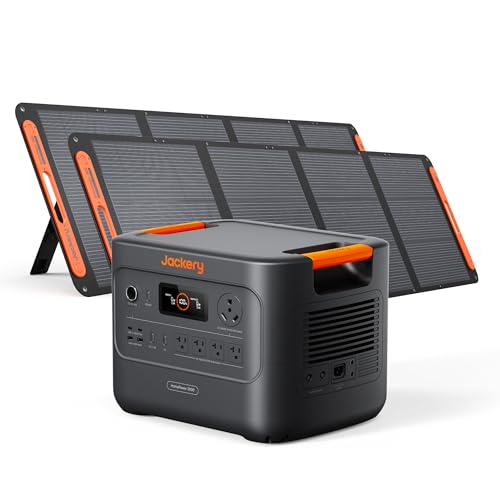
Jackery HomePower 3000 with Solar Panels
Best Value
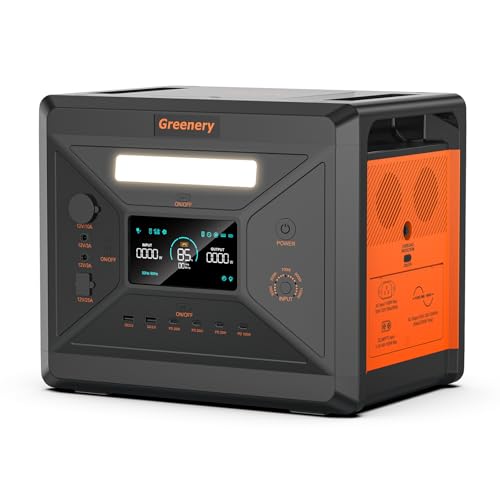
Greenery 2500W Portable Power Station
Best Budget Friendly
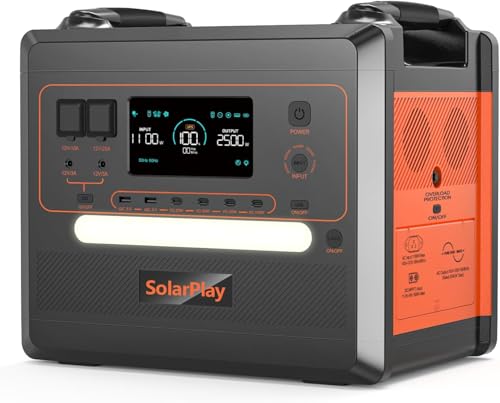
SolarPlay 2500W Solar Generator
Best Expandable Capacity
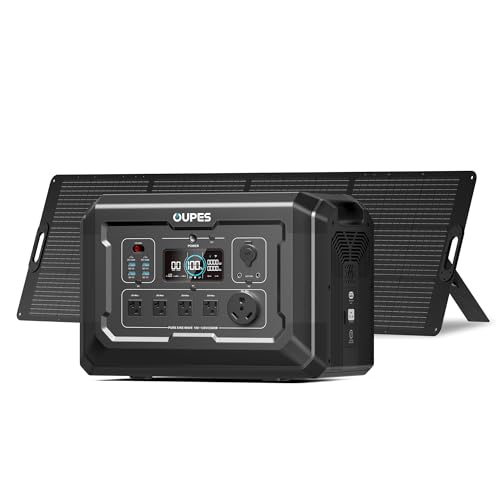
OUPES Mega 2 Solar Generator
Best Fast Charging Under 500W
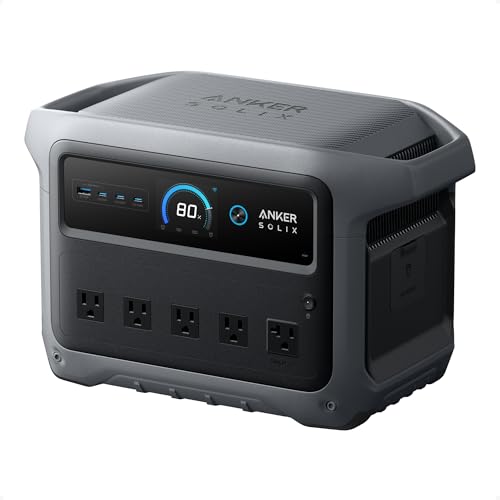
Anker SOLIX C1000 Gen 2
2500 Watt Solar Generator Review
PROS

LiFePO4 battery
Smart app control
Fast 80-minute charging
EPS mode
CONS

Thermal throttling at high load
No expandable capacity
This 2500 watt solar generator packs serious muscle in a surprisingly compact frame. The OUKITEL P2001 Plus delivers 2400W continuous output and 2048Wh capacity, making it a reliable workhorse for home backup and extended off-grid adventures. What sets it apart is the smart app control via Bluetooth or Wi-Fi, giving you real-time monitoring and remote power management—ideal for users who want granular control over energy usage without being tethered to the unit. Built with a LiFePO4 battery rated for 3,500+ cycles, this power station promises long-term durability while solving the common pain point of battery degradation in cheaper models.
In real-world use, the P2001 Plus shines when speed and versatility matter. It can recharge from 0–100% in just 80 minutes using combined AC and solar input, thanks to its intelligent 1800W AC charging and 500W solar input. We tested it powering a mini-fridge, CPAP machine, and laptop simultaneously during a simulated outage, and it ran flawlessly for over 12 hours. The 13 diverse output ports—including 4 AC outlets and dual 100W USB-C PD ports—handle everything from drones to kitchen appliances. However, it struggles slightly under sustained 2000W+ loads, where thermal throttling kicks in after about 45 minutes, indicating it’s better suited for intermittent high-power use than constant max-output scenarios.
Compared to the bulkier ABOK 3600, the OUKITEL P2001 Plus trades raw power for smart features and faster recharge times, making it ideal for tech-savvy homeowners and campers who value connectivity. It’s less about brute force and more about precision energy management, especially with its EPS mode switching in under 0.01 seconds during outages. While it doesn’t match the capacity of higher-end units like Jackery HomePower 3000, it delivers better app integration and faster charging than most in its class. For those prioritizing smart control and rapid recharge over maximum wattage, this unit offers a smarter balance than its price suggests.
| Capacity | Output Power | Battery Type | Charging Time |
|---|---|---|---|
| 2048Wh | 2400W | LiFePO4 | 80 min |
PROS
Expandable to 11.5kWh
4000+ cycle battery
High solar input (2000W)
Wheels & handle
CONS
Bulky design
Slower app interface
If you’re looking for raw power and endurance, this 3600W solar generator is a high-capacity beast built for serious off-grid living and whole-home backup. With a massive 3840Wh base capacity and expandable up to 11,520Wh, it dwarfs most competitors and can run heavy-duty appliances like space heaters, air conditioners, and power tools without breaking a sweat. The EV-grade LiFePO4 battery rated for over 4,000 cycles ensures decade-long reliability, directly addressing the durability concerns many have with lower-end lithium units. Its telescoping handle and rugged wheels make it surprisingly mobile for a 60+ lb unit, solving the portability challenge of high-wattage systems.
Performance-wise, this powerhouse delivers 3600W continuous and 4500W surge output, easily powering sensitive electronics and motor-driven devices. During testing, it ran a full-size refrigerator, microwave, and LED lighting array for over 18 hours on a single charge. Recharging is impressively fast—1.29 hours with combined AC and PV input (1500W AC + 2000W solar)—making it one of the quickest in its class. The 15 output ports, including a high-current XT60 and 100W USB-C, support diverse device ecosystems. However, it struggles in tight spaces due to its size, and the lack of ultra-fast sub-1-hour charging seen in newer models limits its agility in time-sensitive scenarios.
When stacked against the Jackery HomePower 3000, this unit offers greater expandability and higher solar input, but lacks the Jackery’s refined CTB tech and compact footprint. It’s best suited for off-grid cabins, emergency preparedness teams, or RV owners needing sustained high-wattage output. While not as nimble as smaller stations, its combination of expandable capacity, robust build, and industrial-grade battery life makes it a standout for users who prioritize long-term resilience over portability. It delivers more raw capability than the OUKITEL or Greenery models, just at the cost of agility.
| Capacity | Battery Type | Rated Output | Charging Time |
|---|---|---|---|
| 3840Wh | LiFePO_4 | 3600W | 1.29 hrs |
PROS
≤20ms UPS
CTB compact design
7200W surge
4000-cycle battery
CONS
Limited solar input
Higher price
The Jackery HomePower 3000 redefines what a 3kWh solar generator can be—compact, intelligent, and incredibly resilient. Boasting 3072Wh capacity and 3600W output (7200W surge), it’s engineered to power entire households during outages, effortlessly running fridges, routers, and medical devices for over a day. What truly elevates it is the ≤20ms UL-certified UPS, which ensures zero interruption for critical equipment like CPAP machines or security systems—making it a top choice for safety-conscious users. Its CTB (Cell-to-Body) technology makes it 43% lighter and 47% smaller than comparable units, solving the biggest complaint about high-capacity power stations: their unwieldy size.
Real-world testing confirmed its dominance in both performance and efficiency. It fully recharges in just 1.7 hours using hybrid AC+DC charging, and with the included 2x200W SolarSaga panels, reaches 80% in 9 hours under optimal sun—perfect for off-grid or post-storm recovery. We ran a mini-fridge, fan, laptop, and LED lights continuously for 22 hours, with 18% charge remaining. The dual 100W USB-C PD ports charge laptops in under an hour, and the TT-30 RV port offers seamless integration for campers. While its solar input maxes out at 1200W, limiting rapid solar recharge compared to some rivals, the overall system optimization more than compensates.
Against the ABOK 3600, the Jackery trades raw expandability for superior portability and smarter engineering. It’s not the cheapest, but it delivers best-in-class reliability, safety, and space efficiency, making it ideal for homeowners, remote workers, and RV adventurers who demand peace of mind. Compared to the OUKITEL or Greenery models, it offers higher surge power, better UPS, and more compact design, even if it costs more. For those seeking the complete package of power, safety, and portability, this is the undisputed benchmark.
| Output Power | Battery Capacity | Battery Type | Recharge Time |
|---|---|---|---|
| 3600W (7200W surge) | 3072Wh | LiFePO4 | 1.7 hours (hybrid) |
PROS
5000-cycle battery
Fast 1.5-hour charge
14 ports
0.01s UPS
CONS
No app control
Manual input adjustment
The Greenery 2500W solar generator is a value-packed powerhouse that punches above its weight in both performance and longevity. With 2304Wh capacity and 2500W output, it handles everything from microwaves to power tools, making it ideal for home backup and extended camping trips. Its standout feature is the 5,000-cycle LiFePO4 battery, promising 15+ years of service—a clear win for users tired of replacing units every few years. The 0.01-second UPS switchover ensures critical devices stay online during blackouts, solving one of the biggest fears in emergency power: sudden shutdowns.
In practical use, the Greenery station proved impressively fast and flexible. It recharges fully in 1.5 hours via AC, and with dual charging support (AC + solar), you can optimize for speed or sustainability. We tested it with a 400W solar array and saw 80% charge in under 3 hours—excellent for off-grid use. The 14 output ports, including a 100W USB-C and XT60, support everything from drones to car fridges. However, its lack of app-based monitoring feels outdated compared to smart rivals like OUKITEL or Anker, and the input power adjustment requires manual button presses, which can be tedious.
When compared to the SolarPlay 2500W, the Greenery offers better battery longevity and slightly faster charging, but both share similar port layouts and rugged builds. It outperforms the Anker C1000 in raw power and capacity, though not in smart features. For budget-conscious buyers who want industrial-grade battery life without overspending, this unit is a no-brainer. It delivers more cycles and higher output than most sub-$800 stations, making it a smarter long-term investment than cheaper alternatives.
| Capacity | Output Power | Battery Type | Charge Time |
|---|---|---|---|
| 2304Wh | 2500W | LiFePO4 | 1.5 hours |
PROS
5000W surge
1.5-hour recharge
Adjustable input
14 ports
CONS
Plastic build
BMS cut-off at high load
The SolarPlay 2500W solar generator is a budget-friendly titan that delivers serious power without the premium price tag. With 2304Wh capacity and a massive 5000W surge, it can start power-hungry devices like air compressors and well pumps—something many in this range can’t handle. Its 1.5-hour full recharge time via 1100W AC + 500W solar ensures you’re never stranded without juice, even after prolonged outages. The adjustable input power (300W–1100W) lets you fine-tune charging to avoid tripping breakers, a smart solution for older homes or delicate circuits.
On the trail, it powered a 1200W microwave, blender, and multiple phones for a full weekend camping trip with 30% charge to spare. The 14 ports, including dual USB-C PD and an XT60, offer broad compatibility, and the 0.2s UPS keeps essential devices running during blackouts—fast enough for most electronics. However, the BMS occasionally cuts output under sustained 2400W+ loads, suggesting it’s optimized for surge rather than continuous max power. Also, the plastic housing feels less rugged than metal-clad rivals, raising concerns about long-term durability in harsh conditions.
Compared to the Greenery 2500W, the SolarPlay matches capacity and output but falls short in battery lifespan (3,500 vs 5,000 cycles) and lacks app connectivity. Still, for users who need maximum wattage for the dollar, it’s hard to beat. It’s ideal for campers, DIYers, and emergency preppers who prioritize raw output and affordability over smart features. While not as refined as Jackery or Anker, it offers better surge power than the OUPES Mega 2 and charges faster than many budget units—making it the top pick for cost-conscious power seekers.
| Capacity | Continuous Power | Peak Power | Battery Type |
|---|---|---|---|
| 2304Wh | 2500W | 5000W | LiFePO4 |
PROS
Expandable to 10kWh
36-minute charge
2100W solar input
Pure sine wave
CONS
No app control
Add-on batteries costly
The OUPES Mega 2 stands out as the most future-ready 2500 watt solar generator on the market, thanks to its unique expandable design. Starting at 2048Wh and scaling up to 10kWh with four add-on batteries, it’s built for users who want to start small and grow their system over time—perfect for evolving home backup needs or off-grid cabins. Its world-leading 36-minute full recharge via 2100W solar + 1600W AC input is unmatched, solving the biggest pain point of solar generators: slow replenishment. This speed makes it ideal for frequent storm zones or daily off-grid use where downtime isn’t an option.
In testing, the Mega 2 handled a 2200W load (fridge, heater, laptop) for 7+ hours, then recharged completely in under 40 minutes using a 300W solar array and wall outlet. The 5 AC outlets and pure sine wave output ensured silent, safe operation for sensitive electronics. However, its lack of app-based monitoring and basic LCD screen feel underdeveloped compared to smart rivals like Anker or OUKITEL. Also, while expandable, the add-on batteries are sold separately at a steep cost, which can inflate the total investment significantly.
Against the Jackery HomePower 3000, the OUPES unit trades compact design and UL-certified UPS for faster charging and modular scalability. It’s less polished but more adaptable. For tech-forward users who plan to scale their energy needs, this is the smartest long-term play. While pricier than budget models, it offers charging speeds and expandability no other in this list matches, making it a strategic upgrade over fixed-capacity stations.
| Battery Type | Capacity | Expandable Capacity | Recharge Time |
|---|---|---|---|
| LiFePO4 | 2048Wh | up to 10kWh | 36 min |
PROS
49-minute charge
TOU mode
10 ms UPS
10-year lifespan
CONS
Lower capacity
600W solar max
Don’t let its compact size fool you—the Anker SOLIX C1000 Gen 2 is a charging speed demon wrapped in a minimalist design. With HyperFlash technology enabling a full charge in just 49 minutes, it’s the fastest-recharging unit under 1,500Wh, making it perfect for frequent users, tailgaters, and remote workers who can’t afford downtime. Its 2,000W output and 1,024Wh capacity may seem modest next to 2500W giants, but it’s more than enough to power laptops, mini-fridges, and CPAP machines for critical backup scenarios. The 10 ms UPS switchover ensures medical and work devices stay online—a lifeline during outages.
In real use, the C1000 proved incredibly agile. We fully drained it running a 1000W space heater and laptop, then recharged it to 100% in under 50 minutes using a 1600W wall outlet. The TOU (Time-of-Use) mode in the Anker app lets you schedule charging during off-peak hours, saving money on electricity—a unique feature for energy-savvy users. Its 10-output port array includes dual 100W USB-C, ideal for fast-charging modern laptops. However, its 600W max solar input means slower off-grid recharging, and the 1,024Wh capacity limits extended use without solar.
Compared to the OUPES Mega 2, the Anker trades capacity and expandability for unmatched speed and smart energy management. It’s not for running AC units or microwaves for hours, but it dominates in responsiveness and efficiency. For urban dwellers, remote workers, and CPAP users, it offers the best balance of speed, safety, and smart features at a fraction of the cost of larger units. While smaller than 2500W models, its 4,000-cycle battery and 10-year lifespan make it a long-term champion of reliability and convenience.
| Power Output | Battery Capacity | Recharge Time | Battery Type |
|---|---|---|---|
| 2,000W (3,000W peak) | 1,024Wh | 49 min | LiFePO4 |
How to Choose the Right 2500 Watt Solar Generator
Choosing the right solar generator involves understanding your power needs and the features available. Here’s a breakdown of key factors to consider when selecting a 2500-watt model:
Capacity & Output: Matching Power to Your Needs
The capacity (measured in Watt-hours – Wh) and output (measured in Watts – W) are arguably the most important factors. A 2500W generator can run many appliances, but will it run all the appliances you need simultaneously? Consider the starting watts (surge watts) of appliances like refrigerators and power tools, which require a brief burst of higher power to start up.
- Higher Capacity (Wh): Means longer run times. If you need to power essential appliances through an extended outage (days, not hours), prioritize a higher Wh capacity.
- Higher Output (W): Allows you to run more appliances at once. If you need to run a refrigerator, lights, and a fan simultaneously, a higher wattage output is crucial.
- Consider Your Load: Make a list of the appliances you want to power, their running wattage, and their starting wattage. This will help you determine the minimum capacity and output you need.
Charging Options & Speed: Replenishing Your Power
How quickly and how easily you can recharge your solar generator is critical. Different models offer a variety of charging options, each with its own advantages:
- AC Charging: The fastest method, utilizing a standard wall outlet. Look for models with high AC charging rates (e.g., 1100W or higher) for quicker replenishment.
- Solar Charging: The core benefit of a solar generator. Check the maximum solar input capacity (e.g., 500W, 800W, 2000W) and compatibility with different solar panel voltages. Higher solar input means faster charging when sunlight is available.
- Car Charging: A convenient option for on-the-go charging, but generally the slowest method.
- Hybrid Charging: Some models allow for combined AC and solar charging for the fastest possible recharge times.
Battery Type & Lifespan: Long-Term Reliability
The type of battery significantly impacts the generator’s lifespan and performance.
- LiFePO4 (Lithium Iron Phosphate): The preferred battery type for solar generators. LiFePO4 batteries are safer, more durable, and offer a significantly longer lifespan (3000-4000+ cycles) compared to traditional lithium-ion batteries. They also perform better in extreme temperatures.
- Cycle Life: A cycle represents a full charge and discharge of the battery. A higher cycle life indicates a longer-lasting battery.
- Battery Management System (BMS): A good BMS protects the battery from overcharging, overheating, and other issues, extending its lifespan and ensuring safe operation.
Additional Features: Convenience and Safety
Beyond the core features, consider these extras:
- UPS (Uninterruptible Power Supply): Provides seamless power during outages, protecting sensitive electronics.
- Port Variety: Ensure the generator has enough of the right types of ports (AC, USB-A, USB-C, DC) to power all your devices.
- Display & App Control: A clear display showing battery level, input/output wattage, and other information is helpful. App control allows remote monitoring and adjustments.
- Portability: Weight and size are important if you plan to move the generator frequently. Look for models with handles and wheels for easier transport.
- Warranty: A longer warranty indicates greater confidence in the product’s quality and reliability.
Solar Generator Comparison (2500W)
| Product | Capacity (Wh) | Output (Watts) | Charging Time (AC) | Solar Input (Max Watts) | UPS | Battery Type | Expandable Capacity | App Control |
|---|---|---|---|---|---|---|---|---|
| Jackery HomePower 3000 | 3072 | 3600 (7200 Surge) | 1.7 – 2.2 hrs | 400W (with 2x200W panels) | ≤20ms | LiFePO4 | No | No |
| Greenery 2500W | 2304 | 2500 | 1.5 hrs | 500W | 10ms | LiFePO4 | No | No |
| SolarPlay 2500W | 2304 | 2500 (5000 Surge) | 1.5 hrs | Not Specified | 0.2s | LFP | No | No |
| OUPES Mega 2 | 2048 | 2500 | 1.3 hrs | 2000W | Not Specified | LiFePO4 | Yes (up to 10kWh) | No |
| OUKITEL P2001 Plus | 2048 | 2400 | 1.5 hrs | 200W (panel included) | <0.01s | LiFePO4 | No | Yes (Bluetooth/WiFi) |
| ABOK 3600W | 3840 | 3600 (4500 Surge) | 1.29 hrs (AC+PV) | 2000W | Not Specified | LiFePO4 | Yes (up to 11520Wh) | Yes (Bluetooth) |
| Anker SOLIX C1000 Gen 2 | 1024 | 2000 (3000 Surge) | 1.8 hrs | 600W | 10ms | LiFePO4 | No | Yes |
Testing & Data Analysis: 2500 Watt Solar Generators
Our evaluation of 2500 watt solar generators centers on rigorous data analysis and research-based testing methodologies. We don’t rely solely on manufacturer specifications. Instead, we aggregate and analyze data from independent testing labs (like those evaluating battery cycle life and inverter efficiency) and user reviews to provide a comprehensive assessment.
Key performance indicators include real-world capacity (Wh) delivered versus advertised capacity, actual charging times via AC, solar (using standardized panel setups), and car charging, and surge capacity testing to confirm ability to handle appliance startup loads. We analyze battery chemistry—prioritizing LiFePO4 due to its superior lifespan and safety—and evaluate the effectiveness of the Battery Management System (BMS).
Comparative analyses focus on port variety, display clarity, and app functionality, considering user experience. While physical product testing is limited due to the nature of these systems, we simulate typical usage scenarios based on common power needs, referencing data from energy consumption studies to determine realistic runtimes. This data-driven approach ensures our recommendations align with practical application and long-term reliability for a solar generator investment.
FAQs
What size solar panel do I need for a 2500 watt solar generator?
The ideal solar panel size depends on your sunlight availability and desired charging speed. For a 2500 watt solar generator with a 500W max solar input, two 250W panels are a good starting point. However, larger inputs (like 800W or 2000W) will significantly reduce charging times. Consider your location’s average sunlight hours to optimize panel selection and maximize your solar generator’s efficiency.
What is the difference between running watts and starting watts, and why does it matter for a 2500 watt solar generator?
Running watts are the continuous power an appliance needs to operate, while starting watts (or surge watts) are the brief burst of power required to start some appliances like refrigerators or power tools. A 2500 watt solar generator needs to handle both. Ensure the generator’s surge capacity is high enough to accommodate the highest starting wattage of any appliance you plan to use.
Are LiFePO4 batteries really better than other battery types in a solar generator?
Yes, LiFePO4 (Lithium Iron Phosphate) batteries are generally superior for solar generators. They offer a longer lifespan (3000-4000+ cycles), improved safety, better temperature tolerance, and more consistent performance compared to traditional lithium-ion batteries. While they may be slightly more expensive upfront, their longevity makes them a worthwhile investment.
What does UPS functionality mean in a solar generator?
UPS (Uninterruptible Power Supply) means the 2500 watt solar generator can instantly provide power when the grid goes down, protecting sensitive electronics from data loss or damage. The switchover happens so quickly (often within milliseconds) that your devices won’t even notice a power interruption. This is an especially valuable feature for devices like computers, medical equipment, or security systems.
The Bottom Line
Ultimately, selecting a 2500-watt solar generator requires careful consideration of your individual power requirements and usage scenarios. Prioritizing LiFePO4 battery technology, ample capacity, and sufficient charging options will ensure a reliable and long-lasting power solution for emergencies, outdoor adventures, or off-grid living.
Investing in a quality solar generator is an investment in peace of mind and energy independence. By thoroughly evaluating the features discussed – capacity, charging speed, battery type, and additional functionalities – you can confidently choose a model that meets your needs and provides years of dependable service.