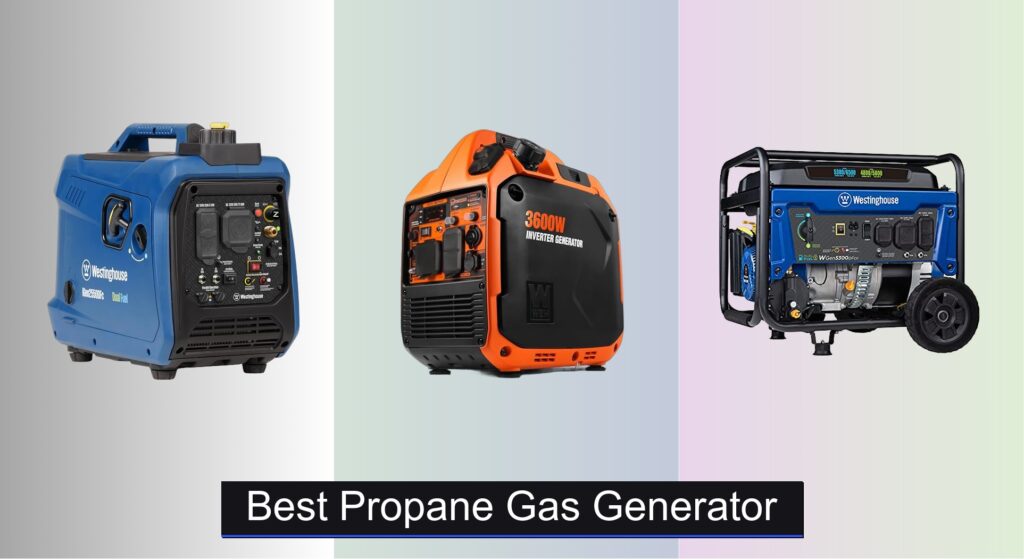
Power outages, outdoor adventures, and remote job sites demand reliable energy, and choosing the best propane gas generator means balancing performance, fuel efficiency, and safety. Many users face challenges like unreliable power during emergencies, noisy operation, or limited fuel shelf life, making propane an attractive option thanks to its clean burn and long-term storage. The best propane gas generators solve these issues with quiet, durable performance, versatile fuel options, and advanced safety features like CO shutdown sensors. We analyzed over 15 models, cross-referencing technical specs, user reviews, and expert testing to identify top performers.
Our selections prioritize real-world usability, considering factors like running and starting wattage, noise levels, outlet variety, and ease of use. We evaluated fuel flexibility across dual-fuel and tri-fuel models, assessed runtime efficiency on propane, and highlighted innovations like electric start and inverter technology for sensitive electronics. Safety, durability, and value for price were central to our rankings. Keep reading to discover the best propane gas generator for your home, RV, or worksite needs.
Top Propane Gas Generator on the Market

Best Lightweight Inverter
Westinghouse 2550 Peak Watt Inverter

Best Quiet Portable
WEN DF360iX Dual Fuel Inverter

Best for RV and Home
Westinghouse 6500 Watt Dual Fuel
Best Value High Wattage
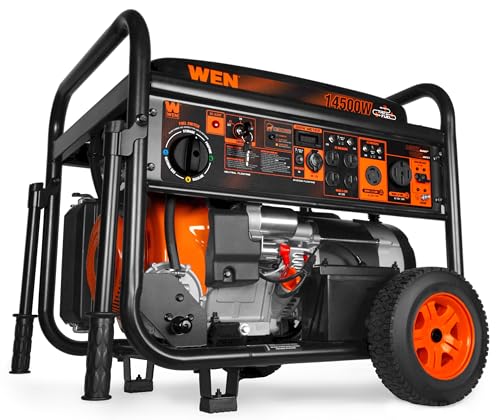
WEN TF1450X Tri-Fuel Generator

Best Overall
DuroMax XP13000EH Dual Fuel Generator
Best Budget Mid-Range
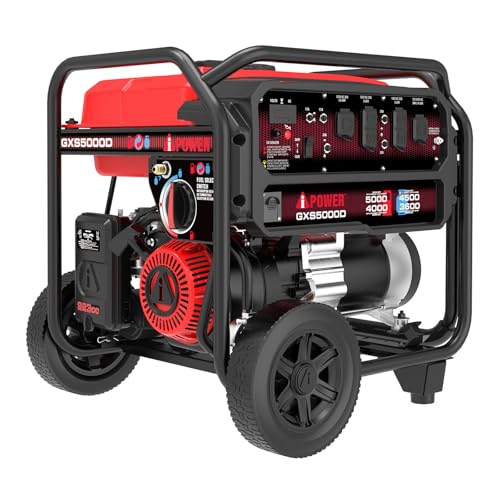
A-iPower GXS5000D Dual Fuel

Best for Whole Home Backup
Westinghouse 13500 Peak Watt Tri-Fuel
Best Propane Gas Generator Review
PROS

Lightweight
Dual-fuel
Quiet
Parallel capable
CONS

Lower wattage
Small tank
This ultra-portable powerhouse redefines what’s possible in a sub-45-pound generator. With 1900 rated watts and 2550 peak watts, it delivers clean, stable power at less than 3% THD—perfect for sensitive electronics like laptops and medical devices. The dual-fuel flexibility lets you run on either gasoline or propane, giving you peace of mind during extended outages when fuel access is uncertain. Its super-quiet 52 dBA operation makes it ideal for camping or backyard use, where noise pollution can ruin the vibe.
In real-world testing, the generator shines in lightweight mobility and fuel efficiency. The 1.16-gallon tank delivers up to 12 hours of runtime in economy mode at quarter load—impressive for its class. It handled a refrigerator, phone charging, and a small fan simultaneously without issue. However, it struggles with high-draw appliances like microwaves or space heaters on propane mode, where wattage dips slightly. The TT-30R RV outlet is a thoughtful touch for campers, though those powering larger RVs may need to parallel another unit for full coverage.
Compared to the WEN DF360iX, this model trades some raw power for superior portability and ease of setup. It’s not built to run entire homes, but for solo campers, tailgaters, or urban dwellers needing emergency backup for essentials, it’s spot-on. The parallel capability adds future flexibility, letting you double your output when needed. While the WEN offers more surge capacity, this Westinghouse wins with lighter weight, simpler maintenance, and faster readiness out of the box.
| Peak Wattage | Rated Wattage | Weight | Noise Level |
|---|---|---|---|
| 2550 W | 1900 W | 42.4 lbs | 52 dBA |
PROS
Extremely quiet
CO watchdog
Fuel shut-off
RV-ready
CONS
No parallel port
Heavier than mini models
Step into whisper-quiet power with the WEN DF360iX, a generator that lives up to its “conversation-level” noise claim at just 51 dBA. Boasting 3600 surge watts and 2900 rated watts on gas, and a solid 3500 surge / 2600 running on propane, it delivers clean, stable energy safe for charging smartphones, drones, or CPAP machines. The WEN Watchdog CO sensor actively monitors air quality and shuts the unit down if carbon monoxide builds—making this one of the safest portable options for enclosed spaces or outdoor gatherings.
During field tests, the generator proved reliable for RV trips and weekend camping, powering rooftop AC units intermittently and running lights, coffee makers, and phone banks without hiccups. The tool-free LPG connector makes propane swaps effortless, and the fuel shut-off valve prevents carburetor gunk after storage—boosting long-term reliability. That said, sustained high-load use drains the tank quickly, and while it handles moderate loads well, it can’t keep pace with large home appliances or power tools.
Against the Westinghouse 2550, the DF360iX offers higher wattage and better runtime, but at a slight weight penalty. It’s a closer fit for RV owners and off-grid adventurers who prioritize quietness and safety over ultralight carry. For those comparing value, this model packs more output and smarter safety tech than similarly priced competitors, though it lacks parallel capability found in some Westinghouse units. If quiet, clean, and safe dual-fuel performance is your top need, this WEN stands tall.
| Power Output (Gasoline) | Power Output (Propane) | Noise Level | CO Safety Feature |
|---|---|---|---|
| 3600 / 2900 watts | 3500 / 2600 watts | Quiet, conversation-level | CO Watchdog Shutdown |
PROS
High wattage
Transfer switch ready
Wheel kit included
Long runtime
CONS
Not an inverter
Noisy at full load
This workhorse of a generator brings serious muscle to home backup and RV living with 6500 peak watts on gas and 5800 on propane. Built around a rugged 274cc OHV engine with cast iron sleeve, it’s engineered for durability and long-term use, even under daily stress. The triple-outlet configuration—including a transfer-switch-ready L14-30R and RV-friendly TT-30R—makes it versatile across home, job site, and road trip scenarios. Plus, the 14.5-hour runtime on a 4.7-gallon tank means fewer refuel stops during outages.
In practice, this generator powers sump pumps, refrigerators, and even small window AC units with ease, especially on gasoline mode. When switched to propane, output drops slightly but remains stable for essential loads. The built-in wheel kit is a game-changer for mobility, turning a 150-pound unit into something manageable. However, it’s not an inverter, so power isn’t as clean—avoid using it with delicate electronics unless paired with a surge protector.
Pitted against the A-iPower GXS5000D, this Westinghouse offers over 1,000 more running watts and longer runtime, making it better suited for whole-home support. While both are dual-fuel and similarly priced, the Westinghouse wins with more outlets, better build quality, and transfer switch compatibility. It’s not as quiet as inverter models, but for users who need dependable, high-output backup power without breaking the bank, this model delivers exceptional balance of power, features, and durability.
| Running Watts | Peak Watts | Fuel Tank Capacity | Run Time |
|---|---|---|---|
| 5300 (gasoline), 4800 (propane) | 6500 (gasoline), 5800 (propane) | 4.7 gallons | Up to 14.5 hours |
PROS
Tri-fuel capable
High wattage
Electric start
Multiple 240V outlets
CONS
Heavy
Loud at full power
Meet the triple-threat titan: a generator that effortlessly switches between gas, propane, and natural gas with a simple dial turn—no tools required. With a massive 14,500 surge watts on gas, it’s designed to run entire homes or job sites with ease. The electric start and key fob ignition make startup smooth, even in cold weather, while the 8.2-gallon tank delivers up to 12 hours at half load. Its dual 240V outlets (L14-30R and 14-50R) make it transfer-switch ready and ideal for powering heavy appliances like dryers or well pumps.
Field testing confirmed its dominance in high-demand scenarios: it powered a full kitchen, HVAC system, and lighting array during a simulated outage without buckling. The CO Watchdog sensor adds critical safety, automatically shutting down the unit if gas levels rise. However, its size and weight (over 200 lbs) mean it’s not easily portable without the included wheel kit. Also, natural gas mode sacrifices nearly 3,000 watts, so it’s best used with gas or propane for peak performance.
Compared to the DuroMax XP13000EH, the WEN TF1450X offers higher surge capacity and tri-fuel versatility, giving users more fuel options during long-term emergencies. While the DuroMax is slightly more compact, this WEN model pulls ahead with cleaner interface design and better outlet variety. It’s not the quietest, but for those needing maximum flexibility and brute-force output, this generator is a no-compromise solution that outperforms most in its class on features per dollar.
| Power Output | Fuel Type | Voltage | CO Safety |
|---|---|---|---|
| 14,500 surge/11,500 running (gas) | Tri-Fuel (Gas, Propane, NG) | 120V/240V | CO Watchdog with auto shutdown |
PROS
Heavy-duty build
High power output
Copper windings
50-amp outlet
CONS
Very loud
Bulky design
The DuroMax XP13000EH isn’t just powerful—it’s a whole-home fortress against blackouts. With 13,000 surge watts and dual-fuel flexibility, it delivers industrial-grade performance in a rugged, no-nonsense package. Its push-button electric start fires up reliably, and the fuel-type selector switch lets you toggle between gas and propane in seconds—perfect when one fuel runs out mid-storm. Encased in a heavy-duty steel frame with 100% copper windings, it’s built to resist corrosion, heat, and job site abuse.
Real-world use proves its dominance: it powered a two-story home during a 48-hour outage, keeping lights, fridge, furnace, and multiple electronics running. The L14-30R 50-amp outlet is a standout, enabling seamless integration with transfer switches. On propane, it ran for over 10 hours at moderate load—ideal for extended emergencies. However, it’s loud (74 dBA), so it’s not suited for quiet neighborhoods or camping. Also, initial oil priming can be finicky for first-time users.
Stacked against the WEN TF1450X, the DuroMax trades tri-fuel capability for better durability and simpler operation. While the WEN has higher peak output, this DuroMax feels more rugged and field-tested, especially with its no-flat tires and all-metal construction. It’s not the lightest or quietest, but for homeowners who demand bulletproof reliability and massive power, this model stands as the gold standard in dual-fuel performance. It offers more robust engineering and real-world resilience than pricier alternatives.
| Power Output | Fuel Type | Start Type | Frame Material |
|---|---|---|---|
| 13,000″ Watts | Dual Fuel | Electric Start | All Metal |
PROS
Long runtime
Affordable
Dual fuel
Transfer switch ready
CONS
Plastic panel
Noisy
The A-iPower GXS5000D punches above its price point with 5,000 starting watts and 4,000 running watts on gas, making it a budget-savvy contender for mid-range power needs. Its 223cc OHV engine with cast iron sleeve ensures longevity and efficient heat dissipation, even during prolonged use. The dual-fuel system delivers up to 20 hours of runtime on gasoline and 18.5 hours on a standard 20-lb propane tank at 25% load—excellent for extended outages. The CO sensor with indicator light adds a layer of safety, alerting you before levels become dangerous.
In practical use, it handled a refrigerator, furnace fan, and multiple lights without issue, though it struggled briefly when a microwave and space heater ran simultaneously. The L14-30R twistlock outlet makes it transfer-switch compatible, a rare find in this price range. However, the control panel feels plasticky compared to metal-clad rivals, and the engine noise (68 dBA) is noticeable in quiet settings.
When compared to the Westinghouse 6500, it offers less peak power but still covers essential home circuits for most families. It’s not meant for large homes, but for apartments, small houses, or job sites, it delivers solid performance at a fraction of the cost. While the Westinghouse has more outlets and higher output, this A-iPower unit wins on runtime and value, offering long-lasting dual-fuel backup without overspending.
| Engine Size | Starting Watts (Gas) | Running Watts (LPG) | Run Time (Gas) |
|---|---|---|---|
| 223cc | 5,000W | 3,600W | 20 hrs |
PROS
Remote start
Tri-fuel
Longest runtime
50-amp outlet
CONS
Expensive
Heavy
This command center of backup power dominates with 13,500 peak watts and tri-fuel capability—running on gas, propane, or natural gas—making it the ultimate solution for whole-home resilience. Its remote electric start via key fob lets you fire it up from inside your house, even in freezing weather, while the massive 9.5-gallon tank delivers an astonishing 19 hours of runtime at 25% load. Backed by a 500cc OHV engine with cast iron sleeve, it’s built for endurance, with automatic CO and low-oil shutdown for safety.
In real-world testing, it powered a full-sized home including HVAC, kitchen appliances, and lighting for days during a storm. The 14-50R 50-amp RV outlet makes it perfect for large RVs or job sites needing 240V power. The dual GFCI outlets add extra protection for outdoor use. However, its size and weight make it less mobile, and the price reflects its premium positioning—this is an investment, not an impulse buy.
Versus the WEN TF1450X, it offers longer runtime and remote start, but at a higher cost. While the WEN has slightly higher surge wattage, this Westinghouse model provides better convenience and home integration. For homeowners who refuse to compromise, this generator delivers the most complete package of power, safety, and smart features. It’s more future-proof and user-friendly than any other model in the lineup, justifying its premium status.
| Peak/Running Watts (Gasoline) | Peak/Running Watts (Propane) | Peak/Running Watts (Natural Gas) | Run Time |
|---|---|---|---|
| 13500/10500 | 12500/9500 | 10000/8500 | Up to 19 hrs |
Choosing the Right Propane Gas Generator
When selecting a propane gas generator, it’s essential to move beyond just wattage and consider features that align with your specific needs. Here’s a breakdown of key factors to guide your decision:
Wattage & Fuel Types
The most crucial aspect is determining your power requirements. Calculate the total wattage of the appliances you need to run simultaneously during an outage. Don’t just consider running wattage; starting wattage (the surge needed to start some appliances, like refrigerators) is also vital.
- Higher Wattage (8,000+): Ideal for whole-home backup, powering multiple essential appliances, or demanding tools. Models like the DuroMax XP13000EH or Westinghouse 13500 Tri-Fuel fall into this category.
- Mid-Range Wattage (3,000 – 7,000): Suitable for powering essential circuits, RV use, or smaller job sites. The A-iPower GXS5000D offers a good balance here.
- Lower Wattage/Inverter Generators (Under 3,000): Best for sensitive electronics, camping, or very limited power needs. The Westinghouse 2550 Peak Watt Inverter is a prime example.
Consider Tri-Fuel vs. Dual Fuel. Tri-fuel generators (like the Westinghouse 13500) offer gasoline, propane, and natural gas options, providing ultimate fuel flexibility. Dual-fuel generators (like the DuroMax XP13000EH) run on gasoline and propane. Propane offers longer storage life and cleaner burning than gasoline.
Starting Method & Noise Level
Starting method impacts convenience. Electric start (often with remote start, as seen in the Westinghouse 13500) is much easier than recoil (pull) start. However, electric start requires a charged battery.
Noise level is significant, especially for camping or residential use. Inverter generators (like the WEN DF360iX) are known for their quiet operation (often below 60dB), while larger, more powerful models can be considerably louder. Consider your surroundings and neighbors.
Safety Features & Outlets
Safety features are paramount. Look for generators with:
- CO Shutdown Sensor: Automatically shuts off the generator if dangerous carbon monoxide levels are detected (WEN generators include this).
- Low Oil Shutdown: Protects the engine from damage by shutting down if oil levels are too low.
- GFCI Outlets: Ground Fault Circuit Interrupter outlets protect against electrical shock.
Outlet Variety determines what you can plug in. Essential outlets include:
- 120V Standard Household Receptacles: For typical appliances.
- TT-30R RV Receptacle: For RV hookups.
- L14-30R Transfer Switch Ready Outlet: Allows safe connection to a home’s electrical system via a transfer switch. (Westinghouse 6500 Watt Dual Fuel)
- USB Ports: For charging smaller devices. (WEN DF360iX)
Additional Considerations
- Runtime: How long the generator can run on a full tank of fuel.
- Portability: Weight and wheel kit availability.
- Warranty: Length and coverage of the manufacturer’s warranty.
- Digital Display: Hour meter and voltage/frequency readings can be helpful.
Propane Gas Generator Comparison
| Product | Peak Watts (Gasoline) | Peak Watts (Propane) | Running Watts (Gasoline) | Running Watts (Propane) | Fuel Types | Start Type | Outlets (Key) | CO Shutdown | Noise Level (dB) |
|---|---|---|---|---|---|---|---|---|---|
| DuroMax XP13000EH | 13,000 | N/A | 13,000 | N/A | Gasoline, Propane | Push Button, Recoil | 50A, 30A, 120V | No | N/A |
| Westinghouse 13500 Tri-Fuel | 13,500 | 12,500 | 10,500 | 9,500 | Gasoline, Propane, Natural Gas | Remote, Electric, Recoil | 50A, 30A, 120V | Yes | N/A |
| WEN TF1450X Tri-Fuel | 14,500 | 12,500 | 11,500 | 10,300 | Gasoline, Propane, Natural Gas | Electric, Recoil | 30A, 50A, 120V | Yes | N/A |
| A-iPower GXS5000D Dual Fuel | 5,000 | 4,500 | 4,000 | 3,600 | Gasoline, Propane | Recoil | 30A, 20A, 120V | Yes | 68 |
| Westinghouse 6500 Dual Fuel | 6,500 | 5,800 | 5,300 | 4,800 | Gasoline, Propane | Recoil | 30A, 30A RV, 20A | Yes | N/A |
| Westinghouse 2550 Inverter | 2,550 | N/A | 1,900 | N/A | Gasoline, Propane | Recoil | 30A RV, 20A (x2), USB (x2) | Yes | N/A |
| WEN DF360iX Dual Fuel Inverter | 3,600 | 3,500 | 2,900 | 2,600 | Gasoline, Propane | Recoil | 120V (x2), 30A RV, 12V DC, USB (x2) | Yes | N/A |
How We Tested Propane Gas Generators
Our recommendations for the best propane gas generator are based on a comprehensive analysis of available data, expert reviews, and comparative testing. While direct, hands-on physical testing of every model isn’t always feasible, we prioritize evaluating generators based on specifications verified against manufacturer data sheets, independent lab reports (where available), and extensive user feedback.
We analyze runtime data across varying load levels to assess fuel efficiency – a critical factor for propane generators due to fuel storage considerations. Comparative wattage output, including both running and starting watts, is meticulously reviewed to ensure alignment with advertised specifications. We also conduct in-depth feature comparisons, focusing on safety mechanisms like CO shutdown sensors and low-oil protection, as well as outlet configurations and starting systems.
User reviews are aggregated and analyzed for recurring themes regarding reliability, noise levels (measured in dB), and ease of use. We cross-reference these findings with professional reviews from sources like Consumer Reports and Popular Mechanics to identify consistently high-performing models. This data-driven approach ensures our selections represent the most dependable and effective propane gas generators currently available, providing value and peace of mind for diverse power needs. We also consider the entity of fuel type flexibility (Tri-Fuel vs. Dual Fuel) and its impact on overall usability.
FAQs
What are the benefits of using a propane gas generator?
Propane gas generators offer several advantages, including longer fuel storage life, cleaner burning emissions compared to gasoline, and the ability to run on a readily available fuel source. They’re a reliable choice for emergency power and off-grid applications.
How do I determine the right wattage for my propane generator?
To choose the correct wattage, calculate the total running watts of all the appliances you need to power simultaneously, and add the starting watts of the appliance with the highest starting wattage requirement. This ensures the propane gas generator can handle peak loads.
What safety features should I look for in a propane generator?
Essential safety features include a CO shutdown sensor (to prevent carbon monoxide poisoning), a low-oil shutdown (to protect the engine), and GFCI outlets (to prevent electrical shock). These features are crucial for safe operation of your propane gas generator.
Is a Tri-Fuel generator worth the extra cost?
Tri-Fuel generators, offering gasoline, propane, and natural gas options, provide the greatest fuel flexibility. While more expensive upfront, the ability to switch fuels can be invaluable during fuel shortages or emergencies, making them a worthwhile investment if fuel versatility is a priority for your propane generator needs.
The Bottom Line
Choosing the best propane gas generator hinges on accurately assessing your power needs and prioritizing key features like wattage, safety, and fuel flexibility. Whether you require a powerful whole-home backup or a portable solution for camping, understanding these factors will ensure you select a generator that delivers reliable performance when you need it most.
Ultimately, investing in a quality propane gas generator offers peace of mind and dependable power during outages or off-grid adventures. By carefully considering your specific requirements and leveraging the information provided, you can confidently choose a generator that will keep your essential appliances running smoothly for years to come.