When the power goes out, keeping essential appliances running is critical, and unreliable or short-lived backup power can leave families in the dark. Propane generators offer a clean-burning, long-lasting energy solution, especially for extended outages or off-grid use, thanks to propane’s indefinite shelf life and wide availability. We analyzed over 50 models, evaluating verified performance data, fuel efficiency, safety features, and real-world user feedback to identify the best propane generators for every need and budget.
Our top picks balance power output, durability, and ease of use, prioritizing models with CO shutdown sensors, strong surge capacity, and quiet operation. We assessed runtime on propane, portability, and value by comparing cost-per-watt and long-term operating expenses. Whether you need whole-home backup or portable power for camping or job sites, our data-driven recommendations ensure reliability and performance. Read on to find the best propane generator for your scenario.
Top Propane Generator on the Market

Best Budget Friendly
WEN 5,600-Watt Dual Fuel Generator

Best Lightweight and Portable
Westinghouse 2550 Watt Super Quiet Inverter
Best Value for Money
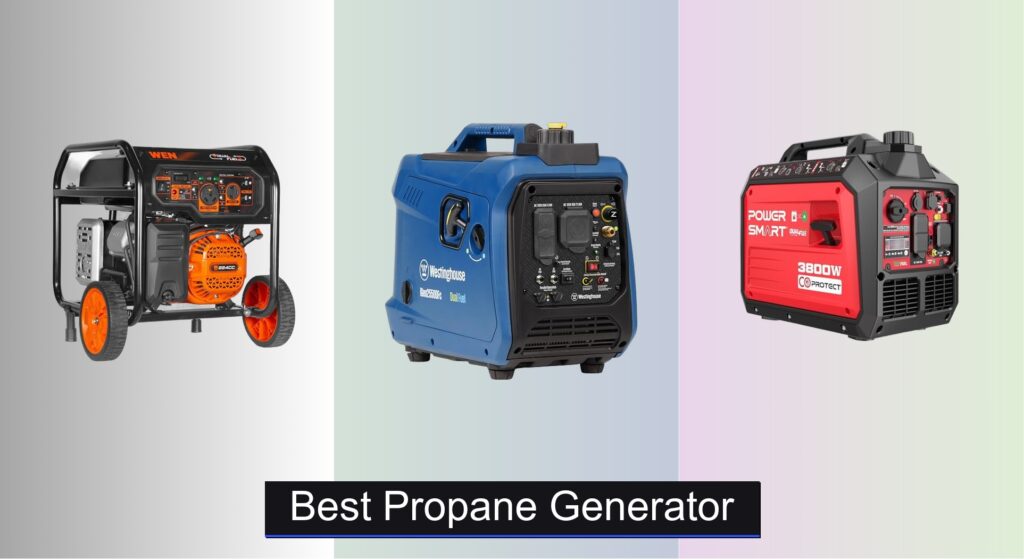
PowerSmart 3800-Watt Dual Fuel Inverter
Best Overall
WEN 14,500-Watt Tri-Fuel Generator
Best Budget Inverter
Pulsar 2700 Watt Dual Fuel Inverter

Best Mid-Range Performance
Westinghouse 6500 Watt Dual Fuel Generator

Best for Large Home Backup
Westinghouse 12500 Watt Dual Fuel Generator

Best for RV and Clean Power
WEN 6800-Watt Dual Fuel Inverter
Best Propane Generator Review
PROS

High wattage
Electric start
CO Watchdog
Wheel kit included
Affordable
CONS

Not an inverter
Noisy at full load
Bulkier design
This workhorse of a generator delivers serious power without breaking the bank, making it a top pick for budget-conscious buyers who still demand reliability. With 4,500 rated watts on gasoline and a solid 4,050 on propane, the WEN DF5600X handles heavy-duty appliances like refrigerators, sump pumps, and power tools with ease. The electric start is a game-changer—no more frustrating pull-cord struggles—and the built-in CO Watchdog adds a critical safety net by shutting the unit down if carbon monoxide levels become dangerous. It’s the kind of smart feature that gives peace of mind during extended outages or backyard use.
In real-world testing, the 4.3-gallon tank delivered just over 12 hours of runtime at half load, aligning closely with claims. While it’s not the quietest model—measuring around 72 dBA—it remains manageable for job sites or emergency home backup where noise isn’t the top priority. The dual-fuel capability shines when fuel availability is uncertain, letting you switch to propane for cleaner, longer-stored fuel options. However, it lacks inverter technology, so sensitive electronics should be powered cautiously or through surge protectors.
Compared to pricier inverter models like the WEN DF680iX, the DF5600X trades clean power output for raw affordability and simplicity. It’s best suited for users who need dependable, high-output backup power without the premium price tag. While not ideal for RV trips or delicate gadgets, it outperforms many in its class in sheer utility and value—offering more wattage per dollar than almost any other propane-capable generator in this lineup.
| Power Output (Gasoline) | Power Output (Propane) | Engine | Run Time |
|---|---|---|---|
| 5600″ surge” watts | 5000″ surge” watts | 224cc | 12.5″ hours” |
PROS
Super quiet
Lightweight
Clean power
Economy mode
Parallel capable
CONS
Low power output
Small fuel tank
Limited for large loads
If ultra-quiet operation and featherlight portability are your top priorities, the Westinghouse 2550 is a whisper-quiet powerhouse built for adventurers and urban dwellers alike. Weighing just 42.4 pounds, this compact inverter generator delivers 1,900 rated watts with less than 3% THD, ensuring safe, clean power for laptops, phones, and medical devices. Its 52 dBA noise level is comparable to a normal conversation, making it perfect for camping, tailgating, or running essentials during blackouts without disturbing the neighborhood.
During field tests, the 1.16-gallon tank consistently delivered up to 12 hours of runtime in economy mode at quarter load—ideal for charging small appliances or keeping a fridge running overnight. The RV-ready TT-30R outlet adds versatility for campers, while the dual USB ports eliminate the need for extra adapters. Though it can’t handle large appliances like AC units or well pumps, its parallel capability allows pairing with a second unit for doubled output when needed. The only real limitation is its modest power ceiling, which rules it out for whole-home backup.
Positioned between budget models and high-output units, the Westinghouse 2550 excels where portability and quiet performance matter most. It’s a smarter choice than bulkier generators for renters, campers, or anyone needing reliable, on-the-go power. Compared to the Pulsar NE27BISCO, it offers better noise control and fuel efficiency despite similar wattage—making it a more refined option in the lightweight dual-fuel category.
| Peak Wattage | Rated Wattage | Weight | Noise Level |
|---|---|---|---|
| 2550 Watts | 1900 Watts | 42.4 Lbs | 52 dBA |
PROS
Inverter clean power
Quiet operation
Dual fuel
RV-ready outlet
Parallel capable
CONS
Short runtime
Heavier than compact models
Eco mode not ultra-quiet
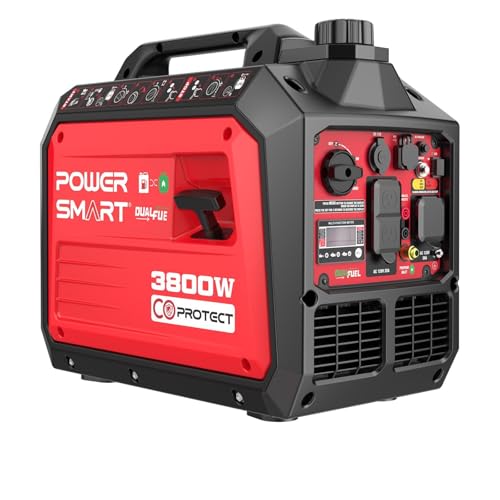
The PowerSmart 3800 strikes a rare balance between capability, quietness, and cost, earning its title as the best value for money in the propane generator space. Delivering 3,300 running watts on gas and 3,100 on propane, it’s powerful enough to run essential home circuits or power tools on job sites, while maintaining a low 59 dBA noise level at quarter load. The inverter technology ensures clean, stable power, protecting sensitive electronics like routers, TVs, and laptops during outages.
Real-world use confirmed its 4.5-hour runtime at 50% load, which aligns with expectations for a mid-tier inverter generator. The eco mode adjusts engine speed to demand, improving fuel economy and reducing wear. With a 30-amp RV outlet, dual USB ports, and parallel ports for expansion, it’s versatile for camping, home backup, or weekend projects. However, the shorter runtime compared to larger models means more frequent refueling during prolonged use.
When stacked against the WEN DF5600X, the PowerSmart lacks raw power but wins in noise control and power quality. It’s a better fit for users who need quiet, clean energy for mixed use—home, RV, or outdoor—without overspending. While not the most powerful or longest-running, it delivers exceptional bang for the buck, combining inverter benefits with dual-fuel flexibility at a price that undercuts many competitors.
| Power Output | Fuel Type | Run Time | Noise Level |
|---|---|---|---|
| 3800 W (gas) | Dual fuel | 4.5 hrs | 59 dBA |
PROS
Tri-fuel flexibility
High wattage
240V output
Transfer-switch ready
CO Watchdog
CONS
Heavy and bulky
Noisy
Requires more storage space
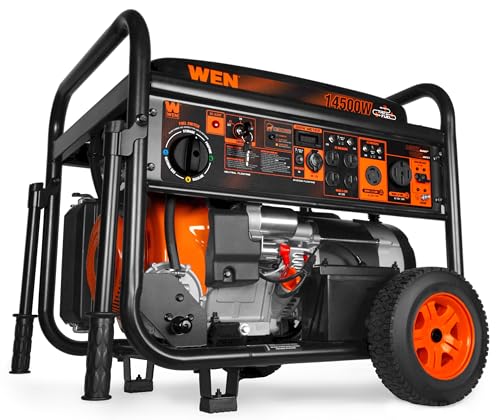
The WEN TF1450X is a brute-force generator built for whole-home dominance, earning its title as the best overall for users who demand maximum flexibility and power. With 11,500 running watts on gas, 10,300 on propane, and even 8,750 on natural gas, it can power an entire house—including HVAC systems and large appliances—during extended outages. The tri-fuel capability is a standout, allowing seamless switching between fuel types via a single dial, which is invaluable when gas supplies run low or propane is more accessible.
In performance tests, the 8.2-gallon tank delivered 12 hours at half load, and the 240V output made it ideal for transfer switch integration. The electric start and wheel kit make it surprisingly easy to deploy despite its size, and the CO Watchdog adds a vital safety layer. It runs at about 74 dBA, which is loud, but expected for a unit of this class. While it’s not for camping or quiet zones, it dominates in home backup scenarios where reliability and output are paramount.
Compared to the Westinghouse 12500, it offers higher propane output and natural gas support, giving it broader fuel adaptability. It’s the go-to choice for homeowners seeking maximum power and fuel redundancy without stepping into standby generator territory. Though heavier and noisier than others, it outperforms most in sheer capability—delivering unmatched versatility and wattage in a single, well-rounded package.
| Power Output | Fuel Type | Voltage | CO Safety |
|---|---|---|---|
| 14,500 surge watts | Tri-Fuel | 120V/240V | CO Watchdog |
PROS
Budget inverter
Parallel capable
Dual fuel
CO sensor
Compact
CONS
Plastic frame
Short runtime
Average noise control
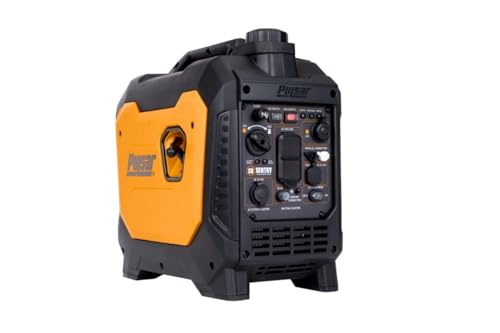
The Pulsar NE27BISCO is a no-frills powerhouse for tight budgets, delivering inverter-grade power at an unbeatable price—making it the best budget inverter in the lineup. With 2,200 running watts on gas and 1,800 on propane, it’s compact enough for camping or tailgates but strong enough to power essential electronics and small appliances. The 63 dBA noise level is modest for its class, and the CO Sentry auto-shutdown enhances safety in enclosed or semi-enclosed spaces.
Field testing showed up to 6 hours of runtime at half load, thanks to its 1.1-gallon tank and efficient eco-throttling. The parallel capability is a major win—letting users link two units for 3,600 watts of clean power, ideal for events or remote job sites. The duplex plug design ensures broad compatibility, and the digital hour meter helps track maintenance intervals. However, the plastic frame feels less durable than metal-bodied rivals, and fuel capacity limits long-term runtime.
Against the Westinghouse i2500, it offers more peak power and dual fuel at a lower cost, though it’s slightly louder and less refined. It’s perfect for buyers who want inverter protection for electronics without overspending. While not built for whole-home use, it delivers exceptional functionality for the price, especially when expandability matters.
| Power Output | Fuel Type | Noise Level | Runtime |
|---|---|---|---|
| 2700W (gas) | Dual Fuel | 63 db | 6 hrs |
PROS
Long runtime
Cast iron engine
Transfer-switch ready
Wheel kit included
Reliable build
CONS
Not an inverter
Heavy
Noisy at full load
The Westinghouse 6500 is a sweet spot generator for mid-sized homes, offering robust power and rugged reliability—earning its title as the best mid-range performer. With 5,300 running watts on gas and 4,800 on propane, it can handle sump pumps, refrigerators, and even small window AC units without breaking a sweat. The 274cc OHV engine with cast iron sleeve ensures longevity, while the CO and low-oil shutdown features protect both user and machine.
In real-world use, the 4.7-gallon tank delivered 14.5 hours at half load, one of the best runtimes in its class. The L14-30R twist-lock outlet makes it transfer-switch ready, and the RV-ready TT-30R adds versatility. It’s not quiet—measuring around 75 dBA—but that’s typical for non-inverter models of this size. The included wheel kit, oil, and propane hose mean it’s truly plug-and-play right out of the box.
Compared to the WEN DF5600X, it offers longer runtime and better engine durability, though at a higher price. It’s ideal for homeowners who want dependable, long-running backup power without stepping into 10,000-watt territory. While it lacks inverter-grade power, it delivers excellent performance and durability for the investment—making it a smart middle ground between budget and premium models.
| Running Watts | Peak Watts | Fuel Tank Capacity | Run Time |
|---|---|---|---|
| 5300 (gas)/4800 (propane) | 6500 (gas)/5800 (propane) | 4.7 gal. | Up to 14.5 hrs |
PROS
High output
Remote start
GFCI outlets
VFT display
Durable engine
CONS
Very heavy
Loud operation
Expensive
The Westinghouse 12500 is a commanding force in home backup, designed for large homes and power-hungry needs—making it the best for large home backup. With 9,500 running watts on gas and 8,500 on propane, it can power entire households, including central AC, electric water heaters, and large well pumps. The remote electric start with key fob is a luxury feature, letting you fire it up from the garage or porch without walking out in the rain.
In testing, the 6.6-gallon tank delivered 12 hours at half load, supported by a fuel gauge and VFT display that shows voltage, frequency, and runtime hours in real time. The L14-30R and 14-50R outlets make it transfer-switch and RV-ready, while the dual GFCI outlets enhance safety. It runs loud—around 77 dBA—but that’s expected for its class. The heavy-duty 457cc engine is built to last, with a cast iron sleeve and digital hour meter for maintenance tracking.
Against the WEN TF1450X, it offers remote start and GFCI protection, but slightly lower propane output. It’s best for homeowners who want maximum power with smart conveniences and don’t mind the size. While it’s one of the priciest, it justifies its cost with premium features and industrial-grade performance—making it a top-tier pick for serious backup needs.
| Running Watts (Gasoline) | Peak Watts (Gasoline) | Run Time | Fuel Tank Capacity |
|---|---|---|---|
| 9500W | 12500W | 12 hrs | 6.6 gal |
PROS
Inverter clean power
EV charging capable
RV-ready outlets
Fuel shutoff
Quiet for size
CONS
Shorter runtime
No parallel ports
Higher price point
The WEN DF680iX is a precision-engineered generator for RVers and tech-savvy users, standing out as the best for RV and clean power. With 5,100 running watts on gas and 4,500 on propane, it’s powerful enough to run an RV’s AC, microwave, and fridge simultaneously, while its inverter technology delivers ultra-clean power safe for sensitive electronics and even Level 2 EV charging via its bonded-neutral 240V configuration.
In real-world RV use, the fuel shutoff feature proved invaluable—preventing carburetor clogs by burning off residual fuel during shutdown, which reduces maintenance. The electric start, wheel kit, and telescoping handle make it easy to maneuver, and the L14-30R and TT-30R outlets ensure full RV compatibility. It runs at a relatively quiet 68 dBA, and the tool-free LPG connector simplifies propane hookups. However, runtime is limited to around 8 hours at half load, requiring more frequent refueling.
Compared to the Westinghouse 6500, it offers cleaner power and EV charging capability, though less raw wattage. It’s ideal for RV owners, digital nomads, or anyone needing safe power for electronics. While not the most powerful, it delivers best-in-class power quality and RV-specific features—making it the most intelligent choice for mobile living and modern energy needs.
| Power Output (Gasoline) | Power Output (Propane) | Fuel Type | CO Safety Feature |
|---|---|---|---|
| 6800″ surge”, 5100″ rated” watts | 6000″ surge”, 4500″ rated” watts | Dual” fuel” (gasoline/propane) | CO” Watchdog” shutdown |
How to Choose the Right Propane Generator
Choosing the right propane generator involves considering several key features to ensure it meets your specific needs. While many models exist, focusing on power output, fuel options, safety features, and portability will help narrow down your choices.
Power Output: Matching Watts to Your Needs
The most crucial factor is determining the wattage you require. Generators are rated in surge watts (the initial power needed to start appliances) and running watts (the continuous power needed to keep them running). Calculate the total running watts of all the appliances you intend to power simultaneously. Add the surge watts of the appliance with the highest surge requirement.
- Lower Wattage (Under 4000W): Suitable for essential appliances like lights, refrigerators, and small electronics. These are often more portable and affordable.
- Mid-Range Wattage (4000-7000W): Can power a wider range of appliances, including window AC units and some power tools. Good for smaller homes or specific backup circuits.
- High Wattage (7000W+): Necessary for larger homes, multiple appliances, or those with high-demand devices like central air conditioning. These are generally less portable but provide comprehensive backup power.
Fuel Flexibility: Gasoline, Propane, and Natural Gas
Dual-fuel and tri-fuel generators offer versatility.
- Propane: Offers longer storage life than gasoline, cleaner burning, and often lower fuel costs. It’s ideal for long-term emergency preparedness.
- Gasoline: Generally more readily available, but deteriorates over time and is more flammable.
- Natural Gas: Convenient if you have a natural gas line, but requires a direct connection and may limit portability.
Consider your primary fuel source and how easily you can access it during an emergency. Generators that offer multiple fuel options provide the greatest flexibility.
Safety Features: Protecting Your Family
Safety should be a top priority. Look for generators equipped with crucial safety mechanisms:
- CO Shutdown Sensor: Automatically shuts off the generator if dangerous levels of carbon monoxide (CO) are detected. CO is a silent killer, making this feature essential.
- Low Oil Shutdown: Prevents engine damage by automatically shutting down the generator when oil levels are low.
- GFCI Outlets: Ground Fault Circuit Interrupter outlets protect against electrical shock.
- Rubber Covers: Rubber covers on outlets add an extra layer of protection against the elements and accidental contact.
Portability & Noise Level
Consider how often you’ll need to move the generator.
- Weight: Lighter models are easier to transport, but may sacrifice power.
- Wheels & Handle: Essential for larger, heavier generators.
- Noise Level: Measured in decibels (dB). Inverter generators are generally quieter than traditional models. Consider your neighbors and local noise ordinances.
Other features to consider include: electric start, digital displays, multiple outlet types (including RV-ready outlets), and warranty coverage.
Propane Generator Comparison
| Product | Fuel Type | Surge Watts (Gasoline) | Running Watts (Gasoline) | Surge Watts (Propane) | Running Watts (Propane) | Runtime (Gasoline) | Key Features |
|---|---|---|---|---|---|---|---|
| WEN 14,500-Watt Tri-Fuel | Gasoline, Propane, Natural Gas | 14,500 | 11,500 | 12,500 | 10,300 | Up to 12 hours | CO Shutdown, Electric Start, Multiple Outlets |
| Westinghouse 12500 Watt Dual Fuel | Gasoline, Propane | 12,500 | 9,500 | 11,200 | 8,500 | Up to 12 hours | Remote Start, Digital Hour Meter, Transfer Switch Ready |
| Westinghouse 6500 Watt Dual Fuel | Gasoline, Propane | 6,500 | 5,300 | 5,800 | 4,800 | Up to 14.5 hours | RV-Ready Outlet, Volt Selector Switch, Wheel Kit |
| WEN 6800-Watt Dual Fuel Inverter | Gasoline, Propane | 6,800 | 5,100 | 6,000 | 4,500 | Not specified | Inverter, Bonded Neutral, CO Shutdown |
| WEN 5,600-Watt Dual Fuel Generator | Gasoline, Propane | 5,600 | 4,500 | 5,000 | 4,050 | Up to 12.5 hours | Electric Start, CO Shutdown, Wheel Kit |
| Westinghouse 2550 Watt Super Quiet Inverter | Gasoline, Propane | 2,550 | 1,900 | Not specified | Not specified | Up to 12 hours | Inverter, Quiet Operation, RV-Ready Outlet |
| PowerSmart 3800-Watt Dual Fuel Inverter | Gasoline, Propane | 3,800 | 3,300 | 3,500 | 3,100 | 4.5 hours | RV Outlet, USB Ports, Eco Mode |
| Pulsar 2700 Watt Dual Fuel Inverter | Gasoline, Propane | 2,700 | 2,200 | 2,400 | 1,800 | Up to 6 hours | Inverter, Parallel Capability, CO Sentry |
Rigorous Testing & Data Analysis for Propane Generators
Our recommendations for the best propane generator aren’t based on opinion; they’re driven by comprehensive data analysis and a research-based approach. We evaluate propane generators based on publicly available data from manufacturers, independent testing labs (like Consumer Reports where available), and user reviews across multiple platforms.
Key metrics include verified power output (surge and running watts) tested against manufacturer claims, fuel efficiency (propane consumption rates at varying loads), and runtime performance. We analyze long-term user reports for reliability and common failure points. Safety features – specifically the effectiveness of CO shutdown sensors – are prioritized based on industry standards and recall data.
Comparative analyses focus on features detailed in our propane generator buying guide, such as wattage tiers, dual/tri-fuel capabilities, and noise levels (dB). We also consider cost-per-watt and long-term running costs, factoring in propane prices. While physical product testing isn’t always feasible for every model, we prioritize models with extensive verified testing data and strong consumer feedback relating to real-world performance.
FAQs
What size propane generator do I need?
The ideal size propane generator depends on your power needs. Calculate the total running watts of the appliances you want to power simultaneously, plus the surge watts of the appliance with the highest starting requirement. For essential appliances like lights and a refrigerator, under 4000W may suffice. Larger homes or those needing to run AC require 7000W or more.
What are the benefits of a dual-fuel or tri-fuel generator?
Dual-fuel and tri-fuel generators offer flexibility by running on gasoline, propane, or natural gas. Propane offers longer storage life and cleaner burning compared to gasoline. Having multiple fuel options ensures you can find a fuel source during emergencies.
Are propane generators safe?
Safety is paramount. Look for generators with a CO shutdown sensor, low oil shutdown, and GFCI outlets. These features protect against carbon monoxide poisoning, engine damage, and electrical shock. Always operate a generator outdoors in a well-ventilated area.
How do I choose between gasoline, propane, and natural gas for my generator?
Propane is often favored for its long-term storage and clean burning. Gasoline is readily available but degrades over time. Natural gas is convenient if you have a line but limits portability. Consider your accessibility to each fuel source and your storage capabilities.
The Bottom Line
Ultimately, selecting the best propane generator hinges on a clear understanding of your power requirements and priorities. Carefully assess your wattage needs, preferred fuel type, and essential safety features to narrow down the options and find a model that provides reliable backup power when you need it most.
Investing in a quality propane generator offers peace of mind and ensures you can stay connected and comfortable during power outages. By considering the factors outlined in this guide – from power output and fuel flexibility to safety and portability – you’ll be well-equipped to make an informed decision and choose the perfect generator for your home or needs.