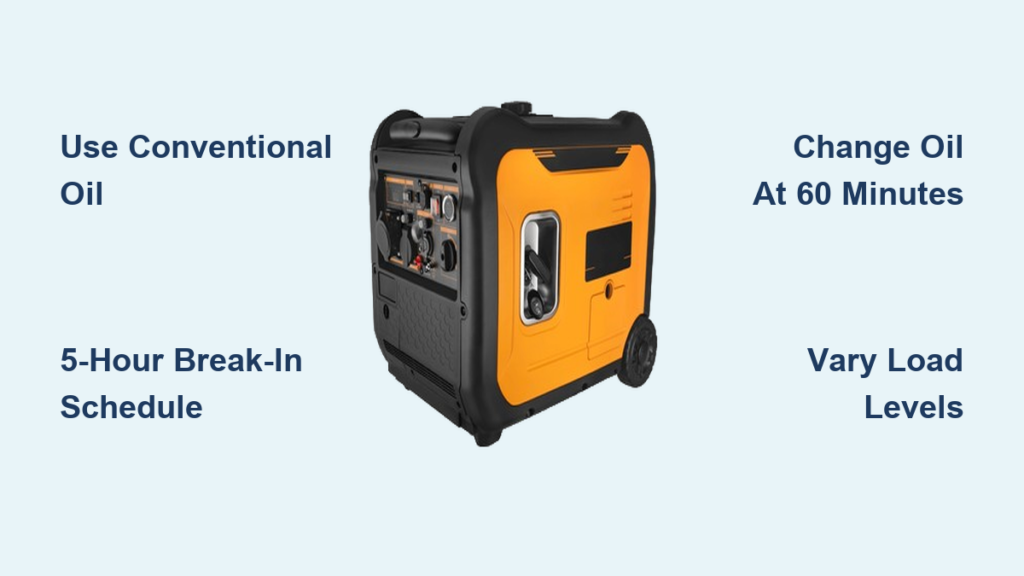
You just unboxed your new inverter generator and the excitement is real. Resist the urge to plug in your RV or power tools immediately. Skipping the break-in process is like flooring a sports car straight off the dealership lot—it sacrifices thousands of hours of engine life and invites costly failures. Properly seating piston rings during the first five hours slashes oil consumption, prevents blow-by fumes, and keeps your warranty intact. This simple routine takes less than a Saturday morning but pays dividends for years. Below, you’ll discover the exact break-in schedules mechanics use, plus critical oil change timing and load tricks most manuals omit.
Required Tools & First Fill Checklist
Skip the generic “tools needed” trap—this is your only shopping list for a flawless break-in. Grab these specific items before firing up your generator:
| Item | Why It Matters | Pro Upgrade Tip |
|---|---|---|
| Conventional 10W-30 oil (1 quart) | Suspends metal debris during break-in | Buy a 6-pack; engines use only 12–20 oz per change |
| Full-synthetic 5W-30 or 10W-30 | Final fill for cooler operation | Switch after break-in for maximum longevity |
| Non-ethanol 91-octane fuel | Prevents carburetor gumming | E10 works if you add SeaFoam (1 oz per gallon) |
| Magnetic dipstick | Captures microscopic metal particles | Secure with oil-proof epoxy—check magnet retention weekly |
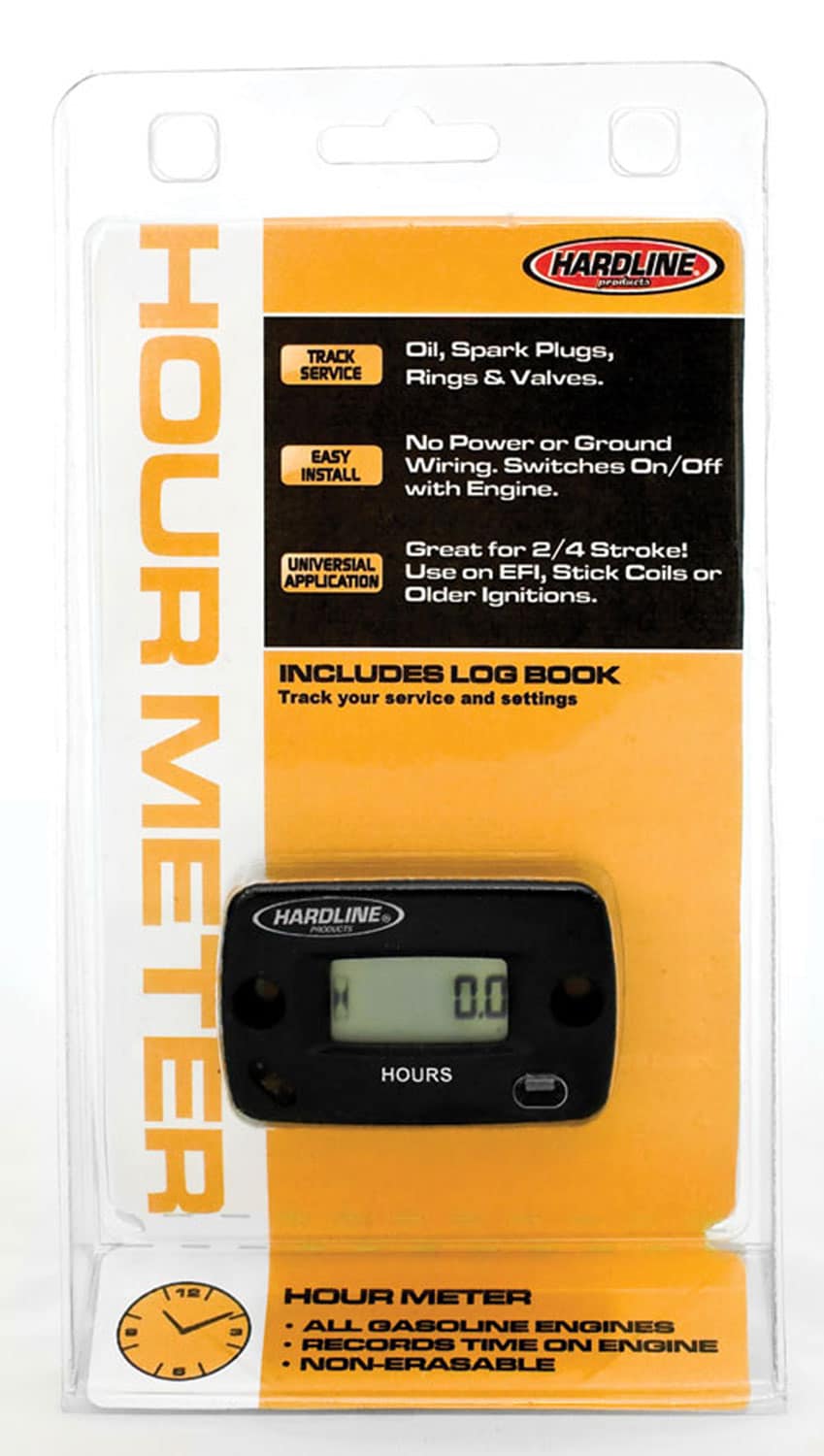
| Inductive hour meter | Tracks precise runtime | Stick-on type ($10) avoids wiring hassles |
| 5/16″ drain hose + pan | Spill-free oil changes | Fits common M10-1.25 drain plugs |
Critical pre-start step: Add conventional oil 2–3 oz below the dipstick’s max mark. Overfilling causes foaming and leaks. For extra protection, pull the spark plug, inject ½ oz of Marvel Mystery Oil into the cylinder, and slowly pull the recoil 10 times to coat cylinder walls. Wait 5 minutes before reinstalling the plug—this pre-lube prevents dry starts that scratch fresh engine surfaces.
Why conventional oil beats “break-in” labeled products
Manufacturers recommend standard high-detergent conventional oil (like Rotella T6) for the first 5 hours—not specialty “break-in” oils. Its superior debris-capturing ability safely flushes microscopic metal particles created during initial wear. Synthetic oil’s slippery nature actually hinders ring seating in this critical phase. Save synthetic for after the final oil change.
Break-In Schedule Options That Actually Work
5-Hour Moderate Routine (90% of Owners)
This balanced approach seats rings without stressing components. Track runtime with your hour meter:
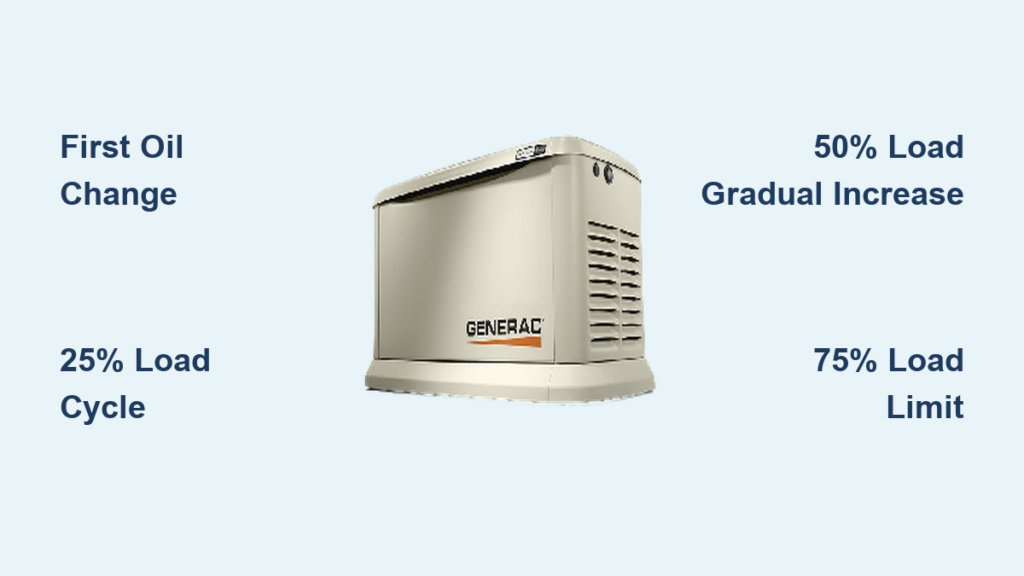
- 0–30 minutes: No-load warm-up. Check for fuel/oil leaks while letting auto-choke disengage. Never skip this step—cold metal expands as it heats.
- 30–60 minutes: Light load (25% of rated watts). Plug in a single LED work light or phone charger. Cycle Eco-throttle on/off every 15 minutes to exercise windings.
- 1–5 hours: Medium load (50–75%). Vary devices: run a space heater for 20 minutes, then a fridge for 30. Critical: Never exceed 75% load in this phase.
- At 5 hours: Shut down while hot, drain oil immediately (expect metallic “sparkles”), and refill with synthetic.
Total oil used: One 20-oz quart. Best for home/RV users prioritizing reliability.
Single-Tank Heavy Load Method (Time-Crunched Users)
Warning: Only attempt this on 2000–3500W units in noise-permitted areas. Fill your tank with non-ethanol fuel, warm the engine for 2 minutes, then apply 75–80% load immediately (e.g., a 2500W heater on a 3500W generator). Run until the tank empties (3–6 hours). Drain conventional oil while hot and switch to synthetic. Ear protection is mandatory—this runs at full throttle.
Aggressive Metal Removal Schedule (Dusty Job Sites)
For contractors working in sandy conditions where debris risks are high:
– 30 min no-load → drain oil (heavy metallic glitter expected)
– 30 min at 200W (e.g., laptop charger) → drain oil
– 60 min at 400W (e.g., drop lights) → drain oil
– 60 min at 80% load → final change to synthetic
Uses only 10 oz of oil from one quart. Changes remove 95% of wear particles before they circulate.
Oil Change Timing: When to Pull the Plug

| Break-In Phase | Oil Type | Change Timing | Visual Clue to Act |
|---|---|---|---|
| First hour | Conventional 10W-30 | After 60 minutes | Oil appears gray with metallic “sparkles” |
| Final break-in | Conventional 10W-30 | At 5 hours | Consistent metallic sheen |
| Post break-in | Full-synthetic 5W-30 | Every 25–50 hours | Oil turns dark brown (not black) |
Never skip the first oil change at 60 minutes. This flushes the heaviest concentration of metal particles from initial wear. Drain oil while the engine is hot—cool oil traps debris in the sump. Expect to see metallic glitter; absence indicates insufficient load during break-in.
Load Management Rules You Can’t Ignore
- The 75% red line: Exceeding 75% of rated watts in the first 5 hours risks overheating valves. For a 3500W generator, max load = 2625W.
- Idle kills rings: Running unloaded for hours creates low cylinder pressure, preventing rings from seating properly. Minimum load = 10% (e.g., a single 100W bulb on a 1000W unit).
- Eco-throttle cycling: Toggle Eco-mode every 15 minutes during medium-load phases. This temperature variation seats rings more evenly than steady-state operation.
- Post break-in minimum: Always run at ≥25% load to prevent wet-stacking (unburned fuel fouling spark plugs).
Real-world load targets
- 1000W generator: Cycle between 200W (phone charger) and 750W (microwave)
- 2200W generator: Alternate 500W (TV) and 1650W (small AC unit)
- 3500W generator: Switch between 800W (refrigerator) and 2600W (well pump)
Fuel & Shutdown Protocol for Longevity
Fuel choice matters more than you think: Non-ethanol 91-octane is ideal for clean combustion. If using E10 gasoline (common at pumps), add SeaFoam (1 oz per gallon) to neutralize ethanol’s moisture-attracting properties. Never run old fuel—ethanol separates from gasoline in 30 days, causing carburetor varnish.
Shutdown sequence that prevents gumming:
1. Close the fuel valve while generator runs
2. Let engine consume residual fuel in the carburetor
3. Stop when it sputters (typically 30–60 seconds)
4. Never shut down with full fuel—this leaves ethanol-rich mixture to corrode components
For storage exceeding 90 days, completely drain the tank and run until dry. Refill with fresh stabilized fuel before next use—old fuel gums within months.
Myth-Busting: What Manufacturers Won’t Tell You
“Modern engines don’t need break-in”
Reality: Precision honing leaves microscopic peaks that must wear down to create proper ring seal. Without early oil changes, metal particles circulate for hours, accelerating wear. Data shows break-in reduces long-term oil consumption by 40%.
“Synthetic oil prevents ring seating”
Reality: Ring seating depends on cylinder pressure—not oil chemistry. Tests confirm identical ring seating with conventional vs. synthetic oil in air-cooled engines. Use conventional only for the first 5 hours, then switch to synthetic for superior high-temperature protection.
“Multiple oil changes are wasteful”
Reality: One quart of oil costs $4. Engine replacement costs $400+. The 10 oz used in aggressive break-in schedules is less than half a quart—cheap insurance against catastrophic failure.
Your 7-Step Break-In Launch Checklist
Follow this exact sequence to avoid rookie mistakes:
- [ ] Verify load limits in your manual—some brands cap break-in at 50% (e.g., Champion Dual-Fuel)
- [ ] Install magnetic dipstick and hour meter before first start
- [ ] Pre-fill oil 2–3 oz below max mark (accounts for residual oil)
- [ ] Pre-lube cylinder (optional but recommended): Inject ½ oz Marvel Mystery Oil via spark plug hole
- [ ] Start engine → run 15 min no-load while checking for leaks
- [ ] Apply 25–50% load for 1 hour → drain oil immediately
- [ ] Apply 50–75% load for 4 hours → drain oil and switch to synthetic
Log oil appearance at each change—metallic glitter should decrease noticeably by the final change. Clean the magnetic dipstick thoroughly during every oil service; persistent heavy glitter after 5 hours indicates abnormal wear.
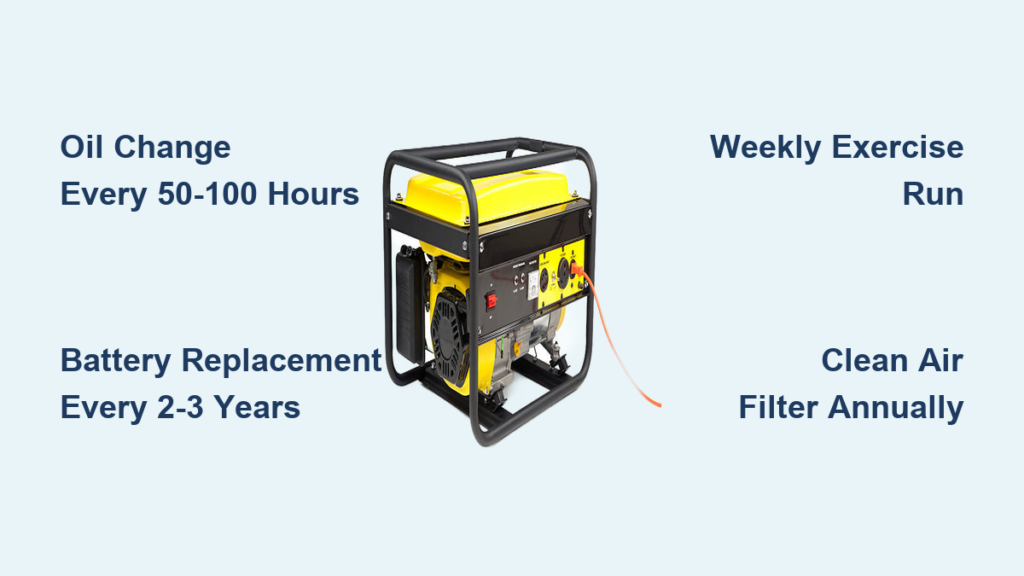
Final Note: Your generator thrives on regular use. Exercise it monthly with a 30-minute run at 50% load to keep fuel fresh and internals lubricated. Stick to 25–50 hour oil intervals (sooner in dusty conditions), and you’ll enjoy whisper-quiet power for 2,000+ hours. That initial 5-hour investment isn’t just procedure—it’s the foundation of a decade-long partnership with your machine.