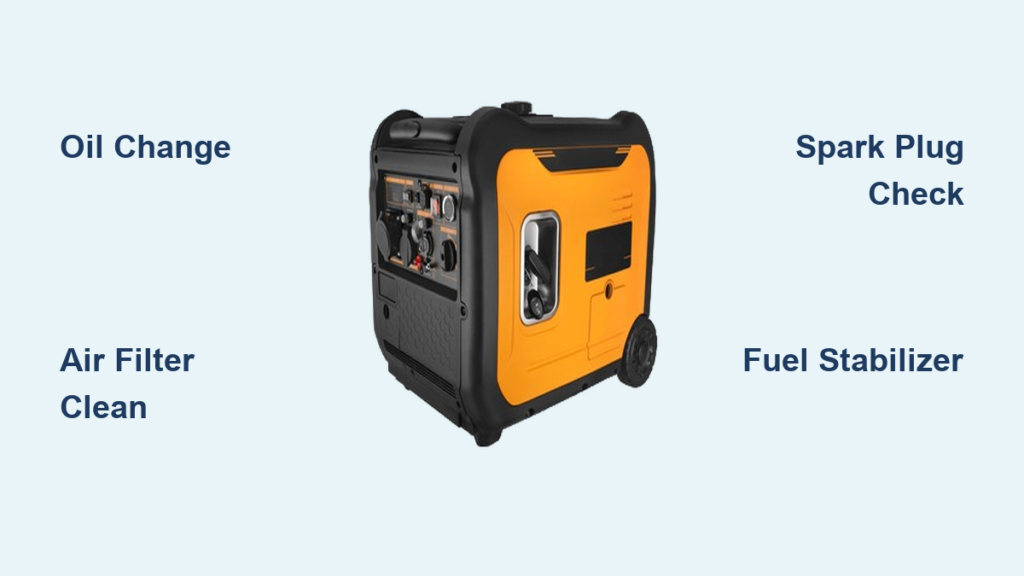
Your inverter generator sits silently in your garage, ready to power essential appliances during a storm or energize your campsite. But neglecting basic care can transform this reliable asset into a costly liability within hours. Field data confirms that proper inverter generator maintenance doubles operational life—from 1,000 to 2,000 hours—saving you replacement costs exceeding $1,000. This isn’t complicated upkeep; it’s systematic care that prevents 90% of failures. You’ll master essential protocols for Honda, Yamaha, and all major brands while avoiding common pitfalls that trigger breakdowns.
Unlike conventional generators, inverter models adjust engine speed to match electrical demand, reducing wear. Yet this efficiency demands precise maintenance—especially for tri-fuel systems. Skip a single oil change, and carbon buildup can seize pistons. Ignore stale fuel, and carburetor varnish leaves you powerless during emergencies. This guide delivers actionable steps verified by manufacturer specifications, ensuring your unit delivers clean, stable power for 10–15 years.
Essential Monthly Maintenance for Inverter Generator Longevity

Dedicate 30 minutes monthly to prevent catastrophic failures. These tasks target wear points that cause 80% of breakdowns, keeping emissions low and runtime high.
Oil Change: The Lifeline of Your Engine
Warm oil flows completely, carrying contaminants away. Follow this sequence:
1. Run generator 5 minutes to warm oil
2. Shut fuel valve and let engine stop naturally
3. Remove side cover (typically 4 screws)
4. Drain 400ml of oil into a pan—tilt unit slightly for full evacuation
5. Refill with SAE 10W-30/40 semi-synthetic (never automotive oil)
6. Check for leaks after restart
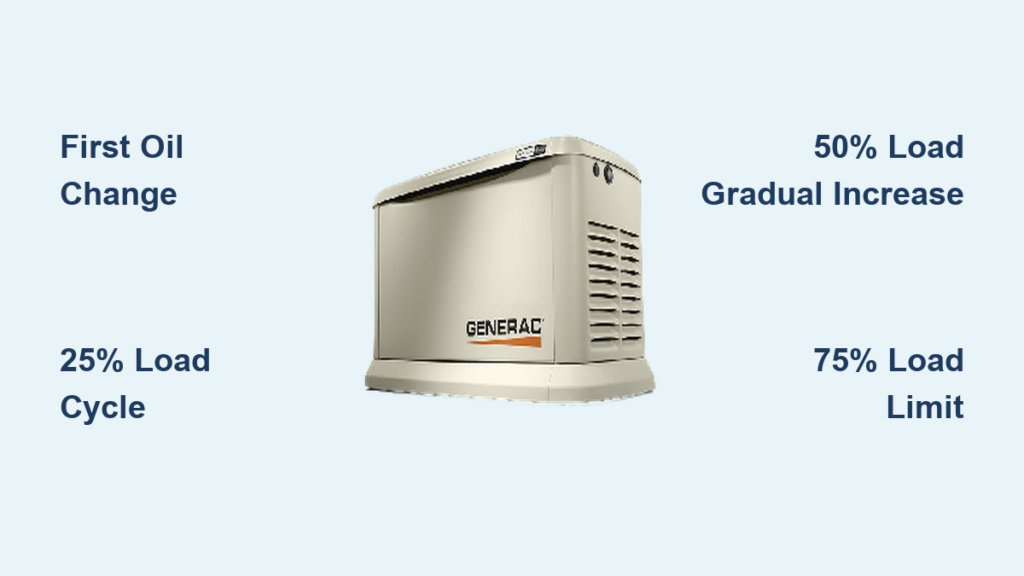
Critical: First change occurs at 8–30 hours (check manual), then every 50–200 hours. Mark your calendar—neglecting this invites piston scoring.
Air Filter Deep Cleaning: Stop Dust Damage
A clogged filter starves the engine, causing overheating and power loss. Foam filters require:
– Washing in warm, soapy water
– Complete air-drying (never compressed air)
– Light saturation with clean oil, then squeezing until drip-free
Paper filters must be replaced when gray—cleaning destroys their micro-fibers. Reinstall correctly; gaps let abrasive dust shred internal components.
Spark Plug Service: Ignition Reliability
Fouled plugs cause hard starts and surging. Remove the plug and:
– Replace if gap exceeds 0.8mm, insulator is cracked, or electrode is worn
– Clean light carbon deposits with a wire brush
– Re-gap to 0.7mm using a feeler gauge
Hand-thread new plugs to avoid cross-threading, then torque to 15–20 N·m. This simple step ensures cold-weather reliability.
Proper Storage Steps to Avoid Inverter Generator Damage
Stale fuel causes 70% of storage-related failures. Tailor your approach to duration.
Short-Term Storage (<30 Days)
For weekend trips:
– Fill tank completely to minimize condensation
– Add ethanol-compatible stabilizer (e.g., Sta-Bil 360 Marine)
– Run 10 minutes to circulate treated fuel
– Cover with breathable fabric in a dry, ventilated space
Long-Term Storage (>30 Days)
For seasonal storage:
1. Add stabilizer and run 15 minutes
2. Shut fuel valve; run until carburetor empties
3. Change oil while warm
4. Spray 2–3 seconds of fogging oil into cylinder via spark plug hole
5. Rotate recoil slowly to coat piston rings
6. Store on wooden blocks (for wheeled models) under a vented cover
Never store with fuel in the carburetor—the ethanol separates, gumming jets irreversibly.
Tri-Fuel Inverter Generator Maintenance: Gas, Propane & Natural Gas
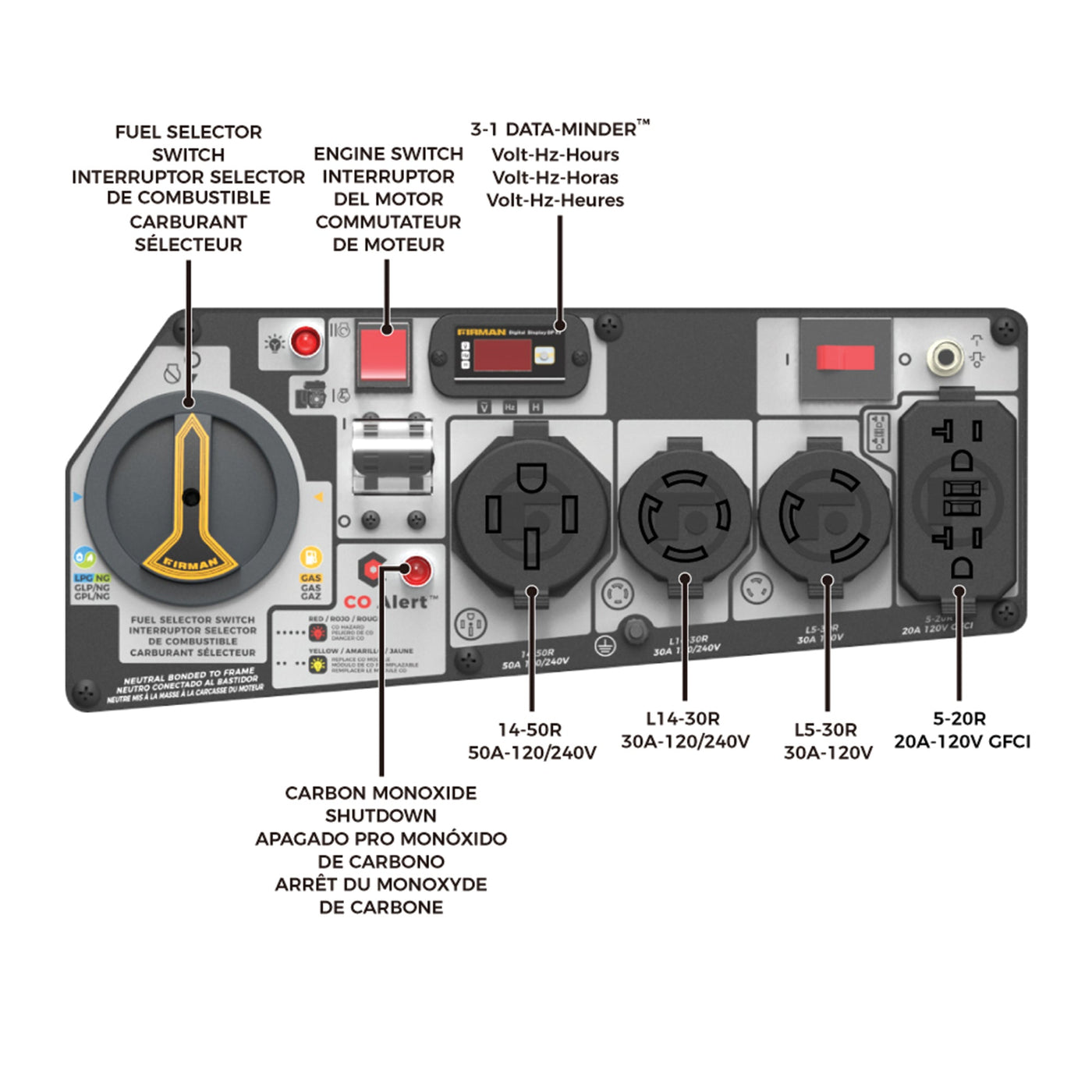
Multi-fuel units need specialized care. Each fuel type attacks different components.
Gasoline System Protocol
Gasoline leaves varnish that clogs jets within 30 days. Combat this by:
– Adding stabilizer to every tank
– Running carburetor dry after each use
– Cleaning jets annually with carb spray
Propane System Safeguards
Propane desiccates rubber hoses. Every 6 months:
– Inspect regulator and lines for cracks
– Test connections with soapy water (bubbles = leak)
– Replace brittle components immediately
After propane use, run 5 minutes on gasoline to flush residue.
Natural Gas Critical Checks
Natural gas requires professional installation but annual DIY verification:
– Monitor pressure regulator (5–7 inches water column)
– Never attempt DIY repairs—call a certified technician
– Exercise fuel selector valve monthly to prevent seal drying
Quick Fixes for Common Inverter Generator Problems
Diagnose issues systematically before calling a technician.
No Start? Check These First
- Oil level (low oil triggers safety shutdown)
- Fuel freshness (discard if >30 days old)
- Spark plug gap (0.7mm ideal)
- Air filter cleanliness (tap paper filters gently)
80% of “no start” cases trace to stale fuel or low oil.
Surging Engine: Immediate Solutions
Rhythmic RPM fluctuations mean:
– Dirty air filter (clean/replace—fixes most cases)
– Partial carburetor blockage (remove bowl, spray jets with cleaner)
– Overload (reduce connected devices to 90% of rated watts)
Low Power Output: Restore Full Capacity
If devices won’t power:
– Verify extension cord gauge (12 AWG for >50 ft runs)
– Clean spark plug and air filter
– Check grounding—poor grounding reduces output by 20%
Safe and Eco-Friendly Inverter Generator Maintenance Practices
Your upkeep impacts safety and the environment. Used oil must go to certified recyclers—never pour on soil. Collect in sealed containers; most auto shops accept it free.
Critical safety steps:
– Always cool the generator fully before servicing (mufflers exceed 300°F)
– Disconnect spark plug wire during maintenance
– Wear nitrile gloves when handling fuel or oil
– Work outdoors to avoid carbon monoxide buildup
Proper inverter generator maintenance cuts emissions by 40%—reducing carbon monoxide and hydrocarbons that endanger your family during outages.
Why Your Inverter Generator Maintenance Log Saves Money
Track these metrics religiously:
– Operating hours (use a $10 hour meter if none built-in)
– Oil change dates and hours
– Filter replacements
– Fuel stabilizer additions
This log proves proper care for warranty claims and boosts resale value by 25%. Spotting patterns—like frequent oil consumption—flags developing issues before they cause $500+ repairs.
When to Call a Pro for Inverter Generator Service

DIY handles 95% of upkeep, but seek professionals for:
– Every 500 hours: Valve adjustments and carburetor rebuilds
– Every 1,000 hours: Inverter module diagnostics (cost: $300–$800)
– Electrical faults: Erratic voltage output or grounding issues
Never open inverter modules—high-voltage capacitors can deliver lethal shocks.
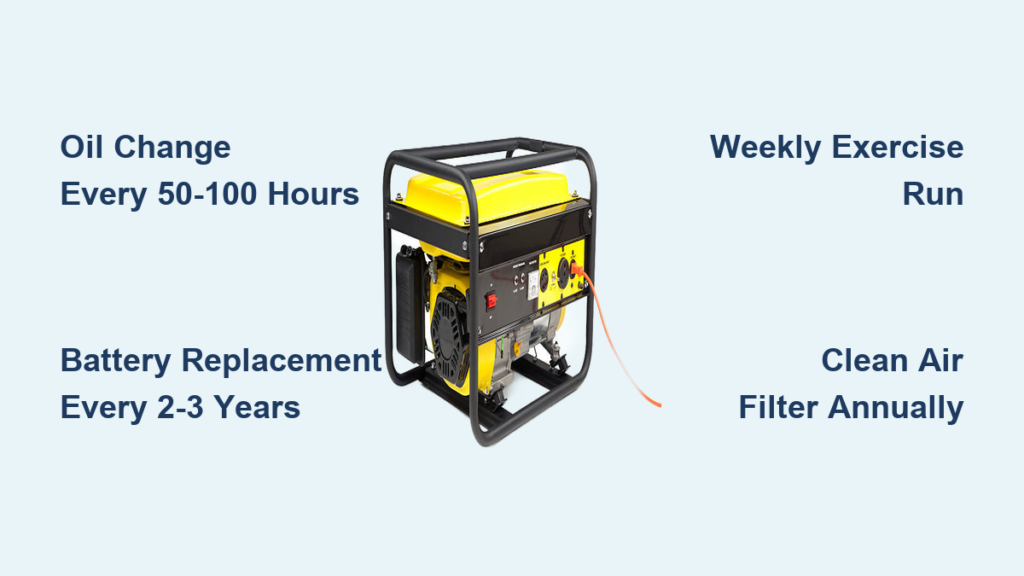
Your Complete Inverter Generator Maintenance Schedule
Follow this tiered approach:
– Before every use: Oil level, air filter visual, fuel leak check
– Every 20–50 hours: Clean air filter, inspect spark plug
– Every 50–200 hours: Oil change (model-dependent)
– Every 100–300 hours: Replace spark plug and air filter
– Every 6 months: Full inspection and storage prep
This inverter generator maintenance routine transforms your unit from a potential liability into a decade-long power partner. That 30-minute monthly investment saves $1,000+ in premature replacements while ensuring clean power for medical devices, refrigerators, and tools when you need it most. Start today—your next storm or camping trip depends on it.
Final Note: Consistent care prevents 90% of failures. Document every service, use genuine parts, and never exceed 90% of rated wattage. Your generator’s longevity is in your hands.