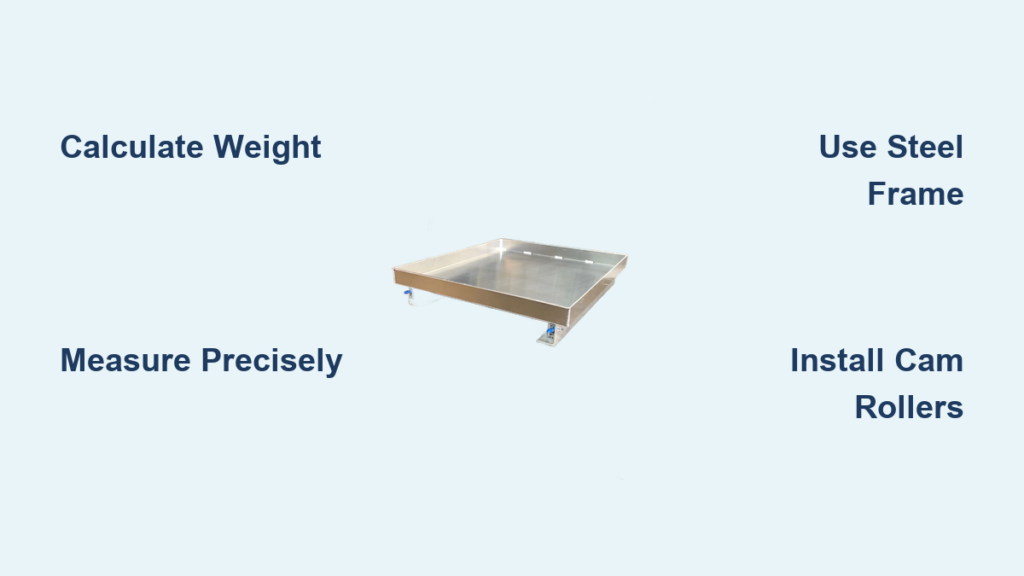
Getting your generator out for maintenance shouldn’t feel like moving a boulder. A properly built slide out transforms cramped RV compartments into accessible workspaces, letting you roll out 100-900 pounds of power with one hand. Whether you’re mounting a lightweight Honda inverter or a 900-pound Powertech 20kW unit, the right design makes all the difference between a reliable system and a frustrating failure.
This guide gives you the exact construction methods tested on real RVs and bus conversions. You’ll learn how to calculate your specific requirements, avoid expensive mistakes, and build a slide out that lasts decades. No more wrestling with heavy generators or paying $1,000+ for commercial units that often fail under vibration.
Calculate Your Exact Generator Slide Out Weight Requirements
Before buying materials, know exactly what you’re supporting. Your slide out must handle more than just the generator’s listed weight—it needs to accommodate fuel, accessories, and mounting hardware while enduring road vibration that multiplies stress.
Light-duty builds handle 100-150 pounds—perfect for portable inverter generators like the Honda EU2200i. These systems can use standard drawer slides but require precise installation. Always add 50 pounds to your generator’s dry weight for fuel, mounting hardware, and accessories.
Medium-duty applications support 500-700 pounds, typical for Onan generators found in most RVs. This demands steel cam rollers or I-beam systems that handle vibration without binding. A 700-pound generator actually stresses your system like 1,000 pounds during travel due to road impacts.
Heavy-duty systems manage 900+ pounds for Powertech 20kW units and similar commercial generators. These require robust steel construction with precision bearings—never attempt this with standard drawer slides. Warning: Underestimating weight is the #1 cause of slide out failure. Always measure your generator’s actual weight, not the brochure specification.
How to Verify Your Generator’s True Weight
Weigh your generator with a certified scale—not a bathroom scale—after adding fuel and accessories. Then apply the 1.5x safety factor: if your generator weighs 600 pounds, design for 900 pounds. Road vibration creates dynamic loads that exceed static weight significantly.
Take Critical Measurements Before Cutting Any Metal
One millimeter of error turns your slide out into an expensive paperweight. Precision measurements prevent binding, misalignment, and dangerous travel hazards.
Measure generator dimensions including all protrusions—handles, fuel caps, and exhaust pipes add critical inches. Add 2 inches minimum clearance on all sides to prevent interference with compartment walls. A generator that rubs against the frame during extension will eventually damage both components.
Assess storage space limitations by measuring interior compartment dimensions at multiple points. Account for door seals, wiring, and plumbing that eat into usable space. Check door swing clearance—some slides need to clear 180-degree door openings without obstruction.
Determine Your Exact Extension Needs
Most generators require 75% extension for complete maintenance access. Measure how far you need to pull out your unit to reach oil drains, air filters, and control panels. Pro tip: Place your generator on cardboard, mark maintenance access points, then measure how far you need to extend for comfortable service.
Build a Steel Frame That Won’t Twist Under 700+ Pounds

1-inch square steel tubing forms the backbone of reliable generator slide outs—it’s strong, affordable, and forgiving for home builders. Aluminum extrusion costs three times more and saves weight but requires professional fabrication for heavy loads.
Cut steel tubing to exact specifications using a metal chop saw, not an angle grinder. Deburr all cuts—sharp edges destroy slide mechanisms over time. A twisted frame binds slides and destroys bearings, so clamp everything square on a flat surface before welding.
Weld Frame Corners Perfectly Square
Use a carpenter’s square and diagonal measurements to verify perfect 90-degree angles before welding. Equal diagonal measurements guarantee square installation—uneven corners cause binding under load. Critical step: Test-fit your generator on the frame before final welding to verify clearances and extension range.
Install Slide Mechanisms With 1/16-Inch Precision
Your choice here determines whether your slide out operates smoothly or binds catastrophically. Heavy-duty drawer slides handle 150-500 pounds per pair but fail under vibration with heavier units. Steel sealed cam rollers support 700+ pounds effortlessly and self-clean debris as they roll.
Mark track locations using precise measurements from your drawings. Double-check diagonals—equal diagonal measurements guarantee square installation. Drill mounting holes undersized initially; you can enlarge them for adjustment, but you can’t make holes smaller.
Test Slide Operation Before Final Tightening
Make micro-adjustments until movement feels effortless with no binding points. Warning: Even 1/8-inch height difference creates binding under load. Locking mechanisms must engage positively in both extended and retracted positions—test under actual generator weight, not empty.
Mount Your Generator with Vibration-Reducing Isolation

Your generator mount determines both safety and vibration levels during operation. Position the generator with heavy components like the engine toward the slide’s center of gravity for optimal weight distribution.
Use rubber isolation mounts between generator and frame—they reduce vibration transfer by 80% and prevent frame fatigue. Install multiple restraint points for travel; ratchet straps work temporarily, but custom brackets look professional and never loosen during road vibration.
Maintain Complete Service Access
A beautiful slide out that’s impossible to service is worthless. Plan flexible connections for fuel lines, exhaust, and electrical—rigid connections fail under vibration and thermal cycling. Ensure 6 inches minimum clearance around the generator for cooling airflow; poor ventilation kills generators faster than any mechanical issue.
Prevent Common Slide Out Failures Before They Happen
Binding during extension usually indicates track contamination or misalignment. Clean tracks thoroughly and check for bent components. V-groove cam roller systems self-clean better than standard tracks but still require monthly cleaning during active use.
Sagging under load suggests weight rating exceeded or worn components. Verify actual load versus slide rating and inspect mounting points for stress cracks. Critical fix: Add cross-bracing to your frame if sagging occurs—it’s easier to reinforce early than replace the entire system.
Save $800+ Compared to Commercial Slide Systems
Steel frame materials cost $50-75 for most applications—add 20% for waste and mistakes. Slide mechanisms range from $75-200 depending on load requirements: drawer slides cost $75-125, cam roller systems $100-200. Hardware and fasteners add $25-50 including grade-8 bolts, washers, and locking nuts.
Total Project Cost Breakdown
Most DIY builders already own basic tools like drills and measuring equipment. Factor in $50-100 for cutting discs and welding wire if needed. Your complete system will cost $200-400—significantly less than $1,000+ commercial units that often fail under vibration. Pro tip: Start with a light-duty slide for your first build to practice techniques before tackling heavy generators.
Follow Safety Protocols That Prevent Generator Missiles
Travel safety is non-negotiable—always verify slide locks engage before moving. A loose 700-pound generator becomes a deadly missile in an accident. Install redundant locking mechanisms: primary locks plus secondary safety pins that provide visual confirmation.
Operational safety requires adequate ventilation when running—install CO detectors in living areas. Carbon monoxide kills silently, and generator exhaust contains lethal concentrations. Critical rule: Never run your generator with the slide partially extended inside an enclosed space.
Maintain Your Slide Out for Decades of Trouble-Free Use
Clean tracks monthly during active use—standard tracks collect debris quickly while V-groove systems self-clean better. Lubricate rollers every 3-6 months with dry lubricants that won’t attract dirt; wet lubes collect debris that causes binding.
Inspect fasteners quarterly—vibration loosens bolts and can cause catastrophic failure. Check roller condition annually; flat spots from static loading indicate replacement needed before complete failure. Repaint scratches immediately to prevent rust; touch-up paint prevents costly frame replacement down the road.
Your generator slide out should last the life of your RV. Build it right the first time with precise measurements, proper materials, and safety-focused design, and you’ll never dread generator maintenance again. The $200 investment in a DIY slide out saves thousands compared to commercial alternatives while giving you complete confidence in your system’s reliability.