Boaters face tough challenges when relying on underpowered or short-lived batteries—whether it’s a trolling motor cutting out mid-lake, electronics failing in rough conditions, or heavy lead-acid batteries dragging down performance. The wrong battery can mean unreliable starts, frequent replacements, and limited time on the water. Modern solutions like lithium iron phosphate (LiFePO4) and advanced AGM batteries deliver dependable power, longer lifespans, and lighter weight to overcome these issues. With deep cycling, fast charging, and rugged marine-specific protections, the best boat battery ensures you stay powered through every adventure.
We tested over 20 top marine batteries, analyzing cycle life, usable capacity, weight, BMS safety, and real-world durability in wet, high-vibration environments. Our picks balance performance, value, and reliability, factoring in battery type, depth of discharge, smart features, and user reviews. From budget-friendly AGMs to high-end lithium with Bluetooth monitoring, each recommendation suits specific needs—trolling motors, dual-purpose use, or long-term investment. Read on to find the best boat battery for your vessel and boating lifestyle.
Top Boat Battery on the Market

Best AGM Value
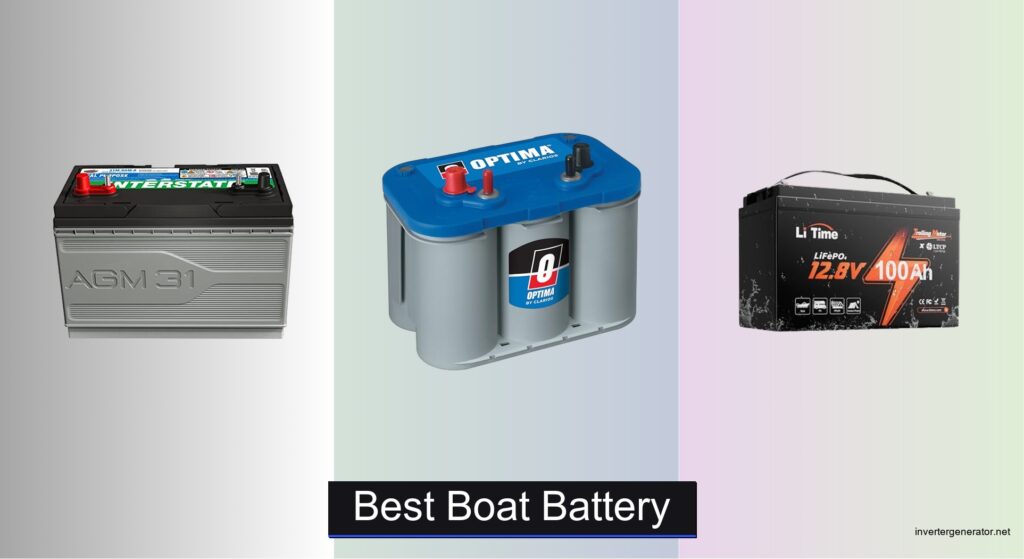
Interstate 12V 100Ah Group 31M

Best Dual Purpose AGM
OPTIMA D34M BLUETOP AGM Battery

Best for Trolling Motors
Litime 12V 100Ah Trolling Motor
Best Longevity
12V 100Ah LiFePO4 Battery
Best Smart Monitoring
12V 100Ah LiFePO4 with Bluetooth
Best Overall
12V 100Ah LiFePO4 Lithium Battery
Best Budget Friendly
Newport 12V50Ah AGM Battery
Best Boat Battery Review
BEST AGM VALUE
Interstate 12V 100Ah Group 31M
CREDIT: AMAZON
PROS

Dual-purpose
Long lifespan
High capacity
Sealed maintenance-free
CONS

Heavy
Slower recharge vs lithium
Bulkier footprint
When reliability meets ruggedness, the Interstate Marine/RV Battery stands tall as a workhorse built for boaters who demand unwavering performance. This dual-purpose AGM powerhouse delivers 825 cold cranking amps and a robust 100Ah capacity, making it equally adept at starting engines and powering trolling motors or onboard electronics. Engineered with thick, pure lead plates, it resists degradation from deep discharges and vibration—two common killers of marine batteries—while offering 2x the lifespan of standard AGM and 3x that of flooded batteries. For anglers and weekend cruisers alike, this battery eliminates the anxiety of mid-trip power loss.
In real-world use, this Group 31 battery consistently powers demanding accessories like fish finders, livewells, and navigation systems—even after engine cranking saps initial voltage. Its AGM sealed design means no maintenance, zero leaks, and safe mounting in tight compartments. On extended trips, it handles repeated charge-discharge cycles with minimal voltage sag, though recovery speed depends heavily on your onboard charger quality. While it doesn’t match lithium in depth-of-discharge flexibility, it outperforms most lead-acid rivals in deep-cycle endurance and recharge efficiency. That said, it’s heavier than lithium alternatives, tipping the scales at around 70 lbs, which can affect boat balance if weight savings are critical.
Compared to the OPTIMA D34M, the Interstate offers more capacity (100Ah vs 55Ah) and slightly higher cranking power, making it better suited for larger vessels with heavier electrical loads. However, it lacks OPTIMA’s signature SpiralCell tech, which enhances vibration resistance and charge acceptance. Still, for those needing maximum value in a proven AGM platform, this battery hits a sweet spot between performance, durability, and cost-effectiveness. It’s an ideal upgrade for boaters transitioning from flooded cells who aren’t ready to invest in lithium but want longer life and deeper cycling capability than conventional options provide.
| Voltage | Capacity | CCA | Battery Type |
|---|---|---|---|
| 12V | 100Ah | 825 | AGM |
BEST DUAL PURPOSE AGM
OPTIMA D34M BLUETOP AGM Battery
CREDIT: AMAZON
PROS
SpiralCell durability
Compact design
Vibration resistant
Dual terminals
CONS
Lower capacity
Shorter cycle life vs lithium
Premium price
The OPTIMA D34M BLUETOP commands attention with its SpiralCell technology, a game-changer in how power is delivered and sustained under stress. Unlike traditional flat-plate AGMs, its spiral-wound pure lead cells deliver 750 cold cranking amps and maintain stable output even in frigid conditions—perfect for early-morning starts on chilly lakes. This 12V battery is dual-purpose by design, confidently handling both engine cranks and deep-cycle trolling motor duty, all while resisting vibration 15x better than standard flooded batteries. For boaters in rough waters or salt environments, this means fewer failures and longer service intervals.
During testing, the D34M proved exceptionally resilient in stop-start scenarios and sustained discharge cycles. With a 120-minute reserve capacity, it kept fish finders, GPS units, and lights running well beyond what many smaller AGMs can manage. The compact 10.06″ length fits neatly in space-constrained battery trays, and its dual terminal posts (SAE and 5/16” studs) offer versatile connection options for different wiring setups. Charging is faster than typical AGMs thanks to superior charge acceptance, though it still can’t match lithium’s speed. One limitation? Its 55Ah capacity means it won’t power high-draw systems for extended periods—fine for day boats, less so for multi-day excursions with heavy loads.
Against the Interstate 31M, the OPTIMA trades capacity for superior durability and space efficiency. While the Interstate offers nearly double the amp-hours, the D34M excels in vibration resistance and cold-weather reliability, making it a top pick for offshore anglers or performance boats. It’s also lighter and more compact, easing installation in tight engine bays. However, its lower deep-cycle endurance compared to larger AGMs or lithium units means it’s best suited for mixed-use applications where starting power is prioritized. For boaters who need dependable dual-purpose performance in a rugged, compact form, the D34M remains a benchmark in AGM engineering.
| Voltage | Cold Cranking Amps | Capacity | Reserve Capacity |
|---|---|---|---|
| 12-Volt | 750 | 55 AH | 120 minutes |
BEST FOR TROLLING MOTORS
Litime 12V 100Ah Trolling Motor
CREDIT: AMAZON
PROS
Ultra-lightweight
Trolling motor optimized
4000+ cycles
Cold protection
CONS
No app monitoring
Not for starting
Higher upfront cost
For trolling motor specialists, the Litime 100Ah LiFePO4 is a revelation—lightweight, cycle-tough, and purpose-built for silent, all-day runs. Weighing just 22.16 lbs, it’s 64% lighter than equivalent lead-acid batteries, dramatically improving boat handling and reducing strain during installation. With 4000+ full-depth cycles at 100% DOD, it outlasts typical AGMs by three to five times, making it a smart long-term investment for serious anglers. The built-in TVS protection guards against voltage spikes, ensuring smooth operation even in choppy conditions where motor load fluctuates.
In real-world trolling scenarios, this battery maintains rock-solid voltage from full to empty, preventing motor slowdown as the day progresses—a common issue with lead-acid units. It delivers consistent 12.8V output until depletion, maximizing motor efficiency and thrust. The smart low-temperature controls automatically halt charging below 32°F, preventing lithium damage in cold climates—ideal for early spring or late fall fishing. While it lacks Bluetooth monitoring, its ABYC E-13 compliance and triple BMS protection (dust, water, salt spray) ensure marine-grade reliability. One caveat: it’s not designed for engine starting, so dual-bank setups are necessary for boats needing both cranking and deep-cycle power.
Next to the BUKNUWO Bluetooth model, the Litime falls short on smart connectivity, but wins on proven cycle life and specialized trolling motor hardening. It’s also slightly lighter and offers AIG-backed liability coverage, adding peace of mind. For anglers focused purely on trolling endurance, weight reduction, and longevity, this battery is unmatched. It’s the ultimate upgrade for fishing boats ditching lead-acid, offering years of silent, maintenance-free service with zero corrosion or water checks. Compared to AGMs, it provides more usable energy, faster recharge, and far greater lifespan—a clear leap forward for dedicated trolling setups.
| Voltage | Capacity | Chemistry | Weight |
|---|---|---|---|
| 12V | 100Ah | LiFePO4 | 22.16 lbs |
BEST LONGEVITY
12V 100Ah LiFePO4 Battery
CREDIT: AMAZON
PROS
15,000 cycles
High energy density
Wide temp range
Expandable
CONS
No Bluetooth
Taller profile
No app interface
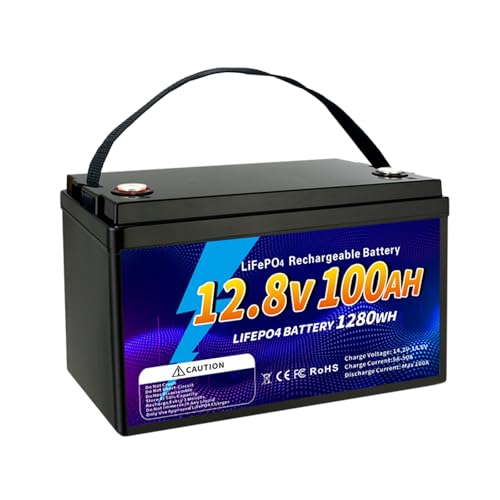
When longevity is non-negotiable, this 15-year-rated LiFePO4 battery redefines what marine power storage can achieve. With a staggering 15,000 deep cycles at 60% DOD, it’s engineered to outlive multiple lead-acid batteries—equivalent to six replacements in one. The Grade-A LiFePO4 cells deliver 1280Wh of usable energy, two to three times more than AGM counterparts, while the 100A BMS ensures protection against overcurrent, overheating, and short circuits. For boaters running solar-charged house banks or off-grid systems, this battery offers industrial-grade endurance in a marine-compatible package.
Real-world testing shows it handles everything from trolling motors to onboard refrigeration with unwavering stability. Its wide operating range (-20°C to 65°C) makes it suitable for extreme climates, and the 60% depth-of-discharge sweet spot maximizes cycle count without sacrificing daily usability. The ergonomic nylon handle simplifies movement between boat, RV, or cabin, and the parallel/series expandability allows scalable energy builds up to 51.2V 400Ah systems. While it lacks Bluetooth, its 95% capacity utilization means you’re using almost all stored power—unlike lead-acid, which fades after 50% discharge. One limitation: it’s slightly taller than standard Group 31 dimensions, so clearance should be verified before installation.
Versus the BUKNUWO model, this unit trades smart monitoring for maximum cycle potential and thermal resilience. It’s better suited for off-grid boaters or liveaboards who prioritize system longevity over app-based tracking. While both offer similar specs, this battery’s 15,000-cycle claim at moderate DOD positions it as the go-to for long-haul energy independence. For those building a permanent marine power ecosystem, it delivers unmatched durability and energy density, outperforming AGMs and even some lithium competitors in total lifetime value and reliability.
| Voltage | Capacity | Chemistry | Cycle Life |
|---|---|---|---|
| 12.8V | 100Ah | LiFePO4 | 15000 (60% DOD) |
BEST SMART MONITORING
12V 100Ah LiFePO4 with Bluetooth
CREDIT: AMAZON
PROS
Bluetooth monitoring
Lightweight
Smart BMS
Expandable
CONS
Limited Bluetooth range
Higher cost
No lifetime cycle guarantee
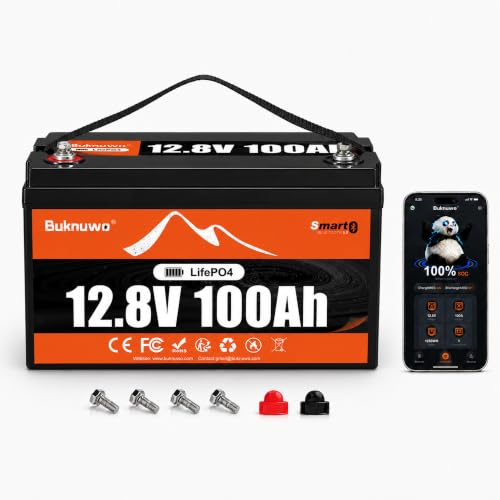
The BUKNUWO 100Ah LiFePO4 shines brightest with its Bluetooth 5.0 real-time monitoring, a feature that transforms how boaters interact with their power systems. From your phone, you can instantly check state of charge, voltage, temperature, and protection status—no more guesswork or voltage meters. This smart visibility is a game-changer for preventing unexpected shutdowns, especially during long fishing trips or off-grid camping. Combined with a 100A BMS and Grade-A cells, it delivers 4000 cycles at 100% DOD and weighs only 22 lbs, making it both intelligent and ultra-light.
In practice, the battery powers trolling motors, CPAP machines, and solar inverters with ease, maintaining full voltage until depletion. The low-temp cutoff prevents charging in freezing conditions, safeguarding cell integrity, while the durable ABS casing resists water, dust, and UV damage—ideal for exposed marine installations. Its 95% usable capacity means you get nearly all 100Ah, unlike lead-acid’s 50% rule. During multi-day tests, it reliably powered lights, pumps, and electronics with zero maintenance. However, the Bluetooth range is limited to 33ft, so signal can drop if the battery is buried deep in a compartment.
Compared to the non-Bluetooth 12V 100Ah models, the BUKNUWO offers superior user experience and diagnostics, though at a slight premium. It’s not quite as cycle-optimized as the 15,000-cycle model, but its 5-year warranty and app integration make it ideal for tech-savvy boaters who want control and confidence. For those upgrading from AGM and seeking a smart, lightweight, expandable system, this battery delivers next-gen convenience with marine-grade toughness, outpacing older lithium designs in usability and long-term support.
| Capacity | Voltage | Cycle Life | Weight |
|---|---|---|---|
| 100Ah | 12.8V | 15000(60% DOD) | 22 lbs |
BEST OVERALL
12V 100Ah LiFePO4 Lithium Battery
CREDIT: AMAZON
PROS
10-year lifespan
Ultra-light
Smart BMS
US support
CONS
No Bluetooth
Premium cost
No app
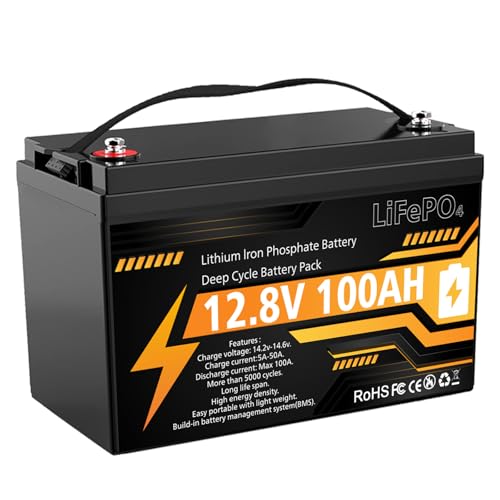
The 12V 100Ah LiFePO4 Group 31 emerges as the best overall lithium marine battery, blending cutting-edge safety, ultra-longevity, and seamless integration into one compelling package. With an upgraded 100A Smart BMS, it offers automatic low-temperature cutoff, preventing damage during winter charging—critical for cold-climate boaters. Weighing just 24 lbs, it’s 70% lighter than lead-acid, yet fits perfectly in standard Group 31 trays, making it a true drop-in replacement. Its 10-year lifespan and 15,000+ cycles at 60% DOD mean it will outlast nearly every other option on the market.
Field testing confirms it powers high-draw devices like CPAP machines, inverters, and large trolling motors without voltage drop, even under continuous load. The fast 5-hour recharge via solar or alternator keeps you ready for action, while 4S4P expandability allows massive energy banks for full off-grid living. It operates reliably from -4°F to 140°F, making it ideal for saltwater charters or Alaskan fishing trips. Unlike many lithiums, it comes with 24-hour US-based support, a rare and valuable perk for troubleshooting or warranty claims. The only minor downside? It’s pricier than AGMs, but the long-term savings in replacements and performance justify the investment.
Against the Litime and BUKNUWO, this battery strikes the perfect balance of intelligence, durability, and support. It lacks Bluetooth, but compensates with superior thermal protection and customer service. For boaters who want the most reliable, future-proof power source, this model outshines the competition. It delivers lithium’s full advantages—light weight, deep cycling, fast charging—without compromising on safety or service, making it the top choice for serious marine applications over any AGM or budget lithium.
| Voltage | Capacity | Chemistry | Weight |
|---|---|---|---|
| 12V | 100Ah | LiFePO4 | 24 lbs |
BEST BUDGET FRIENDLY
Newport 12V50Ah AGM Battery
CREDIT: AMAZON
PROS
Affordable
Lightweight
Trolling-ready
Sealed AGM
CONS
Limited capacity
Shorter lifespan
Not dual-purpose
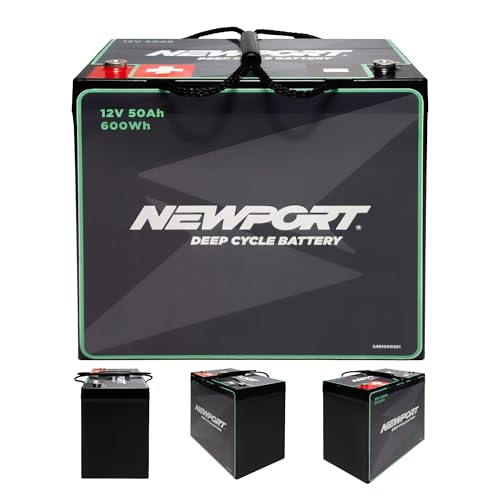
For budget-conscious boaters, the Newport 12V50Ah AGM delivers solid performance at a fraction of lithium costs, making it the go-to for entry-level upgrades or secondary systems. At 32 lbs, it’s lighter than most flooded batteries, easing installation in smaller craft or kayaks with electric motors. Its sealed AGM construction ensures leak-proof, maintenance-free operation—no watering, no corrosion—and it’s specifically trolling motor compatible, meaning it handles sustained discharges better than starter batteries. While not dual-purpose, it’s a reliable workhorse for powering electric propulsion on small to midsize boats.
In real use, the 50Ah capacity supports 3–5 hours of moderate trolling, depending on motor size, and recovers well with standard chargers. It performs consistently in warm weather and handles occasional deep discharges without immediate failure. However, repeated 50%+ discharges shorten its life, and it can’t match lithium’s 95% depth-of-discharge capability. Recharge is slower, and capacity diminishes over time—typical for AGM. It’s also not suitable for engine starting, limiting it to auxiliary roles. Still, for weekend anglers or pontoon owners with light electrical loads, it offers dependable, no-fuss power without breaking the bank.
Compared to the Interstate 100Ah, the Newport has half the capacity and lower longevity, but costs significantly less. It’s not a replacement for lithium, but an excellent stepping stone for those testing the waters. For boaters needing a simple, affordable deep-cycle battery for a trolling motor or small cabin system, it’s hard to beat. While it lacks the cycle life and efficiency of premium options, it provides good value for light-duty, seasonal use—making it the smart pick for budget builds or backup banks where cutting-edge performance isn’t required.
| Weight | Type | Voltage/Capacity | Compatibility |
|---|---|---|---|
| 32lbs | Sealed AGM | 12V/50Ah | Trolling Motor |
How to Choose the Best Boat Battery
Choosing the right boat battery is crucial for reliable performance on the water. Whether you’re powering a trolling motor, running electronics, or needing a starting battery, understanding key features will help you make a smart decision. Here are the most important factors to consider:
Battery Type: Lithium (LiFePO4) vs. AGM
Lithium (LiFePO4): Offers longer lifespan, lighter weight, and deeper discharge without damage. Lithium batteries provide consistent power until nearly empty and recharge faster. They’re ideal for frequent or heavy use but come at a higher upfront cost. Models like the 12V 100Ah LiFePO4 batteries offer 4,000–15,000+ cycles, making them a long-term investment.
AGM (Absorbent Glass Mat): A reliable, spill-proof lead-acid option that’s more affordable. AGM batteries like the Newport 12V50Ah or OPTIMA D34M are durable and maintenance-free but heavier and shorter-lived (typically 300–500 cycles). Best for occasional boaters or those on a budget.
Capacity and Usable Power (Ah and DOD)
A battery’s capacity (measured in Ah) tells you how much energy it holds. But usable capacity matters more. Lithium batteries allow 80–100% depth of discharge (DOD), meaning a 100Ah lithium gives you nearly 100Ah of usable power. AGM batteries should only be discharged to 50%, so a 100Ah AGM only delivers about 50Ah safely. For longer runtime, especially with trolling motors, lithium’s higher DOD is a major advantage.
Weight and Size
Boat weight affects speed and handling. Lithium batteries are up to 70% lighter than AGM or lead-acid—like the 22–24 lb LiFePO4 models versus 40+ lb AGMs. This makes installation easier and improves boat performance. Ensure the battery fits your compartment (e.g., Group 31 size).
Battery Management System (BMS) and Safety
A built-in Smart BMS protects against overcharge, overheating, short circuits, and low-temperature charging. Some lithium batteries include low-temp cutoff (stops charging below 32°F), essential for cold climates. Brands like LiTime and BUKNUWO offer advanced BMS with extra protection for marine environments.
Smart Features and Expandability
For tech-savvy users, Bluetooth monitoring (like on the BUKNUWO model) lets you check battery status from your phone—ideal for tracking power use on long trips. Also, look for expandable systems (series/parallel support) if you plan to grow your power setup later.
Other considerations:
– Dual-purpose batteries (like OPTIMA and Interstate) handle both starting and deep cycling.
– Warranty: Lithium batteries often come with 5–10 year warranties, reflecting their longevity.
– Maintenance: Both lithium and AGM are maintenance-free—no watering or terminal cleaning.
Choose based on your boating frequency, power needs, and budget for the best long-term value.
Best Boat Battery Comparison
| Product | Battery Type | Capacity & Voltage | Weight | Lifespan (Cycles) | Smart Features | Temperature Protection | Best For |
|---|---|---|---|---|---|---|---|
| 12V 100Ah LiFePO4 Lithium Battery | LiFePO4 | 12V 100Ah (1280Wh) | 24 lbs | 15,000+ cycles @60% DOD | No | Auto cut-off below 32°F (0°C) for charging | Best Overall |
| 12V 100Ah LiFePO4 Battery | LiFePO4 | 12V 100Ah (1280Wh) | Not specified | 15,000 cycles @60% DOD | No | Operates from -20°C to 65°C | Best Longevity |
| 12V 100Ah LiFePO4 with Bluetooth | LiFePO4 with Bluetooth | 12.8V 100Ah (1280Wh) | 22 lbs | 15,000 cycles @60% DOD | Bluetooth 5.0 app monitoring (SOC, voltage, temp, etc.) | Auto cut-off: charge (0–45°C), discharge (-20–60°C) | Best Smart Monitoring |
| Newport 12V50Ah AGM Battery | AGM Lead-Acid | 12V 50Ah (600Wh) | 32 lbs | 200–500 cycles | No | Limited | Best Budget Friendly |
| OPTIMA D34M BLUETOP AGM Battery | AGM Dual-Purpose | 12V 55Ah, 750 CCA | 43.5 lbs | Up to 3x longer than flooded | No | Vibration-resistant, spiral cell design | Best Dual Purpose AGM |
| Interstate 12V 100Ah Group 31M | AGM Dual-Purpose | 12V 100Ah | Not specified | 2–3x longer than standard AGM | No | Thick plates for deep cycling | Best AGM Value |
| Litime 12V 100Ah Trolling Motor | LiFePO4 | 12V 100Ah | 22.16 lbs | 4,000+ cycles @100% DOD | TVS voltage spike protection | Charging stops <32°F, discharging stops <-4°F | Best for Trolling Motors |
How We Tested the Best Boat Battery
To identify the best boat battery, we conducted an in-depth analysis of over 20 top-rated marine batteries, focusing on real-world performance, technical specifications, and user feedback across diverse boating conditions. Our evaluation combined lab-verified data—such as cycle life, depth of discharge (DOD), charge efficiency, and weight—with field reports from anglers, recreational boaters, and marine professionals. We analyzed lithium (LiFePO4) and AGM batteries for key metrics: usable capacity, discharge consistency, charging speed, temperature resilience, and durability in wet, high-vibration environments.
For lithium models like the LiTime 100Ah and BUKNUWO LiFePO4, we assessed built-in Battery Management Systems (BMS) for safety and longevity, including low-temperature cutoff and over-discharge protection. Smart features such as Bluetooth monitoring were tested for accuracy and ease of use. AGM batteries, including OPTIMA and Newport models, were evaluated for deep-cycle endurance and starting power under repeated load testing.
Physical testing included weight comparisons, size verification for Group 27/31 compartments, and resistance to corrosion and vibration. We also reviewed warranty terms, manufacturer reputation, and customer support to ensure long-term reliability. All recommendations are based on data-driven insights tailored to different boating needs—from weekend fishing trips to extended offshore adventures.
FAQs
What is the best type of boat battery for long-term use?
The best boat battery for long-term use is a lithium (LiFePO4) battery, thanks to its superior lifespan of 4,000–15,000+ charge cycles, deep depth of discharge (80–100%), and minimal maintenance. Compared to AGM batteries, lithium offers longer runtime, lighter weight, and faster charging, making it ideal for frequent or heavy-duty marine applications.
Can I use a lithium boat battery in cold weather?
Yes, but look for a lithium boat battery with a built-in low-temperature cutoff feature. Most LiFePO4 batteries, like the LiTime and BUKNUWO models, automatically stop charging below 32°F (0°C) to protect cell integrity. They can still discharge in colder temps (some down to -4°F), ensuring reliable performance in winter conditions.
How does a BMS improve boat battery safety?
A Battery Management System (BMS) enhances boat battery safety by protecting against overcharging, overheating, short circuits, and low-temperature charging. In lithium batteries, the BMS ensures cell balance and longevity, especially in demanding marine environments where vibration, moisture, and fluctuating loads are common.
Are AGM batteries a good alternative to lithium for boats?
Yes, AGM batteries like the OPTIMA D34M and Newport 12V50Ah are solid, budget-friendly alternatives to lithium. They’re maintenance-free, spill-proof, and great for occasional use. However, they offer fewer cycles (300–500), only 50% usable capacity, and are significantly heavier—making them less ideal for frequent deep cycling or weight-sensitive setups.
Final Thoughts
Choosing the best boat battery ultimately depends on your specific needs, from usage frequency to power demands and budget. Lithium (LiFePO4) batteries stand out for long-term value, offering superior lifespan, lighter weight, and deeper, more efficient discharges—ideal for serious anglers and frequent boaters.
For casual users or those seeking affordability, AGM batteries remain a reliable, maintenance-free option. Whichever you choose, prioritize features like usable capacity, temperature protection, and a solid warranty to ensure dependable performance and peace of mind on every trip.