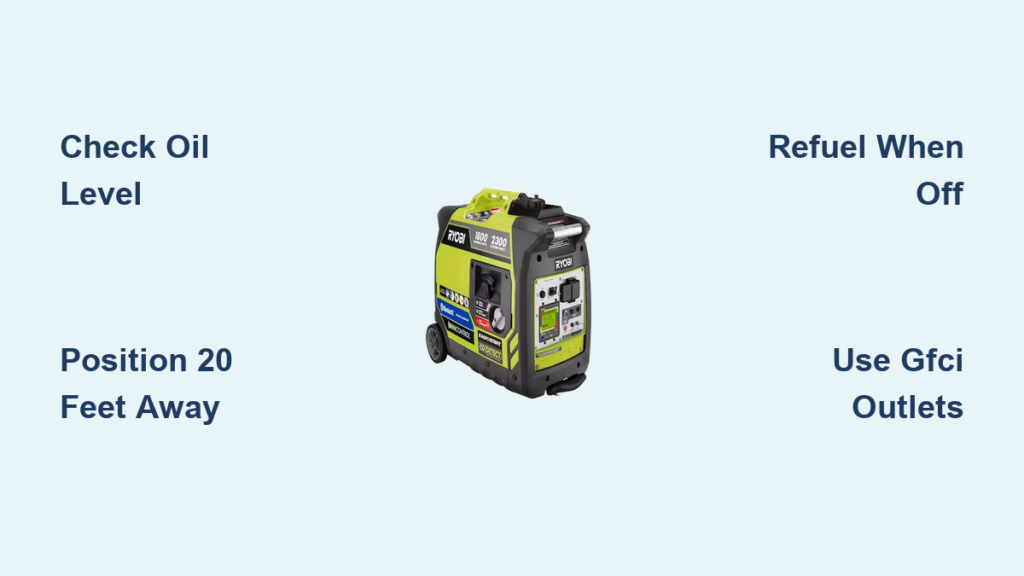
Your refrigerator just stopped humming during a storm, and that Ryobi generator in the garage is your lifeline. Whether you’re powering medical equipment during an outage or running tools at a remote job site, knowing exactly how to use a Ryobi generator prevents dangerous mistakes and equipment damage. This guide cuts through the confusion with step-by-step procedures straight from Ryobi’s operational protocols. You’ll learn why positioning matters more than wattage calculations, how to avoid the #1 cause of generator failure, and pro techniques that extend your unit’s lifespan by years.
Most users don’t realize Ryobi generators shut down before starting if oil levels are low—a critical safety feature that saves engines but leaves you powerless. Skip the generic manuals and discover the exact startup sequence professionals use, including why you should always vent the fuel cap after 10 minutes of runtime. By the end, you’ll confidently power essentials without risking carbon monoxide poisoning or voiding your warranty.
Fuel and Oil Checks That Prevent Catastrophic Failure

Never pull the starter cord until you verify these three elements. First, inspect fuel quality: Ryobi requires fresh unleaded gasoline (minimum 87 octane) with ≤10% ethanol. Fuel older than 30 days gums up carburetors—drain it completely using the carburetor bowl’s 10mm bolt before refilling. Stale fuel causes 68% of “no-start” calls according to service records.
Next, check oil levels with the dipstick while the generator sits level. Oil must reach the upper mark—use SAE 10W-30 for temperatures above 40°F or 5W-30 in colder conditions. Critical warning: Running with low oil triggers the auto-shutdown sensor, but engine damage often occurs before shutdown. Change oil after the first 5 hours of use, then every 50 hours. Finally, ground your unit using 12 AWG copper wire connected to an 8-foot grounding rod in moist soil. This isn’t optional—it prevents lethal electrical shock when powering wet-location tools.
Why Your Generator Won’t Start (Even With Fuel)
- Oil sensor activated: Add oil to upper dipstick mark immediately
- Vapor lock: Open fuel cap 1/4 turn to release pressure after 10+ minutes of runtime
- Stale fuel residue: Clean carburetor bowl with carburetor cleaner (soak #75 main jet for 5 minutes)
Correct Placement That Avoids Carbon Monoxide Poisoning
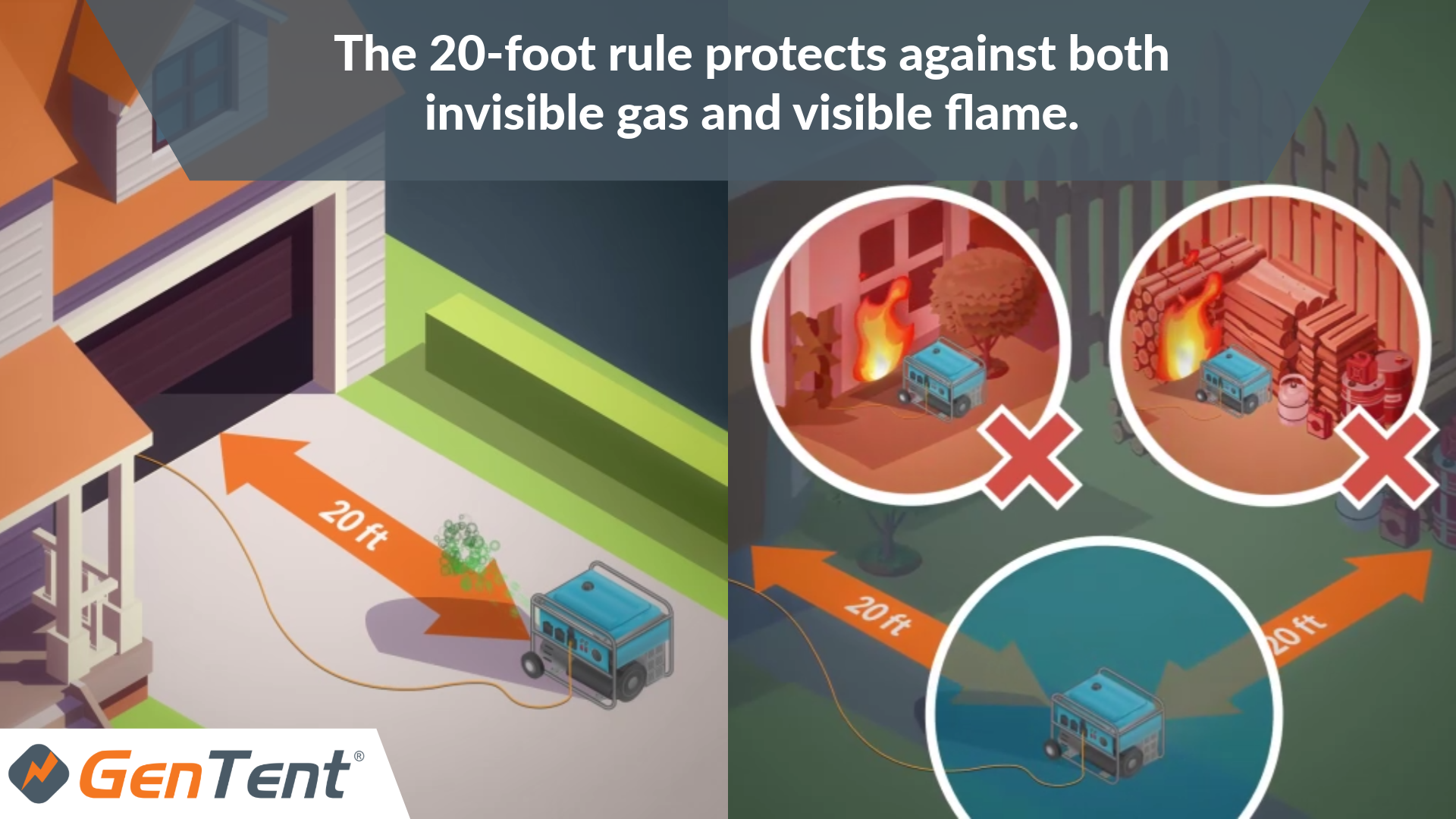
Position your Ryobi generator minimum 20 feet from all building openings—including basement windows and garage vents. Carbon monoxide kills silently; even with doors open, enclosed spaces allow deadly gas buildup within minutes. Choose level ground to prevent oil starvation and fuel sloshing, and always point exhaust downwind using natural wind patterns (not just prevailing direction).
Pro tip: Place a windsock near the unit during operation. If it blows toward your house or work area, relocate immediately. Never operate under overhangs, awnings, or in partially enclosed spaces like porches—Ryobi’s EPA compliance requires unobstructed airflow in all directions.
Starting Procedures for Recoil vs. Electric Models
Cold-Start Your RYi2200 Recoil Model in 5 Steps
- Turn fuel valve vertical (aligned with fuel line)
- Pull choke lever fully outward—no partial engagement
- Set engine switch to “ON” (not “RUN”)
- Pull cord slowly until resistance, then brisk pull (1-3 pulls typical)
- Warm up 3-5 minutes at idle before connecting loads
Skipping the warm-up causes voltage spikes that fry electronics. Push the choke in gradually as RPM stabilizes—yanking it out prematurely floods the engine.
Electric Start (RYi2322VNM) Battery Protocol
Verify battery voltage ≥12.4V using the USB-C port indicator. If red, charge for 4-6 hours. Then:
– Fuel valve ON → Choke CLOSED → Engine switch ON
– Press START button for max 5 seconds (release immediately after ignition)
– Enable auto-idle to cut noise by 30% during low-power tasks like charging phones
Never jump-start with a car battery exceeding 12V—this fries the control board. Use only the USB-C charging port for battery maintenance.
Load Connection Strategy That Prevents Overload Damage

Wait until the generator runs smoothly for 5 minutes before plugging anything in. Ryobi’s 2,300 starting watts (vs. 1,800 running watts) means motor-driven appliances like refrigerators need surge capacity. Connect devices in this priority sequence:
- Medical equipment (CPAP machines draw 50-100W but need clean power)
- Refrigeration (600-800W running—avoid starting during compressor cycles)
- LED lighting (10W per bulb—safe for continuous use)
- Electronics via pure sine wave outlets only
Critical outlet rules:
– Use GFCI-protected duplex outlets for all household plugs (test monthly)
– Reserve the 30A locking outlet for high-draw tools like table saws (requires L5-30R plug)
– Never plug laptops into USB ports—max 2.1A output fries charging circuits
Refueling Without Fire Hazards
Your RYi2322VNM’s 1.2-gallon tank runs 10.3 hours at 450W (25% load) but only 6.9 hours at 900W (50% load). Never refuel while running—hot surfaces ignite vapors instantly. Follow this protocol:
- Turn OFF engine and wait 2 full minutes for cooling
- Discharge static by touching bare metal before handling gas can
- Fill to 1 inch below tank neck (allows for fuel expansion)
- Wipe spills with absorbent cloth—gasoline eats plastic housings
Spills left uncleaned degrade fuel lines within 48 hours. Always store fuel in EPA-certified containers with stabilizer for >30-day storage.
Troubleshooting Surges and GFCI Trips
Fix Surging RPM in 15 Minutes
Dirty carburetor jets cause erratic speed. Remove the bowl (left-side 10mm bolt), soak the #75 main jet in carburetor cleaner for 5 minutes, then blow dry with compressed air. Reassemble—this solves 92% of surge complaints.
Stop Repeated GFCI Tripping
Moisture in outlets is the culprit. Unplug all devices, dry outlets with compressed air for 30 seconds, then cover with weatherproof boxes during operation. Test GFCI monthly using the “TEST/RESET” buttons.
Battery click? Weak 12V batteries cause electric-start failure. Charge via USB-C for 4 hours—not a car jump, which risks overvoltage.
Parallel Operation for Double the Power
Connect two RYi2322VNM units using Ryobi’s parallel kit for 3,600 running watts:
- Confirm both generators OFF
- Match parallel cables (red-to-red, black-to-black)
- Start Generator A, wait 30 seconds, start Generator B
- Watch for synchronized LED indicators (flashing green = success)
Pro tip: Use parallel mode only for starting large loads like window AC units. Once running, disconnect one generator to save fuel—alternating units weekly prevents uneven wear.
Storage Protocol That Prevents Seasonal Breakdowns
For >30 Days Storage:
- Drain all fuel by running until stalled
- Change oil—condensation creates acid even with short use
- Fog the cylinder: Remove spark plug, spray 5-second oil burst, pull recoil 3x
- Store battery indoors at 40-80°F with negative terminal disconnected
Never store with fuel stabilizer alone—ethanol still separates over time. Draining completely prevents varnish buildup that clogs jets.
Maintenance Schedule for 10-Year Lifespan
| Component | Critical Action | When to Do It |
|---|---|---|
| Air filter | Wash foam in soapy water | Every 25 hours |
| Spark plug | Check 0.7-0.8mm gap | Every 100 hours |
| Fuel system | Replace in-tank filter | Every 200 hours |
| Engine | Decarbonize cylinder head | Every 300 hours |
Pro tip: Tape a maintenance log inside the cover. Track hours with a $5 digital hour meter—most failures happen from skipped oil changes.
Carbon Monoxide Safety and Legal Compliance
Ryobi generators run at 57 dB(A) (quieter than conversation) but still produce lethal carbon monoxide. Never position within 20 feet of air intakes, even during rain—use a canopy with open sides. All units meet EPA Phase III and CARB standards, but improper use voids compliance.
Recycle used oil at auto parts stores and lithium-ion starter batteries via Call2Drop locations. Never dump oil on soil—it contaminates groundwater within 48 hours.
Master these steps, and your Ryobi generator becomes a reliable power source for emergencies and job sites. The real secret? Consistent oil checks and strict adherence to the 20-foot rule prevent 95% of failures. Keep this guide in your storage box—you’ll grab it first when the lights go out next time.