That 200-pound generator sitting idle in your garage won’t magically transport itself when storm season approaches or you need to reposition it. Whether you’re relocating your portable power source to a more convenient spot, preparing for hurricane season, or moving to a new home, tackling this heavy equipment presents unique challenges most DIYers underestimate. The combination of substantial weight, awkward shape, and potential safety hazards makes this task far more complex than moving typical household items.
Moving a heavy generator safely demands understanding proper weight distribution, correct lifting techniques, and selecting the right equipment for your specific situation. Without proper planning, you risk serious back injuries, equipment damage, or even fuel spills that could create fire hazards. This guide delivers actionable methods that protect both you and your valuable generator—without requiring professional movers or expensive equipment rentals you’ll use just once.
Why Your Generator Won’t Budge Without Proper Planning
Weight Distribution Challenges
Generators aren’t evenly weighted objects—they concentrate mass toward the engine end, creating balance issues during movement. A typical 3,000-watt portable generator weighs 120-180 pounds without fuel, but add a full 5-gallon gas tank (30+ pounds) and oil, and you’re dealing with nearly 200 pounds of awkwardly distributed weight. This uneven balance causes generators to tip forward when lifted improperly, putting excessive strain on your back and increasing the risk of dropping the unit.
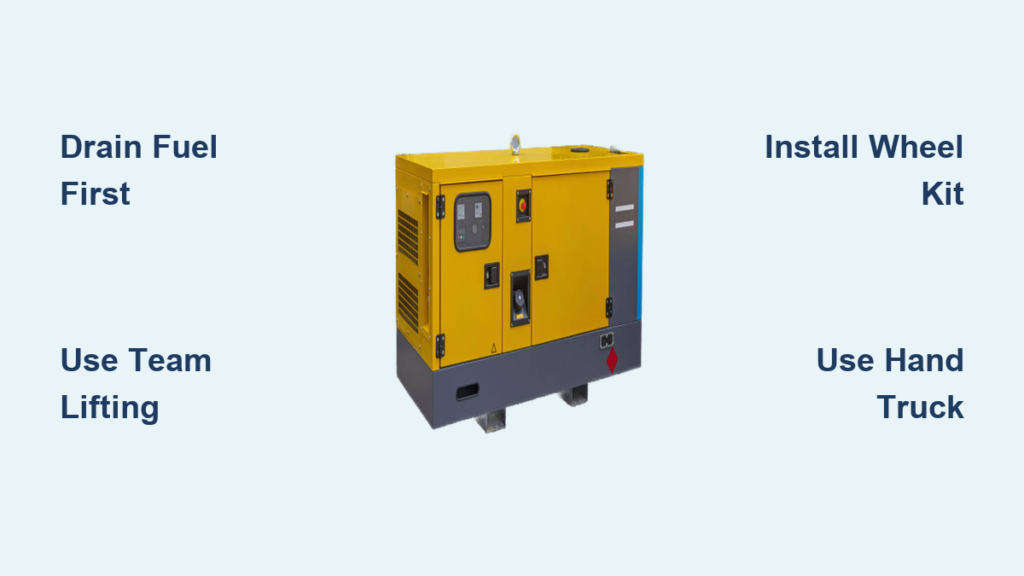
The center of gravity shifts dramatically depending on fuel levels and whether the generator is upright or tilted. Always drain fuel before moving to reduce weight by 15-20% and create more balanced handling. Never attempt to move a generator with a full tank on an incline—fuel sloshing can destabilize the unit mid-move.
Pathway Obstacles You’re Probably Overlooking
Most failed generator moves happen because people skip the critical step of walking the intended route first. Measure every doorway (standard is 32-36 inches wide), gate opening, and tight corner along your path. That generator that fits through your garage door might get stuck at the 90-degree turn into your backyard.
Test your outdoor surface thoroughly—grass and gravel create significantly more resistance than concrete. A generator that slides easily across your garage floor becomes nearly immovable on damp grass. Any incline greater than 5 degrees requires mechanical assistance; steeper slopes demand professional equipment. Document problem areas and plan workarounds before attempting movement.
Essential Safety Gear for Generator Relocation

Non-Negotiable Protective Equipment
Never attempt generator movement without proper protection—your safety depends on it. Steel-toed boots with ankle support prevent foot injuries if the unit slips, while heavy-duty work gloves with reinforced palms provide crucial grip on metal surfaces. For generators over 75 pounds, a back support belt becomes essential to maintain proper lifting posture.
Safety glasses protect your eyes from debris when using pry bars or ramps, and knee pads prevent injury during low-position maneuvers. Skipping any of these items dramatically increases injury risk—OSHA reports that 36% of all moving injuries involve improper personal protective equipment.
Team Size Requirements by Weight Class
Your physical limitations dictate safe movement strategies. OSHA recommends a maximum 51-pound lifting limit for most individuals without assistance. For generators under 100 pounds, two people can typically manage safely with proper technique. Units between 100-200 pounds require three-person teams with coordinated lifting, while anything over 200 pounds demands mechanical assistance regardless of team size.
Assign specific roles before lifting: one person directs movement, one handles the heavy engine end, and others manage balance points. Establish clear verbal commands like “lift,” “stop,” and “lower” to maintain synchronization. Never rely on grunts or nods—miscommunication causes most team lifting accidents.
Proven Manual Movement Techniques for Heavy Generators
Three-Person Lifting Protocol
When mechanical assistance isn’t available, follow this team lifting method:
- Position team members with two at the heavy end (engine side) and one at the lighter end
- Squat with feet shoulder-width apart, keeping your back straight and chest up
- Grip the generator frame securely—not the fuel tank or electrical components
- On the team leader’s count, lift using leg muscles while maintaining eye contact
- Take small, deliberate steps with feet pointed in direction of travel
Pro tip: Use furniture moving straps to distribute weight across your shoulders rather than straining your hands and arms. These $15 straps transform awkward lifts into manageable carries by engaging stronger muscle groups.
Improvised Ramp System for Thresholds

Create instant mechanical advantage using household items when commercial ramps aren’t available:
- Cut two 8-foot 2×10 boards to create stable inclines (1:6 slope ratio)
- Secure boards with construction adhesive to prevent slippage
- Place 2-inch PVC pipes between generator and ramp for instant rollers
- Anchor ramp base with concrete blocks or heavy lumber
This system reduces required lifting force by 80% compared to vertical lifting. For stairs, position the generator sideways with wheels facing the steps and use a pry bar to inch it down each step while team members control descent from below.
Wheel Kit Installation: Your Generator’s Permanent Solution
Model-Specific Wheel Selection
Most manufacturers offer wheel kits designed specifically for your generator model—never force incompatible wheels. Match your kit to generator weight:
- 8-inch wheels: Ideal for 50-150 pound generators (most portable inverter models)
- 10-inch wheels: Required for 150-300 pound conventional generators
- Pneumatic tires: Best for rough terrain but require maintenance
Check your owner’s manual for designated mounting points—never drill into structural components. Proper installation adds mobility without compromising stability during operation.
Step-by-Step Installation Process
- Position generator on level ground with fuel valve closed
- Remove original feet using a 10mm socket wrench
- Align wheel brackets with mounting holes and insert bolts
- Hand-tighten all fasteners before final torqueing
- Apply 25-30 ft-lbs torque in star pattern for even pressure
- Test stability by rocking unit before movement
Critical warning: Never modify your generator frame to accommodate wheels—this voids warranties and creates dangerous structural weaknesses. If your model lacks official mounting points, opt for a generator dolly instead.
Mechanical Assistance Options for Problematic Moves
Heavy-Duty Hand Truck Configuration

For generators under 300 pounds, a properly configured hand truck solves most movement challenges:
- Select a dolly rated for 1.5x your generator’s weight (e.g., 450-lb capacity for 300-lb unit)
- Position generator with heaviest end against the dolly’s upright support
- Secure with two ratchet straps—one across the top, one at base
- Tilt dolly backward until center of gravity rests over wheels
- Walk backward when moving downhill for better control
When navigating stairs, use the “three-point contact” method: two dolly wheels on one step with generator tilted back, then carefully pivot to next step while maintaining three points of contact at all times.
Engine Hoist Setup for Oversized Units
Generators exceeding 300 pounds require professional-grade equipment. A 1-ton engine hoist provides controlled movement without straining your body:
- Position hoist on solid, level surface near generator
- Attach lifting chain to manufacturer-designated lift points
- Raise hoist slowly until chain takes generator weight
- Verify all connections before lifting more than 2 inches
- Move hoist with generator suspended at minimum height
Safety essential: Never stand under a suspended generator. Use tag lines to control swing and maintain 360-degree awareness of your surroundings.
Fuel Management: The Critical Pre-Move Step You Can’t Skip
Safe Fuel Draining Procedure
Reducing weight by 20-30 pounds makes movement significantly safer and prevents dangerous spills:
- Run generator until it stops from fuel exhaustion
- Place approved fuel container beneath drain valve
- Slowly open valve while monitoring flow rate
- Close valve before last drops to avoid sediment
- Store drained fuel with stabilizer for future use
Never transport generators with fuel in the carburetor bowl—this causes leaks during movement. Disconnect the spark plug wire to prevent accidental starting during relocation.
Post-Move Setup for Immediate Operation
Leveling and Ventilation Requirements
After positioning your generator, complete these critical steps before operation:
- Place on perfectly level surface (use a bubble level)
- Maintain minimum 3-foot clearance on all sides for proper ventilation
- Position exhaust away from windows and doors
- Secure with ground stakes if on soft terrain
- Test stability by applying gentle pressure from multiple angles
Pro tip: Create a permanent generator pad using concrete pavers with landscape fabric underneath—this provides stable, level positioning that won’t shift during operation.
When to Call Professionals Instead of DIY
Consider professional help if your generator:
– Weighs over 400 pounds
– Requires movement through tight indoor spaces
– Must traverse stairs or significant slopes
– Lacks proper lifting points for safe handling
Reputable moving services charge $150-400 for local generator relocation and carry $100,000+ in liability insurance—worth the investment to avoid $10,000+ in potential medical bills from lifting injuries.
Moving a heavy generator doesn’t need to be a back-breaking ordeal when you approach it with proper planning and equipment. By understanding your generator’s specific weight distribution, preparing your pathway thoroughly, and selecting the right movement method for your situation, you’ll complete the task safely and efficiently. Remember that the few extra minutes spent planning your move could prevent hours of injury recovery or costly equipment damage. Your generator provides reliable power when you need it most—give it the careful relocation it deserves.