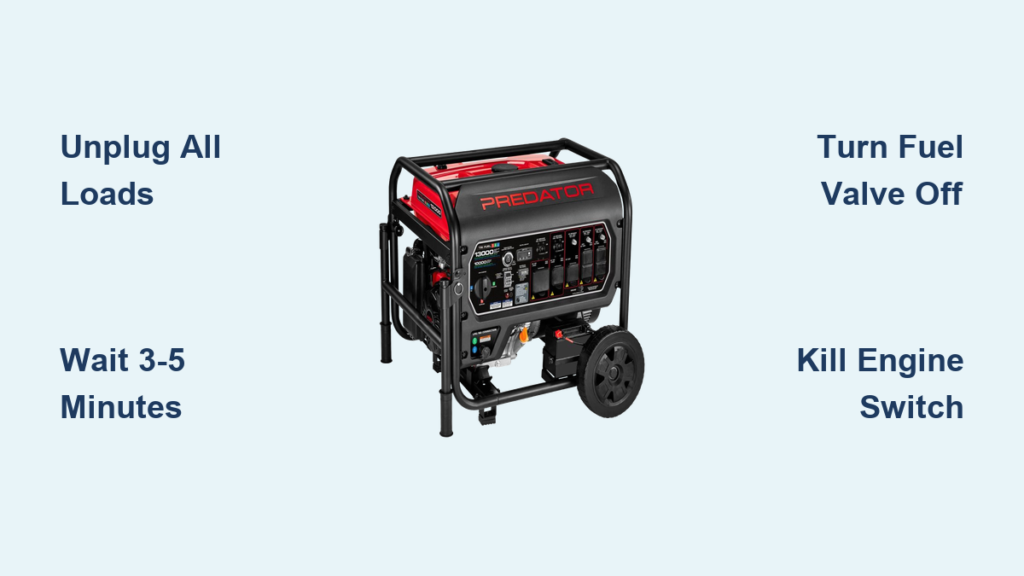
You’ve just finished powering your RV during a storm or running tools at a job site, but abruptly killing your Predator generator could mean expensive repairs down the road. That sudden “off” click might seem convenient, but skipping the proper shutdown sequence risks warped cylinder heads, fuel leaks, and shortened engine life. Whether you’re using a compact 2000-watt model for camping or a 9500-watt workhorse for home backup, how to turn off predator generator safely takes just five minutes but prevents thousands in damage. This guide delivers the exact manufacturer-approved shutdown steps for every Predator model—no guesswork, no jargon.
Most users make the critical mistake of cutting power while devices are still drawing current. When you shut down under load, electrical surges can fry sensitive electronics like laptops or medical equipment plugged into your generator. Worse, the engine suffers thermal shock as hot components cool too rapidly—imagine pouring cold water on red-hot metal. By following this sequence religiously, you’ll extend your generator’s lifespan by years and ensure reliable starts every time. Let’s dive into the precise shutdown ritual that protects your investment.
Disconnect All Electrical Loads Before Shutting Down
Power Down Connected Devices Completely
Flip off every appliance and tool drawing power from your generator before touching any controls. Start with high-draw items like refrigerators or air conditioners, then move to smaller electronics. Never skip unplugging cords—even standby power from a phone charger creates enough load to damage components during shutdown. For home backup systems, flip your transfer switch to “LINE” mode first to isolate the generator from your house wiring.
Critical visual check: Watch the generator’s wattage meter. If it shows any usage above 50 watts, hunt for forgotten connections. That humming sound from your cooler? It’s still drawing power and will cause problems when you shut down.
Verify Zero Electrical Demand Visually and Audibly
After disconnecting everything, listen closely to the engine note. Under load, it runs with a deep, strained rumble—but when fully unloaded, the sound becomes a light, high-pitched whine. If you still hear that heavy drone, retrace your steps: check behind RV panels, under workbenches, and inside toolboxes for hidden devices. Pro tip: Shine a flashlight around the outlet panel—sometimes cords get wedged out of sight.
This verification step takes 20 seconds but prevents catastrophic backfiring. Generators under load during shutdown often cough violently as fuel ignites in the exhaust, potentially melting components. Your goal: hear that distinct “unloaded” whine before proceeding.
Execute Mandatory 3-5 Minute Engine Stabilization Period

Prevent Thermal Shock With Unloaded Cool-Down
Keep your Predator running with zero electrical load for exactly 3-5 minutes—set a timer on your phone. This isn’t just manufacturer suggestion; it’s physics. Metal engine parts expand when hot, and sudden shutdown causes uneven contraction that cracks cylinder heads or warps valves. Think of it like letting a cast-iron skillet cool gradually instead of plunging it in cold water.
What to watch for: During this period, monitor the exhaust. Blue smoke indicates oil burning (needs service), while white puffs mean coolant leakage—both require professional attention before next use. If you hear metallic ticking, shut down immediately and investigate.
Recognize Danger Signs During Stabilization
Unusual sounds during cool-down signal serious issues. A rhythmic knocking suggests piston problems, while grinding noises often mean failing bearings. Never ignore these: Continuing operation risks total engine seizure. If you detect abnormal sounds, shut down using emergency procedures (detailed later) and consult a service center. Waiting through the full stabilization period when problems exist turns minor issues into catastrophic failures.
Shut Off Fuel Supply Before Killing Engine
Locate Model-Specific Fuel Valve Positions

Find your red fuel valve—its position varies by Predator model:
– 2000/2200/3500 series: Left side near fuel tank (often hidden behind recoil starter)
– 6500/8750 models: Bottom-left of control panel (labeled with “ON/OFF” arrows)
– 9000/9500 heavy-duty: Rear panel near fuel cap (requires bending to see)
Time-saver: Wipe the area with a rag first—dirt obscures valve markings on older units. If you can’t find it, consult your manual’s diagram (keep a waterproof copy in your storage box).
Turn Valve to OFF and Monitor Carburetor Drain
Rotate the valve handle fully to “OFF” with firm pressure (stiff valves indicate age-related gunk buildup). The engine will sputter for 30-60 seconds as it burns residual fuel in the carburetor—this is intentional. Skipping this step leaves stale fuel that varnishes internal parts during storage, causing hard starts later. When the engine dies naturally from fuel starvation, you’ve protected the carburetor.
Warning: Never turn the fuel valve OFF while the engine is cold—this traps fuel that evaporates and leaves gummy deposits. Always perform this step only during warm shutdowns.
Stop the Engine With Correct Switch Method
Use Model-Appropriate Engine Kill Switch
Your shutdown method depends on your Predator’s ignition system:
– Pull-start models: Flick the red toggle switch on the engine housing to “STOP”
– Electric start: Turn key fully to “OFF” (not just accessory position)
– Remote start units: Press the STOP button twice on your remote
Common mistake: Users think removing the key stops electric-start models—but the engine keeps running if the key isn’t turned to OFF. Always verify the switch position with your finger, not just visually.
Confirm Complete Shutdown With Triple Verification
After switching off, perform these checks within 10 seconds:
1. Visual: Watch the recoil starter rope—no movement means the engine stopped
2. Auditory: Press your ear near the muffler—zero ticking or hissing sounds
3. Olfactory: Sniff near the exhaust—no raw fuel odor indicates no leaks
If you detect fuel smells, do not restart. Wipe spills immediately with oil-absorbent pads (never paper towels—they create fire hazards).
Emergency Shutdown Protocol for Immediate Dangers
Execute 3-Step Emergency Kill Sequence
When fire erupts or parts fly off, skip stabilization and:
1. Yank the red kill switch (usually on engine housing near spark plug)
2. Spin fuel valve to OFF while backing away
3. Deploy fire extinguisher if flames persist (keep one mounted nearby)
Critical note: Emergency shutdowns cause loud backfires—it’s the fuel igniting in the exhaust. This is safer than letting a fire spread. Afterward, never restart until a technician inspects for damage.
Post-Shutdown Safety and Storage Prep
Mandatory 15-Minute Cooling Before Handling
Wait at least 15 minutes before moving your generator—exhaust manifolds stay above 300°F even after shutdown. Touch test: Hold your palm 2 inches above the muffler; if you can’t keep it there for 5 seconds, it’s still too hot. Moving a hot generator risks fuel spills onto hot surfaces, creating instant fireballs.
Complete Pre-Storage Fuel Management
For storage beyond 30 days:
1. Add 1 oz of fuel stabilizer per gallon of gas
2. Run engine for 5 minutes to circulate treatment
3. Turn fuel valve OFF and let engine die naturally
4. Drain remaining fuel from carburetor bowl (via screw on bottom)
Pro tip: Store with the fuel valve OFF but tank ¼ full—this prevents condensation while avoiding fuel degradation in a full tank.
Troubleshoot Stubborn Shutdown Issues
Fix Engine That Won’t Stop Running
If your Predator keeps running after switching OFF:
– Check kill switch spring tension (weak springs won’t fully engage)
– Inspect spark plug wire—a loose connection bypasses the kill circuit
– Test with choke—pulling full choke should stall the engine (do this outdoors only)
Never ignore this: A stuck-open throttle linkage can cause runaway engines that over-rev and self-destruct. If basic fixes fail, disconnect the spark plug immediately.
Prevent Recurring Backfire on Shutdown
Rough shutdowns with loud booms almost always mean you skipped the stabilization period. Fix permanently: Tape a checklist to your generator: 1) Unplug all devices 2) Timer for 5 minutes 3) Fuel valve OFF. This habit eliminates 95% of backfires.
Final Shutdown Checklist: Before storing your Predator generator, confirm: all loads disconnected, 5-minute cool-down completed, fuel valve OFF, engine fully stopped, 15-minute cooling elapsed, and no fuel leaks detected. Skipping any step risks voiding your warranty—manufacturers inspect shutdown logs during claims. Proper shutdown takes just 8 minutes but adds 5+ years to your generator’s life. Treat this sequence like brushing your teeth: non-negotiable daily maintenance that prevents painful (and expensive) consequences later. Your next adventure starts with a reliable generator—and that reliability begins the moment you power down.