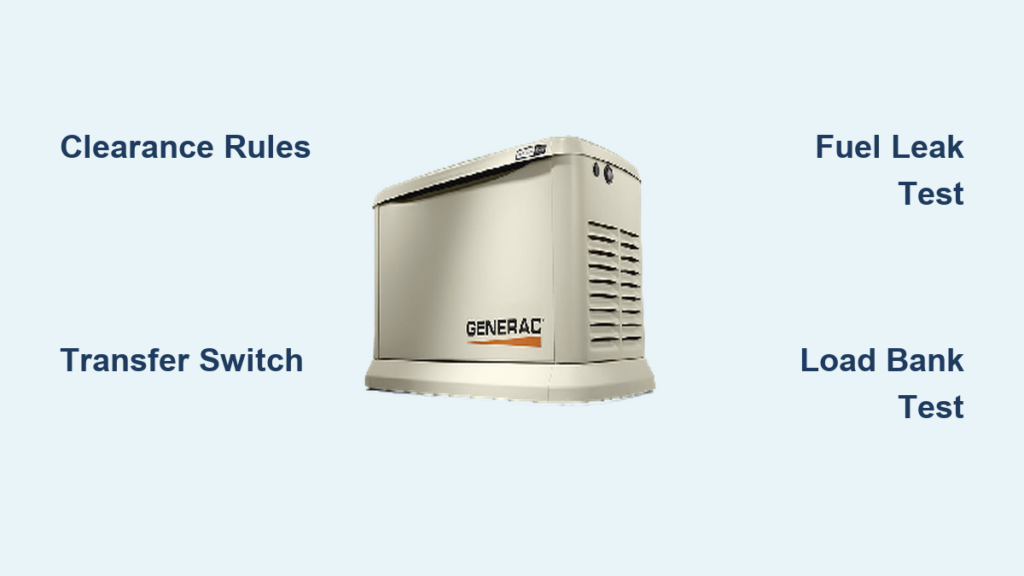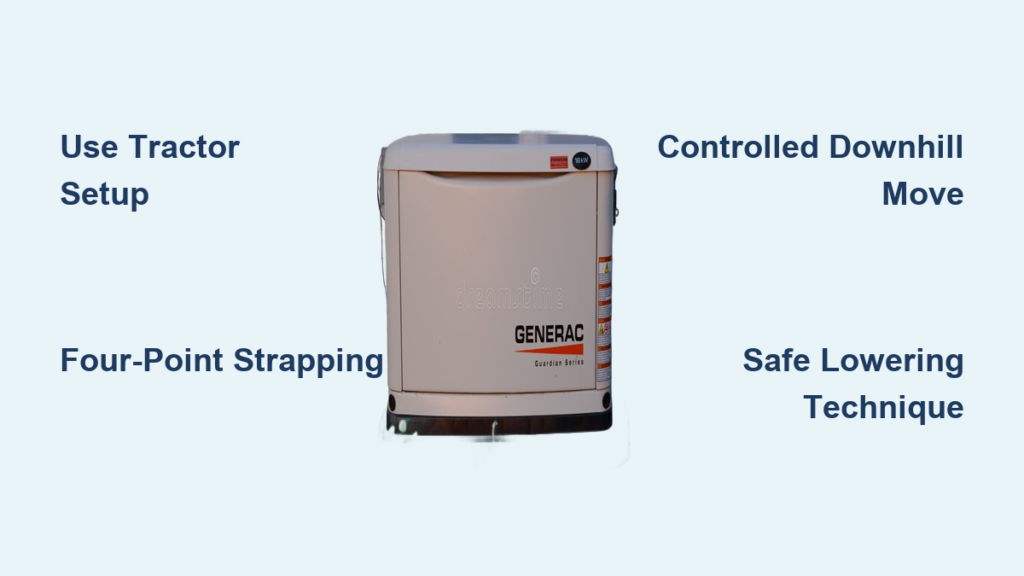
Moving your heavy Generac generator doesn’t have to be a backbreaking chore requiring professional movers. Whether you’re relocating your Generac 5873 across your property or positioning it on its permanent concrete pad, this guide shows you exactly how to move a Generac generator safely using equipment you likely already own. Forget expensive professional services—this proven method lets one person safely relocate a 400+ pound generator in under 30 minutes across varied terrain. You’ll discover the specific tractor setup, four-point strapping technique, and terrain navigation strategies that prevent damage to your valuable investment.
Essential Tractor and Loader Configuration for Generator Movement
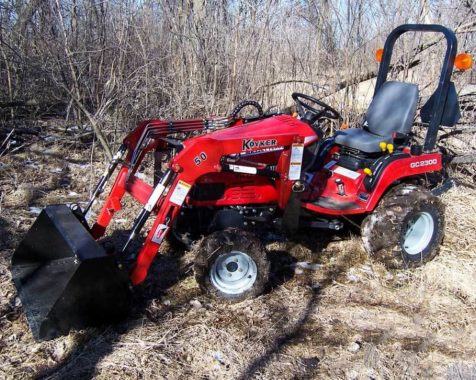
Your compact tractor becomes the perfect moving solution when properly configured for generator transport. The documented method uses a Yanmar Model YMG 1800 compact tractor with a Koyker Model K 110 front end loader, but any similar compact tractor works if it meets these specifications: minimum 48-inch bucket width for stability, adequate counterbalance (like a 60-inch shredder on the 3-point hitch), and loader capacity to safely handle 500+ pounds. Critical detail: rotate your bucket completely opposite the dump direction before lifting—this creates a flat, stable platform that prevents the generator from sliding forward during transport.
Optimizing Your Tractor for Maximum Control
Manual transmission tractors provide superior control during generator movement compared to automatics, allowing precise speed management. Before attempting to move your Generac generator, verify your tractor’s hydraulic system can maintain steady lift throughout the journey. Check that your loader arms move smoothly without jerking, which could destabilize the load. Pro tip: Add extra counterweight to your 3-point hitch if you notice the front end lifting during initial tests—this prevents dangerous instability when carrying heavy loads.
Proper Generator Inspection Before Movement
Removing Shipping Materials Safely
Your Generac arrives wrapped in cardboard and secured to a wooden pallet—never attempt to lift it without this frame. Start by cutting the tape strips holding the cardboard top flaps with a box cutter, then carefully lift off the cardboard cover in one piece to avoid tearing. Immediately inspect for dents, scratches, or shipping damage, documenting any issues on the bill of lading before signing. Crucial warning: never remove the wooden shipping frame before moving your Generac generator—the frame distributes weight evenly and prevents damage to the generator housing during transport.
Critical Damage Assessment Points
Within 60 seconds of unboxing, check these vulnerable areas: fuel tank for dents or punctures, control panel for cracked displays or loose switches, enclosure seams for proper panel alignment, and base frame for bent or broken welds. Pay special attention to the corners where impacts most commonly occur during shipping. If you discover damage, photograph it immediately and contact both the delivery company and Generac before proceeding with movement.
Four-Point Strapping Technique for Maximum Stability

Correct Strap Configuration Method
Using two Harbor Freight SKU 36612 straps creates an exceptionally stable cradle for your Generac generator. Attach the first strap hook to the front left bucket lip, run it straight down through the pallet left side, bring it up to the right bucket lip, wrap excess around the loader arm, and secure the final hook to the loader eye. Repeat this mirrored process on the right side—this cross-pattern configuration prevents side-to-side movement during transport.
Tension Testing Before Lifting
Before raising your Generac generator, perform these critical safety checks: tug each strap connection to equalize slack, verify straps mirror each other perfectly, confirm all hooks seat fully in attachment points, and wrap remaining strap around loader arms to prevent snags. Pro tip: uneven strap tension causes dangerous tilting—spend 30 seconds balancing all four connections before lifting. The proper tension should feel firm but not overly tight, allowing the wooden frame to sit level on the bucket.
Transport Techniques for Varied Terrain Conditions
Safe Movement on Downhill Sections
When moving your Generac generator downhill, select standard low gear and maintain 1000-1200 RPM for controlled descent. Apply light, steady brake pressure rather than intermittent braking to prevent jerking that could destabilize the load. Never exceed walking pace during downhill transport—this keeps the generator stable and gives you time to react to obstacles. If your tractor has differential locks, engage them for better traction on slippery slopes.
Uphill Generator Transport Strategy
Approach uphill sections with momentum built on flat ground before the incline begins. Gradually increase RPM to 1500-1800 as needed while maintaining continuous motion—stopping mid-incline risks dangerous rollback. Keep your eyes focused 10-15 feet ahead to anticipate terrain changes that might affect stability. If the generator begins to tilt backward, immediately lower the bucket slightly while maintaining forward motion to rebalance the load.
Navigating Gates and Tight Spaces
When moving your Generac generator through gates, always back through rather than driving forward—this prevents pendulum motion that could shift the load. For tight spaces, use open areas like orchards for three-point turns rather than attempting sharp maneuvers near obstacles. Strong recommendation: have a spotter guide you through challenging sections—you can’t see all angles while operating the tractor, and one wrong move could damage your generator.
Precise Placement and Lowering Process
Final Positioning Preparation
Before lowering your Generac generator, clear the landing zone of debris, check surface level (asphalt or concrete preferred), plan your final position with adequate ventilation clearance, and mark utility locations to avoid future conflicts. Take 30 seconds to visualize the perfect placement—once lowered, repositioning becomes significantly more difficult. Ensure you have at least 3 feet of clearance on all sides for maintenance access.
Controlled Lowering Sequence
Approach your marked position slowly, then lower the generator gradually using hydraulic controls. Pause when 6 inches above the surface for final position adjustments, then complete the lowering until the wood frame contacts the ground. Hold this position for 30 seconds to allow the generator to settle before releasing strap tension. Critical step: never drop the generator the final few inches—this jars internal components and risks damage to the housing.
Post-Move Inspection and Maintenance
Immediate Generator Check After Relocation
After completing your Generac generator move, perform these checks: verify oil level (transport may cause minor leaks), inspect fuel cap for tight seal after jostling, test electrical connections for loose wires from vibration, and clean accumulated dirt or leaves from cooling vents. Start the generator and listen for unusual noises that might indicate internal shifting during transport. If everything operates normally, your move was successful.
Strap Storage for Future Generator Moves
Extend your strap lifespan by cleaning dirt before storage, drying completely to prevent mildew, storing indoors away from UV damage, and inspecting regularly for cuts or wear. Pro tip: mark your straps with the move date and generator model for easy identification during future projects. These same straps will prove invaluable for maintenance access, storm preparation relocation, or future property improvements requiring generator movement.
Alternative Moving Methods Without Tractor Access
Equipment Options for Non-Farm Settings
If you don’t have tractor access, consider these alternatives: skid steers with pallet forks using the same strap method, forklifts for direct pallet lifting on smooth surfaces, or engine hoists for short-distance concrete movements. Professional movers become necessary only when terrain prevents equipment access—most residential properties allow for creative solutions using common equipment. Important note: avoid pallet jacks (only work on smooth concrete), rolling pipes (risk damage on uneven ground), manual lifting (400+ pounds exceeds safe limits), or truck tailgates (only suitable for initial delivery).
Moving your Generac generator safely is entirely achievable with proper equipment and technique. The tractor-based method eliminates dangerous manual labor while providing exceptional stability—so stable you could transport a full coffee cup on top without spillage. Keep your straps and setup ready, as you’ll likely need to reposition your generator for maintenance, storm preparation, or future property improvements. By following these specific steps, you protect your investment and gain the confidence to handle your Generac generator safely for years to come.