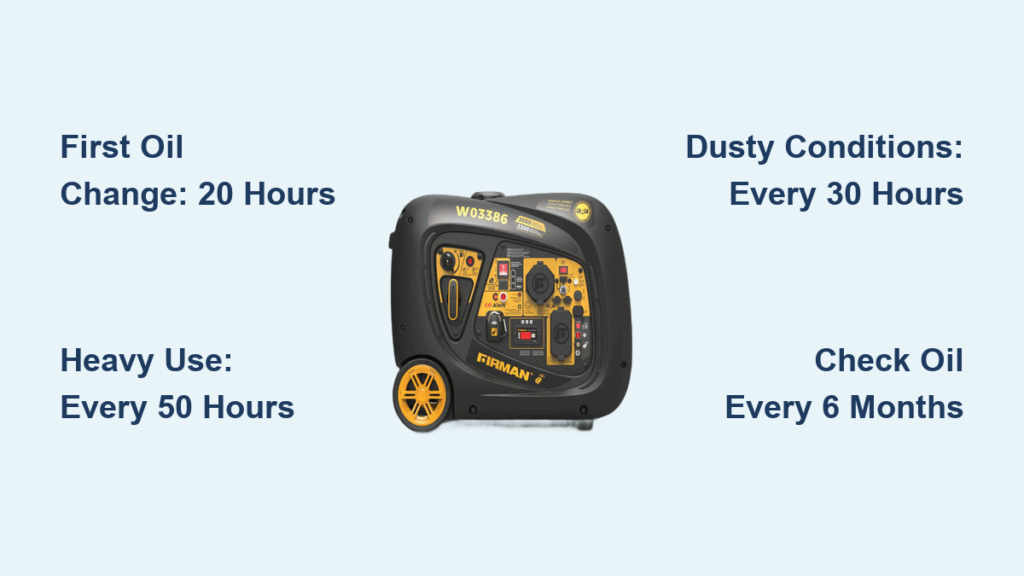
Nothing kills your Firman generator faster than neglecting oil changes. That $5 oil change prevents thousands in engine repairs down the road. Most owners run their generators until they sputter and die, not realizing dirty oil silently destroys bearings and pistons. Whether you’re preparing for storm season or powering job sites daily, clean oil keeps your Firman humming when you need it most.
This guide cuts through the confusion with model-specific oil change schedules based on actual usage patterns. You’ll discover exactly when to change oil for your specific Firman model, warning signs you’re overdue, and a step-by-step process that takes less than 30 minutes. Stop guessing and start protecting your investment with precision maintenance.
Firman Oil Change Intervals by Model

First Oil Change After 20 Hours—Not 100
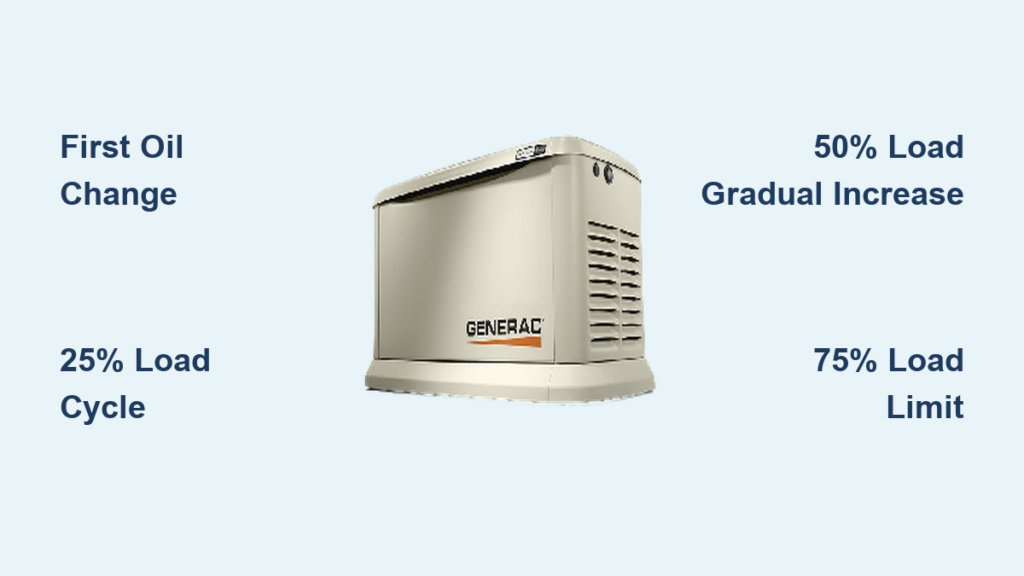
Your new Firman generator needs its first oil change after just 20-25 hours of operation, not the standard interval. During manufacturing, microscopic metal particles break loose and circulate through the engine. This critical break-in change removes harmful debris before it scores cylinder walls.
Skipping this initial oil change voids most Firman warranties and shaves years off your generator’s life. Treat your new generator like a newborn—give it that crucial first oil change before settling into regular maintenance.
Performance Series Oil Schedule for Heavy-Duty Use
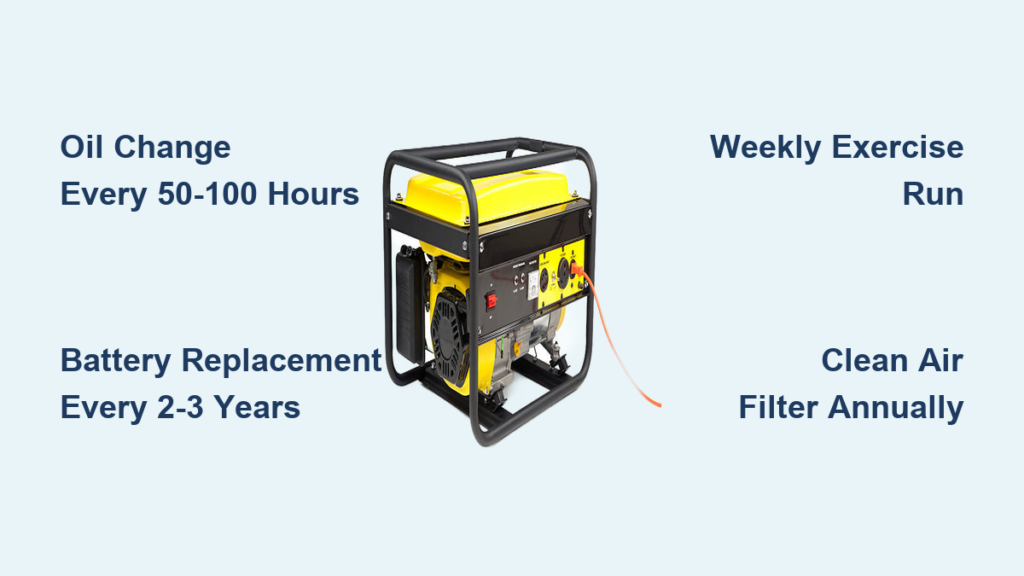
Firman Performance Series (P03607, P03608, P08003) demands strategic oil changes based on workload. Under normal conditions, change oil every 100 hours or 6 months. But if you’re running air compressors or power tools daily, cut that interval in half to 50 hours or 3 months.
Extreme conditions like construction sites or desert environments require oil changes every 25 hours or monthly. These high-output models generate more heat, accelerating oil breakdown. Track actual runtime with a simple counter—not calendar months—to avoid premature engine failure.
Whisper Series Oil Intervals for Backup Power
Firman Whisper Series (W03081, W03082) owners often make a critical mistake—waiting too long between changes. Despite their cleaner-burning inverter technology, these units still need oil changes every 50-75 hours or 6 months under normal use.
For emergency backup generators that sit idle for months, change oil every 6 months regardless of hours. Stale oil collects moisture and forms corrosive acids that damage internal components. Occasional users should never exceed the 6-month calendar limit, even with zero runtime.
Critical Factors That Slash Oil Life

High Temperatures Accelerate Oil Breakdown
Running your Firman in temperatures above 90°F cuts oil life in half. Heat causes oil to oxidize and lose viscosity, leaving metal surfaces unprotected. Generators operating in unventilated enclosures or direct sunlight need oil changes every 30-40 hours instead of standard intervals.
Conversely, cold starts below 40°F cause fuel dilution as unburned gasoline mixes with oil. If you’re starting your generator frequently in winter conditions, change oil every 25 hours to prevent sludge buildup. Monitor your operating environment closely—extreme temperatures demand aggressive maintenance.
Continuous Heavy Loads Cook Your Oil
Your Firman running at 75% load or higher breaks down oil additives within 30-50 hours. Construction crews powering multiple tools simultaneously often overlook this critical factor. A generator running 8 hours daily hits 100 hours in just 12 days—far sooner than the 6-month calendar recommendation.
Light loads under 50% capacity let you stretch to standard intervals, but never exceed the time limit. Track both runtime and calendar time—whichever comes first determines your next oil change.
Dusty Environments Require Emergency Oil Changes
Construction sites and rural locations introduce abrasive particles that turn oil into liquid sandpaper. In these conditions, cut your oil change interval by 50% minimum. Change oil every 20-30 hours to prevent premature engine wear.
Install a quality air filter cover and check pre-cleaner systems weekly. The cleaner your intake air, the longer your oil lasts. Generators operating in dusty conditions without frequent oil changes rarely survive past 500 hours.
Warning Signs You Need Oil Change Now

Dipstick Analysis: Your Oil’s Health Report
Pull the dipstick when the engine is cool for accurate assessment. Fresh oil appears amber and translucent. Change oil immediately if it looks black and thick like tar or milky/foamy—the latter indicates dangerous coolant contamination.
Wipe oil on a white paper towel. Any color darker than medium brown signals change time regardless of hours. Visible metal particles or a strong gasoline smell means your oil has lost protective properties. Don’t gamble with engine health—change oil at the first sign of trouble.
Performance Red Flags You Can’t Ignore
Your generator communicates oil problems through telltale symptoms. Hard starting requiring multiple pulls, rough idle, or reduced power under load all indicate degraded oil. Excessive smoke from the exhaust or metallic knocking sounds signal imminent engine damage.
These symptoms typically appear 10-15 hours before catastrophic failure. Don’t wait for complete breakdown—address oil issues at the first sign of trouble. Clean oil costs pennies compared to engine replacement.
Foolproof Oil Change Process in 30 Minutes
Essential Tools for First-Time Owners
Gather these five critical items before starting: 10W-30 oil (check your model’s capacity), oil drain pan, funnel, clean rags, and replacement oil filter if equipped. Most Firman generators require 1.5-2 quarts of oil—buy an extra quart to avoid mid-process trips to the store.
Pro tip: Keep a complete oil change kit in your generator storage area. Having supplies ready prevents skipped maintenance during emergencies. Quality synthetic oil costs more upfront but extends intervals by 50% for frequent users.
Draining Procedure That Prevents Messes
Never skip warming the oil—run the engine 2-3 minutes to thin the oil for complete drainage. Shut off the fuel valve and let the engine cool 5 minutes (oil remains hot enough to burn skin). Position your drain pan directly under the oil drain plug before removing the dipstick to vent the crankcase.
Remove the drain plug with the correct socket size—stripped plugs cause costly repairs. Allow 5-10 minutes for complete drainage while inspecting the old oil for metal particles. Reinstall the plug with a new crush washer tightened to 15-20 ft-lbs—overtightening strips threads.
Oil Selection Guide: Avoid Costly Mistakes
Viscosity Choices for Your Climate
10W-30 works for most conditions above 20°F, but extreme temperatures require adjustments. Below 20°F, switch to 5W-30 for easier cold starts. In sustained heat above 80°F, SAE 30 provides better high-temperature protection.
Never use automotive oil—friction modifiers damage small engine components. Choose oils labeled “For Small Engines” like Briggs & Stratton or Kohler brands. Verify API service classification SJ or higher on the container.
Synthetic vs Conventional: When It Pays Off
Synthetic oil extends change intervals by 50% but costs 2-3 times more. For generators running 200+ hours annually, synthetic saves money long-term through fewer changes and better engine protection. Occasional backup users gain little benefit—conventional oil changed on schedule provides adequate protection.
Best practice: Use synthetic for daily job site generators; conventional oil suffices for emergency backup units used less than 20 hours yearly.
Maintenance Schedules That Prevent Failures
Emergency Backup Generator Timeline
Before every storm season: Change oil regardless of hours (stale oil corrodes internals). Every 6 months: Replace oil, air filter, and spark plug—even with zero runtime. Annually: Complete full service including valve adjustment.
Create a simple log taped to your generator showing last change date and hours. Emergency generators fail most often due to neglected oil—don’t become another statistic when the grid goes down.
Commercial User Maintenance Calendar
Weekly: Check oil level and condition before each use. Monthly: Change oil (or 25 hours), replace filter, inspect spark plug. Quarterly: Complete full tune-up including valve adjustment.
Heavy users should track runtime with a digital hour meter. Generators powering construction sites need oil changes every 20-30 hours—not waiting for calendar months prevents costly downtime.
Cost-Saving Maintenance Strategies
Bulk Oil Purchasing That Pays Off
Buy oil by the case from warehouse stores for 30-40% savings. Calculate your annual usage—most homeowners need 4-6 quarts yearly for standard maintenance. Store oil in climate-controlled areas as temperature extremes degrade quality.
Pro tip: Split oil cases with neighbors who own similar generators. Everyone saves while ensuring consistent oil quality. Keep receipts to verify oil specifications during warranty claims.
Aftermarket Filter Savings Without Sacrifice
Aftermarket oil filters like Fram PH3614 and Wix 51358 fit many Firman models at 50% less cost than OEM filters. Verify thread size and sealing dimensions match your original before purchasing.
Compare filter specifications online—reputable aftermarket brands provide equivalent filtration at lower cost. Saving $3 per filter adds up significantly with frequent changes.
Regular oil changes remain the simplest, most effective way to extend your Firman generator’s life. Follow the 20-25 hour break-in change, then adjust intervals based on your specific model and usage patterns. Create your maintenance schedule today using these proven templates—your generator (and wallet) will thank you when the next power outage hits. Clean oil costs pennies compared to engine replacement, so stay vigilant and keep your Firman running strong for years to come.