Your DEWALT generator sputters during a storm-induced blackout—not because of fuel issues, but the wrong oil thickening in cold weather. Using incorrect lubricant risks catastrophic engine damage and instantly voids your three-year warranty. This guide cuts through the confusion with DEWALT’s official oil specifications for every DXGN model, temperature-specific solutions, and critical maintenance steps you must follow. Skip these details, and you’ll face expensive repairs when power fails.
Why DEWALT Generators Demand SAE 10W-30 Oil
DEWALT mandates SAE 10W-30 as the universal oil grade for all DXGN-series generators. This viscosity balances cold-weather fluidity and high-temperature stability across the 0°F to 100°F (-18°C to 38°C) range typical for home and jobsite use. Deviate from this specification, and piston rings seize during cold starts or bearings overheat in summer heat. Always verify the API “donut” symbol on the bottle—this isn’t optional for warranty coverage.
When to Switch Oil Grades for Extreme Temperatures
Below 40°F (4°C): Use SAE 5W-30 synthetic
Thinner cold viscosity ensures reliable starting down to -20°F (-29°C). Conventional 10W-30 turns sludge-like at these temperatures, starving bearings of lubrication during startup—the most damaging engine phase. Full-synthetic 5W-30 flows instantly, preventing metal-to-metal contact.
Above 100°F (38°C): Opt for SAE 30 synthetic
In desert heat or continuous heavy loads, thicker SAE 30 maintains film strength when 10W-30 thins out. Viscosity breakdown causes oil pressure drops, accelerating cylinder wear. Never use multi-grades like 10W-40—DEWALT explicitly prohibits them.
Critical API Classification You Must Check
Look for the API service symbol with an “S” category (SJ, SL, SM, SN, or SP). The “S” confirms gasoline-engine compatibility—diesel oils (with “C” categories) lack detergent packages for small engines and will gunk your generator. Reject any oil without this donut seal; it voids warranty coverage even if viscosity matches.
Fill Exactly This Amount: DEWALT Oil Capacities by Model
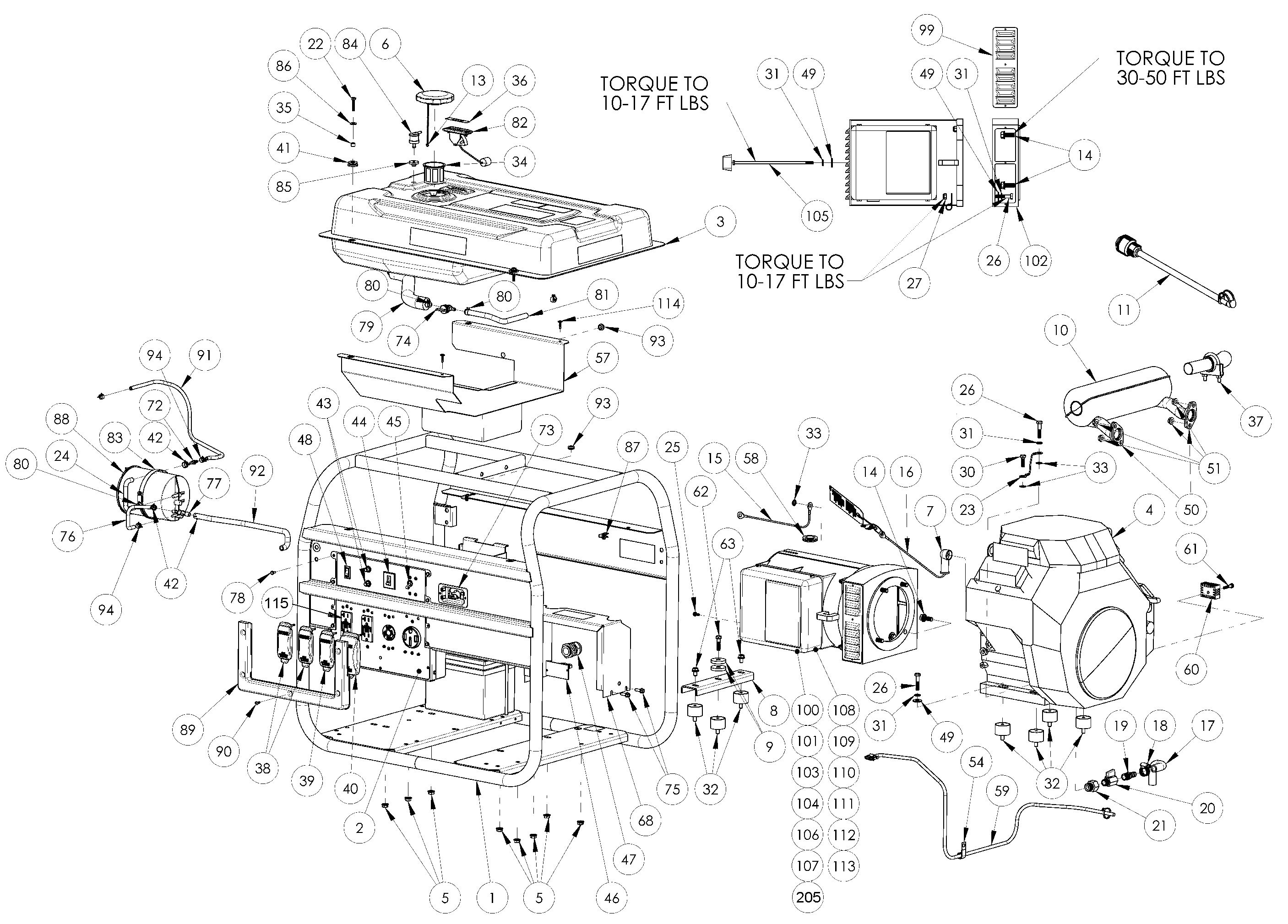
Underfilling causes overheating; overfilling forces oil past seals into the combustion chamber. Match your model precisely:
| Model Series | Oil Capacity | Critical Detail |
|---|---|---|
| DXGN14000/10000/7200 | 1.16 qt (37 fl oz) | Includes filter volume—do not exceed upper dipstick mark |
| DXGN6000/5000/4500 | 1.05 qt (34 fl oz) | Use a 14mm funnel to avoid spills on recoil assembly |
| DXGN4000 | 0.63 qt (20 fl oz) | Most commonly overfilled—stop at dipstick’s “F” line |
Pro Tip: Always check oil on level ground after running. If the level hits the lower dipstick mark, add oil immediately—but never pour beyond the upper mark. Excess oil aerates, losing lubrication ability.
Fix Break-In Oil Failures in 6 Critical Steps
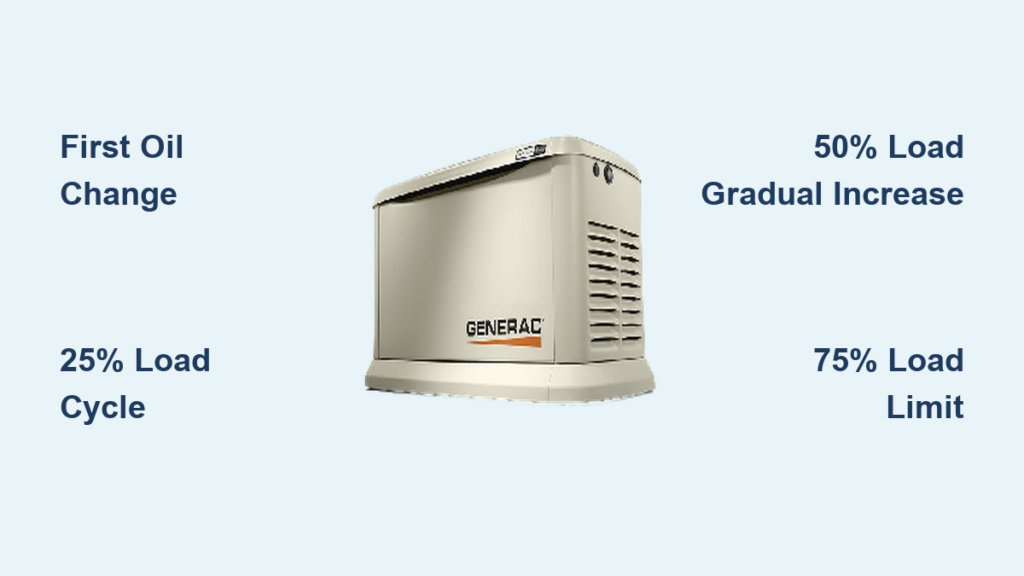
Your first oil change within 5 operating hours removes metal shavings from new engine break-in. Skip this, and debris scores cylinder walls permanently.
- Warm engine 3–5 minutes—cold oil traps metal particles.
- Position 48 oz catch pan under the 3/8-inch magnetic drain plug.
- Remove plug with torque wrench set to 10 ft-lb; let drain 5 full minutes.
- Install new copper washer (part 692236) and tighten plug to exactly 15 ft-lb (20 N·m). Overtightening cracks the crankcase.
- Refill slowly to upper dipstick mark using a narrow-spout funnel.
- Run 30 seconds, recheck level, and top off if needed—never guess.
Warning: Using the wrong washer or torque spec causes leaks that hydrolock the engine. Keep spare washers in your generator toolkit.
Diagnose Oil Change Intervals Faster Than DEWALT Recommends
DEWALT’s 50-hour standard interval assumes clean conditions. Real-world jobsites demand adjustments:
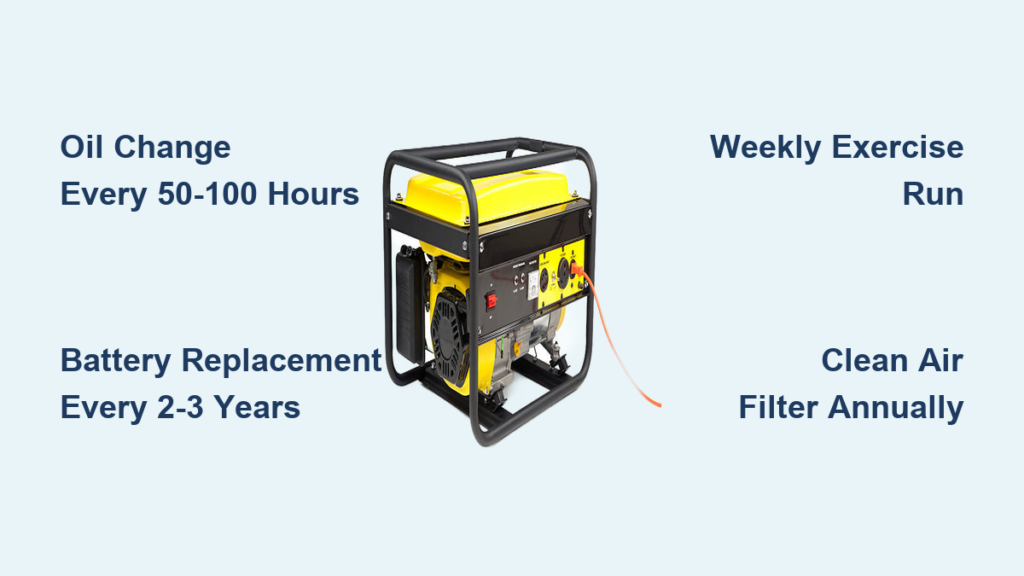
- Normal use (clean garage/storage): Change oil every 50 hours or 6 months—whichever comes first. Stale oil absorbs moisture.
- Dusty job sites or sawdust-heavy workshops: Change every 25 hours. Silica particles act like sandpaper in the crankcase.
- Before storage >90 days: Always drain old oil—it turns acidic and corrodes bearings. Refill with fresh 10W-30 synthetic.
Skip These Costly Oil Check Mistakes
- Mistake: Checking oil on sloped ground → False low reading
Fix: Level the generator; wait 2 minutes after shutdown - Mistake: Topping off to upper mark when cold → Overfill when hot
Fix: Add oil only if below lower mark; recheck after running - Mistake: Ignoring filter changes → Clogged filter starves engine
Fix: Replace spin-on filter (part 492932/696854) every 100 hours
Synthetic vs Conventional Oil: DEWALT’s Unchanged Rules

Despite marketing claims, DEWALT does not extend oil change intervals for synthetic oil. Both require 50-hour changes for warranty validity. But synthetics deliver key advantages:
| Factor | Conventional Oil | Full-Synthetic Oil |
|---|---|---|
| Cold Starts Below 0°F | Struggles to flow | Starts instantly at -20°F |
| Oil Consumption | Higher burn-off | 30% less usage |
| High-Temperature Runs | Thins excessively | Maintains viscosity |
| Cost per Change | $8–$12 | $15–$20 |
Reality Check: Synthetic 10W-30 prevents cold-start wear but won’t let you skip changes. DEWALT’s warranty terms override oil manufacturer claims.
Stop These 4 Oil-Related Generator Failures Now
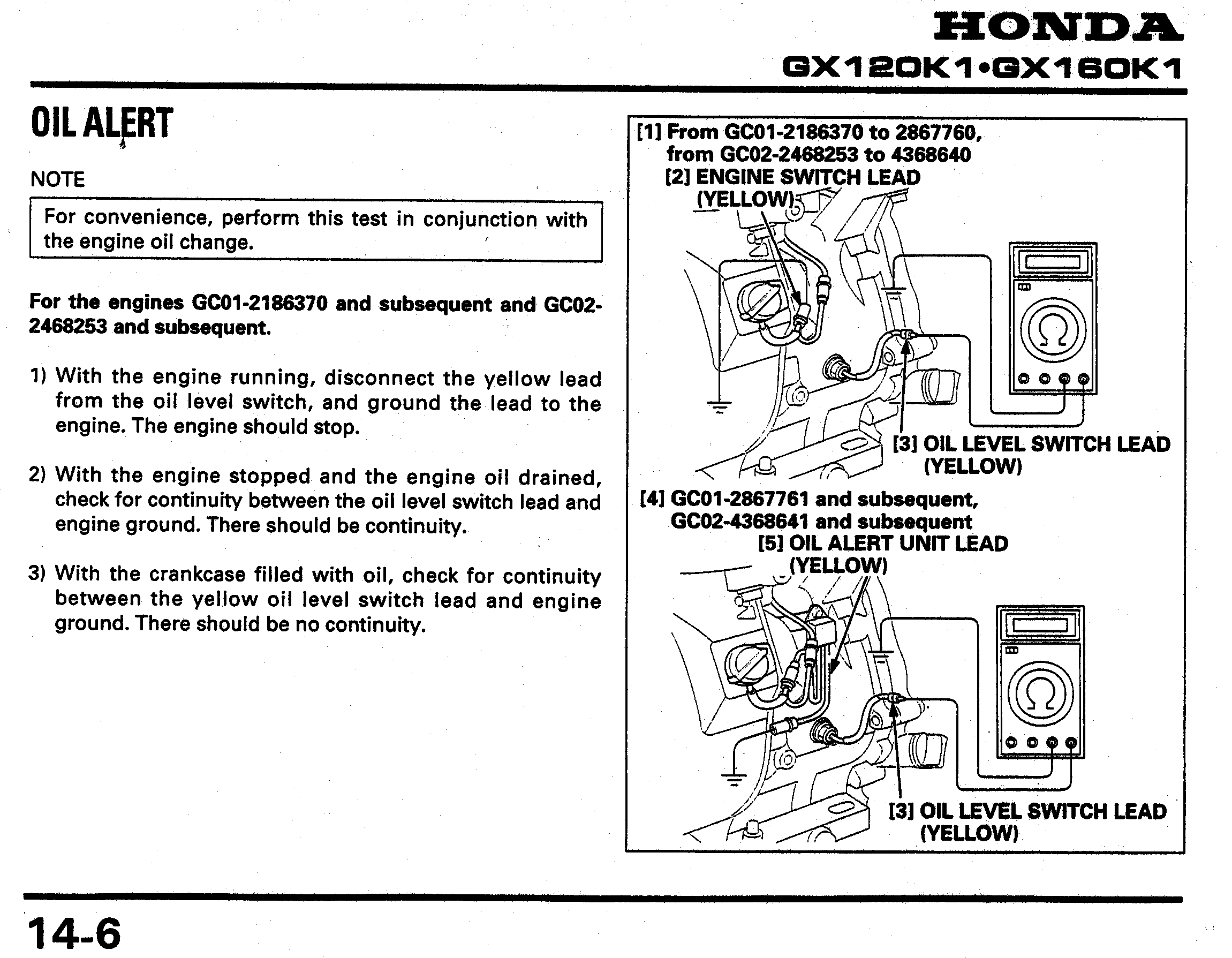
Problem: Burning 0.5+ oz oil per hour
Cause: Overfilling or wrong viscosity (e.g., 5W-20)
Fix: Drain to exact dipstick level; switch to DEWALT-approved 10W-30
Problem: Milky oil on dipstick
Cause: Coolant contamination from head gasket failure
Fix: Change oil immediately; inspect gasket before restart
Problem: Metal flakes on dipstick
Cause: Bearing or piston ring disintegration
Fix: Shut down immediately—continued use destroys the engine
Problem: Persistent drain plug leak
Cause: Reused copper washer or incorrect torque
Fix: Install new washer (692236); torque to 15 ft-lb only
Verified Oil Brands That Won’t Void Your Warranty
Avoid “universal” oils—use only these DEWALT-compliant options:
- Briggs & Stratton Synthetic 10W-30 (part 100074): Jobsite-proven for pressure washer engines
- Honda GN4 10W-30 (part 08207-10W30): Meets DEWALT’s strict oxidation resistance specs
- Mobil 1 10W-30 Full-Synthetic: Widely available at auto stores
- Shell Rotella T6 5W-30: Only for extreme cold—not for year-round use
Critical: If the API donut shows “SP” or “SN,” it’s approved. Reject oils advertising “high zinc” or “additive packages”—DEWALT bans aftermarket additives.
Prepare for Storage: Oil Steps DEWALT Doesn’t Emphasize
Storing your generator improperly causes 70% of “mystery” startup failures. Do this before 90-day storage:
- Change oil while warm (old oil traps acids)
- Fill with 10W-30 full-synthetic—it resists moisture better
- Pull recoil 3 times with ignition OFF to coat cylinder walls
- Add fuel stabilizer and run 10 minutes to circulate treated gas
Never store with conventional oil—it degrades into sludge that blocks oil passages. Synthetic’s stable base stocks prevent this.
Keep your DEWALT generator ready for outages by using only SAE 10W-30 API SJ+ oil, changing it every 50 hours (or 25 in dust), and matching capacity to your DXGN model. One wrong oil choice voids your warranty and risks total engine failure when you need power most. Check the dipstick before every storm season—your backup power depends on it.