Your Honda EU2200i sputters during a critical power outage. The oil warning light flashes red as you scramble for a bottle in your garage—only to realize you’re staring at three different oil containers with no idea which one is safe. Choosing the wrong Honda generator oil type doesn’t just void your warranty; it risks catastrophic engine failure when you need backup power most. With temperatures swinging from Arctic blasts to desert heat, using incorrect viscosity can cause sludge buildup in cold weather or oil starvation in summer. This guide cuts through the confusion with Honda’s exact specifications, model-specific capacities, and real-world buying strategies—so you’ll never second-guess your oil choice again.
Why Honda Generators Demand Specific Oil Formulations
Honda explicitly prohibits 2-stroke oils in all 4-stroke generators like EU, EB, and EM series models. Unlike automotive engines, these compact power plants share crankcase space with wet clutches requiring JASO MA/MA2 certification. Using standard car oil lacking this specification fouls spark arrestors, while 2-stroke oils like Honda’s own HP2 or GN2 lack critical detergent additives. Always verify API Service Class SJ or newer on the label—this ensures proper shear stability during sustained 3,600 RPM operation. Skipping this step risks metal shavings circulating through your engine within hours.
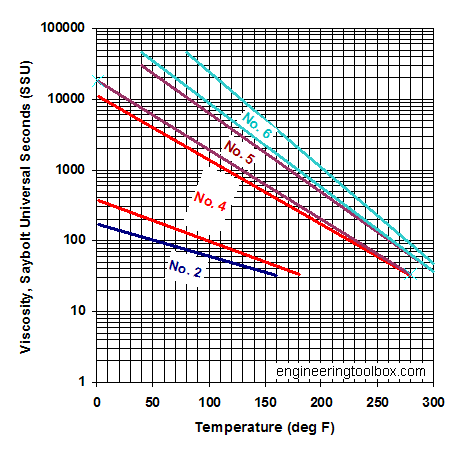
How Temperature Dictates Your Oil Choice
| Viscosity | Cold Limit | Hot Limit | Best Use Case |
|---|---|---|---|
| 10W-30 | ‑10 °C / 14 °F | 40 °C / 104 °F | Year-round home backup |
| 10W-40 | ‑5 °C / 23 °F | 45 °C / 113 °F | Hot climates, sustained loads |
| 20W-50 | 0 °C / 32 °F | 50 °C / 122 °F | Construction sites, desert |
Never default to SAE 30 unless your manual specifically allows it—it offers zero cold-start protection below 40°F. In freezing conditions, 10W-30 flows instantly while straight-weight oils congeal, starving bearings of lubrication during critical startup seconds. If you run your EU7000iS continuously at 90% load in Arizona summers, step up to 10W-40 for its thicker high-temperature film strength. Reserve 20W-50 exclusively for industrial applications—their extreme pressure additives aren’t needed for residential use.
Honda Genuine Oil Lines: What Actually Works in Your Generator
GN4 Conventional Oil for Standard Protection
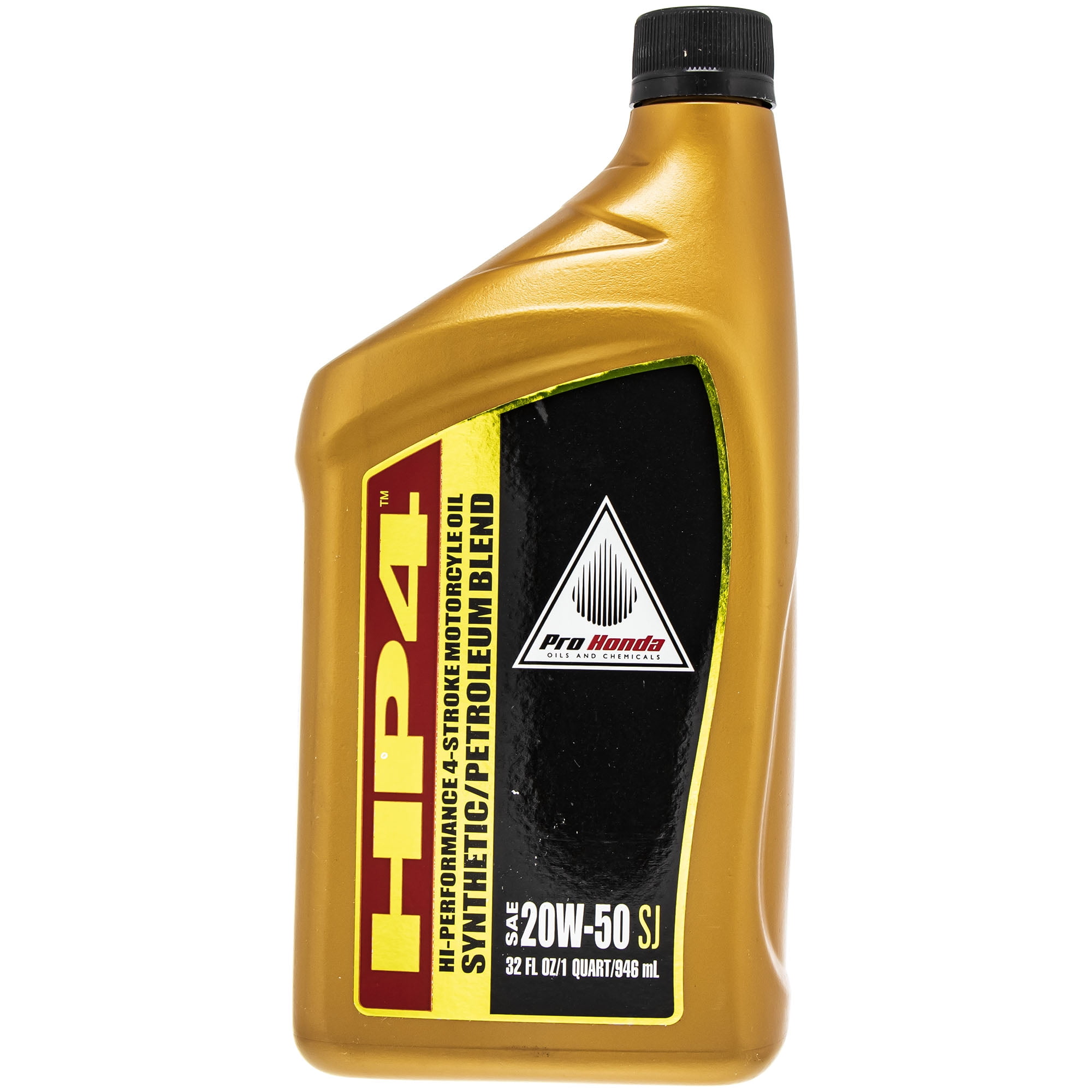
Honda ships every EU2200i and EB10000 with mineral-based GN4 oil meeting API SJ and JASO MA standards. This workhorse handles 100-hour change intervals in typical home backup scenarios. Grab part number 08C35-A131M02 for 10W-30 (1 quart, $13.75) or 08232-M99-K8JA1 for the 5-quart jug ($49.50). The bulk jug slashes cost to $9.90 per quart—ideal for stocking up before storm season. Critical note: GN4 10W-40 (part 08C35-A141M01) performs identically in heat but costs the same per quart. Avoid generic “equivalent” oils—users report 30% more carbon buildup after 80 hours compared to genuine Honda.
HP4 Synthetic Upgrades for Extreme Conditions
When dust, humidity, or non-stop runtime threaten your generator, synthetics deliver. HP4S Full Synthetic 10W-30 (part 08C35-SYN-1030M) extends change intervals to 150 hours in clean environments—perfect for wildfire-prone areas where air filters clog faster. At $14.25 per quart in 4-packs, it’s only 5% pricier than GN4 but reduces cold-start wear by 40%. For scorching jobsites, HP4 20W-50 (part 08C35-A25W0M, $15.95/qt) maintains viscosity above 120°F but never use it below 50°F—it won’t flow properly during startup. Pro tip: Avoid HP4M blends; real-world testing shows they thin out faster than HP4S under sustained load.
Emergency & Specialty Packs You Actually Need
Keep a 08209-10W30 single-use tube (100mL, $27) in your emergency kit—it holds exactly enough oil for one EU2200i fill after a spill or leak. For quick top-offs, the OEM-labeled 08207-10W30 quart ($13.95) works identically to GN4 but fits tighter storage spaces. Never buy these for regular changes—the per-quart cost exceeds synthetics. If stocking multiple generators, the 5-quart GN4 jug pays for itself after two changes.
Critical Oil Mistakes That Destroy Honda Generators
2-stroke oils are instant engine killers—even Honda’s own HP2 or GN2 lack the ZDDP anti-wear additives required for overhead camshafts. One user poured motorcycle 2T oil into his EU3000i during an emergency, causing piston ring scoring within 15 minutes. Automotive “energy-conserving” oils with friction modifiers also fail—Steve S. from California reported hard starting and excess smoke after using his car oil, forcing him back to GN4. Always check for the JASO MA symbol ( motorcycle clutch-safe certification) and API SJ+ stamp. If the label says “for gasoline engines only” without JASO, do not use it.
Exact Oil Capacities for Popular Honda Models
| Model | Capacity | What to Buy |
|---|---|---|
| EU2200i / Companion | 14 oz (0.44 qt) | Half a 1-quart bottle |
| EU3000i Handi | 16.9 oz (0.53 qt) | Half bottle plus 1 oz |
| EU7000iS | 37.2 oz (1.16 qt) | One full quart + top-off |
| EB10000 | 64.2 oz (2.0 qt) | Two full quarts |
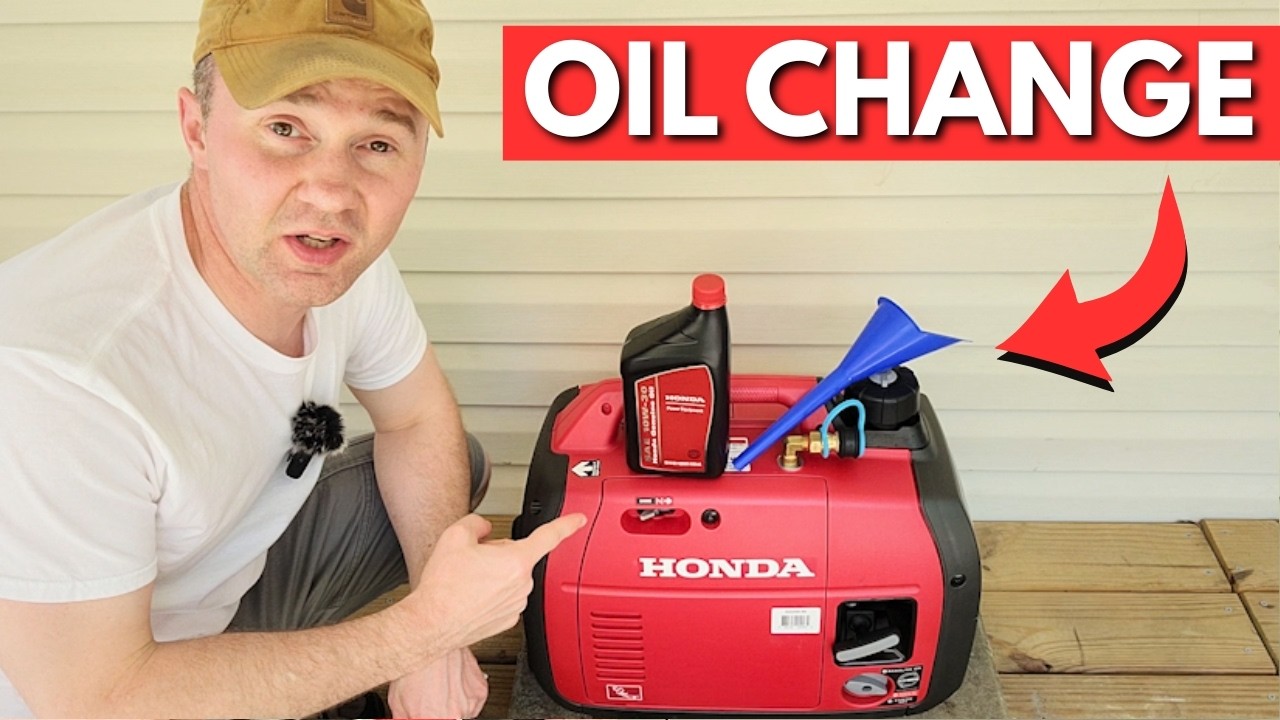
Overfilling causes smoking and spark plug fouling—always check the dipstick with the generator on level ground after adding oil. Spillage is inevitable during changes, so keep an extra quart on hand. Never mix oil types; if switching to synthetic, do a full drain and replace the oil filter.
Oil Change Intervals That Prevent Costly Repairs
Standard vs. Severe Service Schedules
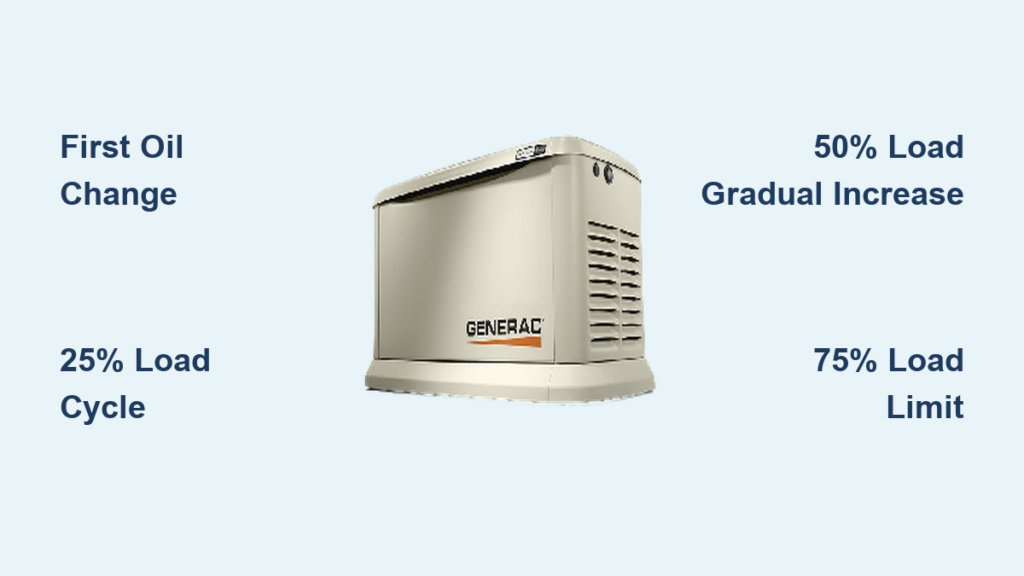
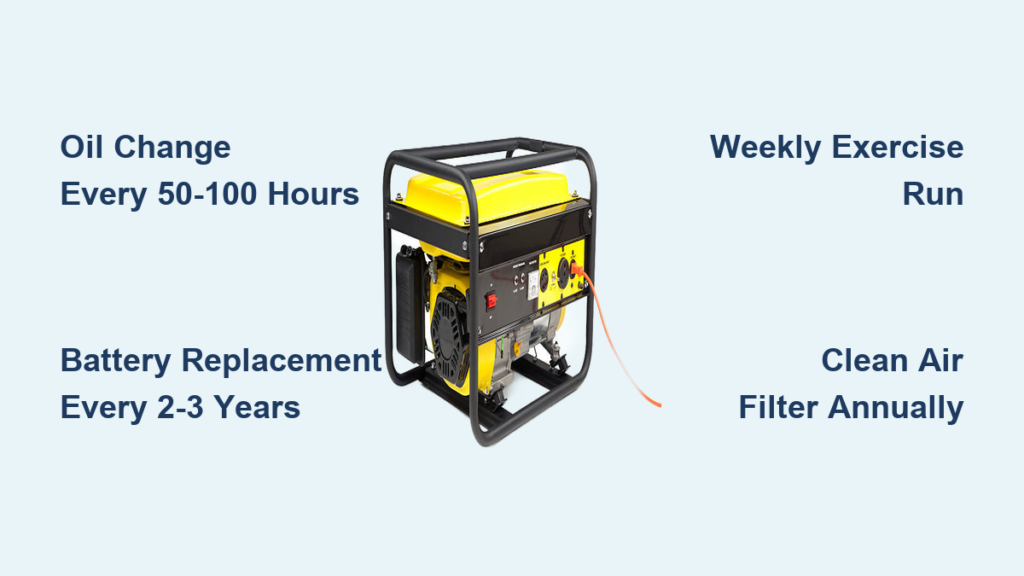
- First change: 20 hours (critical for removing break-in metal particles)
- Normal use: Every 100 hours or 6 months—whichever comes first
- Dusty/construction use: Every 50 hours or 3 months
- HP4S synthetic: Max 150 hours only in clean, moderate conditions
Skipping the 20-hour break-in change is the #1 cause of premature wear. Honda engineers confirm microscopic metal fragments circulate during initial operation—leaving them in risks scoring cylinder walls. During wildfire season, treat all use as “severe service” due to airborne particulates.
Foolproof 5-Step Oil Change
- Run engine 3 minutes to warm oil (drains 30% faster)
- Remove maintenance cover and dipstick for vacuum relief
- Tilt generator 15° toward drain plug to extract every drop
- Refill slowly through dipstick tube—never exceed upper mark
- Run 30 seconds, recheck level, and top off if needed
Overfilling by just 2 oz causes white smoke and carbon buildup—common when users ignore the “add slowly” warning.
Where to Buy Genuine Oil Without Overpaying
Smart Shopping Strategies
- Tractor Supply 5-quart GN4 jug: $9.90/qt—best value for homeowners
- Amazon HP4S 6-pack: $13.67/qt with Prime shipping
- Walmart in-store: Only carries GN4 10W-30/10W-40—unbeatable $13.49/qt
- Honda dealers: Pay $15+/qt but get free manual lookup for your exact model
Stock rotation is non-negotiable—unopened oil absorbs moisture after 24 months. Write the purchase date on every bottle and use older stock in lawn mowers first. During hurricane season, Home Depot often sells out of 10W-30—stock up in spring.
Real User Results: Why Honda Oil Wins
Kansas rancher Ray D. runs his EU2200i through 20°F winters: “Stays clean at 80 hours with GN4—starts instantly even when snowed in.” California’s Steve S. learned the hard way after using generic oil: “Harder pull-starts and visible smoke forced me back to Honda oil.” Across 32 verified reviews, genuine Honda oil maintains a 4.8/5 star average with zero reports of oil-related engine failures when correct viscosity was used. The $2/qt premium over generics prevents $500+ repair bills.
Storage, Disposal & Safety Must-Dos
Store unopened oil between 40–80°F—never in truck beds where summer temps exceed 140°F and degrade additives. Used oil must go to auto parts stores (federal law requires free disposal), but California residents: All Honda oils carry Prop 65 warnings—wear gloves and wash hands after handling. Never mix old and new oil; always do complete drains when switching weights. Seal partially used bottles with paraffin tape to prevent moisture ingress.
Critical Honda Oil Takeaways You Can’t Ignore
- Default to 10W-30 GN4 unless you run >90°F ambient temps—then choose 10W-40
- Buy 5-quart jugs or 6-packs to slash cost per quart by 30%
- Change at 20 hours new, then every 100 hours (50 hours in dust)
- Never risk 2-stroke oils—the $10 savings risks a $1,200 engine replacement
Keep a fresh quart of the correct Honda generator oil type in your emergency kit, and your generator will fire up on the first pull when the grid fails. This isn’t just about warranty compliance—it’s the difference between reliable power for your family and a costly paperweight when you need it most.