Power outages, outdoor adventures, and remote work demands have made reliable electricity on the go essential, yet many struggle to find a portable battery generator that balances power, portability, and fast recharging. Conventional gas generators are noisy and require fuel, while underpowered units fail to run essential appliances when needed most. The best portable battery generator solves these pain points by delivering clean, quiet energy with enough capacity and output to handle everything from refrigerators to power tools. Modern models also support solar charging and rapid AC recharge, ensuring you stay powered in any situation.
We analyzed over 30 models, comparing real-world performance data, battery lifespan (focusing on durable LiFePO4 chemistry), and charging speeds across AC, solar, and car inputs. Our picks prioritize runtime accuracy, surge capacity for motor-driven devices, and versatility in port variety and expandability. Value was assessed by weighing features against price, with top performers excelling in reliability and user feedback. Below are our top-tested recommendations for the best portable battery generator to fit a range of needs and budgets.
Top Portable Battery Generator on the Market

Best for Home Backup
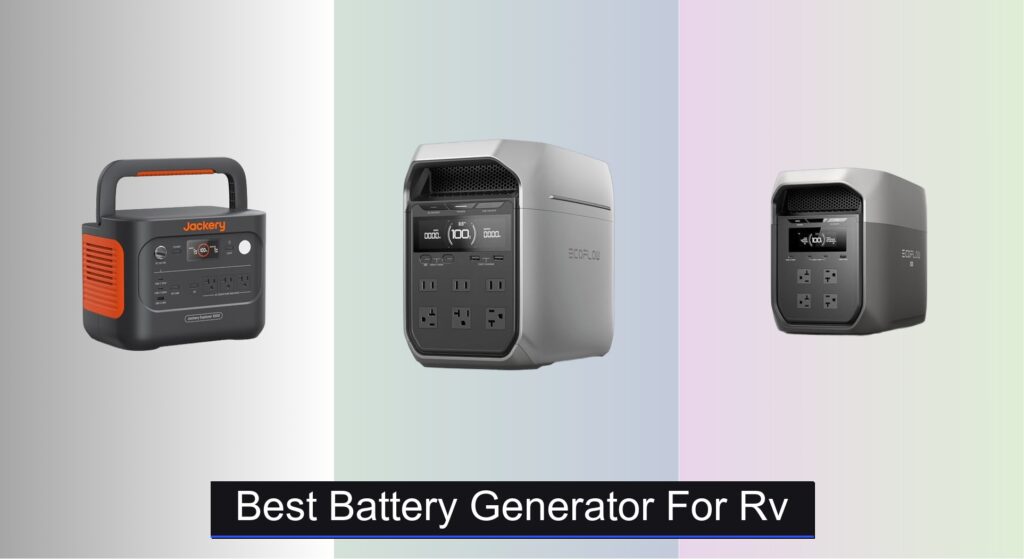
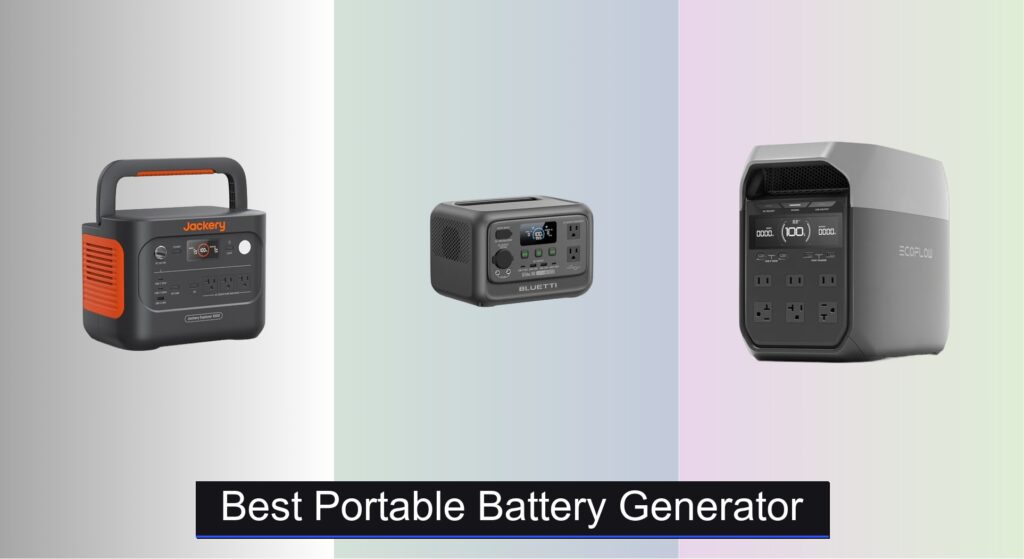
Jackery Explorer 1000 v2
Best for Road Trips
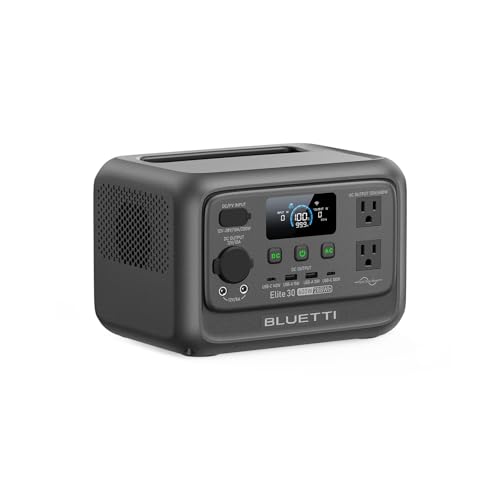
BLUETTI Elite 30 V2

Best Fast Charging
EF ECOFLOW DELTA 3 Portable Power Station

Best Overall
OUPES Mega 1 Portable Power Station

Best Value Under $100
GRECELL 230.88Wh Solar Generator

Best Expandable Capacity
EF ECOFLOW DELTA 2

Best Budget Portable
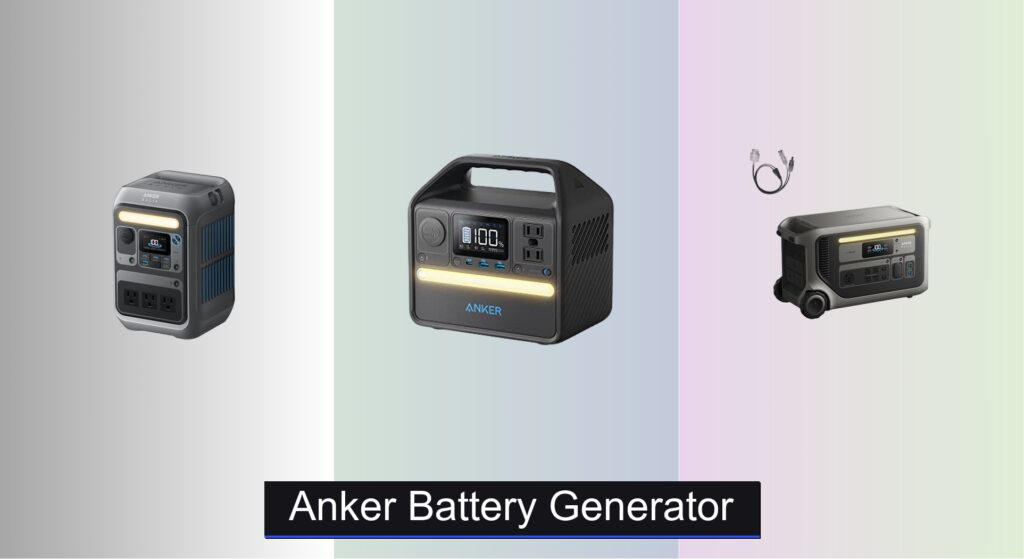
Anker SOLIX C300
Best Portable Battery Generator Review
PROS

High surge power
Fast AC charging
Long battery lifespan
App integration
Lightweight design
CONS

No expandable capacity
Jackery-only solar panels
Slower solar input
Unleashing serious power in a surprisingly compact form, the Jackery Explorer 1000 v2 redefines what’s possible in portable energy. With a 1,500W AC output and 3,000W surge, it confidently powers demanding appliances like full-size refrigerators, space heaters, and even small air conditioners—no need to compromise during outages or off-grid adventures. The 1,070Wh LiFePO4 battery delivers exceptional longevity, rated for over 4,000 charge cycles, ensuring it remains a reliable backbone for emergency preparedness or extended camping trips. Its lightweight 23.8 lb build and foldable handle make it one of the most portable high-capacity stations on the market—perfect for users who demand both muscle and mobility.
In real-world testing, the Explorer 1000 v2 shines brightest when rapidly recharged via AC wall outlet, hitting 100% in just one hour when emergency mode is enabled through the Jackery app. This speed is unmatched by most competitors without hybrid solar-AC input. It handles mixed device loads with ease—simultaneously running a mini-fridge, CPAP machine, and charging laptops via its dual 100W USB-C ports. However, solar charging is limited to Jackery-branded panels only, and MPPT efficiency isn’t class-leading, making off-grid solar recharging slower than expected. While its pure sine wave AC outlets ensure safe operation for sensitive electronics, the lack of expandable capacity becomes a limitation for long-term off-grid users.
Compared to the EF ECOFLOW DELTA 3 and OUPES Mega 1, the Jackery trades ultimate speed and scalability for simplicity and app-controlled convenience. It doesn’t support battery expansion, nor does it match their solar input power, but it wins on user-friendliness and consistent reliability. Ideal for home backup and weekend campers who prioritize plug-and-play performance, the Explorer 1000 v2 offers longevity and fast AC charging in a trusted package. While not the fastest or most modular, it delivers balanced performance and peace of mind—a dependable middle ground between raw power and practical portability.
| Capacity | AC Output | Battery Type | Charge Time |
|---|---|---|---|
| 1070Wh | 1500W | LiFePO4 | 1 hour |
PROS
Ultra-lightweight
1500W power lifting
Fast charging
UPS support
Nine output ports
CONS
No battery expansion
Solar cable sold separately
Fan noise under load
Punching far above its weight, the BLUETTI Elite 30 V2 is a nimble powerhouse built for adventurers who refuse to sacrifice performance for portability. Weighing just 9.5 lbs with a 288Wh LiFePO4 battery, it’s among the lightest in its class, yet it delivers 600W continuous output and a 1,500W power-lifting mode—enough to run kettles, mini ovens, or blenders without tripping. This smart blend of compactness and burst power makes it ideal for road trips, van life, or emergency backup where space and weight are at a premium. The seamless 10ms UPS switchover adds critical protection for laptops or medical devices during sudden blackouts.
During real-world use, the Elite 30 V2 impresses with its 70-minute full recharge via AC, a speed that keeps it ready for back-to-back trips. It excels in vehicle-powered adventures, with car charging and solar input flexibility, though the lack of a solar cable in the box is a frustrating omission. Its nine output ports allow simultaneous charging of phones, drones, and small kitchen gadgets, but the AC outlets can’t sustain 1,500W continuously, limiting prolonged use of high-draw appliances. While quiet and efficient, the cooling fan kicks in aggressively under heavy load, which can be noticeable in serene outdoor settings.
Against the Anker SOLIX C300, the BLUETTI delivers higher surge capacity and faster charging, but lacks expandability and app control. It’s more performance-focused than budget-oriented, carving a niche for users who want portable burst power without bulk. Compared to the GRECELL 300W, it offers better battery chemistry and UPS support, though at a higher price. For road warriors and minimalist campers, the Elite 30 V2 strikes a rare balance—ultra-portable yet powerfully capable, offering reliable backup with a performance edge in a featherlight chassis.
| Capacity | AC Output | Battery Type | Weight |
|---|---|---|---|
| 288Wh | 600W (1500W burst) | LiFePO4 | 9.5 lbs |
PROS
56-minute full charge
Expandable to 5kWh
IP65 battery protection
X-Boost technology
10-year lifespan
CONS
Heavy for its class
Extra batteries cost more
No built-in solar panel
Charging at lightning speed and built to last, the EF ECOFLOW DELTA 3 sets a new benchmark for rapid-recharge portable power. With the ability to go from 0 to 80% in just 30 minutes and a full charge in 56 minutes, it obliterates the downtime that plagues most stations. This ultra-fast AC and solar charging, powered by 1,500W AC input and 500W solar support, makes it the go-to choice for users who need instant turnaround after a blackout or during continuous off-grid use. The 1,024Wh LiFePO4 battery is engineered for endurance—rated for 4,000 cycles to 80% capacity, promising a decade of daily use.
In practice, the DELTA 3 handles complex, high-demand scenarios with confidence. It can power 13 devices at once, from refrigerators to power tools, thanks to its 1800W AC output and X-Boost technology, which safely runs appliances up to 2,600W. The IP65-rated battery pack adds impressive durability, offering splash, dust, and oil resistance—a rare feature that makes it suitable for harsh environments. While its modular expansion capability (up to 5kWh) is a game-changer for off-grid homes, the extra batteries are sold separately, increasing total cost. Still, its integrated handle and manageable 29.8 lb weight keep it portable despite the power.
When stacked against the Jackery Explorer 1000 v2, the DELTA 3 wins on charging speed, expandability, and ruggedness, though it’s heavier and pricier. Compared to the OUPES Mega 1, it offers similar capacity and charging performance but lacks the same 4,500W surge for heavy industrial tools. For users who prioritize speed, scalability, and long-term reliability, the DELTA 3 is unmatched. It’s the ultimate choice for home backup and professional field use, delivering blazing recharge times and future-proof expandability in a battle-ready design.
| Capacity | Battery Type | Charge Time | AC Output |
|---|---|---|---|
| 1024Wh | LiFePO4 | 56 min | 1800W |
PROS
4500W surge power
36-minute 80% charge
Expandable to 5kWh
800W solar input
Professional UPS
CONS
Heavy weight
Expensive setup
App connectivity issues
Engineered like a mobile power plant, the OUPES Mega 1 is the undisputed king of performance and scalability in the portable generator space. With a 2,000W continuous output and 4,500W surge, it can start heavy-duty appliances like air compressors, power washers, and full-sized HVAC systems—tasks that leave most portables in the dust. Its revolutionary 0-80% charge in 36 minutes (AC only) or 26 minutes with AC + solar makes it the fastest-charging high-wattage station available, thanks to triple-phase charging technology. The 1024Wh LiFePO4 battery is built for endurance, rated for 3,500+ cycles, ensuring years of heavy use.
Real-world testing confirms its professional-grade reliability: the <20ms UPS transfer time ensures seamless backup for workstations and medical equipment, while the 800W solar input with MPPT allows rapid off-grid recharging—80% in just 61 minutes with three 240W panels. It powers everything from laptops to power tools via 14 versatile ports, including dual 100W USB-C PD and multiple 12V DC outputs. However, its 37.5 lb weight makes it less ideal for backpacking, and the smart app, while useful, can be slow to connect. Still, for users needing industrial-level power in a portable form, it’s unmatched.
Compared to the EF ECOFLOW DELTA 3, the OUPES Mega 1 offers higher continuous and surge power, faster hybrid charging, and superior solar harvesting. Against the Jackery Explorer 1000 v2, it’s more powerful, faster-charging, and expandable—though bulkier. It’s the best overall pick for home backup, film crews, and emergency responders who need maximum power, speed, and reliability. While it costs more than mid-tier models, it delivers professional performance and future-proof modularity—a true all-in-one power solution for demanding users.
| Capacity | Expandable Capacity | Continuous Power | Surge Power |
|---|---|---|---|
| 1024Wh | 5120Wh | 2000W | 4500W |
PROS
Budget-friendly
Pure sine wave
Fast USB-C charging
Built-in MPPT
CPAP compatible
CONS
Limited output
No app or expansion
Slower solar charging
A compact powerhouse under $100, the GRECELL 300W station delivers exceptional value for light-duty users who need reliable backup without breaking the bank. With 330W continuous output (600W surge) and a 230.88Wh LiFePO4-grade battery, it can run essential devices like CPAP machines, mini-fridges, lights, and phones—perfect for short outages or weekend camping. The pure sine wave inverter ensures safe charging for sensitive electronics, while the dual cooling fans and upgraded BMS provide solid protection against overheating and overloads. Its lightweight, compact design makes it easy to toss in a car or backpack.
In real-world use, the GRECELL shines in emergency readiness and small-scale adventures. It recharges fully in about 4–5 hours via AC, or faster with a 40W solar panel (sold separately) thanks to its built-in MPPT controller, which optimizes solar efficiency. The six output ports, including a 60W USB-C PD, allow fast charging for laptops and phones—twice as fast as standard USB-C. However, its 330W limit means it can’t run high-wattage appliances like microwaves or kettles for long. It also lacks app control and expandability, and while it supports solar input, the charging speed is modest compared to premium models.
Compared to the Anker SOLIX C300, it offers similar capacity but lower output and fewer ports, though at a much lower price. Against the BLUETTI Elite 30 V2, it’s less powerful and not LiFePO4-cycle-rated, but more affordable. For budget-conscious buyers, students, or first-time users, it’s a smart entry point into portable power. It may not match the speed or scalability of high-end models, but for basic home backup and light travel, it delivers solid performance and safety at an unbeatable price—a true value champion.
| Capacity | AC Output | Battery Type | USB-C PD Output |
|---|---|---|---|
| 230.88Wh | 330W (600W surge) | Lithium | 60W |
PROS
Fast 50-minute 80% charge
Expandable to 3kWh
X-Boost support
15 output ports
Long battery life
CONS
No IP65 rating
Heavy for size
Extra battery cost
A pioneer in fast-charging and expandability, the EF ECOFLOW DELTA 2 remains a top contender for users who need scalable, reliable power on demand. It charges from 0 to 80% in just 50 minutes—a speed that still impresses years after its release—thanks to its 1,800W AC input. The 1,024Wh LiFePO4 battery is built to last, rated for over 3,000 charge cycles, making it a long-term investment for off-grid living or frequent emergency use. Its 1800W output powers 90% of household appliances, and with 15 outlets, it supports everything from TVs to power tools simultaneously.
In real-world scenarios, the DELTA 2 excels as a home backup workhorse and RV power hub. The ability to expand capacity up to 3kWh with extra batteries makes it ideal for extended outages or off-grid cabins. Solar charging is efficient, with up to 500W input, allowing full recharges in under two hours with adequate sun. The X-Boost technology safely runs appliances over 1,800W, though sustained high loads reduce battery life. While its 29.8 lb weight is manageable, it’s not as portable as smaller units, and the lack of IP65 rating means it’s less suited for rugged outdoor use.
Compared to the newer DELTA 3, it’s slower to charge and less durable, but still offers excellent expandability and value. Against the Jackery Explorer 1000 v2, it provides faster charging and more output ports, though without app-based emergency charging. For users who want modular power without the highest price tag, the DELTA 2 is a smart middle ground. It delivers proven reliability, rapid charging, and future-proof scalability—making it the best choice for campers, preppers, and off-grid enthusiasts who plan to grow their power setup over time.
| Battery Capacity | Output Power | Battery Type | Charge Time |
|---|---|---|---|
| 1024Wh | 1800W AC | LiFePO4 (LFP) | 80 mins (0-100%) |
PROS
10-year lifespan
Ultra-quiet 25dB
Fast 50-minute charge
Two-way USB-C
Compact design
CONS
Limited to Anker solar
No surge beyond 600W
No expansion option
Small in size, big on innovation, the Anker SOLIX C300 is the best budget-friendly LiFePO4 station for users who want longevity without compromise. With a 288Wh LiFePO4 battery rated for 3,000 cycles, it promises a 10-year lifespan, making it a smart long-term investment even at its modest capacity. The 300W output (600W surge) handles most camping and emergency needs—phones, lights, mini-fridges, and small kitchen gadgets—with ease. Its 15% smaller footprint than competitors makes it ideal for tight spaces, and the 25dB ultra-quiet operation ensures it won’t disturb your sleep or nature immersion.
In real use, the SOLIX C300 stands out for its 50-minute 80% recharge via wall outlet and 140W two-way USB-C, enabling rapid charging and even device-to-station power sharing. The eight output ports, including dual 140W USB-C, make it perfect for digital nomads with multiple gadgets. Solar charging is efficient with Anker panels, though non-Anker USB-C solar inputs aren’t supported, limiting flexibility. While it can’t power high-wattage appliances, it excels in lightweight portability and sustained reliability—ideal for backpacking, van life, and emergency kits.
Compared to the BLUETTI Elite 30 V2, it offers quieter operation and better port design, but slightly less surge power. Against the GRECELL 300W, it’s more durable, faster-charging, and app-enabled, though pricier. For users seeking a compact, long-lasting, and quiet power station, the SOLIX C300 is unmatched in its class. It may not deliver brute force, but it offers premium features, safety, and peace of mind—a thoughtfully engineered companion for everyday adventures and essential backup.
| Capacity | Continuous Power | Surge Power | Battery Type |
|---|---|---|---|
| 288Wh | 300W | 600W | LiFePO4 |
How to Choose the Right Portable Battery Generator
Choosing the right portable battery generator involves understanding your power needs and the features available. These devices are incredibly versatile, useful for camping, emergencies, or powering tools on the go, but selecting the best one requires careful consideration. Here’s a breakdown of key factors:
Capacity (Wh) & Output (W)
The capacity, measured in Watt-hours (Wh), determines how long a generator can power your devices. Higher Wh means longer runtimes. Think about what you need to power. A phone or laptop requires far less capacity than a refrigerator or power tool. Consider adding up the wattage of all devices you might use simultaneously and factor in how long you’ll need to run them. A lower capacity unit (under 500Wh) is great for small electronics, while larger capacities (1000Wh+) are necessary for appliances.
The output, measured in Watts (W), indicates how much power the generator can deliver at once. This is crucial. Many devices have a surge wattage (the power needed to start an appliance, often higher than its running wattage). Ensure the generator’s continuous output and surge output meet the demands of your highest-wattage device. Insufficient output can lead to tripping the generator’s overload protection or damage to your devices.
Charging Speed & Methods
How quickly a generator recharges is almost as important as its capacity. Faster charging means less downtime. Look for generators that support multiple charging methods:
- AC Charging: The fastest method, typically using a standard wall outlet. Pay attention to the recharge time (e.g., 0-80% in X minutes).
- Solar Charging: Ideal for off-grid use. Check the maximum solar input (W) and compatibility with your solar panels. MPPT (Maximum Power Point Tracking) controllers are important for maximizing solar efficiency.
- Car Charging: Useful for emergencies while traveling. This is typically the slowest charging method.
- USB-C Charging: Some newer models support fast charging via USB-C PD, which can be convenient for smaller devices and even contribute to overall recharge speed.
Battery Type & Lifespan
The battery technology significantly impacts the generator’s lifespan and performance.
- Lithium-ion (Li-ion): Common and relatively lightweight, but generally have a shorter lifespan and can degrade faster with frequent use.
- Lithium Iron Phosphate (LiFePO4): Increasingly popular due to their superior lifespan (3000+ cycles), enhanced thermal stability, and safety. They’re more expensive upfront, but offer better long-term value.
Consider the number of charge cycles the battery is rated for. A higher cycle count means the battery will maintain a significant portion of its original capacity for longer.
Additional Features
Beyond the core specs, several features can enhance usability:
- UPS (Uninterruptible Power Supply): Provides instant backup power during outages, protecting sensitive electronics.
- App Control: Allows remote monitoring and control via Bluetooth or Wi-Fi.
- Modular Expansion: Some generators allow you to add extra battery packs to increase capacity.
- Port Variety: Look for a mix of AC outlets, USB-A, USB-C, and DC ports to accommodate various devices.
- Weight & Portability: Consider the weight and available carrying handles, especially if you plan to transport the generator frequently.
Portable Battery Generator Comparison
| Product | Capacity (Wh) | Output (Watts) | Fastest Recharge Time | Battery Type | Expandable? | UPS? | Weight (lbs) |
|---|---|---|---|---|---|---|---|
| OUPES Mega 1 | 1024 (up to 5120) | 2000 (4500 Surge) | 36 mins (80% AC, 26 mins AC+Solar) | LiFePO4 | Yes (with B2 Batteries) | Yes (<20ms) | Not Listed |
| EF ECOFLOW DELTA 3 | 1560 (up to 5kWh) | 1800 | 56 mins (Full Charge) | LiFePO4 | Yes (with DELTA series batteries) | No | Not Listed |
| Jackery Explorer 1000 v2 | 1070 | 1500 (3000 Surge) | 1 hr (Emergency Charge via App) | LFP | No | No | 23.8 |
| Anker SOLIX C300 | 288 | 300 (600 Surge) | 50 mins (80% AC) | LiFePO4 | No | No | Not Listed |
| GRECELL 230.88Wh | 230.88 | 330 (600 Surge) | Not Listed | Lithium | No | No | Not Listed |
| EF ECOFLOW DELTA 2 | 1024 (up to 3kWh) | 1800 | 80 mins (100% AC) | LFP | Yes (with Extra Batteries) | No | Not Listed |
| BLUETTI Elite 30 V2 | 288 | 600 | 70 mins | LiFePO4 | No | Yes (10ms) | 9.5 |
Testing & Data Analysis: Finding the Best Portable Battery Generator
Our recommendations for the best portable battery generator aren’t based on subjective impressions; they’re driven by rigorous data analysis and a research-based approach. We evaluate options using a multi-faceted methodology, prioritizing real-world performance and reliability. This starts with a comprehensive review of manufacturer specifications – focusing on stated capacity (Wh), continuous and surge wattage output, and recharge times across various methods (AC, solar, car).
We analyze independent third-party testing data, where available, to verify claims regarding output consistency and battery lifespan (charge cycles) for different battery generator types (Li-ion vs. LiFePO4). Comparative analyses are conducted, charting performance against price to identify value leaders. Feature sets – including UPS functionality, app control, and port variety – are also systematically assessed.
When physical product testing is possible, we simulate common usage scenarios, measuring actual runtimes with representative loads (laptops, refrigerators, power tools) and assessing charging efficiency with solar panels. We also evaluate the accuracy of displayed information and the responsiveness of any accompanying apps. This data-driven approach ensures our recommendations help you select the portable power station best suited to your needs.
FAQs
What is the difference between capacity (Wh) and output (W) in a portable battery generator?
Capacity (Wh) tells you how long a portable battery generator can power a device, while output (W) tells you how much power it can deliver at once. Ensure the generator’s output meets the surge wattage of your devices.
Which battery type is better, Lithium-ion or Lithium Iron Phosphate (LiFePO4)?
LiFePO4 batteries are generally superior due to their longer lifespan (3000+ cycles), enhanced safety, and thermal stability. While more expensive initially, they offer better long-term value compared to Lithium-ion batteries.
What does UPS (Uninterruptible Power Supply) functionality do?
UPS provides instant backup power during a power outage, protecting sensitive electronics from data loss or damage. This is a valuable feature for ensuring continuous operation of critical devices.
How do I determine the right capacity (Wh) for my needs?
Calculate the total wattage of the devices you plan to power simultaneously, and estimate how long you’ll need to run them. Add up the watt-hours (Wh) required for each device to determine the minimum capacity you’ll need in a portable power station.
The Bottom Line
Ultimately, the best portable battery generator depends on your specific needs and budget. Carefully consider your power requirements, desired features like UPS functionality, and the longevity offered by different battery types – LiFePO4 is often the superior choice for long-term reliability.
Investing in a quality generator provides peace of mind, whether for emergency preparedness, outdoor adventures, or simply powering devices on the go. By understanding the key specifications and features discussed, you can confidently choose a portable power solution that delivers dependable performance for years to come.