Picture this: you’re stranded in a desert with nothing but dry air around you. Yet with the right device, you could pull clean, drinkable water from that very air. That’s the revolutionary promise of atmospheric water generator technology—transforming invisible humidity into life-sustaining H₂O without traditional infrastructure. From ancient Incan fog collectors to today’s countertop units producing 9.5 liters daily, this technology has evolved from survival trick to practical solution for millions facing water scarcity.
Modern atmospheric water generator technology delivers tangible benefits right now. MIT researchers recently achieved 5.8 liters per kilogram of sorbent at just 30% humidity using copper-zeolite arrays, while DARPA’s $14 million investment pushes toward man-portable military units. Whether you’re eliminating plastic bottles at home or deploying emergency water farms after hurricanes, understanding this technology’s real-world applications is critical. This guide cuts through the hype to show exactly how AWG systems work, where they excel, and which model fits your specific needs.
Condensation Cooling Systems: How Standard AWGs Work
The most common atmospheric water generator technology relies on refrigeration principles similar to your home AC unit—but engineered specifically for water extraction. As ambient air passes through carbon felt and HEPA filters, it encounters cooled evaporator coils that drop temperatures below the dew point. This causes water vapor to condense into liquid droplets that collect in reservoirs.
Modern cooling systems integrate five critical stages: air filtration, condensation, sediment removal, carbon purification, and UV-C sterilization. The Spout countertop unit exemplifies this approach, using NASA-grade filters to eliminate PFAS and microplastics while producing 2.5 gallons daily. However, these systems hit performance walls below 18°C (65°F) or 30-40% humidity, consuming 0.3-1.1 kWh per liter—making them ideal for coastal regions but problematic in arid climates.
Why Humidity Levels Make or Break Cooling Systems
You’ll notice dramatic output changes when humidity drops below 40%. At 30% RH, standard cooling AWGs produce only 30-50% of their rated capacity—forcing many desert users to switch technologies. Coastal users in Miami or Singapore enjoy near-maximum output year-round, while Phoenix residents see significant seasonal dips. Crucially, altitude impacts performance too: every 1,000 feet elevation gain reduces air density and available moisture by approximately 10%, requiring larger units for mountain communities.
Desiccant-Based AWGs: Solving Arid Climate Challenges

When humidity plummets below 20%, desiccant absorption becomes the only viable atmospheric water generator technology. These systems use hygroscopic materials like zeolite or metal-organic frameworks (MOFs) that actively grab moisture molecules from air. The breakthrough comes during regeneration: solar-heated copper-zeolite arrays release captured water at 60°C, producing 5.8 liters per kilogram daily even at desert-level 30% humidity.
Solid vs. Liquid Desiccant Performance Showdown
Solid desiccant systems dominate modern deployments due to safety and efficiency. Zeolite-coated copper foam arrays regenerate with minimal energy input, while cellulose-konjac gum membranes achieve 13 liters per kilogram daily using only solar thermal energy. Liquid desiccants like lithium chloride offer higher initial absorption but require vacuum-assisted boiling (60-100°C) and pose corrosion risks—making them better suited for industrial settings than home use. For off-grid applications, solid systems paired with photovoltaic panels now deliver true energy independence.
Countertop Consumer Units: Real-World Performance Data

Household atmospheric water generator technology has reached remarkable maturity, with countertop units eliminating 8,760 plastic bottles annually per household. The Spout system leads with 9.5 liters daily output at $0.46 per gallon (using $0.12/kWh electricity), undercutting premium bottled water costs by 70%. Its quadruple filtration—5-micron sediment, activated carbon, dual UV-C, and ozone—delivers water 2.3x purer than municipal tap supplies.
Airowater Models: Flexibility for Variable Climates
For regions with seasonal humidity shifts, Airowater’s Dewpoint Smart offers a game-changing solution. Its 20-liter capacity unit automatically switches to municipal water during low-humidity periods, maintaining consistent output without manual intervention. At $850-1,100 retail, it targets households replacing $40/month bottled water deliveries—achieving full payback within 10 months. Pro tip: Place units near kitchen windows in humid climates to boost yield by 15-20% through natural convection currents.
Commercial-Scale Deployments: From Schools to Disaster Zones
Watergen’s GEN-M units demonstrate atmospheric water generator technology’s life-saving potential across six continents. In Uzbekistan’s Bukhara region, these plug-and-play systems provide 100% of school drinking water without infrastructure—critical where only 39% of Hanoi residents have safe tap access. During Hurricane Maria relief, FEMA deployed clustered units producing 48,000 liters daily for Puerto Rican communities.
Skysource’s XPRIZE Winner: Waste-to-Water Innovation
The $1.75 million XPRIZE-winning WEDEW system redefines sustainability by generating 2,000 liters daily from organic waste heat. Deployed in Cambodian hospitals and Sierra Leone schools, it uses no grid power while eliminating waste disposal costs. This hybrid approach—combining biomass gasification with desiccant regeneration—proves atmospheric water generator technology can thrive where traditional infrastructure fails.
True Cost Analysis: Beyond the Sticker Price
Many buyers fixate on upfront costs while overlooking operational realities of atmospheric water generator technology. A $1,500 Spout unit costs just $0.46 per gallon to operate at US electricity rates—versus $1.75 for premium bottled water. But crucially, coal-powered operation creates a 1,000x worse carbon footprint than reverse osmosis desalination, making renewable energy pairing essential for true sustainability.
Municipal Insurance Models: Risk Mitigation Strategy
Forward-thinking cities now adopt “water insurance” contracts instead of capital purchases. Paying $500-1,000 monthly for mid-scale units guarantees 48-72 hour emergency deployment during droughts or contamination events. Los Angeles recently signed such an agreement covering 50 public schools—transforming atmospheric water generator technology from luxury item to critical infrastructure.
Climate Limitations You Must Understand
No atmospheric water generator technology works universally. Below 18°C (65°F), cooling systems become exponentially less efficient, while desiccant units require supplemental heating below 15°C. In Denver’s high-altitude environment (5,280 feet), output drops 30% compared to sea-level installations due to reduced air density—requiring 40% larger units for equivalent yield.
Energy Dependency Reality Check
Continuous operation demands serious power: a 20-liter/day unit draws 300-1,000W—equivalent to running a refrigerator. Off-grid users must pair AWGs with substantial solar arrays (minimum 1kW per unit) and battery storage. During California’s 2023 heat dome, users reported 60% output reduction despite high temperatures because humidity plummeted below 20%. Always verify your location’s historical humidity data before purchasing.
Next-Gen Materials Eliminating Current Limitations
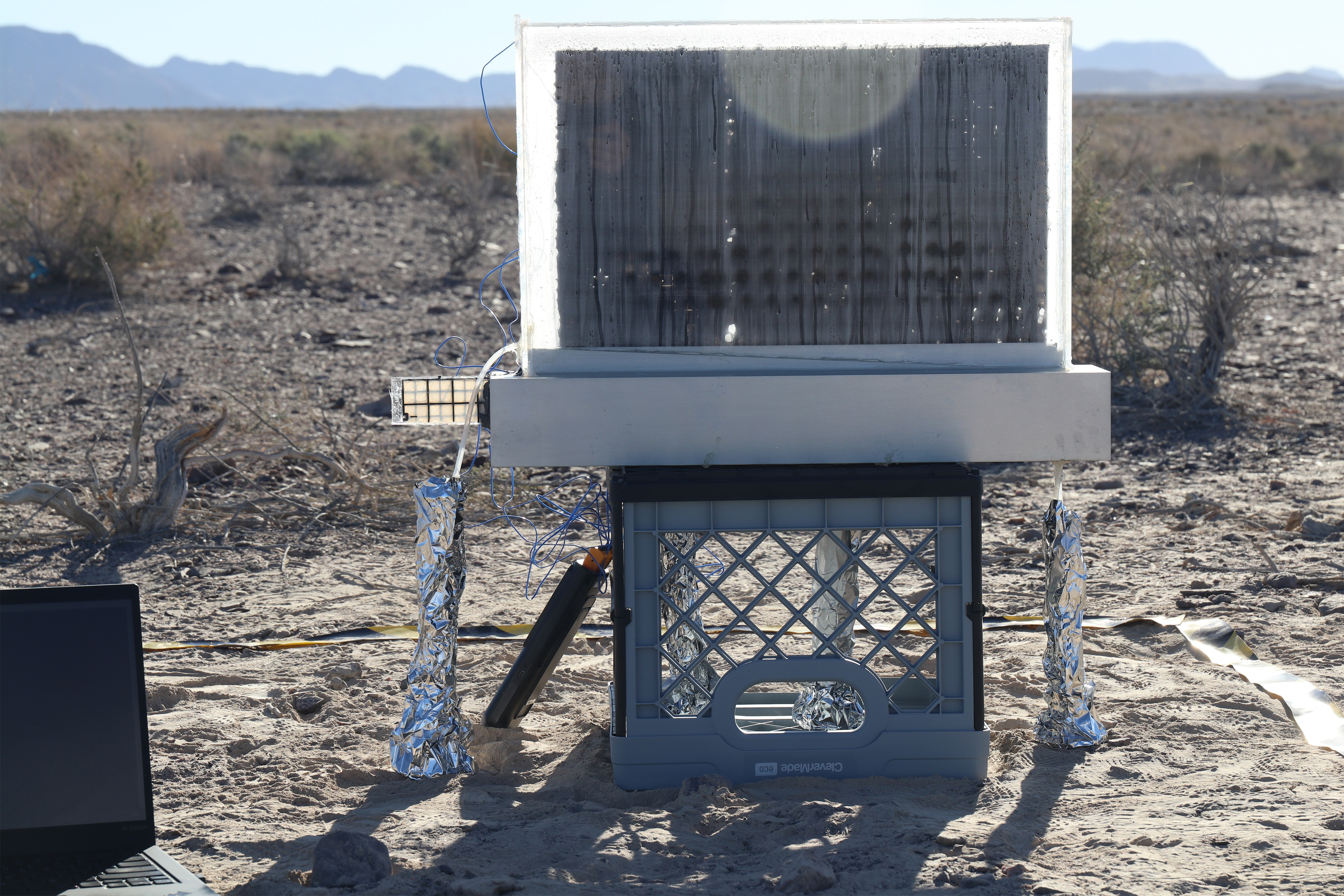
DARPA’s Atmospheric Water Extraction program targets man-portable units producing 150 soldier-days of water under 30kg—impossible with current tech. MIT’s cellulose-konjac gel membranes now achieve 6-13 liters per kilogram daily across 15-30% humidity using passive solar regeneration. These humidity-responsive materials absorb moisture at night and release it with morning sun—requiring zero external energy.
Smart City Integration Accelerating Adoption
The future lies in building-integrated atmospheric water generator technology. Singapore’s new Punggol Digital District incorporates fog-collection façades into high-rises, while Barcelona trials streetlamp-mounted AWGs that recharge during nightly humidity peaks. With 90 countries projected water-stressed by 2050, these passive systems could provide 10-15% of urban drinking water—turning architecture itself into a water source.
Final Note: Atmospheric water generator technology delivers proven solutions today—from eliminating plastic bottles with countertop units to providing emergency water for disaster zones. Choose cooling-condensation systems for humid coastal areas (40%+ RH) and desiccant-based models for arid climates. Always pair units with renewable energy to avoid counterproductive carbon footprints, and verify local climate data against manufacturer specs. With household payback periods under 12 months and life-saving deployments across 50+ countries, this technology has moved beyond novelty to become a critical tool for water security. For immediate next steps, compare Spout’s 9.5L/day system against Airowater’s climate-adaptive models using your region’s historical humidity data—your perfect water-from-air solution is closer than you think.