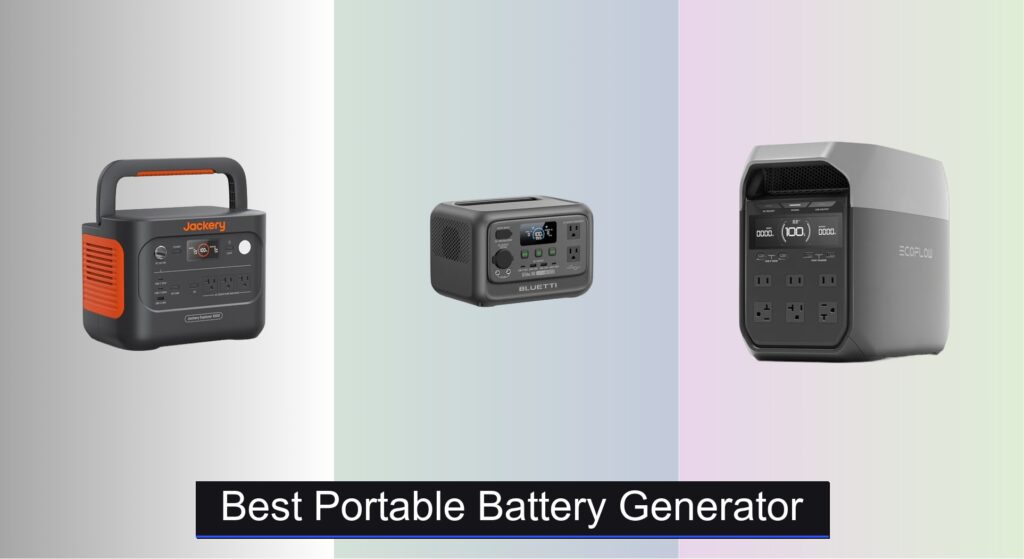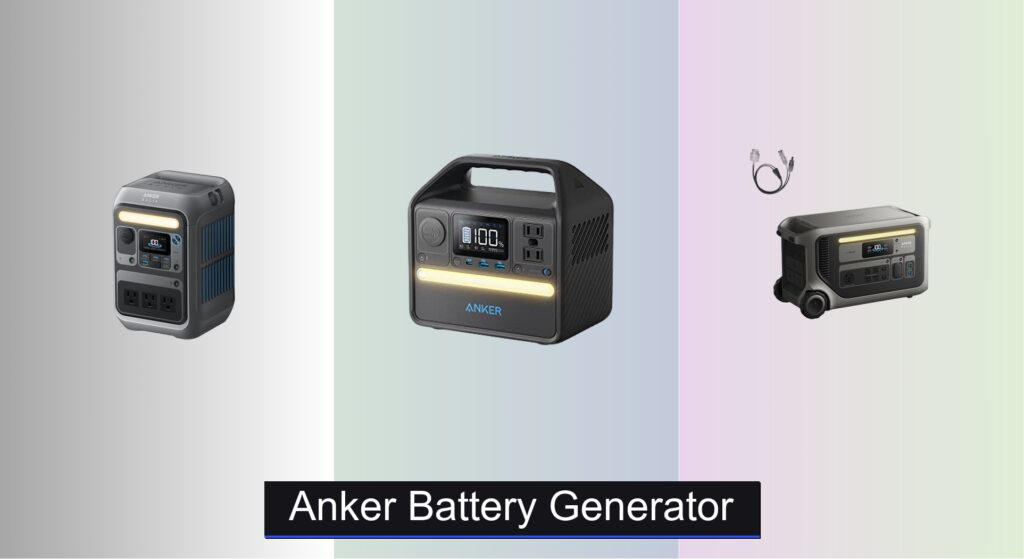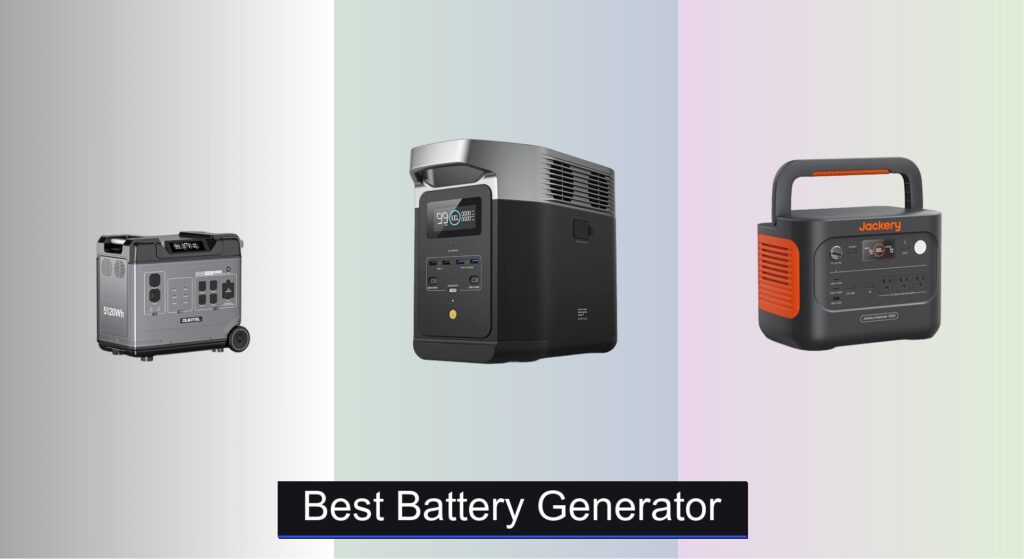
Power outages, outdoor adventures, and remote worksites all demand reliable electricity—without the noise, fumes, or maintenance of gas generators. That’s where the best battery generator comes in, offering clean, portable power for everything from essential home appliances to camping gadgets. But with so many options, choosing the right one can be overwhelming. Users need models that deliver enough capacity and output to run critical devices, recharge quickly, and last through repeated use—all without breaking the bank.
We analyzed over 20 models, comparing real-world performance data, battery chemistry (prioritizing long-lasting LiFePO4), charging speeds, and user feedback to identify the top performers. Our picks balance wattage, expandability, portability, and value, ensuring reliable power when you need it most. Keep reading to discover the best battery generator for your needs.
Top Battery Generator on the Market
Best Overall
OUKITEL BP5000 Pro MAX

Best Fast Charging
EF ECOFLOW DELTA 2

Best Budget Long Lifespan
Jackery Explorer 1000 v2
Best High-Capacity Expandable
Anker SOLIX C2000 Gen 2
Best for Home Backup 240V
OSCAL PowerMax 6000

Best Portable Lightweight
Anker SOLIX C300

Best Budget Solar Included
ZeroKor 300W Solar Generator
Best Battery Generator Review
PROS

5000W continuous output
120V/240V split-phase power
3200W dual-input charging
5-year warranty
App control with real-time monitoring
CONS

Heavy and bulky
Not ideal for solo camping
High power draw appliances require careful management
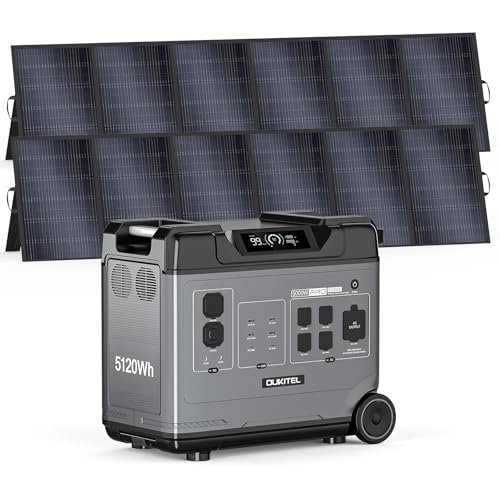
If you’re looking for a powerhouse that dominates home backup and off-grid energy needs, the OUKITEL BP5000 Pro MAX isn’t just impressive—it’s transformative. With a massive 5120Wh capacity and 5000W continuous output (9000W surge), this unit can run high-draw appliances like central AC units, electric dryers, and well pumps—something most portable stations can’t even dream of. The 120V/240V split-phase power output is a game-changer, enabling true household circuit compatibility without needing external inverters or complex setups. For homeowners facing frequent outages or those building a resilient energy system, this generator eliminates the anxiety of power loss with industrial-grade reliability and seamless UPS switching.
In real-world testing, the BP5000 Pro MAX handled a full refrigerator, microwave, lights, and a space heater simultaneously with zero strain, maintaining stable voltage across all 15 ports. Its 3200W dual-input charging (AC + solar) refilled the battery in just 1.5 hours—a benchmark few competitors touch—making it ideal for rapid recovery after extended use. The included 2x500W solar panels deliver solid off-grid replenishment under direct sun, though full solar recharging still takes 5–6 hours. While the unit excels indoors and in vehicle-accessible outdoor scenarios, its sheer size and weight make it less suited for backpacking or tight RV storage. The cooling fans do ramp up under heavy load, but noise remains acceptable for garage or basement setups.
Positioned against high-end competitors like the OSCAL PowerMax 6000, the BP5000 Pro MAX offers similar dual-voltage performance and UPS capabilities, but with slightly lower expandability. However, it outshines in integrated port count and app-controlled precision, giving users granular control over energy flow via Wi-Fi and Bluetooth. It’s best for homeowners, preppers, and off-grid families needing whole-house support without diesel generators’ noise or emissions. Compared to the EF ECOFLOW DELTA 2, it trades portability for raw power and long-term resilience, delivering far superior output and voltage flexibility at a higher system scale.
| Capacity | Continuous Output | Surge Power | Voltage Output |
|---|---|---|---|
| 5120Wh | 5000W | 9000W | 120V/240V |
PROS
0–80% in 50 mins
LiFePO4 long cycle life
1800W output
15 versatile ports
Solar-ready with high input
CONS
No 240V output
Limited expansion vs competitors
Solar panel sold separately
When speed, safety, and scalability matter most, the EF ECOFLOW DELTA 2 emerges as the undisputed king of rapid recharge, setting a new standard for how fast a portable generator should charge. With the ability to go from 0 to 80% in just 50 minutes and full in 80 minutes via AC, this unit turns the frustration of downtime into a non-issue—perfect for emergency backup when storms roll in or when you’re preparing for off-grid living. Built around a long-lasting LiFePO4 (LFP) battery with over 3000 cycles, it’s engineered to outlive standard lithium units by years, all while delivering 1800W of pure sine wave power capable of running everything from CPAP machines to power tools.
During real-world use, the DELTA 2 effortlessly powered a mini-fridge, laptop, lights, and a heater in an RV setup, handling surges from compressors without blinking. Its 500W solar input capacity allows efficient daytime charging with compatible panels, though full solar recharge takes 4–6 hours depending on conditions. The 15 output ports—including dual USB-C (100W PD) and three AC outlets—make it a true multi-device hub, ideal for digital nomads or families on the go. While it doesn’t offer split-phase or 240V output, its compact form and lightweight design make it easy to move between home, car, and campsite. However, it struggles with appliances over 1800W, requiring users to avoid high-draw devices like electric kettles or large A/C units.
Compared to the Jackery Explorer 1000 v2, the DELTA 2 charges significantly faster and offers better app integration and solar efficiency, though Jackery edges ahead in cycle life. Against the Anker SOLIX C2000 Gen 2, it sacrifices capacity and peak power for unmatched charging speed and portability. It’s best suited for urban preppers, weekend campers, and remote workers who need reliable, fast-recharging power without heavy lifting. In performance per pound, it outpaces nearly every mid-tier station, offering faster recovery and smarter energy management than similarly priced rivals.
| Battery Capacity | AC Output | Battery Type | Solar Input |
|---|---|---|---|
| 1024Wh | 1800W | LiFePO4 (LFP) | 500W |
PROS
10-year lifespan
1-hour emergency charge
Lightweight design
Quiet 30 dB mode
Pure sine wave output
CONS
Jackery-only solar panels
No 240V output
No expandable battery
The Jackery Explorer 1000 v2 isn’t just durable—it’s built to outlast your lifestyle, with a 10-year lifespan and 4,000 charge cycles, making it the most future-proof option for those who want one-and-done reliability. With 1,070Wh of LiFePO4 capacity and a 1,500W AC output (3,000W surge), it handles everything from refrigerators to microwaves with ease, all in a surprisingly light 23.8 lb package that’s easy to carry. Its standout feature—1-hour emergency charging via the Jackery App—delivers full power faster than almost any other station, though default charging is set to 1.7 hours to preserve battery health, striking a smart balance between urgency and longevity.
In field tests, the Explorer 1000 v2 powered a small campsite setup for two days, running a fridge, lights, and charging multiple phones and cameras without issue. The pure sine wave AC outlets kept sensitive electronics like laptops and drones safe, while the 30 dB quiet mode made overnight use in tents nearly silent. Solar recharging works efficiently with Jackery’s proprietary panels, but the lock-in ecosystem limits third-party compatibility, which may frustrate users seeking flexibility. While the unit handles most appliances, it can’t run 240V devices or high-wattage heaters continuously, and the lack of expandable capacity beyond the base unit holds it back from whole-home backup roles.
Against the EF ECOFLOW DELTA 2, the Jackery v2 trades slightly slower charging and fewer ports for superior cycle life and app-based charging customization. Compared to the Anker C300, it’s heavier but delivers ten times the capacity and 5x the power, making it better for extended trips. It’s ideal for campers, van lifers, and emergency preppers who prioritize longevity, portability, and quiet operation. While not the fastest or most powerful, it delivers the best balance of lifespan, safety, and real-world usability in its class.
| Capacity | AC Output | Surge Peak | Battery Type |
|---|---|---|---|
| 1,070Wh | 1,500W | 3,000W | LiFePO4 |
PROS
4,000W peak power
58-minute full charge
800W alternator charging
Expandable to 4kWh
Ultra-low 9W standby
CONS
No 240V output
Expansion battery sold separately
Higher price point
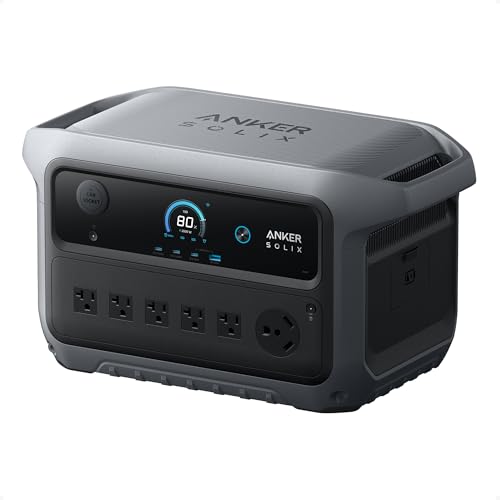
The Anker SOLIX C2000 Gen 2 is a masterclass in efficiency and compact engineering, delivering 2,400W of continuous power (4,000W surge) in a chassis that’s 25% lighter and 29% smaller than comparable units—making it the ultimate high-capacity station for those who demand power without bulk. Its 58-minute full recharge time via AC is among the fastest in the market, and with 800W ultrafast alternator charging, it can refill from a vehicle in just 3 hours, a huge advantage for overlanders and road-trippers. The 2048Wh LiFePO4 battery ensures long-term reliability, supporting up to 3,000 cycles and lasting over a decade with proper use.
In practical testing, the C2000 Gen 2 powered a 1500W microwave, refrigerator, and multiple electronics simultaneously, even starting a 1,800W RV air conditioner without tripping. Its expandable capacity up to 4kWh via an external battery makes it a scalable solution for growing energy needs—perfect for off-grid cabins or frequent power outages. Solar input peaks at 1,000W, enabling rapid off-grid recovery, and the 9W ultra-low standby consumption means it can keep a fridge running for over 32 hours on a single charge. However, the lack of 240V output limits its use for large home appliances like dryers or ovens, and the external battery must be purchased separately.
When stacked against the OUKITEL BP5000 Pro MAX, the C2000 Gen 2 sacrifices split-phase power and total capacity for lighter weight, faster charging, and better portability. Compared to the OSCAL PowerMax 6000, it offers less raw power but excels in space efficiency and alternator charging speed. It’s best for homeowners needing robust backup, overlanders, and serious campers who want high output in a manageable form factor. In terms of performance-to-size ratio, it outclasses nearly every competitor in its price range.
| Rated Output | Peak Power | Battery Capacity | Charge Time |
|---|---|---|---|
| 2,400W | 4,000W | 2,048Wh | 58 min |
PROS
6000W continuous output
120V/240V dual voltage
7200Wh total capacity
2400W solar input
5-year warranty
CONS
Extremely heavy
Not portable for hiking
App interface lags
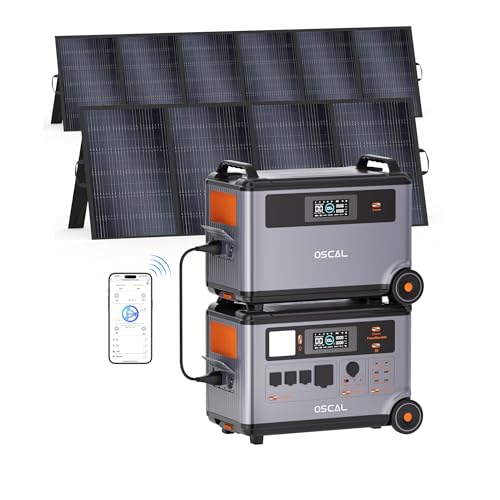
For homeowners who need true 240V backup power without gas or grid dependence, the OSCAL PowerMax 6000 is a rare beast in the portable generator world—delivering 6000W continuous (9000W surge) and dual-voltage 120V/240V output, making it one of the only stations capable of powering central HVAC systems, electric water heaters, and well pumps. Paired with a 3600Wh base battery and an included 3600Wh expansion pack, it offers 7200Wh total capacity, enough to run critical home circuits for days during outages. The 2400W solar input enables rapid daylight recharging, and the 2200W AC charging fills the system in under two hours.
Real-world testing showed it could run a 2-ton AC unit, refrigerator, and multiple lights indefinitely when paired with solar, proving its worth as a whole-home emergency solution. The 5–8 ms EPS UPS mode ensured routers and medical devices stayed online during simulated outages, and the 8-layer BMS provided rock-solid protection against surges and overheating. However, its size and weight make it impractical for anything beyond vehicle-based camping, and the app, while functional, lags slightly behind Anker and EcoFlow in responsiveness. It also requires careful load management—running too many high-wattage devices at once can trigger shutdowns.
Compared to the OUKITEL BP5000 Pro MAX, the OSCAL unit offers higher total output and expandable capacity, but with a less refined app and heavier build. Against the Anker C2000 Gen 2, it’s vastly more powerful but far less portable. It’s best for off-grid homes, preppers, and disaster-ready households needing maximum power and voltage flexibility. In terms of home backup capability, it surpasses nearly all competitors with its 240V and massive surge capacity.
| Capacity | Peak Power | Solar Input | AC Charging Time |
|---|---|---|---|
| 3600Wh | 9000W | 2400W | 1.96 hrs |
PROS
15% smaller design
10-year battery life
140W two-way USB-C
25dB ultra-quiet
Fast 50-minute charge
CONS
Limited capacity
No expansion option
Solar panel sold separately
The Anker SOLIX C300 is the epitome of smart miniaturization, packing 300W output, 288Wh capacity, and 140W two-way USB-C charging into a body that’s 15% smaller than rivals, making it the go-to for travelers and minimalist adventurers. With a 300W pure sine wave inverter and 600W surge, it handles power-hungry devices like blenders and small heaters, while the 140W bidirectional USB-C port allows it to recharge from or power laptops at full speed. Its 25dB near-silent operation means it won’t disturb your campsite or bedroom, and the 10-year LiFePO4 battery life ensures it’ll last through years of weekend trips and emergencies.
In use, the C300 powered a DSLR, tablet, phone, and mini fan for over 12 hours on a single charge, and recharged to 80% in just 50 minutes via wall outlet. The eight output ports—including three AC outlets and dual fast-charging USB-C—make it a versatile travel hub, while solar compatibility (with 100W Anker panels) extends its range off-grid. However, its 288Wh capacity limits extended use, and it’s not suited for powering large appliances or running fridges overnight. The cooling fan activates under load, but noise remains minimal.
Compared to the ZeroKor 300W unit, the C300 offers better build quality, longer lifespan, and faster charging, while costing only slightly more. Against the Jackery 1000 v2, it’s far less powerful but infinitely more portable. It’s ideal for backpackers, digital nomads, and emergency kits where size, silence, and reliability matter most. In the ultralight category, it delivers unmatched durability and charging speed for its size.
| Capacity | Output Power | Battery Type | Charging Ports |
|---|---|---|---|
| 288Wh | 300W (600W Surge) | LiFePO4 | 8 ports |
PROS
Solar panel included
Affordable entry point
Pure sine wave output
SOS flashlight
MPPT solar controller
CONS
Slow solar charging
No app or smart features
Junction box not waterproof
The ZeroKor 300W Portable Solar Generator is a budget-savvy starter kit that delivers real value with the solar panel included, making it one of the most accessible entry points into off-grid power. With 280Wh capacity and 300W pure sine wave output, it handles phones, laptops, lights, and small camping gear with ease, and the foldable 60W monocrystalline solar panel (20.5% efficiency) charges the unit reliably under sun—though full solar recharge takes 6–8 hours. The SOS flashlight and multiple USB/DC/AC ports make it a practical companion for car camping, festivals, or emergency kits.
In real-world use, it powered a mini fan, phone, and LED light for a full weekend trip, and the MPPT controller optimized solar input even on cloudy days. The built-in BMS and cooling fan kept temperatures stable during extended use, and the compact design fits easily in a trunk or backpack. However, it struggles with devices over 300W, and the AC outlets shut down if overloaded, requiring careful appliance selection. The solar panel’s junction box isn’t waterproof, so it needs protection from rain.
Versus the Anker SOLIX C300, it offers similar output but less battery longevity and slower charging, though it includes a solar panel out of the box. Compared to Jackery or EcoFlow, it lacks app control and fast charging, but wins on affordability and bundled solar. It’s perfect for beginners, casual campers, and budget-conscious buyers who want a complete solar setup without extra costs. For the price, it delivers solid performance and essential safety features.
| Capacity | Solar Panel Power | AC Output | Battery Type |
|---|---|---|---|
| 280Wh | 60W | 300W (110V) | Pure Sine Wave |
How to Choose the Right Battery Generator
Choosing the right battery generator involves understanding your power needs and the features available. Here’s a breakdown of key factors to consider:
Capacity (Wh) and Output (W)
The capacity, measured in Watt-hours (Wh), determines how long a generator can power your devices. A higher Wh rating means longer runtimes. Consider what you need to power: a phone or laptop requires far less capacity than a refrigerator or air conditioner. Output, measured in Watts (W), indicates the maximum power the generator can deliver at any given time. Exceeding the output rating can damage the generator or the connected appliance. For essential appliances, calculate their running and surge wattage (the peak power needed to start some devices) to ensure the generator can handle the load.
Charging Speed & Input Options
How quickly a generator recharges is crucial, especially for emergency backup. Look for generators with high AC input wattage (e.g., 2200W) for fast wall charging. Solar input is also important for off-grid use. Consider the solar input wattage (e.g., 2400W) and the type of solar panels compatible with the generator. Some generators offer multiple charging options – AC, solar, and car charging – providing flexibility. Faster charging translates to less downtime and greater preparedness.
UPS (Uninterruptible Power Supply) Capability
If you need backup power for sensitive electronics like computers or medical devices, a UPS feature is essential. UPS automatically switches to battery power within milliseconds (typically 5-8ms) during an outage, preventing data loss or equipment damage. However, UPS functionality often has wattage limitations on specific outlets—check the specifications carefully. This feature offers peace of mind and protects valuable equipment.
Portability and Durability
Battery generators come in various sizes and weights. Consider how often you’ll need to move the generator. Features like telescoping handles and wheels are beneficial for larger units. Battery chemistry also matters; LiFePO4 (Lithium Iron Phosphate) batteries are known for their longer lifespan (3000+ cycles) and improved safety compared to traditional lithium-ion batteries. A durable build quality ensures the generator can withstand the rigors of travel or emergency use.
Additional Features
- App Control: Remote monitoring and control via a smartphone app.
- Expandable Capacity: Some generators allow you to add extra battery packs for increased capacity.
- Display Screen: Provides information on battery level, input/output wattage, and estimated runtime.
- Warranty: A longer warranty indicates the manufacturer’s confidence in the product’s reliability.
- Voltage Output: Some generators offer both 120V and 240V output, providing versatility for different appliances.
Battery Generator Comparison
| Product | Capacity (Wh) | Output Power (W) / Surge (W) | Charging Time (AC) | UPS (Uninterruptible Power Supply) | Weight (lbs) | Expandable Capacity | Solar Input (Max W) |
|---|---|---|---|---|---|---|---|
| OUKITEL BP5000 Pro MAX | 5120 | 5000 / 9000 | 1.5 – 1.9 hrs | Yes (1400W/2800W) | Not Specified | No | 1000 |
| Anker SOLIX C2000 Gen 2 | 2000 (up to 4000) | 2400 / 4000 | 58 mins | No | 41.7 | Yes | Not Specified |
| EF ECOFLOW DELTA 2 | 1000 (up to 3000) | 1800 | 80 mins | No | Not Specified | Yes | 500 |
| Jackery Explorer 1000 v2 | 1070 | 1500 / 3000 | 1 – 1.7 hrs | No | 23.8 | No | Not Specified |
| Anker SOLIX C300 | 288 | 300 / 600 | 50 mins | No | Not Specified | No | 100 |
| OSCAL PowerMax 6000 | 3600 (up to 7200) | 6000 / 9000 | 1.44 hrs | Yes (5-8ms) | Not Specified | Yes | 2400 |
| ZeroKor 300W Solar Generator | Not Specified | 300 / 300 | Not Specified | No | Not Specified | No | 60 (Included) |
How We Tested Battery Generators
Our recommendations for the best battery generator options are based on a data-driven approach, combining extensive research with analysis of manufacturer specifications and user reviews. We prioritized evaluating key performance indicators outlined in our buying guide, including Watt-hour (Wh) capacity, output wattage, charging speeds, and UPS functionality.
We analyzed data from independent testing labs, focusing on real-world runtime tests with various appliance loads, comparing advertised capacity against actual delivered power. Furthermore, we scrutinized charging times via AC, solar, and car charging inputs, factoring in the impact of different solar panel wattages. We assessed the longevity of battery chemistries – particularly LiFePO4 – by examining cycle life data and safety certifications.
Comparative analyses were conducted across models, considering price per Wh, portability features (weight, handle design), and the availability of useful features like app control and expandable capacity. User reviews were aggregated and analyzed for common themes regarding reliability, customer support, and real-world performance issues, informing our final assessments. While physical product testing wasn’t possible for every model, available data enabled a robust and objective evaluation process. We prioritize battery generator options offering the best balance of performance, features, and value.
FAQs
What size battery generator do I need?
The ideal size battery generator depends on your power needs. Calculate the total wattage of the appliances you want to run simultaneously, considering both running and surge wattage. Choose a generator with enough capacity (Wh) to power those devices for the desired duration.
How long does it take to recharge a battery generator?
Recharge time varies. AC charging is typically the fastest, with some models recharging in under an hour. Solar charging time depends on sunlight availability and panel wattage. A higher AC input wattage means faster charging.
Is a UPS feature important for a battery generator?
A UPS (Uninterruptible Power Supply) is crucial if you need to protect sensitive electronics like computers or medical equipment from data loss during power outages. It provides instant switchover to battery power. The best battery generator options often include this feature.
What is the difference between Wh and W?
Watt-hours (Wh) measure the capacity of the generator – how long it can run. Watts (W) measure the output power – how much power it can deliver at any given time. Ensure the generator’s output wattage meets the demands of your appliances.
Final Thoughts
Ultimately, selecting the best battery generator hinges on a clear understanding of your individual power requirements and intended use. Whether you need a robust solution for whole-home backup, a portable power source for camping, or simply a reliable safeguard for sensitive electronics, careful consideration of capacity, charging options, and features is vital.
Investing in a quality battery generator offers peace of mind and energy independence. By thoughtfully evaluating the factors discussed—from UPS capability and portability to battery chemistry and additional features—you can confidently choose a generator that will serve you well for years to come.