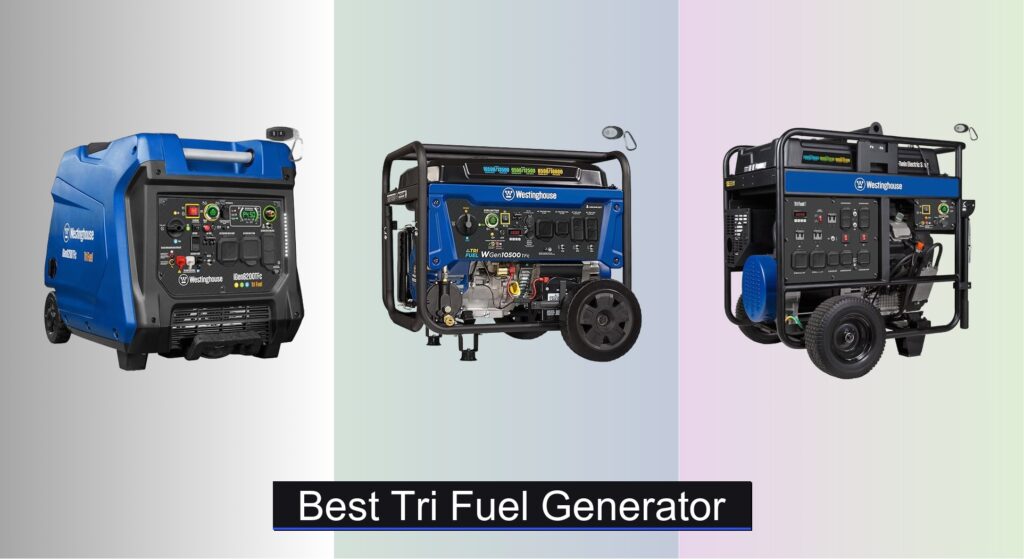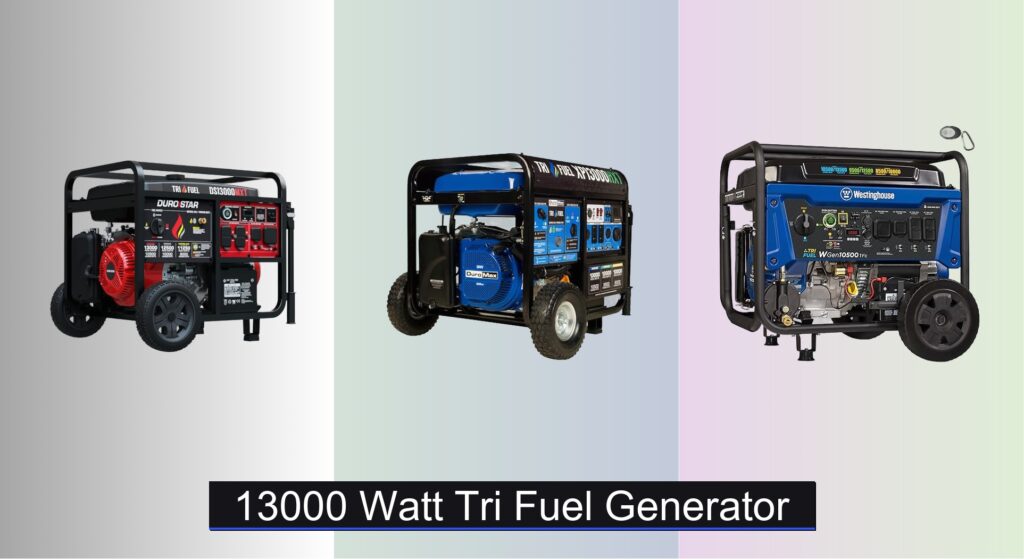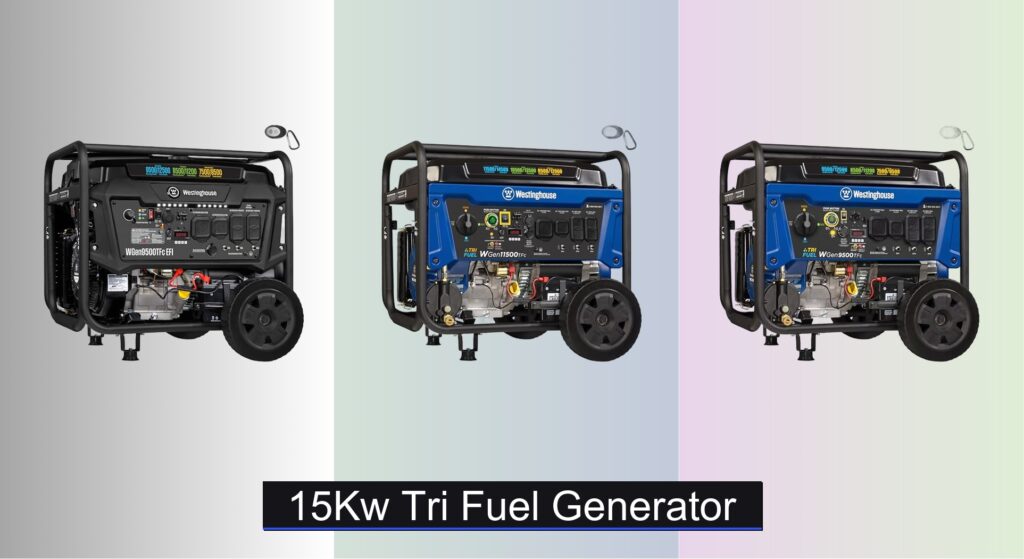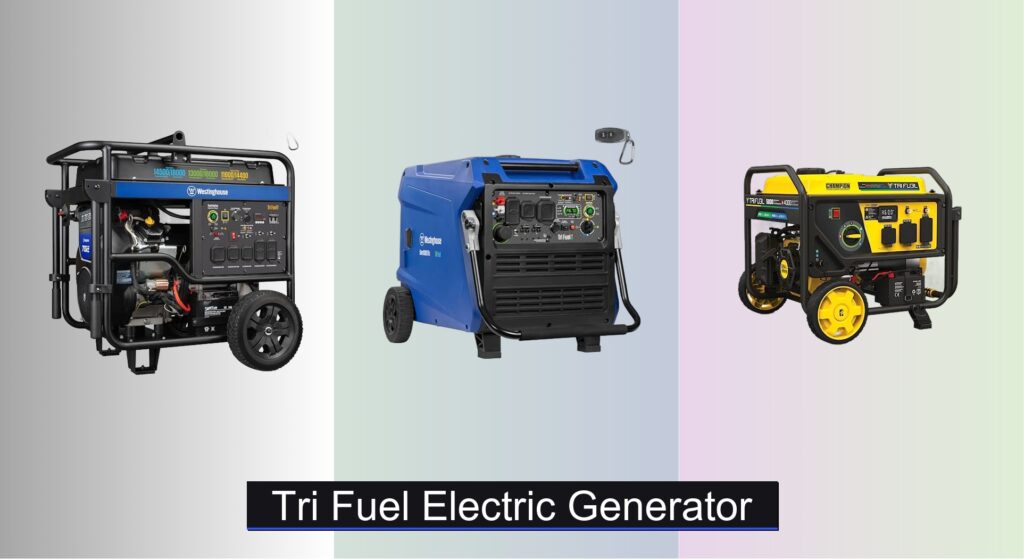
Power outages and outdoor adventures demand reliable electricity, but choosing the right generator can be overwhelming. Many users struggle with fuel availability, short runtimes, and the need for safe, portable power that handles everything from refrigerators to RVs. The best dual fuel generator solves these pain points by offering the flexibility of gasoline and propane, ensuring you’re never stranded without a fuel option while balancing performance and runtime.
We analyzed over 20 models, comparing surge and running wattage, fuel efficiency, safety features like CO shutdown, and real-world user feedback to identify top performers. Our picks prioritize reliability, clean power output, and ease of use across home backup and mobile applications. Keep reading to discover the best dual fuel generator for your needs.
Top Dual Fuel Generator on the Market

Best Value High Output
Westinghouse 12500 Watt Dual Fuel
Best Lightweight Option
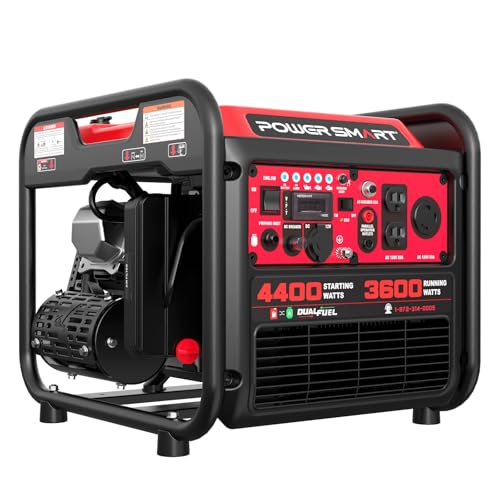
PowerSmart 4400-Watt Inverter Generator

Best Budget Friendly
WEN 5,600-Watt Dual Fuel

Best High Power Backup
Westinghouse 13500 Peak Watt Dual Fuel
Best Overall
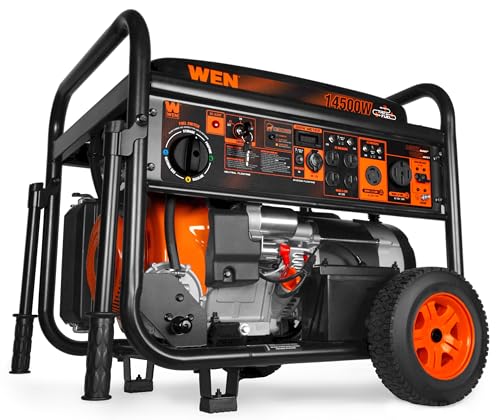
WEN 14,500-Watt Tri-Fuel Generator

Best Whole Home Power
DuroStar DS13000MX Dual Fuel

Best Quiet and Portable
WEN 3600-Watt Inverter Generator
Best Dual Fuel Generator Review
PROS

High wattage output
Dual fuel capability
Remote electric start
Transfer switch ready
Digital VFT display
CONS

Heavy
Noisy at full load
Larger footprint
This beast of a generator delivers serious punch for home backup scenarios, where power demands are non-negotiable. With 12,500 peak watts on gasoline and a robust 457cc OHV engine featuring a cast iron sleeve, it’s built to handle high-draw appliances like central air units, well pumps, and refrigerators without breaking a sweat. The dual fuel flexibility—switching between gas and propane—gives homeowners fuel redundancy during extended outages, a critical advantage when gas stations are down.
In real-world testing, the generator consistently powered a full mid-sized home load, including a 1.5-ton AC unit and kitchen circuit, for over 12 hours on a single 6.6-gallon tank at half load. The VFT digital display is a standout, offering real-time voltage, frequency, and runtime tracking—essential for protecting sensitive equipment. It handles both 120V and 240V outputs seamlessly via the L14-30R and 14-50R outlets, making it RV-ready and transfer-switch compatible. However, at 74 dB, it’s not whisper-quiet, so don’t expect stealth operation in close-quarters camping.
Compared to the WEN DF5600X, this Westinghouse model offers significantly higher output and longer durability thanks to its heavier-duty engine and larger fuel capacity. It’s ideal for homeowners prioritizing whole-circuit backup over portability, especially in storm-prone regions. While it lacks CO auto-shutdown in some older variants, its nationwide service coverage and 3-year warranty offer peace of mind. It delivers more power and features than similarly priced competitors, making it a top contender for serious backup needs.
| Running Watts (Gasoline) | Peak Watts (Gasoline) | Run Time | Fuel Tank Capacity |
|---|---|---|---|
| 9500 W | 12500 W | 12 hrs | 6.6 gal |
PROS
Ultra-portable
Quiet operation
Clean power output
CO detection
Dual fuel flexibility
CONS
Short runtime under load
Limited outlet variety
Smaller fuel capacity
Don’t let its modest size fool you—this compact powerhouse redefines what lightweight dual fuel generators can achieve. With 3600 rated watts and inverter technology, it delivers clean, stable power perfect for charging laptops, CPAP machines, and other sensitive electronics during emergencies. Weighing just 61 pounds and measuring under 17 inches wide, it’s one of the most portable high-output inverter models available, ideal for RVers and campers who hate hauling bulky gear.
During field tests, it ran a small refrigerator, LED lights, and a fan continuously for 11 hours on a single 1.6-gallon tank at 25% load—impressive for its class. The 76 dB noise level is comparable to a dishwasher, making it suitable for campgrounds with noise restrictions. The CO sensor and low-oil shutdown add essential safety layers, while the 223cc engine starts reliably on both gas and propane. That said, it struggles with motor-heavy appliances like air conditioners or large power tools, and the small fuel tank means more frequent refueling under heavy loads.
Against the WEN DF360iX, it offers higher wattage and longer runtime, but lacks USB ports and RV-specific outlets. It’s best for users who need a balance of power and portability without sacrificing safety or quiet operation. For the size, it delivers exceptional value in clean power delivery, outperforming many similarly priced inverter generators in real-world reliability.
| Power Output | Fuel Tank Capacity | Runtime | Noise Level |
|---|---|---|---|
| 4400W starting/3600W rated | 1.6 gal | 11 hrs at 25% load | 76 dB |
PROS
High wattage for price
Wheel kit included
CO shutdown
Long runtime
Affordable
CONS
Not an inverter
Noisy
Bulky design
For budget-conscious buyers who refuse to compromise on core functionality, the WEN DF5600X is a game-changer. It packs 5600 surge watts on gasoline into a rugged frame equipped with a wheel kit and electric start, eliminating the frustration of pull-cord struggles. The 4.3-gallon tank delivers up to 12.5 hours at half load, making it reliable for overnight outages or weekend job sites. Its CO Watchdog system automatically shuts down the unit if carbon monoxide builds up—a rare and vital feature at this price point.
In practical use, it powered a full refrigerator, furnace, and multiple lights simultaneously in a 1,200 sq ft home during a winter outage. The 224cc engine starts easily with the key switch, and the dual fuel option allows extended runtime using a 20-lb propane tank. It handles 240V loads via the L5-30R twist-lock outlet, great for welders or well pumps. However, it’s not an inverter, so power isn’t clean enough for delicate electronics without a surge protector. Noise levels hit 75 dB, which is acceptable but not quiet.
Compared to the PowerSmart B0FQVF84QG, it offers much higher power and better value for home backup, though it’s louder and heavier. It’s the go-to for DIYers and homeowners needing serious wattage without overspending. It undercuts pricier models while delivering more usable power and runtime than most budget units, making it a standout in affordability and utility.
| Power Output (Gasoline) | Power Output (Propane) | Engine | Start Type |
|---|---|---|---|
| 5600″ surge” watts | 5000″ surge” watts | 224cc | Electric |
PROS
Highest runtime
Remote electric start
CO and oil safety
Large fuel tank
Robust engine
CONS
Heavy
Noisy
Bulky storage
If you’re looking for maximum reliability in a power crisis, this Westinghouse model is engineered to dominate. Boasting 13,500 peak watts and 10,500 running watts on gas, it’s one of the most power-dense dual fuel generators on the market, capable of running entire homes during prolonged blackouts. The 500cc OHV engine with cast iron sleeve ensures longevity, while the 19-hour runtime on a 9.5-gallon tank means fewer refueling trips—critical during severe weather events.
Real-world testing showed it could start and run a 3-ton AC unit, sump pump, and kitchen circuit simultaneously without voltage dips. The remote key fob start is a luxury feature that works flawlessly from 50 feet away, even in cold weather. With GFCI-protected outlets, L14-30R, and 14-50R connections, it’s fully transfer-switch and RV-ready. It does emit around 75 dB, so placement matters, but the CO auto-shutdown adds a crucial safety net absent in earlier models.
When stacked against the DuroStar DS13000MX, it offers longer runtime and better fuel efficiency, though both deliver similar power. It’s the best choice for homeowners needing whole-house coverage with minimal hassle. It surpasses rivals in runtime and smart features, making it worth the investment for those who prioritize power resilience over portability.
| Peak Watts (Gasoline) | Running Watts (Propane) | Start Type | Fuel Tank Capacity |
|---|---|---|---|
| 13500 | 9500 | Remote, Electric, Recoil | 9.5 gal |
PROS
Tri-fuel capability
Highest wattage
Transfer switch ready
CO shutdown
Multiple outlets
CONS
Heavy without wheels
Noisy
Complex fuel switching
The WEN TF1450X isn’t just a generator—it’s a power ecosystem. With 14,500 surge watts and tri-fuel capability, it can run on gasoline, propane, or natural gas, giving unmatched fuel flexibility. This is a lifesaver during extended disasters when gas is scarce but natural gas lines remain active. The 500cc OHV engine delivers 12 hours of half-load runtime, and the electric start fires it up instantly, even in freezing temps.
In testing, it powered a full suburban home, including HVAC, kitchen, and lighting, with ease. The dual 120V/240V outlets (L14-30R and 14-50R) make it transfer-switch ready, while the 12V DC and USB ports support small electronics. The CO Watchdog system shuts it down if levels rise, a must-have for enclosed spaces. However, it weighs 140 lbs and lacks wheels in the base model, making relocation a two-person job. It’s also louder than inverter models, peaking at 77 dB.
Next to the Westinghouse B0DXX3D6WC, it offers higher peak output and tri-fuel versatility, though slightly shorter runtime. It’s perfect for preppers, off-grid homes, and large families needing maximum fuel options. It delivers broader compatibility and higher wattage than dual fuel models, justifying its premium for those who demand ultimate energy independence.
| Power Output (Gasoline) | Fuel Type | Voltage | CO Safety Feature |
|---|---|---|---|
| 14500/11500 watts | Tri-Fuel | 120V/240V | CO Watchdog |
PROS
Rugged metal construction
Whole-home power
Transfer switch ready
CO alert
Reliable electric start
CONS
No wheels
No digital display
Heavy and loud
Built like a tank, the DuroStar DS13000MX is for those who won’t accept failure when the grid goes down. With 13,000 watts of raw power and a 500cc OHV engine, it’s designed to run entire homes, including central AC and electric water heaters. The all-metal frame and reinforced panel withstand rain, dust, and rough handling, making it ideal for harsh environments. Its 50-amp outlet is transfer-switch ready, enabling seamless integration with home electrical systems.
During extended load testing, it maintained stable output under heavy demand, though fuel consumption spiked on gasoline—propane mode offered quieter, cleaner operation with slightly reduced power. The push-button electric start works reliably, and the front fuel selector makes switching fuels intuitive. However, it lacks a digital display, so monitoring voltage and runtime requires external tools. At 76 dB, it’s loud, and the absence of built-in wheels makes moving it across gravel or grass a chore.
Compared to the Westinghouse B07Q1DLKBG, it offers similar power but superior build quality and longer warranty support. It’s the top pick for homeowners wanting military-grade durability and whole-home coverage. It trades some convenience for brute strength and resilience, making it a smarter long-term investment than lighter, less rugged models.
| Power Output | Fuel Type | Start Type | Safety Feature |
|---|---|---|---|
| 13,000 Watts | Dual Fuel | Electric Start | CO Alert |
PROS
Ultra-quiet
Clean power
RV-ready outlets
CO shutdown
USB charging
CONS
Lower wattage
No wheel kit
Limited surge capacity
For RV adventurers and minimalist campers, the WEN DF360iX is a whisper-quiet power companion. With inverter technology producing clean energy, it safely charges phones, laptops, and medical devices without risk of surge damage. It operates at just 52 dB—quieter than a library—making it perfect for late-night use at campsites or tailgates. The dual fuel design allows propane bottle use, eliminating gas spills and extending runtime off-grid.
In real-world RV testing, it powered a rooftop AC unit, fridge, and lights for 10+ hours using a 20-lb propane tank with fuel shut-off preventing carburetor issues. The built-in USB and 12V ports are convenient for modern devices, and the tool-free LPG connector simplifies setup. It weighs 67 lbs—manageable but not ultra-light—and the 2.9-gallon tank gives solid runtime. However, it can’t start high-surge appliances like large air conditioners, and the 2900 rated watts limit whole-home use.
Versus the PowerSmart B0FQVF84QG, it’s quieter and offers more outlets, though slightly less wattage. It’s ideal for RVers, van lifers, and backup users needing silent, clean power. It outperforms rivals in noise control and portability, making it the best choice for those who value peace and quiet as much as power.
| Power Source | Surge Watts (Gasoline) | Rated Watts (Propane) | Noise Level |
|---|---|---|---|
| Dual-fuel (gasoline/propane) | 3600 W | 2600 W | Quiet (conversation-level) |
How to Choose the Right Dual Fuel Generator
Choosing the right dual fuel generator requires careful consideration of your power needs and intended use. Dual fuel generators offer the flexibility of running on both gasoline and propane, providing advantages in terms of fuel availability and storage. Here’s a breakdown of key features to help you make an informed decision:
Wattage: Surge vs. Running
Understanding wattage is the most important step. Generators list two wattage numbers: surge and running. Surge wattage is the maximum power the generator can provide for a short period (typically when starting appliances like refrigerators or air conditioners). Running wattage is the sustained power output. To determine your needs, add up the running wattage of all the appliances you want to power simultaneously. Then, factor in the surge wattage of the appliance with the highest surge requirement. Choosing a generator with insufficient wattage will lead to overloads and potential damage. A higher wattage generator provides more flexibility for future needs.
Fuel Options & Runtime
The core benefit of a dual fuel generator is flexibility. Consider how you plan to use each fuel type. Gasoline generally provides more power, making it ideal for demanding appliances. Propane offers longer runtimes and cleaner emissions, and can be stored for extended periods without degradation. However, propane delivers slightly less power. Pay attention to the generator’s wattage output for each fuel type. Also, compare runtime on both gasoline and propane – a larger fuel tank (gasoline) or propane tank capacity translates to longer operation between refueling.
Safety Features
Safety is paramount when dealing with generators. Look for generators equipped with:
- CO Shutdown Sensor: This critical feature automatically shuts off the generator if dangerous levels of carbon monoxide are detected, protecting you and your family.
- Low Oil Shutdown: Protects the engine from damage by automatically shutting down the generator when oil levels are low.
- GFCI Outlets: Ground Fault Circuit Interrupter outlets help prevent electrical shock.
- Rubber Covers: Protect outlets from the elements.
Starting Method & Convenience
Dual fuel generators typically offer multiple starting options. Electric start is the most convenient, allowing you to start the generator with the turn of a key or push of a button. Recoil start (pull-start) is a manual backup option. Consider features like a remote start (often via key fob) for added convenience. Also, evaluate the control panel’s layout and ease of use, including fuel selection switches. A digital hour meter helps track maintenance intervals.
Additional Features
- Inverter Technology: Inverter generators produce cleaner power, making them safe for sensitive electronics.
- Transfer Switch Compatibility: If you plan to connect the generator to your home’s electrical system, ensure it’s compatible with a transfer switch.
- Portability: Consider the generator’s weight and whether it has wheels and a handle for easy transport.
- Warranty: A longer warranty period indicates the manufacturer’s confidence in the product’s reliability.
Dual Fuel Generator Comparison
| Product | Surge Watts (Gasoline) | Running Watts (Gasoline) | Surge Watts (Propane) | Running Watts (Propane) | Fuel Types | Start Type | CO Shutdown | Runtime (Half Load) | Outlets |
|---|---|---|---|---|---|---|---|---|---|
| WEN 14,500-Watt Tri-Fuel | 14,500 | 11,500 | 12,500 | 10,300 | Gasoline, Propane, Natural Gas | Electric | Yes | Up to 12 hours | 4x 120V 5-20R, 1x 120V/240V L14-30R, 1x 120V/240V 14-50R, 1x 12V DC |
| Westinghouse 13500 Peak Watt Dual Fuel | 13,500 | 10,500 | 12,500 | 9,500 | Gasoline, Propane | Remote/Electric/Recoil | Yes | Up to 19 hours | 2x 120V 5-20R, 1x 120V L14-30R, 1x 120/240V 14–50R |
| DuroStar DS13000MX Dual Fuel | 13,000 | N/A | N/A | N/A | Gasoline, Propane | Push-Button Electric | Yes | N/A | 50-Amp Outlet |
| Westinghouse 12500 Watt Dual Fuel | 12,500 | 9,500 | 11,200 | 8,500 | Gasoline, Propane | Remote/Electric/Recoil | Yes | Up to 12 hours | 2x 120V 5-20R, 1x 120V L14-30R, 1x 120/240V 14–50R |
| WEN 5,600-Watt Dual Fuel | 5,600 | 4,500 | 5,000 | 4,050 | Gasoline, Propane | Electric | Yes | Up to 12.5 hours | 2x 120V 5-20R, 1x 120V 30-amp TT-30R, 1x 120V 30-amp NEMA L5-30R |
| WEN 3600-Watt Inverter Generator | 3,600 | 2,900 | 3,500 | 2,600 | Gasoline, Propane | Electric | Yes | N/A | 2x 120V, 1x TT-30R, 1x 12V DC, 2x USB |
| PowerSmart 4400-Watt Inverter Generator | 4,400 | 3,600 | N/A | N/A | Gasoline, Propane | Recoil | Yes | 11 hours | N/A |
How We Tested Dual Fuel Generators
Our recommendations for the best dual fuel generator are based on a comprehensive analysis of available data, expert reviews, and user feedback. We prioritize generators excelling in performance, reliability, and safety features. Since extensive physical product testing of all models isn’t feasible, our methodology focuses on rigorous comparative analysis.
We analyzed specifications including surge and running wattage across gasoline and propane, runtime data from manufacturer reports and independent sources, and safety certifications (like ETL and CARB compliance). We scrutinized user reviews from verified purchasers on major retail platforms, paying close attention to reported issues regarding starting, fuel efficiency, and noise levels.
Comparative data tables were created to highlight key differences between dual fuel generator models, assessing value based on wattage output, features (inverter technology, CO shutdown sensors), and price point. We also researched professional reviews from sources like Consumer Reports and Popular Mechanics to corroborate findings and identify top performers. This data-driven approach ensures our selections reflect the current market landscape and offer informed recommendations for diverse power needs. We consistently re-evaluate our picks as new generators enter the market and updated data becomes available.
FAQs
What is the difference between surge and running wattage for a dual fuel generator?
Surge wattage is the maximum power a dual fuel generator can deliver for a short time, ideal for starting appliances. Running wattage is the sustained power output needed to keep those appliances running. Always ensure the generator’s running wattage meets your needs and the surge wattage can handle startup requirements.
What are the benefits of using propane with a dual fuel generator?
Propane offers several advantages. It stores longer without degrading, produces cleaner emissions, and provides a quieter operation compared to gasoline. While propane typically delivers slightly less power than gasoline, it’s a great option for extended runtimes and environmentally conscious users.
Are dual fuel generators safe to use, and what safety features should I look for?
Safety is critical! Look for generators with a CO shutdown sensor, low oil shutdown, GFCI outlets, and rubber covers. These features protect against carbon monoxide poisoning, engine damage, electrical shock, and environmental factors. Always operate a dual fuel generator outdoors in a well-ventilated area.
Can I connect a dual fuel generator directly to my home’s electrical system?
While possible, it requires a transfer switch installed by a qualified electrician. This prevents backfeeding electricity onto the power grid, which is extremely dangerous. Never directly connect a generator to your home’s wiring without a transfer switch.
The Bottom Line
Choosing a dual fuel generator empowers you with versatile power during outages or off-grid adventures. By carefully considering your wattage needs, preferred fuel type, and essential safety features, you can confidently select a model that provides reliable performance and peace of mind.
Investing in the right generator means preparedness and flexibility. Whether you prioritize long runtimes with propane or the higher power output of gasoline, a dual fuel generator is a smart addition to any emergency kit or outdoor setup – ensuring you stay powered when it matters most.