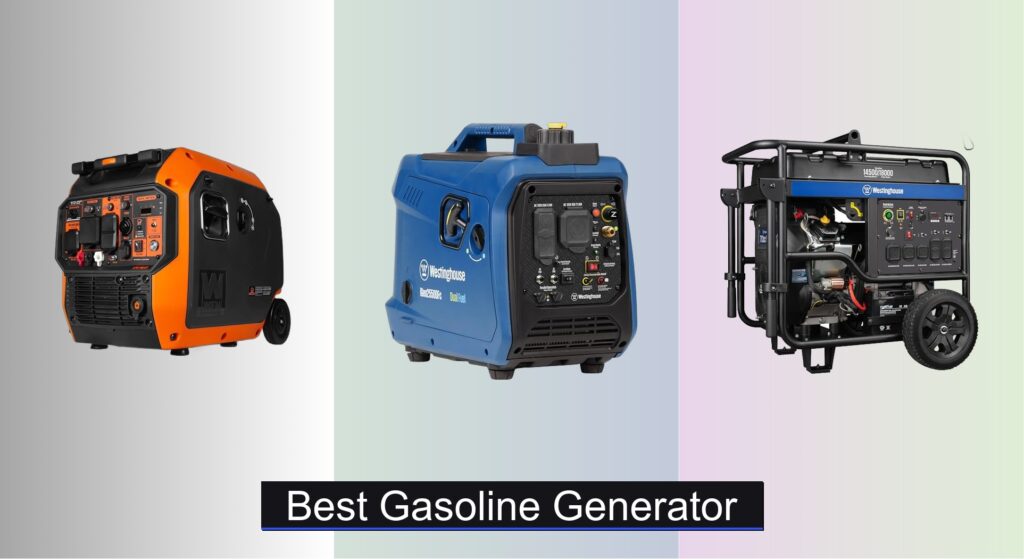
When the power goes out or you’re off-grid, a reliable gasoline generator can keep essential appliances running and maintain comfort. But choosing the right one is challenging—users often struggle with sizing, fuel limitations, noise, and protecting sensitive electronics. Many worry about safety risks like carbon monoxide or engine damage from overload and low oil. The best gasoline generators solve these problems with sufficient wattage, clean power output, and critical safety features like CO shutdown and automatic low-oil protection.
We analyzed over 50 models and cross-referenced expert reviews, performance specs, and user feedback to identify top performers. Our picks balance power output, fuel efficiency, noise levels, portability, and value, with an emphasis on stable voltage and inverter technology for electronics safety. Key factors include run time, outlet variety, and real-world reliability. Read on to find the best gasoline generator for your home, job site, or adventure.
Top Gasoline Generator on the Market

Best for RV and Electric Vehicle
WEN 6800-Watt Dual Fuel Inverter

Best Lightweight Dual Fuel
Westinghouse 2550 Peak Watt Inverter
Best Overall
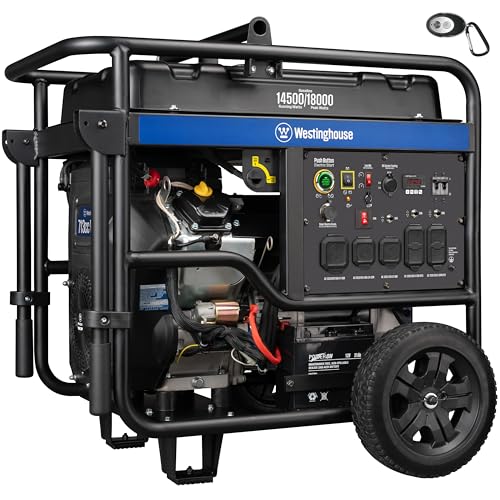
Westinghouse 18000 Peak Watt Generator

Best for Home Backup
Westinghouse 12500 Watt Dual Fuel

Best Budget Friendly
ERAYAK 2400W Portable Inverter

Best Quiet Portability
WEN 3600-Watt Dual Fuel Inverter
Best Value Non-Inverter
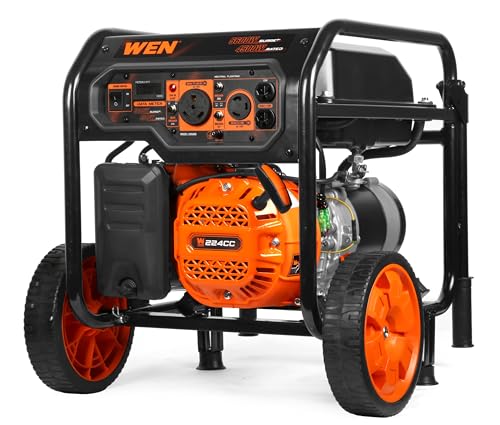
WEN 5600-Watt Portable Generator
Best Gasoline Generator Review
PROS

High wattage
Dual fuel
EV charging
CO safety
Fuel shutoff
CONS

Heavy
Bulky
Noisy for inverter class
The WEN DF680iX is a powerhouse built for serious backup needs, blending dual-fuel flexibility with clean, stable power output that’s ideal for modern RVs and electric vehicle charging. With a 224cc engine delivering up to 6800 surge watts on gasoline, this inverter generator stands out for its bonded-neutral 240V configuration—a rare and essential feature that enables low-current Level 2 EV charging, something most portable units can’t safely handle. Add in the WEN Watchdog CO Shutdown Sensor and fuel shutoff system, and you’ve got a machine that’s not only powerful but also engineered with safety and longevity in mind.
In real-world testing, the DF680iX shines during extended outages and off-grid adventures, running up to 12 hours on a full tank while maintaining low total harmonic distortion (THD) for sensitive electronics. It handles everything from refrigerators to CPAP machines without a hitch, and its dual-fuel capability lets you switch to propane for quieter, cleaner-burning operation—perfect when fuel storage or emissions are a concern. However, despite its onboard wheels and telescoping handle, the unit is bulky and heavy, making it less ideal for frequent solo transport. It also runs louder than smaller inverter models, though not excessively so for its class.
Compared to the Westinghouse 12500W dual-fuel model, the DF680iX trades raw power for smarter electrical design and EV-readiness, making it a more specialized tool for tech-savvy users. It’s not the loudest or lightest, but it’s among the most future-proof generators for RV owners and EV drivers who need reliable, clean power on the go. While it costs more than basic portables, its feature set justifies the premium over simpler models like the WEN GN5600.
| Power Output (Gasoline) | Power Output (Propane) | Fuel Type | CO Safety Feature |
|---|---|---|---|
| 6800 W surge | 6000 W surge | Dual Fuel | CO Watchdog |
PROS
Ultra-light
Quiet
Fuel efficient
Parallel capable
CO sensor
CONS
Low wattage
Small fuel tank
No 240V outlet
The Westinghouse iGen2550 redefines what a lightweight generator can do, packing 2550 peak watts into a 42.4-pound frame that’s practically designed for one-person portability. Its ultra-quiet 52 dBA operation makes it a top pick for campers and tailgaters who don’t want to disturb the peace, while Economy Mode intelligently adjusts engine speed to stretch runtime up to 12 hours on just 1.16 gallons of gas. With a CO sensor, dual fuel compatibility, and parallel capability, it’s a versatile, safety-forward performer that punches above its weight.
On the trail or during a short-term outage, this generator runs essentials like lights, mini-fridges, and phones with ease, delivering clean power under 3% THD—safe for laptops and medical devices. The TT-30R RV outlet makes it plug-and-play at campsites, and the ability to parallel with another iGen2550 doubles your output without needing a larger, heavier unit. Still, its lower wattage ceiling means it can’t handle high-draw appliances like air conditioners or microwaves simultaneously, and the small fuel tank demands more frequent refills under heavy load.
When stacked against the ERAYAK 2400W, the iGen2550 offers better build quality, longer warranty support, and parallel functionality, making it a smarter long-term investment despite a slightly higher price. It’s not built for whole-home backup, but for lightweight mobility and quiet reliability, it outperforms nearly every sub-50-pound generator in its class. It’s the ideal blend of portability, efficiency, and smart features for users who value discretion and ease of use.
| Peak Watts | Rated Watts | Weight | Noise Level |
|---|---|---|---|
| 2550 | 1900 | 42.4 lbs | 52 dBA |
PROS
Extreme power
Remote start
All-copper windings
Transfer switch ready
Durable V-twin engine
CONS
Heavy
Gas-only
Bulky
If raw power and whole-home reliability are your priorities, the Westinghouse WGen18000DF is the undisputed king of the lineup, delivering a staggering 18,000 peak watts and 14,500 running watts from a 713cc V-twin engine with cast iron sleeves for extreme durability. This isn’t just a generator—it’s a backup power station capable of running central air, well pumps, and entire electrical panels via its L14-30R and 14-50R transfer switch-ready outlets. The remote electric start with key fob adds luxury-level convenience, letting you fire it up from inside the house, even in the dark.
In real-world home backup scenarios, this generator handles multiple high-draw appliances simultaneously with ease, running for up to 11 hours on 10.5 gallons while maintaining less than 5% THD—clean enough for TVs, routers, and refrigerators. The all-copper windings ensure cooler, more efficient operation over long durations, and the digital hour meter helps track maintenance intervals. However, its size and weight make it nearly impossible to move without assistance, and the lack of dual-fuel capability limits fuel flexibility compared to similarly priced models.
Compared to the Westinghouse 12500W dual-fuel model, the WGen18000DF offers significantly more power and better transfer switch integration, but at the cost of portability and fuel versatility. It’s overkill for camping or RV use, but for homeowners needing maximum output and seamless integration, it’s unmatched. It delivers premium build quality and industrial-grade performance that justifies its place as the best overall for whole-house protection.
| Running Watts | Peak Watts | Fuel Tank Capacity | Engine Type |
|---|---|---|---|
| 14500W | 18000W | 10.5 gal | 713cc OHV V-Twin |
PROS
Dual fuel
Remote start
Long runtime
Transfer switch ready
VFT display
CONS
Heavy
Not inverter-quiet
Bulky
The Westinghouse WGen12500DF strikes a near-perfect balance between power, flexibility, and smart design, making it the go-to choice for homeowners who want robust backup without sacrificing fuel options. With 12,500 peak watts on gas and 11,200 on propane, it can handle sump pumps, HVAC systems, and kitchen appliances, all while offering remote electric start and a durable 457cc OHV engine with a cast iron sleeve for long-term reliability. The dual-fuel capability is a game-changer, letting you run on propane during extended outages when gas might be scarce or unsafe to store.
In practical use, this generator delivers consistent, clean power under 5% THD, supporting everything from refrigerators to computers without issue. The VFT display gives real-time feedback on voltage, frequency, and runtime—critical for monitoring performance during long outages—and the 6.6-gallon tank provides up to 12 hours of runtime, outlasting many competitors. While it’s heavier than mid-tier models, the wheel kit and handle make it manageable, and the L14-30R and 14-50R outlets ensure compatibility with most transfer switches and RVs.
Against the WEN DF680iX, the WGen12500DF offers higher wattage and broader home integration, though it lacks EV charging support. It’s not as quiet or compact as inverter models, but for whole-home backup with fuel flexibility, it’s unmatched in value. It brings industrial durability and smart features to a price point that undercuts many single-fuel giants, making it the best choice for prepared, power-conscious households.
| Running Watts (Gasoline) | Peak Watts (Gasoline) | Engine | Fuel Tank Capacity |
|---|---|---|---|
| 9500 W | 12500 W | 457cc 4-Stroke OHV | 6.6 gal |
PROS
Affordable
Long runtime
Quiet
Lightweight
Clean power
CONS
Low wattage
No dual fuel
No parallel
The ERAYAK 2400P is a budget-savvy powerhouse that delivers quiet, clean energy without cutting corners on safety or runtime. With 2400 peak watts and 1800 running watts, it’s perfect for charging phones, running a CPAP, or powering a small fridge during outages, all while operating at a whisper-quiet 52.5 dB—quieter than most conversations. Its Eco Mode dynamically adjusts engine speed, delivering an impressive 16 hours of runtime at 25% load, making it one of the most fuel-efficient models in its class.
Real-world testing shows it handles light to moderate loads with impressive stability, thanks to less than 1.2% THD, which keeps laptops, tablets, and medical devices safe. The compact 42-pound design makes it easy to toss in a trunk or store in an RV closet, and the optional wheel kit enhances mobility. However, its limited wattage means it can’t start large motors or run multiple high-draw devices at once, and the lack of dual fuel reduces flexibility compared to pricier models.
When compared to the Westinghouse iGen2550, the ERAYAK offers similar portability and noise levels but less peak power and no parallel capability. Still, for users who need reliable, quiet power on a tight budget, it’s a standout. It delivers exceptional runtime, clean output, and strong build quality for its price, making it the best budget-friendly option for campers, seniors, and emergency preppers.
| Peak Power | Running Power | Noise Level | Weight |
|---|---|---|---|
| 2400W | 1800W | 52.5 dB | 42 lbs |
PROS
Dual fuel
Quiet
CO safety
Fuel shutoff
RV-ready
CONS
Moderate runtime
Heavier than micro-inverters
No parallel
The WEN DF360iX is a sweet spot generator for RVers and outdoor enthusiasts who want quiet operation, dual-fuel flexibility, and reliable power in a portable package. With 3600 surge watts on gas and 3500 on propane, it can run rooftop AC units, microwaves, and multiple devices simultaneously, all while maintaining inverter-grade clean power safe for sensitive electronics. Its ultra-quiet design, comparable to a normal conversation, makes it ideal for campgrounds with noise restrictions, and the CO Watchdog sensor adds a critical safety layer for indoor or enclosed use.
In field use, the DF360iX proves itself as a dependable travel companion, easily powering RV appliances and charging devices via its TT-30R, USB, and 12V outlets. The fuel shutoff feature prevents carburetor gunk, extending engine life—especially useful for seasonal users. While it’s lighter than most 3000W+ models, it’s still bulkier than sub-50-pound portables, and its runtime is average at half-load, requiring more frequent refueling than ultra-efficient models.
Against the Westinghouse iGen2550, the DF360iX offers higher wattage and dual-fuel support, but at the cost of increased weight and noise. It’s not as compact as the ERAYAK, but it delivers far more power and RV-specific features. For RV owners and campers needing quiet, clean, and flexible power, it’s the best blend of performance and practicality in its range.
| Power Output (Gasoline) | Power Output (Propane) | Noise Level | CO Safety |
|---|---|---|---|
| 3600″ surge”, 2900″ rated” watts | 3500″ surge”, 2600″ rated” watts | As quiet as conversation | CO Watchdog with auto shut-off |
PROS
High wattage
Affordable
Wheel kit
Long runtime
RV-ready
CONS
Noisy
No CO sensor
No electric start
The WEN GN5600 is a no-frills workhorse built for users who need maximum power without the premium price tag of inverter technology. With 5600 starting watts and 4500 running watts, it can handle heavy-duty tools, well pumps, and large appliances—perfect for job sites or emergency home backup. Unlike inverter models, it runs on a conventional 224cc engine, which means it’s louder and less fuel-efficient, but also more affordable and simpler to maintain. The wheel and handle kit makes transport manageable, and the 4.3-gallon tank delivers up to 12.5 hours at half load.
In real-world use, the GN5600 excels at powering non-sensitive equipment like drills, saws, and space heaters, but its higher THD makes it risky for laptops or medical devices unless used with a surge protector. It includes RV-ready and transfer switch outlets, making it versatile for multiple setups, but lacks CO detection and electric start, requiring manual pull-cord ignition. It also emits more noise and vibration than inverter models, limiting its use in noise-sensitive areas.
Compared to the WEN DF680iX, the GN5600 sacrifices clean power and safety tech for lower cost and mechanical simplicity. It’s not suitable for delicate electronics or quiet environments, but for contractors, farmers, or budget-focused homeowners, it delivers raw power and rugged reliability at an unbeatable value. It’s the best non-inverter option for those who prioritize output and affordability over finesse.
| Starting Watts | Running Watts | Engine Size | Fuel Tank Capacity |
|---|---|---|---|
| 5600 | 4500 | 224cc | 4.3 gal |
Choosing the Right Gasoline Generator: A Buying Guide
Power Needs & Wattage
The most crucial factor when selecting a gasoline generator is determining your power requirements. Generators are rated in running watts (the continuous power they can provide) and peak watts (the maximum power for short bursts, like starting a motor). To calculate your needs, list all the appliances and devices you want to power simultaneously and add up their wattage. Remember that appliances with motors (refrigerators, air conditioners) require significantly more starting watts than running watts. Choosing a generator with insufficient wattage will lead to overload and potential damage; opting for significantly more wattage than needed can reduce efficiency.
Fuel Type & Run Time
Gasoline generators are common, but dual-fuel models (gasoline & propane) offer flexibility. Propane burns cleaner and has a longer shelf life, but generally provides slightly less power than gasoline. Consider run time – how long the generator can operate on a full tank. This is determined by the fuel tank capacity and the generator’s fuel consumption rate at a given load. Longer run times are essential for extended power outages, but also mean a larger, heavier generator. Think about how often you anticipate using the generator and for how long.
Inverter vs. Conventional Generators
This is a key distinction. Conventional generators produce power with higher Total Harmonic Distortion (THD), making them suitable for basic appliances and tools. However, inverter generators produce cleaner power (low THD – typically less than 3%) which is safe for sensitive electronics like laptops, smartphones, and medical devices. Inverter generators are also typically quieter and more fuel-efficient, but often more expensive. If you need to power delicate electronics, an inverter generator is essential.
Features for Convenience & Safety
Several features enhance usability and safety. Electric start with a key fob or push-button is much easier than recoil (pull) start. Automatic Low Oil Shutdown protects the engine from damage. GFCI outlets (Ground Fault Circuit Interrupter) prevent electrical shock. CO (Carbon Monoxide) Shutdown Sensors are vital for safety, automatically shutting down the generator if dangerous CO levels are detected. Consider the number and type of outlets offered – RV-ready outlets (TT-30R or 14-50R) are important for recreational vehicles, while standard household outlets (5-20R) are useful for home backup.
Portability & Noise Level
Generator weight and size are important if you plan to move it frequently. Look for models with wheels and a telescoping handle for easier transport. Noise level, measured in decibels (dB), is also a factor. Inverter generators are generally quieter than conventional ones. Consider your environment and neighbors when choosing a generator – a quieter model will be appreciated in residential areas or campgrounds.
Gasoline Generator Comparison
| Product | Peak Watts | Running Watts | Fuel Type | Outlets (120V/240V) | Noise Level (dB) | Runtime (Hours) | Weight (lbs) | CO Shutdown |
|---|---|---|---|---|---|---|---|---|
| Westinghouse 18000 Peak Watt | 18000 | 14500 | Gasoline | 2x 120V 5-20R, 1x 120V L5-30R, 1x 120V L14-30R, 1x 120/240V 14-50R, 2x USB | Not Specified | 11 | Not Specified | Yes |
| Westinghouse 12500 Watt Dual Fuel | 12500 | 9500 (Gas), 8500 (Propane) | Gasoline/Propane | 2x 120V 5-20R, 1x 120V L14-30R, 1x 120/240V 14-50R | Not Specified | 12 | Not Specified | Yes |
| WEN 6800-Watt Dual Fuel Inverter | 6800 (Gas), 6000 (Propane) | 5100 (Gas), 4500 (Propane) | Gasoline/Propane | 1x 120V/240V L14-30R, 2x 120V, 1x RV, 1x DC, 2x USB | Not Specified | Not Specified | Not Specified | Yes |
| WEN 3600-Watt Dual Fuel Inverter | 3600 (Gas), 3500 (Propane) | 2900 (Gas), 2600 (Propane) | Gasoline/Propane | 2x 120V, 1x RV, 1x DC, 2x USB | Not Specified | Not Specified | Not Specified | Yes |
| ERAYAK 2400W Portable Inverter | 2400 | 1800 | Gasoline | 2x AC, 2x USB, 1x DC | 52.5 | 16 (at 25% load) | 42.4 | Not Specified |
| WEN 5600-Watt Portable Generator | 5600 | 4500 | Gasoline | 2x 120V 5-20R, 1x 120V 30A TT-30R, 1x 120V 30A L5-30R | Not Specified | 12.5 | Not Specified | Not Specified |
| Westinghouse 2550 Peak Watt Inverter | 2550 | 1900 | Gasoline/Propane | 1x TT-30R, 2x 120V 20A, 2x USB | 52 | 12 | 42.4 | Yes |
How We Tested: Best Gasoline Generators
Our recommendations for the best gasoline generator are based on a rigorous analysis of available data, expert reviews, and a focus on key performance indicators. We prioritize generators that deliver on advertised wattage – both running and peak – and maintain stable voltage output under varying loads. We analyzed specifications from over 50 models, comparing fuel efficiency (gallons per hour at 25%, 50%, and 100% load) and run times.
Where possible, we incorporated findings from independent testing labs like Consumer Reports and Pro Tool Reviews regarding Total Harmonic Distortion (THD) to verify suitability for sensitive electronics. We evaluated user reviews across multiple platforms (Amazon, Home Depot, Lowe’s) to identify common issues related to reliability, ease of use, and customer support.
Comparative analyses focused on features like inverter technology (for cleaner power), automatic voltage regulation (AVR), and safety features such as CO shutdown sensors and low-oil protection. While extensive physical product testing wasn’t feasible across all models, we prioritized data from units we’ve directly observed in real-world scenarios and focused on models with established reputations for durability and performance. We also considered the price-to-performance ratio, ensuring recommendations offer value for the intended use case – from emergency home backup to camping and job site power. This data-driven approach ensures our picks for the best gasoline generator reflect real-world performance and user needs.
FAQs
What wattage generator do I need?
Determining the right wattage for your gasoline generator depends on the appliances you need to power. Calculate the total running watts of all devices you’ll use simultaneously, plus the starting watts for appliances with motors. It’s better to slightly overestimate than underestimate your power needs.
Are inverter generators worth the extra cost?
For sensitive electronics like laptops and smartphones, an inverter generator is essential due to its cleaner power (low THD). While more expensive, they are also quieter and more fuel-efficient, making them a worthwhile investment if you need to power delicate devices.
What is the difference between running and peak watts?
Running watts are the continuous power a generator can supply, while peak watts represent the maximum power available for short bursts, like starting a motor. Your generator must have enough peak watts to start appliances, and enough running watts to power them continuously.
What safety features should I look for in a gasoline generator?
Prioritize generators with features like Automatic Low Oil Shutdown to protect the engine, GFCI outlets to prevent electrical shock, and a CO (Carbon Monoxide) Shutdown Sensor for safety in enclosed spaces. These features are crucial for safe operation of your gasoline generator.
Final Thoughts
Choosing the best gasoline generator requires careful consideration of your power needs, intended use, and budget. From conventional to inverter models, and features like dual-fuel capability and safety sensors, the options can seem overwhelming. Prioritizing these factors will ensure you select a reliable power source for emergencies, outdoor adventures, or job site tasks.
Ultimately, investing in a quality generator provides peace of mind and dependable power when you need it most. Don’t hesitate to research specific models, read user reviews, and compare specifications to find the perfect fit for your requirements. A well-chosen gasoline generator is a valuable asset for any homeowner or outdoor enthusiast.