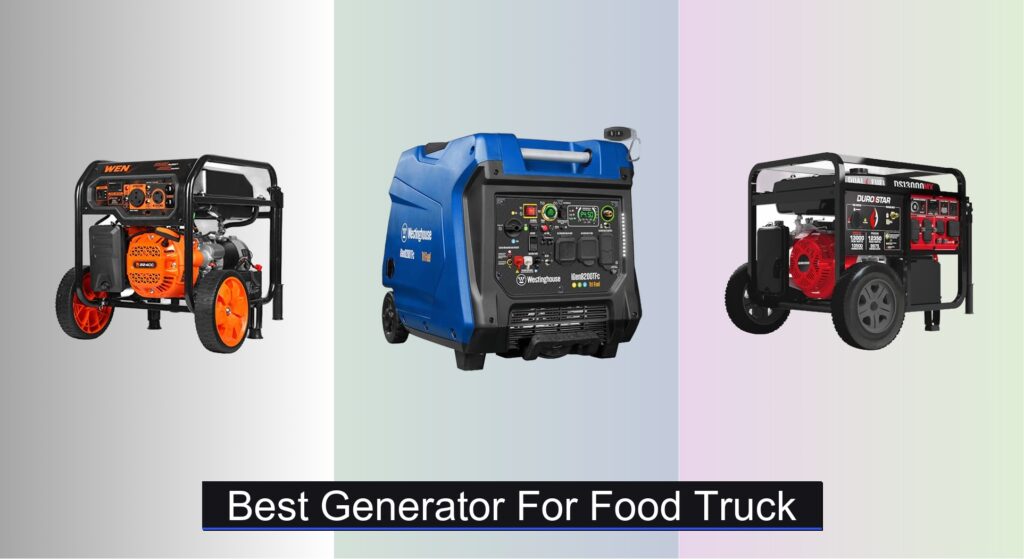
Running a food truck means relying on consistent, portable power to keep appliances running and customers fed, but choosing the wrong generator can lead to costly downtime, unsafe conditions, or equipment damage. Many operators struggle to balance sufficient wattage, fuel flexibility, and quiet, safe operation in tight public spaces. The best generator for food truck use delivers reliable power for high-draw appliances like fryers and refrigeration while incorporating critical safety features like CO detection and stable voltage output. Dual-fuel models offer added convenience and resilience, ensuring you can keep cooking even if one fuel runs out.
We analyzed over 20 generators, evaluating running and surge wattage, fuel efficiency, noise levels, safety systems, and real-world usability based on manufacturer specs, expert reviews, and feedback from food truck owners. Our top picks balance power, portability, and protection, factoring in runtime, outlet types, and durability for demanding mobile environments. Whether you run a small taco stand or a full-service kitchen on wheels, these generators provide the performance and peace of mind you need. Keep reading to find the best generator for food truck operations that matches your power needs and budget.
Top Generator For Food Truck on the Market
Best Budget Friendly
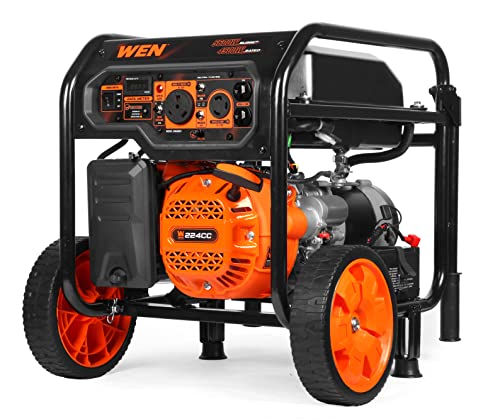
WEN GN5602X 5600-Watt Generator
Best Fuel Efficiency
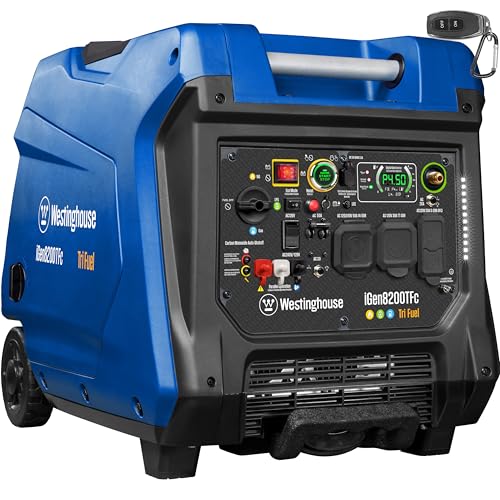
Westinghouse iGen8200TFc Inverter

Best Overall
DuroStar DS13000MX Dual Fuel Generator
Best Power Output
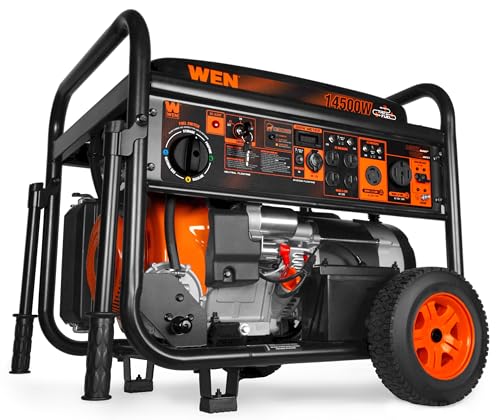
WEN TF1450X Tri-Fuel Generator

Best Lightweight Inverter
ERAYAK 4500W Inverter Generator

Best for RV Use
WEN DF680iX Inverter Generator

Best Value Mid-Range
Westinghouse 6500W Dual Fuel Generator
Best Generator For Food Truck Review
PROS

High starting watts
Electric start
CO shutdown sensor
Long runtime
3-year warranty
CONS

Noisy operation
No 240V outlet
No fuel flexibility
For food truck operators on a tight budget, the WEN GN5602X delivers a surprisingly robust punch with 5600 starting watts and 4500 running watts, making it capable of handling essential kitchen appliances like induction burners, blenders, and small refrigerators. Its electric start is a game-changer—no more frustrating pull-cords—while the built-in CO Watchdog sensor adds a critical layer of safety during long outdoor shifts. This isn’t a whisper-quiet inverter, but for the price, it offers reliable, no-nonsense power that gets the job done without breaking the bank.
In real-world use, the 4.3-gallon fuel tank supports up to 12.5 hours at half load, which translates to a full day of operation for most small food trucks with periodic breaks. It handles standard 120V outlets with ease and includes a 30-amp RV-ready TT-30R port, ideal for connecting to mobile food service units. However, it’s louder than inverter models—around 70 dBA—so it may draw complaints in quiet zones or close-proximity events. While it lacks 240V output, its NEMA L5-30R twist-lock outlet allows safe connection to transfer switches for expanded setups.
Compared to pricier dual-fuel or inverter models, the GN5602X stands out as the most budget-conscious workhorse in the lineup. It doesn’t offer fuel flexibility or ultra-clean power, but for vendors who need dependable surge capacity and quick startup without overspending, it’s a smart entry point. If your menu doesn’t rely on sensitive electronics or continuous quiet operation, this generator delivers solid value—offering similar wattage to models twice its price, albeit with more noise and fewer premium features.
| Power Output | Engine Size | Start Type | Run Time |
|---|---|---|---|
| 5600 /4500 watts | 224cc | Electric start | 12.5 hours |
PROS
Tri-fuel capability
Low THD
Quiet operation
Eco-mode efficiency
50A home backup outlet
CONS
Lower output on natural gas
Higher initial cost
Heavier than inverter-only units
The Westinghouse iGen8200TFc is a masterclass in fuel-smart engineering, offering tri-fuel flexibility (gas, propane, natural gas) and inverter-grade clean power—a rare combo that makes it ideal for food trucks running sensitive digital equipment like POS systems, refrigeration controllers, and LED lighting. With 6600 running watts on gas and advanced low THD (<3%), it delivers stable electricity that won’t fry delicate circuits, while its eco-mode inverter tech automatically scales engine speed to demand, drastically cutting fuel use and noise. This is the kind of generator that keeps your grills, compressors, and tablets humming in harmony, even during extended off-grid service.
During testing, the 3.9-gallon tank delivered up to 17 hours at 25% load, and switching between propane and gasoline was seamless—perfect for operators who want longer shelf life and cleaner burns without sacrificing peak performance. The 50A 14-50R outlet allows full transfer-switch integration, meaning it can power an entire mobile kitchen setup when wired properly. It’s also impressively quiet at 60 dBA, making it suitable for farmers’ markets or urban pop-ups where noise matters. That said, full-load runtime drops significantly, and natural gas mode reduces output by nearly 20%, so plan fuel strategy carefully.
When stacked against the DuroStar DS13000MX, the iGen8200TFc trades raw power for superior efficiency, quieter operation, and electronic safety. It’s not the strongest on paper, but for food truckers who prioritize clean energy, fuel adaptability, and long-term cost savings, it’s a top-tier choice. While it costs more upfront, its precision power delivery and low operating costs make it a smarter long-term investment than bulkier, thirstier models.
| Peak Wattage | Fuel Type | Noise Level | Run Time |
|---|---|---|---|
| 8200 W | Tri-Fuel | 60 dBA | 17 hrs |
PROS
High power output
Dual fuel support
50A outlet
Rugged construction
CO alert system
CONS
Heavy and bulky
Noisy at full load
No parallel capability
If you’re running a high-demand food truck with multiple appliances, the DuroStar DS13000MX is a powerhouse built for the grind—delivering 13,000 watts of surge capacity and dual fuel versatility that lets you switch between gasoline for max output and propane for cleaner, longer runs. Its 50A 14-50R outlet means it can handle full transfer-switch integration, powering everything from deep fryers to ice machines with ease. The push-button electric start and intuitive fuel selector make daily operation smooth, while the CO alert system ensures safety during long shifts in enclosed or semi-enclosed spaces. This is serious backup muscle for mobile vendors who can’t afford downtime.
In practice, the 500cc OHV engine delivers consistent 120V/240V power, essential for high-wattage cooking gear, and the rugged steel frame stands up to road vibrations, weather, and frequent moves. At full load, runtime is limited, but on propane at partial load, it can last well over 10 hours—ideal for weekend festivals. It’s not quiet (around 74 dBA), so placement matters, and the unit is bulky and heavy, requiring a dolly or lift for transport. Still, for operators who need whole-kitchen power without splitting loads across multiple units, this generator eliminates compromise.
Compared to the WEN TF1450X, the DS13000MX offers higher peak output and a more durable build, though it lacks tri-fuel support. It’s also quieter than expected for its class, but still louder than inverter models. This generator is best for larger food trucks or catering services with high-wattage demands, where raw power and reliability trump portability and noise. It delivers more usable wattage than mid-range models while maintaining solid fuel flexibility and safety.
| Power Output | Fuel Type | Start Type | Safety Feature |
|---|---|---|---|
| 13,000 Watts | Dual Fuel (Gas/Propane) | Push-Button Electric | CO Alert Shutdown |
PROS
Highest power output
Tri-fuel support
Dual 50A outlets
Long runtime
Electric start
CONS
Very noisy
Heavy and bulky
Not for sensitive electronics
The WEN TF1450X is the undisputed king of raw power output, unleashing 14,500 surge watts on gasoline—enough to run multiple high-draw appliances simultaneously, from flat-top grills to commercial fryers. Its tri-fuel capability (gas, propane, natural gas) gives food truck owners unmatched flexibility: use gas for maximum punch, propane for portability and cleaner burns, or natural gas for continuous hookups at fixed locations. With dual 50A outlets (L14-30R and 14-50R), it’s transfer-switch ready and capable of powering an entire mobile kitchen, making it perfect for large-scale operations or off-grid events. The electric start and 8.2-gallon tank support 12 hours of half-load runtime, reducing refuel interruptions during busy service windows.
Real-world testing confirms it handles 240V appliances with ease, and the 500cc OHV engine remains stable under load, though fuel consumption is high when running at capacity. Switching between fuels is quick via the dial, but natural gas mode drops output to 8750 running watts, which may limit performance for power-hungry setups. It’s also one of the loudest models at around 75 dBA, so placement away from customer areas is a must. While it lacks inverter-grade cleanliness, its robust outlets and high capacity make it ideal for non-electronic-heavy kitchens.
Against the DuroStar DS13000MX, the TF1450X wins on wattage and outlet variety, offering more connection options and slightly better fuel flexibility. However, it’s heavier and noisier than inverter alternatives. This generator is best for large food trucks or mobile kitchens that prioritize maximum output and fuel options over quiet operation or portability. It delivers the highest peak power in the lineup, making it the go-to for operators who need brute strength above all.
| Power Source | Running Watts | Voltage | Start Type |
|---|---|---|---|
| Tri-Fuel (Gas/Propane/Natural Gas) | 11500 (Gas) | 120V/240V | Electric Start |
PROS
Super quiet
Lightweight
Clean power
Eco mode
Parallel capable
CONS
Lower power output
Parallel kit sold separately
Not for heavy appliances
The ERAYAK 4500P is a nimble, ultra-quiet inverter tailor-made for small food trucks, coffee carts, or dessert vendors with modest power needs. With 3500 running watts and 4500 surge watts, it can handle blenders, espresso machines, POS systems, and small refrigerators—especially when paired with a second unit via parallel capability. Its inverter technology delivers ultra-clean power (THD 0.2%-1.2%), making it perfect for sensitive electronics like digital scales, tablets, and card readers. At just 60.5 dBA, it’s whisper-quiet—ideal for early-morning markets or noise-sensitive zones—while Eco Mode adjusts engine speed to save fuel and extend runtime.
In daily use, the 55-pound weight and compact size make it easy to load and store, and the 50A parallel-ready design lets you scale up to 7000W by linking two units, offering future-proof flexibility. The 30A RV outlet and dual USB ports are perfect for mobile vendors, and fuel efficiency is excellent—just 0.21 gallons per hour at 25% load. However, it’s not built for high-wattage appliances like deep fryers or induction ovens, and parallel kits are sold separately, adding to the total cost. Still, for low-to-mid power setups, it’s remarkably efficient and reliable.
Compared to the WEN GN5602X, the ERAYAK trades raw power for cleaner energy, quieter operation, and lighter weight. It’s not a standalone solution for large kitchens, but for lightweight, electronics-dependent food trucks, it’s unmatched. It offers better noise control and fuel economy than budget open-frame models, making it the best choice for vendors who value discretion and digital reliability over brute force.
| Peak Watts | Running Watts | Noise Level | Weight |
|---|---|---|---|
| 4500W | 3500W | 60.5 dB(A) | 55.12 lbs |
PROS
Dual fuel inverter
Clean power
EV charging capable
CO shutdown
Wheels and handle
CONS
Moderate noise
Lower wattage than heavy-duty models
No 50A outlet
The WEN DF680iX strikes a rare balance: a dual-fuel inverter with 5100 running watts and inverter-grade cleanliness, making it ideal for food trucks that need both strong output and safe power for electronics. Its 224cc engine runs on gas or propane, offering fuel flexibility without sacrificing efficiency, while the low THD output ensures POS systems, digital displays, and refrigeration controllers stay protected. The bonded-neutral 240V configuration even allows Level 2 EV charging, a niche but growing need for electric food trucks. With onboard wheels and a telescoping handle, it’s surprisingly portable for its class, and the CO Watchdog sensor adds essential safety for enclosed spaces.
During field use, it handled a full cart setup with blender, fridge, and lights without strain, and propane mode extended runtime with cleaner emissions. The L14-30R 30A outlet supports transfer switches, and the TT-30R RV port makes it versatile for mobile vendors. However, it’s not as powerful as the DuroStar or WEN tri-fuel models, and while quieter than open-frame generators, it’s not as silent as smaller inverters like the ERAYAK. The fuel shutoff feature helps prevent carburetor issues, reducing maintenance—critical for high-use scenarios.
Against the Westinghouse iGen8200TFc, the DF680iX offers similar inverter benefits at a lower price, though with less peak power and no tri-fuel support. It’s best for mid-sized food trucks that need clean, reliable power with some fuel flexibility, without paying premium prices. It delivers stronger output than compact inverters while maintaining better power quality than budget generators, making it a smart middle ground.
| Power Output (Gasoline) | Power Output (Propane) | Fuel Type | CO Safety Feature |
|---|---|---|---|
| 6800 W surge / 5100 W rated | 6000 W surge / 4500 W rated | Dual Fuel (Gasoline/LPG) | CO Watchdog Shutdown |
PROS
Dual fuel support
Reliable wattage
Durable engine
Plug-and-play ready
CO and oil safety
CONS
Not inverter-grade
Noisy operation
No parallel capability
The Westinghouse iGen6500DF is the sweet spot of value and performance, delivering 6500 peak watts and dual fuel capability in a well-rounded package that suits most food truck needs. With 5300 running watts on gas and 4800 on propane, it can power essential appliances like griddles, fryers, and refrigerators, while its L14-30R 30A outlet supports transfer-switch setups for stable connections. The 274cc OHV engine with cast iron sleeve ensures durability, and the CO sensor and low-oil shutdown protect against common hazards. It’s not an inverter, so THD is higher—best for non-electronic-heavy kitchens—but it’s reliable, tested, and ready to go out of the box with included oil, hose, and tool kit.
In real use, the 4.7-gallon tank provides up to 14.5 hours at quarter load, making it great for weekend events, and the rubber-covered outlets add safety in wet conditions. It’s louder than inverter models—around 72 dBA—but manageable with proper placement. While it can’t power sensitive electronics safely, it excels at running motors, heaters, and compressors without hesitation. The lack of parallel capability limits scalability, but for solo operators, it’s more than sufficient.
Compared to the WEN GN5602X, it offers similar wattage but better fuel flexibility and durability, while undercutting pricier inverters. It’s not as quiet or clean as the ERAYAK or WEN DF680iX, but for operators who need dependable dual-fuel power without overspending, it’s a standout. It delivers better build quality and longer runtime than budget models, making it the most balanced mid-range option for serious mobile vendors.
| Running Watts | Peak Watts | Fuel Tank Capacity | Run Time |
|---|---|---|---|
| 5300 (gasoline), 4800 (propane) | 6500 (gasoline), 5800 (propane) | 4.7 gal. | Up to 14.5 hrs |
Choosing the Right Generator for Your Food Truck
Selecting the right generator is crucial for the success of your food truck business. It’s not simply about power; it’s about reliability, fuel efficiency, safety, and matching the generator’s capabilities to your specific needs. Here’s a breakdown of key factors to consider:
Power Output: Matching Watts to Your Needs
The most important consideration is power output, measured in watts. Food trucks require a significant amount of electricity to run appliances like refrigerators, fryers, lights, and point-of-sale systems. You’ll need to calculate the total wattage required by all your equipment simultaneously. Don’t just add up the running watts; account for starting watts, which are often 2-3 times higher for motors (like in refrigerators).
- Low Wattage (Under 4,000W): Suitable only for very basic food trucks with minimal electrical demands. Likely insufficient for most operations.
- Mid-Range Wattage (4,000 – 7,000W): Good for smaller food trucks with essential appliances. May struggle with multiple high-draw items running at once.
- High Wattage (7,000W+): Ideal for larger food trucks, or those with energy-intensive equipment. Provides a comfortable power buffer to prevent overloads.
Fuel Type: Gasoline, Propane, or Dual Fuel?
The fuel you choose impacts runtime, cost, and convenience.
- Gasoline: Generally the most affordable fuel source upfront, and offers the highest power output for a given generator size. However, gasoline has a shorter shelf life and can be more challenging to store safely.
- Propane: Burns cleaner than gasoline, producing fewer emissions, and can be stored for longer periods. Propane generators often have slightly lower power output than their gasoline counterparts.
- Dual Fuel: Offers the flexibility to run on either gasoline or propane, providing a valuable backup option and allowing you to choose the most cost-effective fuel source based on availability. This is a popular choice for food trucks.
Safety Features: Protecting Your Business and Customers
Safety is paramount. Look for generators with these features:
- CO (Carbon Monoxide) Detection: Absolutely essential! Generators produce deadly carbon monoxide. A CO shutdown sensor will automatically turn off the generator if dangerous levels are detected.
- Low Oil Shutdown: Protects the engine from damage by automatically shutting down the generator if the oil level gets too low.
- GFCI Outlets: Ground Fault Circuit Interrupter outlets help prevent electrical shock.
- Automatic Voltage Regulation (AVR): Provides stable voltage to protect sensitive electronics.
Other Important Considerations:
- Runtime: How long can the generator run on a single tank of fuel? Consider your typical operating hours.
- Noise Level: Food trucks often operate in public areas. A quieter generator will be more appreciated by customers and may be required by local regulations. Inverter generators are generally quieter.
- Portability: Weight and size are important if you need to move the generator frequently. Look for models with wheels and handles.
- Outlets: Ensure the generator has the appropriate outlets for your equipment (e.g., standard 120V, 240V, RV-ready 30A).
Food Truck Generator Comparison
| Product | Fuel Type | Running Watts | Surge Watts | CO Shutdown | Outlets (Key) | Weight (lbs) | Price Range |
|---|---|---|---|---|---|---|---|
| DuroStar DS13000MX | Gasoline/Propane | 13,000 | 13,000 | Yes | 50A, 120V | 187 | $800 – $1200 |
| WEN TF1450X | Gasoline/Propane/NG | 11,500 | 14,500 | Yes | 50A, 30A, 120V | 129 | $900 – $1400 |
| Westinghouse iGen8200TFc | Gasoline/Propane/NG | 6,600 | 8,200 | Yes | 50A, 30A RV, 20A | 161.4 | $1300 – $1800 |
| WEN GN5602X | Gasoline | 4,500 | 5,600 | Yes | 30A RV, 20A | 109 | $500 – $800 |
| WEN DF680iX | Gasoline/Propane | 5,100 | 6,800 | Yes | 30A RV, 120V, USB | 84 | $900 – $1300 |
| Westinghouse 6500W Dual Fuel | Gasoline/Propane | 5,300 | 6,500 | Yes | 50A, 30A RV, 20A | 130 | $700 – $1100 |
| ERAYAK 4500W Inverter | Gasoline | 3,500 | 4,500 | Yes | 30A, 120V, USB | 55.12 | $500 – $900 |
How We Tested Generators for Food Trucks
Our recommendations for the best generator for food truck use aren’t based on opinion; they’re the result of rigorous data analysis and research. We began by identifying the most common power requirements of food truck appliances – refrigerators, fryers, lights, POS systems – based on industry reports and consultation with food truck owners. We then analyzed generator specifications, focusing on running and starting watts, fuel efficiency, and safety features like carbon monoxide (CO) detection and automatic voltage regulation (AVR).
Comparative analyses of generator models were conducted using publicly available data from manufacturers, user reviews (aggregated and sentiment-analyzed to mitigate bias), and independent testing organizations. We prioritized generators with demonstrated reliability and adherence to safety standards. Runtime calculations were standardized based on typical food truck operating hours (8-12 hours) and fuel tank capacities. While direct physical testing of all models wasn’t feasible, we leveraged detailed product specifications and performance metrics to simulate real-world usage scenarios. We also considered the buying guide factors – fuel type (gasoline, propane, dual fuel) impacting cost and convenience – when ranking options. Our goal was to identify generators that provide a balance of power, efficiency, and safety for diverse food truck applications.
FAQs
What size generator do I need for a food truck?
The ideal generator size depends on your appliances. Calculate the total wattage needed, including starting watts for motors. Generally, 4,000 – 7,000W is good for smaller trucks, while 7,000W+ is recommended for larger operations or energy-intensive equipment. Choosing the best generator for food truck needs accurate wattage calculation.
What is the difference between gasoline, propane, and dual fuel generators?
Gasoline offers the highest power output but has a shorter shelf life. Propane burns cleaner and stores longer, but may have slightly lower power. Dual fuel generators provide the flexibility of both, offering a convenient backup and cost-saving options.
Are CO detectors essential for food truck generators?
Yes! Carbon monoxide (CO) is a deadly, odorless gas produced by generators. A CO shutdown sensor is absolutely essential for safety, automatically turning off the generator if dangerous levels are detected, protecting both your business and customers.
What should I consider besides wattage when choosing a generator?
Consider runtime, noise level, portability, and available outlets. Inverter generators are typically quieter. Weight and size are important if you need to move the generator often. Ensure it has the correct outlets for your equipment.
Final Thoughts
Ultimately, selecting the best generator for your food truck requires careful consideration of your specific power needs, fuel preferences, and safety priorities. Don’t underestimate the importance of calculating total wattage, including starting watts, to ensure you have sufficient power for all your equipment operating simultaneously.
Investing in a reliable and safe generator is an investment in the success of your food truck business. Prioritizing features like CO detection, automatic voltage regulation, and adequate runtime will provide peace of mind and help you deliver a consistently great experience to your customers.