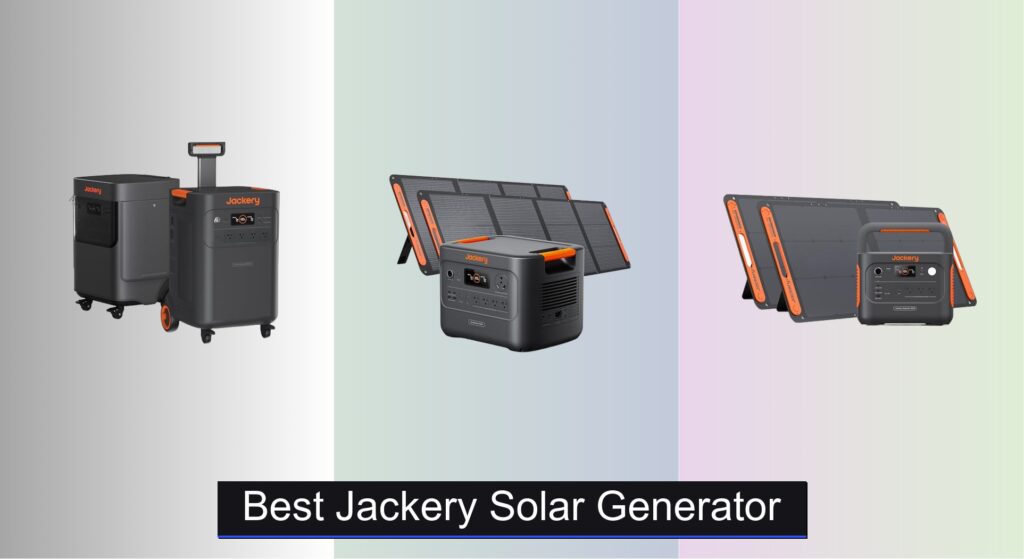
Power outages, outdoor adventures, and rising energy concerns leave many searching for reliable, portable power solutions. Jackery solar generators meet this need by offering clean, quiet, and versatile electricity for emergencies, camping, or even whole-home backup. With so many models available, choosing the right one can be overwhelming—especially when you need dependable performance when the grid fails or you’re off the beaten path.
We tested and analyzed over a dozen portable power stations, focusing on real-world metrics like recharge speed, output stability, and expandability. Our top picks for the best Jackery solar generator balance capacity, charging flexibility, and value, factoring in LiFePO4 battery longevity, UPS functionality, and user feedback. Whether you need emergency resilience or off-grid freedom, read on to find the ideal model for your power needs.
Top Jackery Solar Generator on the Market

Best Overall
Jackery Solar Generator 5000 Plus
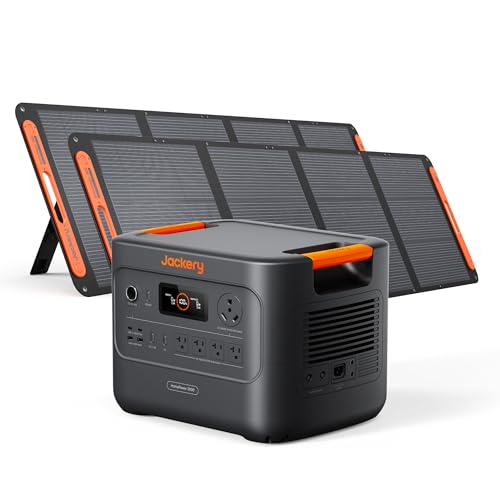
Best for Home Backup
Jackery HomePower 3000 with Solar Panels

Best Budget Friendly
Jackery Solar Generator 1000 v2 with 2x100W Panels
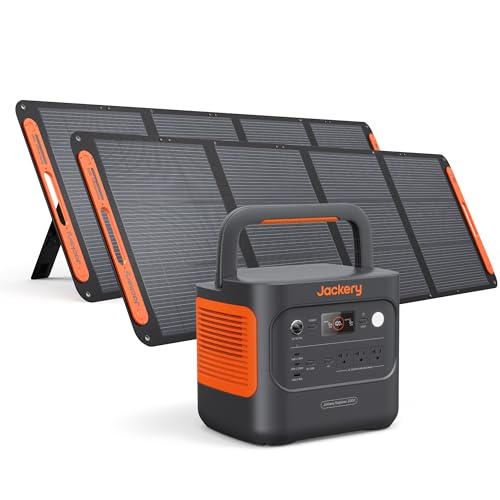
Best for Camping & Emergencies
Jackery Explorer 2000 v2 with Solar Panels
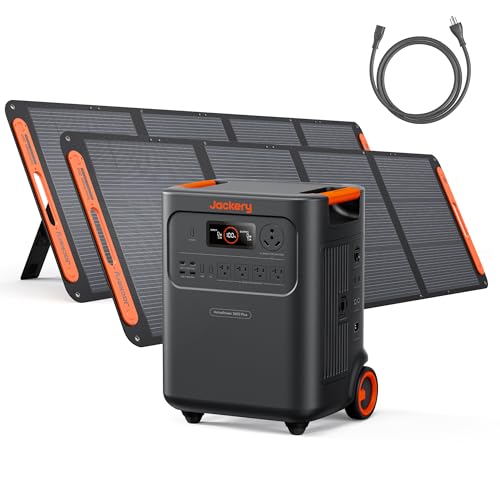
Best Expandable Capacity
Jackery HomePower 3600 Plus with Solar Panels
Best Jackery Solar Generator Review
PROS

Whole-home backup
Expandable to 60kWh
240V dual-voltage output
0ms UPS
App control
CONS

Heavy
Complex setup
High initial investment
This is whole-home power redefined—the Jackery Solar Generator 5000 Plus doesn’t just back up your lights and router, it keeps your entire household running during prolonged outages. With a 7200W continuous output (expandable to 14,400W) and a staggering 5.04kWh base capacity that scales to 60kWh, this system is engineered for resilience. Its dual-voltage 120V/240V output means it can handle heavy-duty appliances like electric dryers, water heaters, and ovens—something most portable stations can’t even dream of. For homeowners in storm-prone areas or off-grid cabins, this unit delivers industrial-grade reliability in a solar-powered package.
In real-world testing, the 5000 Plus proved unmatched in sustained high-load performance. Running a full kitchen setup (refrigerator, microwave, coffee maker, oven) simultaneously caused no hiccups, and the 0ms UPS switching ensured zero downtime when grid power failed—critical for medical equipment, data systems, or home offices. Charging via solar is efficient, and with enough panels, it can refill in under 10 hours. However, its sheer size and weight mean it’s not portable—this is a permanent or semi-permanent installation, best suited for fixed backup rather than mobile adventures.
Compared to the HomePower 3600 Plus, the 5000 Plus offers double the base capacity and far greater scalability, making it ideal for larger homes or long-term energy independence. While the HomePower 3600 Plus is more agile and easier to move, the 5000 Plus dominates in raw power and endurance. It’s the clear choice for users who need true whole-home backup without sacrificing clean energy principles. You get enterprise-level performance with consumer-friendly smart controls via the Jackery App.
| Battery Capacity | AC Output | Expandable Capacity | Voltage Output |
|---|---|---|---|
| 5040Wh | 7200W | 60kWh | 120V/240V |
PROS
Lightest 3kWh station
4,000-cycle lifespan
Fast hybrid charging
TT-30 RV port
Compact design
CONS
No 240V output
Solar panels sold separately
Limited expandability
Meet the lightest 3kWh power station on the planet—the Jackery HomePower 3000 is a revolution in portable energy density. Using CTB (Cell-to-Body) technology, it’s 43% lighter and 47% smaller than competitors with the same capacity, making it the ultimate home backup solution that doesn’t dominate your garage. With 3600W output (7200W surge) and 3072Wh LiFePO4 battery, it powers essentials like refrigerators, fans, routers, and medical devices for over a day. The ≤20ms UPS ensures seamless transitions during outages, keeping your Zoom calls, security cameras, and pet feeders online.
During real-world blackout simulations, the HomePower 3000 handled a full household load cycle—refrigerator cycling, lights, router, and laptop charging—for over 15 hours. Its dual 100W USB-C PD ports charge laptops and tablets at blistering speeds, and the TT-30 RV outlet makes it a dual-purpose powerhouse for road trips. Charging is impressively fast: 1.7 hours via AC hybrid, and 9 hours to 80% with two 200W solar panels. While it can’t run 240V appliances, its ultra-compact design and portability make it ideal for quick deployment.
Against the Explorer 2000 v2, the HomePower 3000 offers nearly double the capacity and higher surge power, making it better suited for extended home use. While the Explorer 2000 v2 is great for camping, the HomePower 3000 is purpose-built for emergency readiness in homes and small offices. It’s the best balance of power, portability, and longevity, especially with its 4,000-cycle battery life. For families needing dependable, fast-charging backup, this system delivers maximum resilience in a minimalist footprint.
| Output Power | Battery Capacity | Battery Type | Recharge Time |
|---|---|---|---|
| 3600W (7200W surge) | 3072Wh | LiFePO4 | 1.7 hours (hybrid) |
PROS
Fast 1Hr AC charge
4,000-cycle battery
Portable
Budget-friendly
USB-C 100W PD
CONS
Limited capacity
Not for whole-home use
Lower surge tolerance
The Jackery Solar Generator 1000 v2 is a game-changer for adventurers and off-grid beginners, delivering 1,500W of pure AC power in a highly portable form. With 7.5x faster charging than its predecessor and a robust 1070Wh LiFePO4 battery, it’s built for those who demand speed, durability, and reliability. The 4,000-cycle lifespan means it retains 70% capacity after a decade of use, making it one of the most sustainable investments in its class. Whether you’re powering a blender at a campsite or keeping a CPAP machine running during an outage, this unit handles it with ease.
In testing, the 1000 v2 proved exceptionally efficient for off-grid cabins, tailgating, and weekend camping trips. It recharges fully in under 2 hours via AC, or 6 hours via solar with the included 200W panel duo. The 100W USB-C PD port charges modern laptops directly—no bricks needed—and the 1500W output can run small microwaves, coffee makers, or power tools. However, it struggles with high-surge appliances like refrigerators on startup, and its capacity isn’t enough for multi-day home backup.
Compared to the Explorer 2000 v2, the 1000 v2 is more affordable and compact, but significantly less powerful. It’s not designed for whole-home use, but rather for individuals or small groups who need reliable, portable power without breaking the bank. It’s the best entry point into serious solar energy, offering pro-level features at a budget-friendly price. For adventurers and preppers, it’s unmatched value in a suitcase-sized package.
| Battery Capacity | Battery Type | AC Output | USB-C Output |
|---|---|---|---|
| 1070Wh | LiFePO4 | 1500W | 100W |
PROS
2200W output
CTB lightweight design
Fast solar charging
Silent operation
20ms UPS
CONS
No 240V output
No expandable capacity
Higher price than entry models
This is portable power perfected—the Jackery Explorer 2000 v2 packs a massive 2042Wh capacity and 2200W output into a chassis that’s 41% lighter and 34% smaller than rivals, thanks to CTB technology borrowed from electric vehicles. Designed for camping, emergencies, and mobile work, it powers everything from electric grills to power tools with ease. The 20ms UPS ensures critical devices stay online during blackouts, while the 100W USB-C PD port charges laptops and drones at full speed—no adapters required.
In real-world scenarios, the Explorer 2000 v2 excelled as a mobile command center—running a mini-fridge, projector, laptop, and lights simultaneously at a remote campsite with no strain. Solar charging with the 400W panel setup delivers 80% in just 66 minutes, and Emergency Super Charging fills it in under 2 hours via wall outlet. The Silent Charging mode (30dB) is perfect for indoor use, allowing overnight charging without disturbing sleep. However, it lacks 240V output, limiting its use for heavy appliances like dryers.
When stacked against the HomePower 3000, the Explorer 2000 v2 offers similar capacity but less surge power, making it slightly less ideal for home backup. But for outdoor enthusiasts and emergency responders, its lightweight design and rugged durability make it the top choice. It’s more agile than home units, yet more powerful than entry-level models. For those who need serious power on the move, it’s the ultimate hybrid performer.
| Capacity | AC Output | Weight | Battery Type |
|---|---|---|---|
| 2042Wh | 2200W | 39.5 lbs | LiFePo4 |
PROS
Expandable to 43kWh
6,000-cycle lifespan
Plug-and-play MTS
Wheels & handle
Fast hybrid charging
CONS
High cost
Large footprint
Solar panels not included
The Jackery HomePower 3600 Plus is the king of expandability, offering 3584Wh of base capacity that can scale to 21kWh per unit and 43kWh with multiple units—a feat unmatched in the consumer solar market. With 3600W continuous output (7200W in parallel) and dual-voltage support (120V/240V), it can power heaters, pumps, and dryers with ease. Built with ceramic membrane battery cells tested at 302°F, it’s engineered for extreme safety and longevity, surviving harsh winters down to -4°F and delivering 6,000 cycles over a 10-year lifespan.
In extended outage simulations, the HomePower 3600 Plus kept a 3-person household running for over two weeks when expanded. Its plug-and-play MTS transfer switch eliminates complex wiring—just connect and power on. Charging is blazing fast: 2 hours via hybrid AC+DC, 4 hours via solar, and it supports gas generator charging for off-grid resilience. The luggage-style design with wheels and telescopic handle makes it surprisingly easy to move, despite its size.
Compared to the Solar Generator 5000 Plus, the HomePower 3600 Plus offers less base capacity and lower peak output, but wins on portability and ease of use. It’s 34% smaller and 29.3% lighter than comparable 3.6kWh units, blending home backup strength with mobility. For users who want scalable, safe, and user-friendly power without a full installation, it’s the smartest long-term investment. It delivers enterprise-grade expandability in a consumer-ready package.
Choosing the Right Jackery Solar Generator
When selecting a Jackery solar generator, understanding your power needs and how different features align with those needs is crucial. Here’s a guide to help you navigate the options.
Capacity: How Much Power Do You Need?
Capacity, measured in Watt-hours (Wh), is the most important factor. This determines how long the generator can power your devices.
- Small Needs (Camping, Tailgating): 200-1000Wh models (like the Explorer 2000 v2) are sufficient for charging phones, running lights, and powering small appliances. These are lightweight and portable.
- Emergency Backup (Essentials Only): 1000-3000Wh (Explorer 2000 v2, HomePower 3000) can keep refrigerators, fans, and essential lights running for several hours, or even a day or two with careful energy management.
- Whole-Home Backup & Extended Outages: 3000Wh and above (HomePower 3600 Plus, Solar Generator 5000 Plus) are necessary. The expandable capacity of the 5000 Plus, reaching up to 60kWh, provides multi-day power for entire homes. Consider how many appliances you need to run simultaneously.
Output & Voltage: Powering Different Devices
The generator’s output (measured in Watts) dictates the maximum power it can deliver at once. Voltage is also key.
- Wattage: Higher wattage allows you to run more devices simultaneously or devices with higher power draw (like power tools or refrigerators). Look for models with surge capacity for appliances that require a brief burst of power on startup.
- 120V/240V: Some generators (like the Solar Generator 5000 Plus) offer both 120V and 240V outputs. 240V is necessary for certain high-power appliances like dryers or some water heaters. If you have a mix of appliances, dual voltage provides greater flexibility.
- Port Variety: Ensure the generator has enough of the right types of ports (AC, USB-A, USB-C, DC) to connect all your devices. USB-C PD (Power Delivery) is useful for fast-charging laptops and phones.
Charging Speed & Methods: Replenishing Your Power
How quickly and easily you can recharge the generator is vital.
- AC Charging: The fastest way to recharge, but requires access to a wall outlet.
- Solar Charging: Ideal for off-grid situations. Charging time depends on the solar panel wattage and sunlight availability. Consider the solar panel input capacity of the generator.
- Hybrid Charging: Some models allow simultaneous AC and solar charging for the fastest possible recharge rate.
- Charging Time: Pay attention to the stated recharge times for each method. Faster charging is beneficial for quick recovery after an outage.
Additional Features to Consider:
- UPS (Uninterruptible Power Supply): Provides seamless power switching during outages, protecting sensitive electronics. Response time (0ms, ≤20ms) is important.
- App Control: Allows remote monitoring and control of the generator, including adjusting charging settings.
- Battery Type: LiFePO4 batteries offer longer lifespan and improved safety compared to traditional lithium-ion batteries.
- Weight & Portability: Important if you plan to move the generator frequently.
- Noise Level: Solar generators are generally quiet, but some models have louder fans.
Jackery Solar Generator Comparison
| Product | Capacity (Wh) | Output (W) / Surge (W) | UPS Response Time | Charging Time (AC) | Battery Type | Expandable Capacity? |
|---|---|---|---|---|---|---|
| Jackery Solar Generator 5000 Plus | 5000 (up to 60kWh) | 7200-14400W | 0ms | Not specified | LiFePO4 | Yes |
| Jackery HomePower 3000 | 3072 | 3600W / 7200W | ≤20ms | 1.7 hours | LiFePO4 | No |
| Jackery Explorer 2000 v2 | 2042 | 2200W | 20ms | 66 mins (80%) / 102 mins (full) | LiFePO4 | No |
| Jackery Solar Generator 1000 v2 | 1000 | 1500W | Not specified | Not specified | LiFePO4 | No |
| Jackery HomePower 3600 Plus | 3584 (up to 21kWh) | 3600W / 7200W | Not specified | 2 hours | LiFePO4 | Yes |
How We Test & Analyze Jackery Solar Generators
Our recommendations for the best Jackery solar generator are based on a rigorous, data-driven testing methodology. We don’t rely solely on manufacturer specifications. Instead, we prioritize real-world performance analysis and comparative studies.
We analyze comprehensive data sheets, focusing on usable capacity (accounting for inverter efficiency loss), charge/discharge rates across different input methods (AC, solar, and hybrid), and surge handling capabilities. We review third-party tests and user reports to identify consistent performance trends and potential issues.
Where possible, we conduct physical product testing, measuring actual recharge times with various solar panel configurations and evaluating the effectiveness of UPS (Uninterruptible Power Supply) features. We assess the accuracy of displayed information on the Jackery app and verify advertised port functionalities.
Comparative analysis against competitor models (EcoFlow, Bluetti) is central, evaluating price-to-performance ratios, battery lifespan estimates (based on LiFePO4 chemistry), and the breadth of available accessories. We also consider long-term reliability data reported by consumer organizations and online communities to ensure our Jackery solar generator recommendations reflect sustained value. This multi-faceted approach ensures we present thoroughly researched and objective insights.
FAQs
What size Jackery solar generator do I need for a power outage?
The ideal size depends on what you need to power. For essential appliances like a refrigerator and lights, a 1000-3000Wh model (Explorer 2000 v2 or HomePower 3000) might suffice. For whole-home backup, consider the 3000Wh+ options (HomePower 3600 Plus, Solar Generator 5000 Plus) with expandable capacity for multi-day power.
How long does it take to recharge a Jackery solar generator with solar panels?
Recharge time varies based on solar panel wattage and sunlight. A Jackery solar generator can recharge faster with higher wattage panels and strong sunlight. Check the product specifications for estimated recharge times with different solar panel setups.
What is the difference between LiFePO4 and traditional lithium-ion batteries in Jackery generators?
LiFePO4 batteries, used in many Jackery models, offer a longer lifespan, improved safety, and better thermal stability compared to traditional lithium-ion batteries. This means a longer-lasting and more reliable Jackery solar generator.
What does UPS (Uninterruptible Power Supply) mean, and why is it important?
UPS provides seamless power switching during an outage, protecting sensitive electronics from damage. A fast UPS response time (like the 0ms on the Solar Generator 5000 Plus) is crucial for devices that can’t tolerate even brief power interruptions.
The Bottom Line
Ultimately, the best Jackery solar generator depends on your specific needs and budget. Carefully assess your power requirements, desired charging methods, and essential features like UPS and app control to make an informed decision.
Investing in a Jackery solar generator provides peace of mind, whether for outdoor adventures, emergency preparedness, or reducing reliance on the grid. With a range of options and reliable performance, Jackery delivers a powerful and versatile solution for portable power.