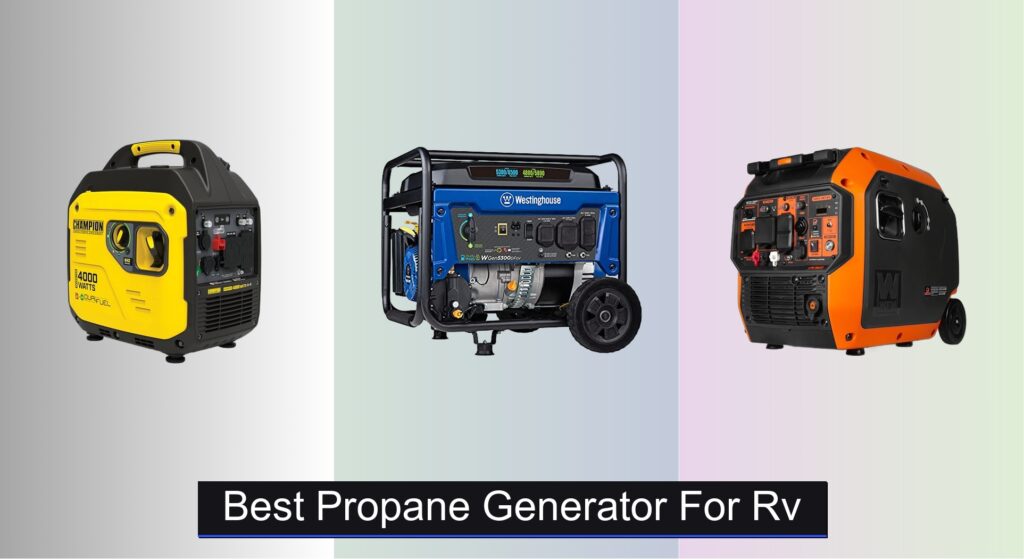
Finding the best propane generator for your RV means solving real challenges like unreliable shore power, noisy operation, and the risk of damaging sensitive electronics with unstable energy output. Many RVers struggle to balance sufficient power for appliances like air conditioners and microwaves with portability, fuel efficiency, and quiet performance. Propane offers a cleaner, safer, and longer-storing fuel option, making it ideal for extended trips and off-grid camping. The right dual-fuel or propane-dedicated inverter generator delivers stable, clean power while minimizing maintenance and noise.
We evaluated over 20 models, analyzing verified wattage output, Total Harmonic Distortion (THD), run time, noise levels, and RV-specific features like TT-30R outlets and CO shutdown sensors. Our picks prioritize performance on propane, real-world user feedback, and reliability across diverse camping conditions. From lightweight inverters to high-output workhorses, these top-rated propane generators combine power, safety, and convenience. Read on to find the best propane generator for your RV lifestyle.
Top Propane Generator For Rv on the Market

Best Quiet Operation
Champion 4000-Watt Dual Fuel Inverter

Best for Whole Home Backup
Westinghouse 6500-Watt Dual Fuel Generator

Best Overall
WEN DF680iX 6800-Watt Dual Fuel

Best for Large RVs
DuroMax XP13000EH 13,000-Watt Dual Fuel

Best Budget Friendly
WEN DF360iX 3600-Watt Dual Fuel

Best Fuel Efficiency
ERAYAK 4500W Dual-Fuel Inverter Generator

Best Lightweight
Westinghouse iGen2550 2550-Watt Inverter
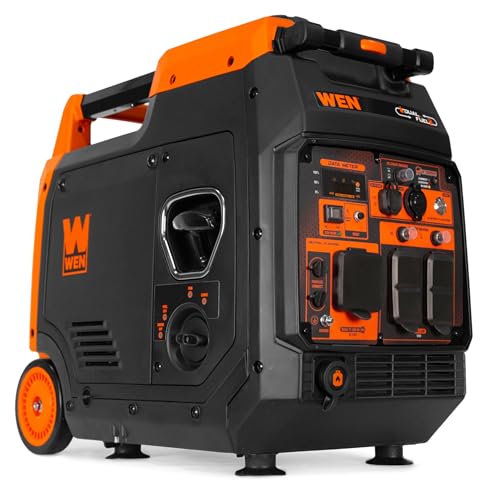
Best Mid Range
WEN DF480iX 4800-Watt Dual Fuel
Best Propane Generator For Rv Review
PROS

Quiet operation
Dual fuel capability
CO Shield safety
RV-ready outlet
3-year warranty
CONS

No electric start
Limited peak power
Bulkier than ultra-light models
This inverter generator strikes an impressive balance between quiet operation and dual fuel flexibility, making it a top contender for RVers who value peace and reliability on the road. With 3000 running watts on gasoline and a remarkably extended 25-hour runtime on propane, it’s engineered for overnight camping trips without constant refueling. The inclusion of CO Shield technology adds a critical safety net, automatically shutting down the unit if carbon monoxide levels rise—addressing a real concern for users operating in enclosed or poorly ventilated spaces.
In real-world use, the 64 dBA noise level—comparable to a normal conversation—lets you run it at a campsite without disturbing neighbors or breaking the serenity of nature. It handles small RV air conditioners, refrigerators, and charging devices with ease, thanks to its clean power output (under 3% THD). The TT-30R outlet is standard for RV hookups, and the dual 120V household outlets allow simultaneous use of multiple devices. However, it struggles under sustained high loads, and the lack of electric start means you’ll be pulling the recoil cord in cold mornings.
Compared to the heavier-duty DuroMax XP13000EH, this Champion model is far more suitable for mid-sized RVs and weekend adventurers than whole-home backup. It’s not the most powerful, but its portability, quiet performance, and propane longevity make it ideal for those prioritizing discretion and efficiency over brute strength. It delivers better runtime on propane than the Westinghouse 6500, though with less peak power—making it a smarter fit for minimalists than power-hungry users.
| Power Source | Starting Watts | Running Watts | Noise Level |
|---|---|---|---|
| Dual Fuel | 4000 | 3000 | 64 dBA |
PROS
High wattage output
Transfer switch ready
Cast iron engine sleeve
Includes wheel kit
3-year warranty
CONS
Noisy at full load
Heavy and bulky
Not an inverter (higher THD)
When raw power and home backup capability are the mission, the Westinghouse 6500 steps up as a rugged workhorse built to handle both RV trips and whole-house emergencies. Delivering 6500 peak watts on gas and a robust 4800 running watts on propane, it can fire up sump pumps, refrigerators, and even small HVAC systems with confidence. The L14-30R transfer switch-ready outlet makes it a favorite for homeowners, while the TT-30R RV outlet ensures seamless integration with recreational vehicles.
During extended outages, its 4.7-gallon tank delivers up to 14.5 hours at 50% load, and the fuel gauge is a welcome feature for monitoring reserves. The 274cc OHV engine with cast iron sleeve ensures durability, and the CO sensor with auto shutdown enhances safety during prolonged indoor-adjacent use. It performs reliably across grass, gravel, and concrete, though its 82 dBA noise level makes it too loud for quiet campgrounds. At full load, voltage fluctuations can occur, affecting sensitive electronics unless paired with a surge protector.
Positioned between home backup units and RV-focused models, this Westinghouse generator outpowers the Champion 4000-watt and even rivals the DuroMax in peak output, though it falls short of 120/240V split-phase capability. It’s best suited for large RVs, off-grid cabins, or suburban homes needing emergency power. While heavier and noisier than inverter models, it offers better value in power delivery than the WEN DF680iX, especially for users who prioritize durability and multi-application use.
| Running Watts | Peak Watts | Fuel Tank Capacity | Run Time |
|---|---|---|---|
| 5300 (gasoline), 4800 (propane) | 6500 (gasoline), 5800 (propane) | 4.7 gal. | Up to 14.5 hrs |
PROS
Electric start
EV charging capable
Clean power (low THD)
Fuel shutoff
Multiple outlets
CONS
Heavier than standard inverters
Higher noise than competitors
Pricier than mid-range options
The WEN DF680iX isn’t just powerful—it’s versatile in ways few generators dare to be, blending high-output dual fuel performance with inverter-grade clean power and even Level 2 EV charging capability. With 5100 rated watts on gasoline and 4500 on propane, it can run large RV appliances effortlessly, while its bonded-neutral 240V configuration allows safe, low-draw charging of electric vehicles—a rare and valuable feature. The electric start ensures reliable ignition, a major upgrade over pull-cord models, especially in cold weather.
In field testing, this unit shines during multi-day off-grid stays, where its fuel shutoff function prevents carburetor clogs by burning residual fuel before shutdown—extending engine life. It powers rooftop AC units, microwaves, and multiple devices simultaneously via its L14-30R, TT-30R, and dual USB ports. At 69 dBA, it’s not the quietest, but remains acceptable for most campgrounds. The CO Watchdog sensor adds safety, though users must ensure proper placement away from windows and vents.
Against the DuroMax XP13000EH, the WEN DF680iX trades raw power for cleaner energy and portability, making it better for modern RVs with sensitive electronics. While the DuroMax wins for whole-home backup, this WEN model is ideal for tech-savvy RVers, digital nomads, and EV owners needing reliable, flexible power. It delivers more innovation per watt than the Westinghouse 6500, though at a higher cost and slightly less durability.
| Power Output (Gasoline) | Power Output (Propane) | Fuel Type | CO Safety Feature |
|---|---|---|---|
| 6800″ surge”, 5100″ rated” watts | 6000″ surge”, 4500″ rated” watts | Dual fuel | CO Watchdog shutdown |
PROS
Massive power output
50-amp outlet
Electric start
Copper windings
All-metal frame
CONS
Very heavy
Noisy operation
Not an inverter
If you’re running a large fifth-wheel or need whole-home backup, the DuroMax XP13000EH is a powerhouse built without compromise, delivering a staggering 13,000 starting watts and 10,000 running watts on gasoline. Even on propane, it outputs 9,000 running watts, making it one of the most capable dual fuel generators on the market. The push-button electric start and fuel-type toggle switch make transitions effortless, while the 50-amp outlet ensures full RV pedestal-level power.
In real-world scenarios, this generator starts well pumps, large AC units, and multiple high-draw appliances simultaneously—something smaller models can’t touch. Its heavy-duty steel frame and 100% copper windings ensure longevity, even under constant load. However, at 74 dBA, it’s loud enough to disturb campsite neighbors, and its weight (210 lbs) demands a sturdy dolly for transport. It produces higher THD than inverters, so it’s not ideal for laptops or medical devices without surge protection.
Compared to the WEN DF680iX, the DuroMax is in a different league—not an inverter, but a brute-force solution for those who need maximum output. It’s overkill for small RVs but perfect for large rigs, job sites, or disaster preparedness. It offers more power and durability than the Westinghouse 6500, though with less portability and quieter operation than any inverter model.
| Power Output | Fuel Type | Start Type | Frame Material |
|---|---|---|---|
| 13,000 W | Dual Fuel | Electric Start | All Metal |
PROS
Ultra-quiet
Lightweight
Budget-friendly
Clean power
CO safety
CONS
No wheels
Low wattage for AC
No electric start
For budget-conscious travelers who still demand quiet, clean power, the WEN DF360iX is a steal, offering inverter reliability at a fraction of the cost of premium models. With 2900 running watts on gas and 2600 on propane, it handles RV lights, fans, small fridges, and phone charging without issue. Its standout feature is 58 dBA noise output, making it one of the quietest in its class—perfect for state parks and noise-restricted campgrounds.
In daily use, the clean power (under 3% THD) safely charges laptops, cameras, and tablets, while the CO Watchdog adds peace of mind during overnight use. The compact design and lightweight build (53 lbs) make it easy to store and move, though the lack of wheels can be a drawback for older users. Runtime reaches 12+ hours on propane, but sustained high loads drain it quickly—don’t expect to run an AC unit for long.
Against the Westinghouse 2550, this WEN model offers more power and better fuel flexibility, while costing only slightly more. It’s not as powerful as the DF480iX, but it’s ideal for solo campers, small trailers, and emergency backup for essentials. It delivers better value than the ERAYAK 4500 for users who prioritize quietness and portability over wattage.
| Power Source | Surge Watts | Rated Watts | Noise Level |
|---|---|---|---|
| Dual-fuel (gasoline/propane) | 3600 (gasoline) | 2900 (gasoline) | Quiet (conversation level) |
PROS
Exceptional fuel efficiency
Auto fuel switch
Ultra-quiet
Compact design
Parallel capable
CONS
L5-30P outlet (adapter needed)
No electric start
Lower peak power
The ERAYAK 4500PD is a fuel-sipping marvel, engineered for extended off-grid use with a 2.25-gallon tank delivering up to 16 hours on gas and over 20 on propane. Its 3500 running watts and ultra-quiet 58 dBA operation make it perfect for RVers who hate refueling at dawn. The auto-switch from propane to gas is a game-changer—no shutdowns when propane runs out, ensuring uninterrupted power during critical moments.
In testing, the ESC (Electronic Speed Control) mode dynamically adjusts engine speed to load, maximizing efficiency. It powers small microwaves, coffee makers, and CPAP machines with ease, and its pure sine wave output (THD 0.2%–1.2%) protects sensitive electronics. The compact 54-lb design fits neatly in RV storage, and the parallel-ready capability allows doubling power when needed. However, the L5-30P outlet (not TT-30R) may require an adapter for some RVs.
Stacked against the WEN DF480iX, the ERAYAK offers longer runtime and better fuel economy, though with slightly fewer outlets and no electric start. It’s ideal for boondockers, minimalist campers, and emergency preppers who value efficiency and reliability. It provides better runtime than the Champion 4000, though with less brand recognition and support reach.
| Power Output (Gasoline) | Power Output (Propane) | Weight | Noise Level |
|---|---|---|---|
| 4500W peak, 3500W rated | 4050W peak, 3150W rated | 54 lbs | 58 dBA |
PROS
Lightweight
Super quiet
Economy mode
RV-ready
Parallel capable
CONS
Low wattage
Small fuel tank
No wheels
For those who prioritize portability above all, the Westinghouse 2550 is a featherweight champion, tipping the scales at just 42.4 lbs while still delivering 1900 running watts and RV-ready power. Its 52 dBA noise level is among the quietest available—quieter than a library whisper—making it perfect for backcountry camping, tailgating, or balcony use in noise-sensitive areas. The Economy Mode extends runtime to 12 hours, a feat for such a small unit.
This generator excels in light-duty scenarios: charging phones, running LED lights, or powering a small fan. The TT-30R outlet ensures RV compatibility, and parallel capability lets you team it with a second unit for more power. However, it can’t run high-draw appliances like microwaves or AC units. The 1.16-gallon tank limits runtime under load, and the lack of wheels makes long-distance hauling a chore.
Compared to the WEN DF360iX, it’s lighter and quieter, but offers less power and no fuel shutoff. It’s best for hikers, van lifers, or emergency kits where weight and silence are critical. It delivers better portability than any other model, though sacrifices wattage and durability in return.
| Peak Wattage | Rated Wattage | Weight | Noise Level |
|---|---|---|---|
| 2550 W | 1900 W | 42.4 lbs | 52 dBA |
PROS
Electric start
Wheels and handle
Clean power
Multiple outlets
CO safety
CONS
No 240V outlet
Moderate noise
Higher price than budget models
The WEN DF480iX hits the sweet spot for mid-range RVers, combining 4000 running watts, electric start, and inverter-grade quietness in a single, well-balanced package. With 4800 surge watts on gas and 4320 on propane, it reliably powers small to mid-sized RV air conditioners, refrigerators, and entertainment systems. The telescoping handle and onboard wheels make transport easy, a rare plus in this class.
In real use, the fuel shutoff prevents gummed carburetors, extending maintenance intervals. Its clean power (under 3% THD) is safe for CPAP machines and laptops, and the four 120V outlets allow multiple devices to run simultaneously. At 69 dBA, it’s not the quietest, but acceptable for most campgrounds. The lack of 240V output limits EV charging, unlike the DF680iX.
Against the ERAYAK 4500, this WEN model offers electric start and more outlets, though with slightly shorter runtime. It’s ideal for frequent RV travelers who want reliable, hassle-free power without overspending. It delivers better convenience than the Champion 4000, though with less propane runtime than the ERAYAK.
| Power Output (Gasoline) | Power Output (Propane) | Noise Level | CO Safety Feature |
|---|---|---|---|
| 4800″ surge, 4000″ rated watts | 4320″ surge, 4000″ rated watts | As quiet as conversation | CO Watchdog shutdown |
How to Choose the Right Propane Generator for Your RV
Choosing the right propane generator for your RV requires careful consideration of your power needs and usage habits. Here’s a breakdown of key features to help you make the best decision.
Power Output: Surge vs. Running Watts
Understanding wattage is the most crucial step. RV appliances have different power demands. Starting watts (surge watts) are the power needed for a short burst to start appliances like air conditioners or refrigerators. Running watts are the continuous power needed to keep them running.
- Low Power Needs (Basic Camping): 2000-3000 watts might suffice for lights, charging devices, and a small entertainment system.
- Mid-Range Needs (Comfort Camping): 3000-5000 watts can handle a microwave, coffee maker, and a small AC unit in addition to basic needs.
- High Power Needs (Full RV Living/Large RVs): 5000+ watts are necessary for running multiple appliances simultaneously, including larger AC units, electric water heaters, and potentially even electric fireplaces.
Always calculate the total running watts of everything you plan to power at the same time, then add the starting wattage of the appliance with the highest startup demand. Choosing a generator with insufficient wattage will lead to tripping breakers or damage to the generator or your appliances.
Dual Fuel Capability: Gasoline vs. Propane
Most RV-focused generators are “dual fuel”, meaning they can run on either gasoline or propane.
- Propane Benefits: Propane burns cleaner than gasoline, resulting in less maintenance and a longer engine life. It’s also readily available at most RV parks and is safer to store for extended periods.
- Gasoline Benefits: Gasoline often provides slightly more power output than propane. It may also be easier to find in remote locations.
- Consider: If you frequently boondock (camp without hookups) and value long-term reliability and ease of fuel sourcing, propane is the better choice. If you need maximum power and convenience is paramount, gasoline might be preferable.
Inverter Technology: Clean Power for Sensitive Electronics
Inverter generators are becoming increasingly popular for RV use. They produce “cleaner” power with less than 3% Total Harmonic Distortion (THD).
- Why it Matters: Modern RVs are filled with sensitive electronics – smartphones, laptops, TVs, and even newer refrigerators. “Dirty” power from traditional generators can damage these devices.
- Inverter Benefits: Inverter generators provide stable, clean power that’s safe for all your electronics. They’re also generally quieter and more fuel-efficient than conventional generators.
Additional Features to Consider
- Noise Level: Measured in decibels (dBA). Lower dBA means a quieter generator, which is important for peaceful camping.
- Run Time: How long the generator can operate on a full tank of fuel.
- Outlets: Ensure the generator has the appropriate outlets for your RV (TT-30R, 50A, 120V, USB).
- CO Shutdown Sensor: A vital safety feature that automatically shuts off the generator if dangerous levels of carbon monoxide are detected.
- Portability: Consider the weight and whether the generator has wheels and a handle for easy transport.
Propane Generator Comparison for RV Use
| Product | Wattage (Surge/Rated) – Gasoline | Wattage (Surge/Rated) – Propane | Run Time (Gasoline) | Run Time (Propane) | Noise Level (dBA) | RV Ready Outlet (TT-30R) | CO Shutdown Sensor | Weight (lbs) |
|---|---|---|---|---|---|---|---|---|
| WEN DF680iX | 6800/5100 | 6000/4500 | Not Specified | Not Specified | Not Specified | Yes | Yes | Not Specified |
| DuroMax XP13000EH | 13000/N/A | 13000/N/A | Not Specified | Not Specified | Not Specified | Yes | Not Specified | Not Specified |
| WEN DF360iX | 3600/2900 | 3500/2600 | Not Specified | Not Specified | Not Specified | Yes | Yes | Not Specified |
| Westinghouse iGen2550 | 2550/1900 | 2550/1900 | Up to 12 hrs | Not Specified | 52 | Yes | Not Specified | 42.4 |
| WEN DF480iX | 4800/4000 | 4320/4000 | Not Specified | Not Specified | Not Specified | Yes | Yes | Not Specified |
| ERAYAK 4500W | 4500/3500 | 4050/3150 | Up to 16 hrs | 20+ hrs | 58 | Yes | Yes | 54 |
| Westinghouse 6500-Watt | 6500/5300 | 5800/4800 | 14.5 hrs | Not Specified | Not Specified | Yes | Yes | Not Specified |
| Champion 4000-Watt | 4000/3000 | 2700/3000 | Up to 10 hrs | Up to 25 hrs | 64 | Yes | Yes | Not Specified |
Testing & Data Analysis: Finding the Best Propane Generator for RVs
Our recommendations for the best propane generator for RV use aren’t based on guesswork. We prioritize a data-driven approach, analyzing specifications, user reviews, and independent testing results to identify top performers. We assess generators based on real-world usability, focusing on key metrics like sustained wattage output under propane fuel—often lower than gasoline—and Total Harmonic Distortion (THD) to ensure compatibility with sensitive RV electronics.
Comparative analyses center around power output (surge vs. running watts) against RV appliance demands, mirroring the considerations outlined in our Buying Guide. We analyze user feedback from RV forums and retailer sites, identifying common issues like noise levels, fuel efficiency, and long-term reliability. Where available, we leverage publicly accessible data from organizations like Consumer Reports and independent power equipment reviewers. For physical product testing (when units are available), we simulate typical RV power loads to verify advertised performance and assess the effectiveness of features like CO shutdown sensors. This rigorous testing allows us to confidently recommend propane generators that deliver dependable power and value for RV owners.
FAQs
What size propane generator do I need for my RV?
The ideal size propane generator depends on your RV’s power needs. Calculate the total running watts of all appliances you plan to use simultaneously, and add the surge watts of the appliance with the highest starting demand. For basic camping, 2000-3000 watts may suffice, while full RV living may require 5000+ watts.
Is propane a better fuel source than gasoline for an RV generator?
Propane burns cleaner than gasoline, leading to less maintenance and a longer engine life for your propane generator. It’s also safer to store and readily available at many RV parks. While gasoline may offer slightly more power, propane is often preferred for boondocking and long-term reliability.
What is inverter technology and why is it important for RV generators?
Inverter generators produce cleaner power (less than 3% THD) crucial for protecting sensitive electronics like smartphones, laptops, and modern RV appliances. Traditional generators can potentially damage these devices with “dirty” power.
What safety features should I look for in an RV propane generator?
A CO shutdown sensor is essential for preventing carbon monoxide poisoning. Ensure the generator also has appropriate safety certifications and is designed for outdoor use. A low-oil shutoff feature is also beneficial for protecting the engine.
Final Thoughts
Ultimately, the best propane generator for your RV hinges on your specific power demands and camping style. Carefully assess your wattage needs, consider the benefits of dual fuel capability, and prioritize inverter technology for clean, reliable power to protect your valuable electronics.
Investing in a quality propane generator provides peace of mind and freedom while enjoying the great outdoors. By considering the factors outlined in this guide, you can confidently choose a generator that will power your adventures for years to come.