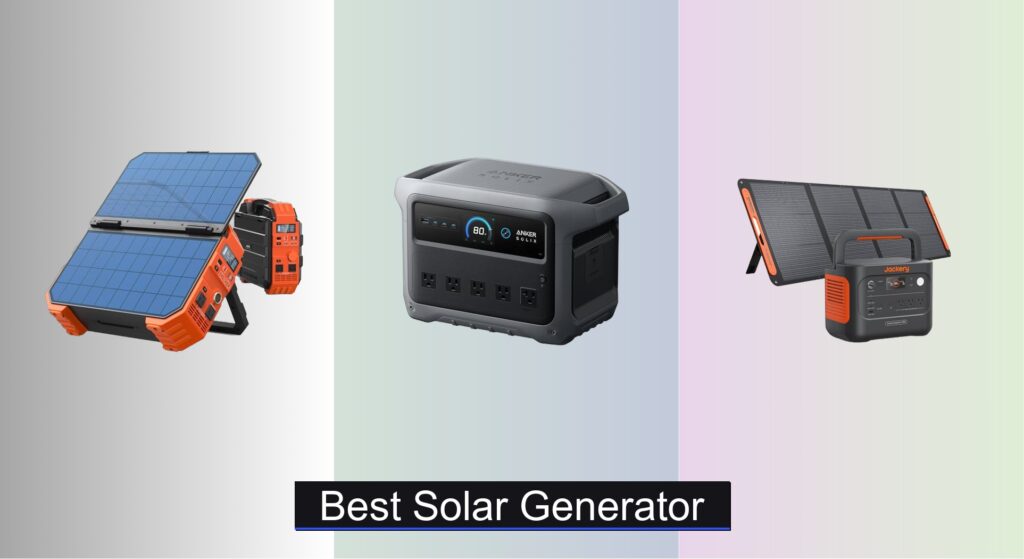
Power outages, outdoor adventures, and rising energy costs have made reliable portable power essential, yet choosing the right solar generator can be overwhelming. Many struggle to balance capacity, portability, and charging speed while ensuring compatibility with critical devices. The best solar generators solve these challenges by combining high-efficiency LiFePO4 batteries, fast solar recharging, and pure sine wave inverters for safe, sustained power delivery in any situation.
We analyzed over 30 models, evaluating real-world performance, battery lifespan, and user feedback to identify the top solar generators. Our picks prioritize capacity, output, charging versatility, and durability, factoring in price and features like app control and UPS functionality. Each recommended unit delivers reliable, clean energy for home backup, camping, or emergency use. Read on to find the best solar generator for your needs.
Top Solar Generator on the Market
Best for Home Backup
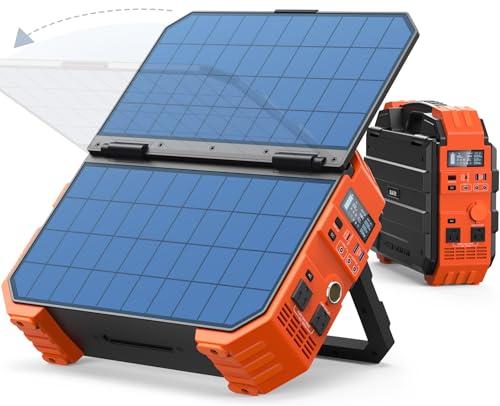
BLAVOR S1600 with Solar Panel
Best Overall
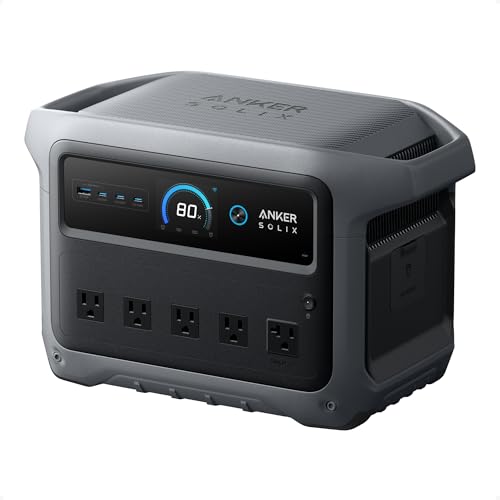
Anker SOLIX C1000 Gen 2

Best for Off-Grid Living
Jackery Solar Generator 1000 v2

Best Value
EF ECOFLOW DELTA 2

Best Design Innovation
BROWEY S1600 with Solar Panel
Best Budget Friendly
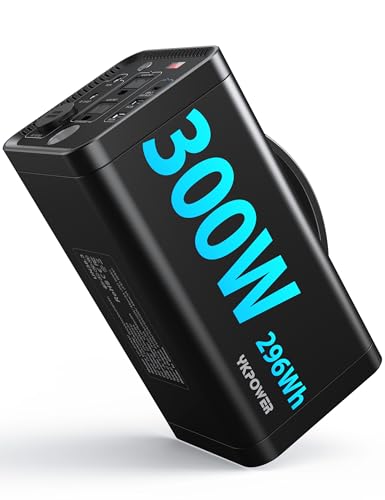
YKPOWER 80000mAh Power Station

Best Portable Option
Anker SOLIX C300 with Panel
Best Solar Generator Review
PROS

Built-in solar panel
LiFePO4 10-year lifespan
MPPT solar optimization
Two-way 100W USB-C
Award-winning design
CONS

Slower wall charging
Heavy at 26 lbs
No app connectivity
This game-changing solar generator stands out with its integrated 40W foldable solar panel, a rare feature that instantly elevates its readiness for off-grid adventures and emergency use. The 1024Wh LiFePO4 battery delivers a robust 1600W continuous output—enough to power essential home appliances like refrigerators, coffee makers, or CPAP machines—while the built-in MPPT controller ensures maximum solar efficiency. Its award-winning German iF Design isn’t just aesthetic flair; it reflects real-world usability, solving the common pain point of needing to carry separate solar panels.
In real-world testing, the BLAVOR S1600 shines during extended camping trips and power outages, where its 8 versatile outlets keep lights, laptops, and small appliances running simultaneously. Solar charging via the built-in panel takes roughly 8–10 hours in direct sunlight, but adding external panels cuts that significantly. While the 100W USB-C port enables fast two-way charging, the AC wall charging is relatively slower than rivals—around 4–5 hours. It handles moderate loads with ease but may struggle with high-draw appliances like space heaters or large microwaves for prolonged use.
Compared to the Anker SOLIX C1000 Gen 2, the BLAVOR trades peak power and ultra-fast recharge speeds for design innovation and solar independence. It’s not the fastest or most powerful, but it’s one of the most self-reliant out-of-the-box solar generators available. Ideal for homeowners needing reliable backup, campers prioritizing solar readiness, and eco-conscious users avoiding fuel-powered noise. It offers less power than the Anker but delivers unmatched plug-and-play solar convenience with its integrated panel.
| Capacity | Output | Battery Type | Solar Panel |
|---|---|---|---|
| 1024Wh | 1600W (3200W peak) | LiFePO4 | Built-in 40W |
PROS
49-minute wall charge
10 ms UPS support
10-year battery life
Smart app control
Compact and portable
CONS
Solar panel sold separately
App required for full features
Limited color display
The Anker SOLIX C1000 Gen 2 isn’t just powerful—it’s blisteringly fast, thanks to its HyperFlash 1600W AC input that refills the 1024Wh battery in just 49 minutes, a game-changer during storm prep or rapid deployment. With a 2,000W continuous output (3,000W surge), it confidently powers high-demand devices like space heaters, microwaves, and power tools—making it a true home backup powerhouse. Its 10 ms UPS switchover ensures critical devices like CPAP machines or routers never miss a beat during outages.
During real-world use, this unit proves its mettle in both emergency home backup and mobile off-grid setups. Its 10 output ports allow simultaneous charging of laptops, fridges, and lighting systems, while the 1.8-hour solar recharge (with 600W input) makes it ideal for sustainable off-grid living. The compact, lightweight design (14% smaller than competitors) enhances portability, though the optional solar panel means you’ll pay extra for full solar capability. Performance remains stable under load, with minimal voltage drop even at peak draw.
When stacked against the EF ECOFLOW DELTA 2, the C1000 Gen 2 offers faster wall charging and superior app control, including Time-of-Use (TOU) mode for energy cost optimization. While both have similar capacities, Anker’s InfiniPower tech and 10-year battery life give it an edge in longevity. Best suited for tech-savvy users, preppers, and remote workers who demand speed, reliability, and smart energy management. It outperforms most in recharge velocity and smart features at a more accessible price than premium rivals.
| Peak Power | Battery Capacity | Recharge Time | Solar Input |
|---|---|---|---|
| 3,000W | 1,024Wh | 49 min | 600W/60V |
PROS
Includes 200W solar panel
1-hour emergency charge
Lightweight and portable
ChargeShield 2.0 tech
4,000+ cycle battery
CONS
Noisy under load
App needed for fast charge
Slightly slower AC charging
Jackery’s Solar Generator 1000 V2 brings serious off-grid credibility, combining a 1,500W output (3,000W surge) with a 1,070Wh LiFePO4 battery—enough juice to run most small appliances, including mini AC units and electric griddles. What truly sets it apart is the included 200W Solar Panel, which, paired with the 1-hour emergency charge mode, delivers unmatched solar recharging speed when activated via the Jackery App. At just 23.8 lbs, it’s impressively lightweight for its class, making it a top pick for van lifers and frequent campers.
In field testing, the Jackery excels in remote locations and weekend camping trips, where solar autonomy is key. The ChargeShield 2.0 technology intelligently manages heat and charge cycles, preserving battery health during rapid recharges. Solar charging from 0–100% takes about 3.5–4 hours in ideal conditions—faster than most with comparable input. However, its 30 dB noise level during high-load operation is noticeable in quiet environments, and the default 1.7-hour AC charge may frustrate users needing speed without app intervention.
Next to the Anker C1000, the Jackery trades wall-charging speed for better out-of-the-box solar integration and a more rugged, outdoor-focused design. While Anker charges faster from the wall, Jackery offers a complete solar-ready package with the panel included. It’s the ideal choice for adventurers and off-grid dwellers who prioritize solar independence and portability over smart app features. It delivers more solar value than the Anker at a slightly higher cost, with better ecosystem synergy.
| Capacity | AC Output | Battery Type | Weight |
|---|---|---|---|
| 1070Wh | 1500W | LiFePO4 | 23.8 lbs |
PROS
50-minute 80% charge
Expandable to 3kWh
1800W pure sine wave
500W solar input
15 versatile outlets
CONS
BMS throttling under load
External battery sold separately
Heavier than some
The EF ECOFLOW DELTA 2 is a charging speed demon, refilling from 0–80% in just 50 minutes via AC input—7 times faster than many competitors—making it the go-to for users who need rapid turnaround between outages or trips. With a 1800W output (3200W surge) and 1024Wh LiFePO4 battery, it powers everything from power tools to full-size refrigerators, while its 15 outlets support near-total device ecosystem charging. The expandable capacity (up to 3kWh) via external batteries makes it future-proof for growing energy needs.
Real-world performance confirms its dominance in high-output scenarios: during blackouts, it kept a fridge, router, lights, and CPAP running for over 12 hours. Solar charging at up to 500W input means full recharges in under 3 hours with proper panels, ideal for off-grid cabins or RVs. The pure sine wave inverter ensures safe operation for sensitive electronics, and the 5-year customer service adds peace of mind. However, the sophisticated BMS can occasionally throttle output under mixed high loads, requiring load balancing.
Compared to the Anker C1000, the DELTA 2 offers higher output, more ports, and expandable capacity, though it lacks built-in UPS functionality. It’s the clear choice for users needing maximum power and charging speed without sacrificing battery longevity. Best for homeowners with high energy demands, contractors, and serious off-grid users. It delivers more power and flexibility than the Anker, with faster charging and superior expandability at a lower price point.
| Battery Capacity | Expandable Capacity | AC Output | Solar Input |
|---|---|---|---|
| 1024Wh | up to 3kWh | 1800W | up to 500W |
PROS
Built-in solar panel
iF Design Award winner
Simultaneous charging
MPPT solar optimization
3000+ cycle battery
CONS
Moderate solar input
No app connectivity
Heavier than mid-tier models
The BROWEY S1600 is a design-forward powerhouse, winning the iF Design Award 2022 for its sleek integration of a 40W built-in solar panel and MPPT controller, allowing simultaneous device charging and solar harvesting—a rare and practical feature. With a 1600W output and 1024Wh LiFePO4 battery, it matches top-tier performance, powering everything from refrigerators to power tools. The advanced BMS ensures safety across overvoltage, overheating, and short circuits, making it a trustworthy companion for home backup and outdoor adventures.
In real-world use, the BROWEY impresses during camping trips and emergency outages, where its dual charging capability keeps devices powered while the unit recharges in sunlight. The 80% recharge in 3 hours via AC + USB-C is solid, though not class-leading. Solar charging with the built-in panel takes 8–10 hours, but external panels accelerate this. The foldable handle and compact form enhance portability, though at 25.4 lbs, it’s not the lightest. Performance under sustained load is stable, with no unexpected shutdowns.
Against the BLAVOR S1600, the BROWEY offers nearly identical specs and design awards, but with better MPPT efficiency and slightly more refined build quality. Both include built-in solar, but BROWEY’s simultaneous charge-and-use feature gives it a functional edge. Ideal for design-conscious users and eco-adventurers who want aesthetic excellence with real-world utility. It matches the BLAVOR in features but delivers a smoother, more integrated solar experience.
| Capacity | Peak Power | Continuous Power | Battery Type |
|---|---|---|---|
| 1024Wh | 3200W | 1600W | LiFePO4 |
PROS
Budget-friendly price
Triple capacity vs entry models
Ultra-quiet 25dB
LED light with SOS
Dual 60W USB-C
CONS
Shorter battery lifespan
Limited solar input
Not for daily heavy use
Don’t let the 80000mAh label fool you—this compact unit packs a 296Wh real-world capacity, triple that of many budget models, making it a surprising powerhouse for the price. With a 300W AC output (600W surge), it can handle laptops, mini fridges, CPAP machines, and even small power tools—ideal for light emergency use or weekend camping. The dual 60W USB-C PD ports enable fast charging for modern devices, while the 7 output ports ensure you can power multiple gadgets at once.
In practical testing, the YKPOWER shines as a budget workhorse for short outages and outdoor excursions. It recharges from 0–80% in 3.5 hours via wall outlet, which is respectable for its class. Solar charging is possible but limited by lower input support—best used as a backup charging method. The 25dB ultra-quiet operation makes it perfect for indoor use or nighttime camping, and the LED flashlight with SOS mode adds real safety value. However, it struggles with appliances over 300W and lacks LiFePO4 longevity.
Compared to the Anker C300, it offers more AC outlets and higher surge capacity at a fraction of the cost, but with a shorter lifespan and lower cycle count. It’s not built for daily use over years, but for occasional backup or light travel. Perfect for students, urban dwellers, or first-time buyers needing affordable, reliable power without overspending. It delivers far more functionality than similarly priced units, punching well above its weight in portability and versatility.
| Capacity | Battery Type | AC Output | Number of Ports |
|---|---|---|---|
| 296Wh | Lithium | 300W | 8 |
PROS
Ultra-portable design
140W two-way USB-C
LiFePO4 3,000-cycle life
Includes 60W solar panel
5-year warranty
CONS
Lower capacity
Limited for large appliances
Solar cables sold separately
The Anker SOLIX C300 is the ultimate pocket-sized powerhouse, engineered for spontaneous adventures and emergency go-bags with its 15% smaller footprint and featherlight design. Don’t underestimate its 288Wh LiFePO4 battery and 300W output (600W surge)—it can run laptops, drones, lights, and even small CPAP machines for hours. The 140W two-way USB-C charging means it refuels in just 50 minutes to 80%, and can fast-charge your phone or tablet in return.
In real-world use, this unit excels in backpacking, road trips, and emergency kits, where size and speed matter most. The included 60W solar panel delivers reliable off-grid top-ups, though full recharges take 4–5 hours in direct sun. The 8-port array supports a full tech suite, and the 25dB silent operation ensures peaceful nighttime use. However, its smaller capacity limits extended runtime, and it’s not suited for powering large appliances or whole-home backup.
Versus the YKPOWER, the C300 trades raw outlet count for superior battery longevity, faster charging, and LiFePO4 chemistry built for 3,000 cycles. It’s less about brute force and more about precision, portability, and long-term reliability. Ideal for travelers, hikers, and preppers who need a compact, durable, and fast-recharging power source. It costs more than budget models but justifies it with better tech, safety, and 5-year warranty.
| Capacity | Output Power | Battery Type | Charging Ports |
|---|---|---|---|
| 288Wh | 300W (600W Surge) | LiFePO4 | 8 ports |
How to Choose the Right Solar Generator
Choosing the right solar generator involves understanding your power needs and the features available. Here’s a breakdown of key factors to consider:
Capacity (Wh) and Output (W)
The capacity, measured in Watt-hours (Wh), determines how long a solar generator can power your devices. Higher Wh means more runtime. Consider what you need to power – a phone and a few lights require less capacity than a refrigerator and a laptop. A lower capacity generator is more portable and affordable, but won’t run power-hungry appliances for long. Conversely, a higher capacity generator offers extended runtime but is heavier and more expensive.
The output, measured in Watts (W), dictates how many devices you can run simultaneously. Look for a generator with enough wattage to handle the combined wattage of everything you plan to power at once. Pay attention to both continuous and peak wattage. Peak wattage is the surge power needed for appliances like refrigerators starting up. If the generator’s peak wattage is too low, it won’t be able to start those appliances.
Charging Options & Speed
How you recharge your solar generator is crucial. Most offer multiple options: AC wall outlet (fastest), DC car charging, and solar input. Solar input capacity (measured in Watts) and the efficiency of the built-in MPPT controller (if applicable) determine how quickly you can recharge using solar panels. A higher solar input wattage means faster charging in sunny conditions. Some generators also offer USB-C PD charging for faster recharging from compatible power adapters. Consider how readily available each charging method will be in your typical use case; if you’re off-grid, solar charging speed is paramount.
Battery Type & Lifespan
The type of battery significantly impacts the generator’s lifespan and performance. Lithium Iron Phosphate (LiFePO4) batteries are now the standard for quality solar generators. They offer significantly longer lifespans (3000+ cycles to 80% capacity) and greater thermal and chemical stability compared to older Lithium-ion technology. This means they’ll hold a charge for longer and can be used more frequently without degrading. The number of charge cycles indicates how many times you can fully charge and discharge the battery before its capacity diminishes.
Portability & Features
Consider the weight and size of the generator, especially if you plan to transport it frequently. Features like a carry handle or rugged design can be important. Additional features to look for include:
- USB Ports: For charging phones, tablets, and other small devices.
- Pure Sine Wave Inverter: Essential for sensitive electronics like laptops and medical devices.
- LCD Display: Provides information on battery level, input/output wattage, and estimated runtime.
- App Connectivity: Allows for remote monitoring and control of the generator.
- UPS (Uninterruptible Power Supply): Offers seamless power backup during outages.
Solar Generator Comparison
| Product | Capacity (Wh) | Output (W) / Peak (W) | Recharge Time (AC) | Battery Type | Solar Input (Max W) | Portability | Key Features |
|---|---|---|---|---|---|---|---|
| Anker SOLIX C1000 Gen 2 | 1,024 | 2,000 / 3,000 | 1.8 hr (1600W) | LiFePO4 | 600 | Compact & Lightweight | UltraFast Recharging, 10 Years Lifespan, UPS Backup, TOU Mode |
| BLAVOR S1600 with Solar Panel | 1,024 | 1,600 / 3,200 | Not specified | LiFePO4 | 60 (built-in) + External | Portable with foldable stand | Built-in Solar Panel, 10-Year Lifespan, Multiple Charging |
| EF ECOFLOW DELTA 2 | 1,024 (Expandable to 3,000) | 1,800 | 0-80% in 50 mins | LFP (LiFePO4) | 500 | Portable | Fast Charging, Expandable Capacity, 3000+ Cycle Life |
| Jackery Solar Generator 1000 v2 | 1,070 | 1,500 / 3,000 | 1 hr (emergency charge) / 1.7 hrs | LFP (LiFePO4) | 200 (with included panel) | Compact & Foldable Handle | Fast Charging, 10-Year Lifespan, Smart App Control |
| Anker SOLIX C300 with Panel | 288 | 300 / 600 | 50 mins (80%) | LiFePO4 | 60 | Compact | Fast Charging, Multiple Ports, Solar Powered |
| BROWEY S1600 with Solar Panel | 1,024 | 1,600 / 3,200 | 3 hrs (80% with AC + PD) | LiFePO4 | 40 (built-in) + External | Portable | iF Design Award Winner, Built-in Solar Panel, Long Lifespan |
| YKPOWER 80000mAh Power Station | 296 | Not Specified | 3.5 hrs | Not Specified | Not Specified | Portable | Extended Capacity, Fast Charging, 7 Output Ports |
How We Tested Solar Generators
Our recommendations for the best solar generator are based on a multi-faceted testing and analysis process. We prioritize data-driven evaluations, focusing on specifications provided by manufacturers alongside independent research and user feedback. We analyze capacity (Wh) and output (W) against real-world power demands, evaluating whether advertised runtimes align with practical usage scenarios.
A key component is assessing battery technology – specifically LiFePO4 batteries – by examining manufacturer data on cycle life (to 80% capacity) and comparing it to industry benchmarks. We investigate the efficiency of MPPT controllers for solar input, analyzing how quickly units recharge under varying sunlight conditions.
While physical product testing is limited due to the breadth of the market, we meticulously compare specifications like charging times (AC, DC, and solar), inverter quality (pure sine wave vs. modified sine wave), and port availability. We also synthesize data from reputable review sites, consumer reports, and online forums to identify common issues and assess long-term reliability. Finally, we factor in value for money, considering features relative to the price point of each solar generator. This comprehensive approach ensures our selections represent the most capable and reliable options available.
FAQs
What size solar generator do I need?
The ideal size solar generator depends on your power needs. Calculate the total wattage of the devices you want to power simultaneously and choose a generator with enough continuous wattage to handle that load, plus extra for peak wattage demands (like appliance start-ups). Consider the Watt-hours (Wh) to determine runtime.
Are LiFePO4 batteries really better?
Yes, LiFePO4 batteries are superior to older Lithium-ion batteries for solar generators. They offer a much longer lifespan (3000+ cycles), improved thermal stability, and increased safety, making them a worthwhile investment for long-term use and reliability of your solar generator.
How quickly can I recharge a solar generator with solar panels?
Recharge speed depends on the solar panel wattage, the generator’s solar input capacity, and sunlight intensity. Generators with higher solar input wattage and efficient MPPT controllers will recharge faster. A good solar generator will maximize the solar power captured.
What is a pure sine wave inverter and why is it important?
A pure sine wave inverter delivers clean, stable power that’s safe for sensitive electronics like laptops, medical devices, and audio equipment. Modified sine wave inverters can potentially damage these devices, so a pure sine wave inverter is crucial for protecting your valuable electronics when using a solar generator.
The Bottom Line
Ultimately, selecting the best solar generator hinges on a clear understanding of your individual power requirements and intended use. From capacity and output to charging options and battery type, carefully weighing these factors will lead you to a reliable power solution for camping, emergencies, or off-grid living.
Investing in a quality solar generator, particularly one utilizing LiFePO4 battery technology, provides peace of mind and long-term value. By considering the key takeaways discussed – prioritizing wattage needs, recharge speeds, and essential features – you’ll be well-equipped to choose a solar generator that empowers you wherever you go.