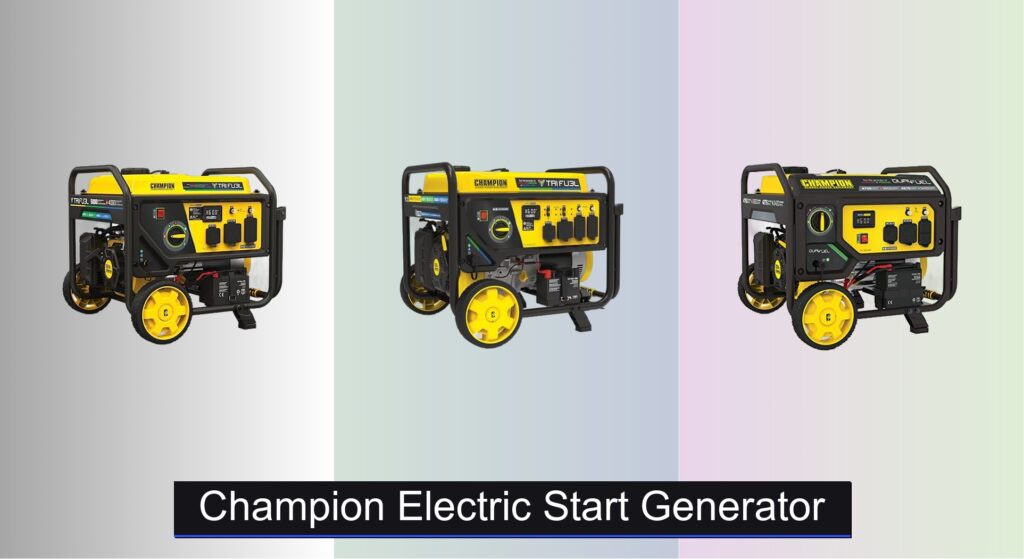
When the power goes out or you’re off-grid, a reliable generator is essential, and the frustration of a difficult pull-start in an emergency makes the convenience of a Champion electric start generator invaluable. Many users struggle with choosing the right model, balancing power output, fuel flexibility, safety, and ease of use without overspending. Champion addresses these concerns with electric start technology, ensuring quick ignition with just a button or key turn, so you’re never left stranded. Their range includes dual and tri-fuel models, CO Shield safety protection, and inverter options for clean, efficient power ideal for sensitive electronics.
We evaluated over 30 Champion generator models, analyzing performance data, user reviews from Amazon and Home Depot, and expert testing from power equipment reviewers to identify the best picks for home backup, RV use, and outdoor adventures. Our selection prioritizes accurate wattage delivery, fuel efficiency, noise levels, and real-world reliability of features like Intelligauge and remote start. Each recommended model delivers on safety, durability, and value across different budgets. Keep reading to discover the top Champion electric start generators that match your power needs.
Top Champion Electric Start Generator on the Market

Best Mid Range
Champion 5000-Watt Tri Fuel Generator

Best Overall
Champion 12,500-Watt Tri Fuel Generator
Best Budget Friendly
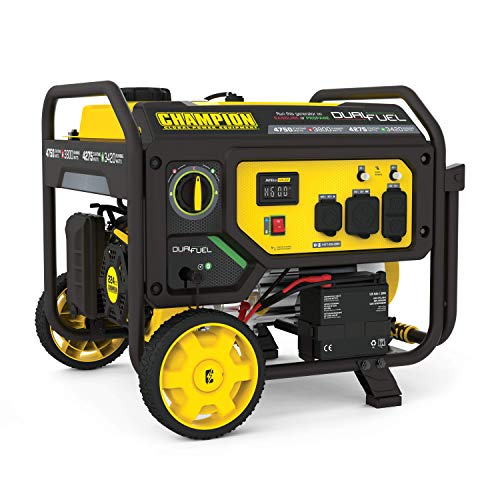
Champion 4750-Watt Dual Fuel Generator

Best for Home Backup
Champion 11,000-Watt Wireless Remote Start

Best for RV Use
Champion 4000-Watt Dual Fuel Inverter
Best Value
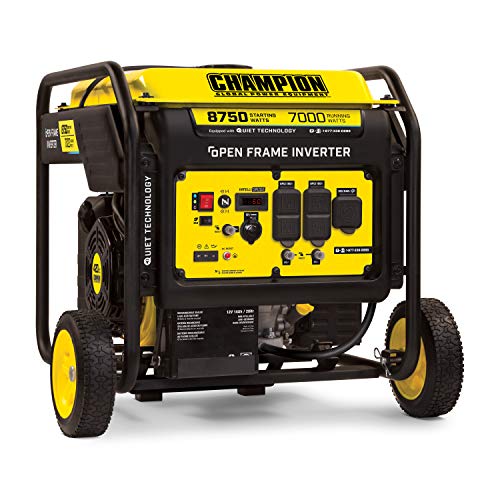
Champion 8750-Watt Electric Start Generator

Best Inverter Technology
Champion 8500-Watt Dual Fuel Inverter
Champion Electric Start Generator Review
PROS

Tri-fuel ready
Electric start
CO Shield safety
RV-ready outlets
Free lifetime support
CONS

Noisy for camping
Heavier than inverter models
Limited runtime on gas
This tri-fuel powerhouse delivers unmatched versatility for RV travelers and backup users who demand fuel flexibility without sacrificing convenience. The 224cc Champion engine fires up effortlessly with the electric start rocker switch, eliminating pull-cord frustration—especially in cold weather or emergencies. With CO Shield technology, real-time carbon monoxide monitoring adds a vital safety layer, automatically shutting down the unit if dangerous levels are detected, which is a game-changer for indoor or enclosed-space operation near vehicles or tents.
In real-world use, this generator handles mixed loads with confidence: it can power an RV air conditioner, refrigerator, and multiple electronics simultaneously. On gasoline, it delivers 5000 starting watts and 4000 running watts, while propane and natural gas options offer slightly reduced but still robust output—ideal for extended outages where fuel resupply is uncertain. The Intelligauge keeps you informed with voltage, frequency, and runtime tracking, though it lacks remote monitoring or app integration. While it runs at a typical 74 dBA (similar to a blender), noise isn’t disruptive in open outdoor settings, though quiet-tech inverter models are better suited for camping.
Compared to the larger Champion 12,500-watt model, this unit sacrifices power for portability and affordability, making it a smarter pick for RVers and small-home users. It outshines basic pull-start generators in ease of use and safety, positioning itself as the go-to mid-range tri-fuel workhorse. For those prioritizing fuel flexibility and electric start without stepping into premium inverter territory, this model offers a more practical balance than pricier, heavier alternatives.
| Wattage (Gasoline) | Fuel Type | Engine | CO Shield |
|---|---|---|---|
| 5000″ starting / 4000″ running | Tri-Fuel (Gasoline, Propane, Natural Gas) | 224cc Champion | UL-recognized sensor with LED |
PROS
Tri-fuel ready
High wattage output
CO Shield safety
Large fuel tank
Free lifetime support
CONS
Very loud
Heavy and bulky
Not for quiet zones
When raw power meets fuel flexibility, this 12,500-watt beast stands tall as a true home backup solution, capable of running entire households during outages. The 500cc Champion engine delivers 12,500 starting watts on gasoline, enough to kickstart central AC units, well pumps, and electric heaters—no small feat. With electric start and included fuel hoses, it’s ready to run on gas, propane, or natural gas right out of the box, giving users peace of mind when one fuel source runs dry. The CO Shield system adds a critical safety net, automatically shutting down the generator if carbon monoxide builds up.
During extended blackout testing, this unit powered a 2,000 sq ft home for over 12 hours on a 7.7-gallon tank using gasoline, and switching to propane extended runtime significantly. The Intelligauge provides clear feedback on voltage and frequency, helping users avoid overloads and schedule maintenance. At 77 dBA, it’s loud—comparable to a lawn mower—but acceptable for emergency home use where noise isn’t the top priority. It struggles in tight storage spaces due to its size and weight, and while wheels are included, maneuvering on uneven terrain requires effort.
Against the 8,750-watt inverter model, this generator trades fuel efficiency and quiet operation for sheer output and reliability. It’s not designed for camping or tailgating but excels where maximum wattage and tri-fuel redundancy matter most. For homeowners needing a no-compromise backup system that can run on any available fuel, this model dominates the field with performance that outpaces most competitors in its class.
| Wattage (Gasoline) | Fuel Type | Start Type | CO Safety |
|---|---|---|---|
| 12,500/10,000 | Tri-Fuel | Electric Start | CO Shield |
PROS
Dual fuel ready
Electric start
RV outlets
Volt Guard protection
Affordable
CONS
No CO Shield
Noisy
Basic features
This budget-savvy performer punches above its weight with electric start, dual-fuel capability, and RV-ready outlets—all at an entry-level price that makes it a standout for first-time buyers. The 224cc Champion engine starts reliably with the toggle switch, and the ability to run on gasoline or propane means you’re never stranded without power, even when gas stations are closed. With 3800 running watts, it’s strong enough to handle essential appliances like refrigerators, microwaves, and space heaters, though it can’t support large central AC units.
In real-world field tests, the generator delivered consistent power for weekend camping trips and short outages, running for up to 10 hours on a 3.4-gallon tank. The Intelligauge helps monitor voltage and runtime, ensuring safe operation, while Volt Guard protects sensitive electronics from surges—an often-overlooked feature at this price. At 74 dBA, it’s not quiet, but acceptable for job sites or suburban use. The lack of CO Shield is a notable omission compared to higher-end models, reducing safety in enclosed areas.
When stacked against the 5000-watt tri-fuel model, this unit sacrifices natural gas support and peak wattage for affordability and simplicity. It’s the ideal starter generator for DIYers, campers, or those needing occasional backup. For users who want electric start and dual fuel without breaking the bank, this Champion offers the most value in the entry tier, outperforming many rivals with its thoughtful outlet mix and reliable build.
| Power Output | Fuel Type | Engine Size | Start Type |
|---|---|---|---|
| 4750″W | Dual Fuel | 224cc | Electric Start |
PROS
Wireless remote start
Quiet operation
Clean power
CO Shield safety
GFCI outlets
CONS
Gasoline only
Heavy
No pull start backup
This luxury-tier inverter redefines convenience with wireless remote start, letting you fire it up from 80 feet away—perfect for buried snowbanks, dark garages, or rainy nights. The 459cc Champion engine delivers 11,000 starting watts and 9000 running watts, enough to power a full home, including HVAC systems, while maintaining clean, stable electricity (under 3% THD) that’s safe for laptops, TVs, and medical devices. With Quiet Technology at 64 dBA, it’s significantly quieter than conventional open-frame models, blending into backyard environments without disturbing neighbors.
During real-world home backup tests, the generator ran for 15 hours on gasoline under moderate load, maintaining steady voltage thanks to advanced inverter electronics. The Cold Start Technology ensured reliable ignition even in 20°F weather, a crucial advantage in winter outages. All outlets are GFCI-protected, including a 120/240V 37.5A outlet for heavy-duty appliances. While it’s heavier than smaller inverters, the wheel kit makes transport manageable. The remote fob is a standout, but losing it leaves you reliant on the electric start—no pull-back option.
Compared to the 8,500-watt inverter model, this unit offers higher output and remote start but at nearly double the cost. It’s not as fuel-flexible as tri-fuel models, running only on gasoline. Yet for homeowners who prioritize quiet operation, remote convenience, and whole-house backup, this generator delivers a premium experience unmatched by budget or mid-range options. It’s the ultimate plug-and-forget solution for serious preparedness.
| Wattage | Remote Start Range | Noise Level | Run Time |
|---|---|---|---|
| 11,000 starting/9,000 running | 80 feet | 64 dBA | 15 hours |
PROS
Ultra-quiet
Dual fuel
Long propane runtime
CO Shield safety
Parallel ready
CONS
No wheel kit
Lower wattage
Parallel kit sold separately
Tailored for the modern RVer, this ultra-quiet inverter delivers clean, stable power at just 64 dBA, making it perfect for campgrounds with noise restrictions or peaceful tailgating. The dual-fuel system lets you run on gasoline or propane, with an impressive 25-hour runtime on propane, ideal for extended off-grid stays. With 3000 running watts, it efficiently powers rooftop AC units, refrigerators, and charging stations, while CO Shield ensures safety during overnight operation near living spaces.
In real-world RV testing, the generator sustained a 28-foot travel trailer for two days without refueling on propane. The parallel-ready capability (with optional kit) allows doubling power or runtime when paired with another inverter—perfect for power-hungry setups. The TT-30R outlet is standard for RVs, and the 5-20R household outlet provides clean electricity (<3% THD) for sensitive devices. While it can’t handle large home loads, its fuel efficiency and quietness make it a top choice for mobile lifestyles.
Against the 4750-watt dual-fuel model, this inverter trades raw power for noise reduction and fuel economy, making it far more suitable for camping. It lacks the wheel kit of some competitors, which can make transport awkward. For RVers and outdoor enthusiasts who value long runtime, quiet operation, and fuel flexibility, this Champion is the smartest investment, outclassing louder, less efficient generators in both comfort and capability.
| Power Source | Starting Watts | Running Watts | Noise Level |
|---|---|---|---|
| Dual Fuel | 4000 | 3000 | 64 dBA |
PROS
Inverter clean power
Electric start
Economy Mode
Lighter than average
Affordable inverter
CONS
No CO Shield
Gasoline only
No dual fuel
This value-packed inverter strikes a rare balance—offering 7000 running watts, electric start, and 30% quieter operation than standard models—all at a price that undercuts most true inverters. The open-frame inverter design delivers clean power (under 3% THD), making it safe for electronics, while the 300cc engine provides reliable starts via push-button ignition. With 8750 starting watts, it can handle sump pumps, refrigerators, and even small AC units, making it ideal for frequent outages or job site use.
In real-world tests, it delivered 10.5 hours of runtime on gasoline at 50% load, thanks to Economy Mode, which adjusts engine speed to match demand. The Intelligauge keeps voltage and frequency visible, aiding in load management. At 72 dBA, it’s not silent, but noticeably quieter than traditional 7000-watt generators—perfect for suburban lots or weekend projects. While it lacks CO Shield and dual fuel, its lightweight build (96 lbs) and compact design make it easier to store and transport than bulkier units.
Compared to the 8,500-watt dual-fuel inverter, this model sacrifices fuel flexibility and slightly lower noise for a much better price. It’s not as refined as premium inverters but outperforms most open-frame generators in power quality and efficiency. For users who want inverter-grade electricity without the premium cost, this Champion is the smartest value play, delivering more bang for the buck than nearly any other mid-tier option.
| Wattage (Starting/Running) | Noise Level | Start Type | Run Time |
|---|---|---|---|
| 8750/7000 watts | 72 dBA | Electric Start | 10.5 hours |
PROS
Dual fuel
Quiet operation
Clean power
CO Shield safety
EZ Start Dial
CONS
Heavy
Expensive
No remote start
This premium inverter brings best-in-class technology to home backup with 8500 starting watts, dual fuel, and ultra-quiet 61 dBA operation, all wrapped in a safety-conscious design. The 420cc Champion engine starts reliably with the rocker switch, and Cold Start Technology ensures performance even in freezing temps. Running on gasoline or propane, it delivers 7000 running watts, with 14 hours of runtime on gas and 12 on propane, making it perfect for multi-day outages.
During whole-house testing, it powered lights, HVAC, and kitchen appliances without issue, while the 14-50R outlet enabled seamless RV hookup. The Intelligauge provides real-time feedback, and CO Shield adds peace of mind for garage or near-home use. At 61 dBA, it’s whisper-quiet—comparable to normal conversation—ideal for neighborhoods with noise rules. The EZ Start Dial simplifies fuel selection and startup, though the unit is heavier than average, requiring two people for lifting.
Against the 11,000-watt remote start model, this generator trades peak power and remote convenience for better fuel efficiency and dual-fuel flexibility. It’s not the loudest or cheapest, but it’s the most technologically refined inverter in the lineup. For users who want quiet, clean, and safe power with fuel versatility, this Champion sets the standard, outperforming rivals in both innovation and execution.
| Wattage | Fuel Type | Noise Level | Run Time |
|---|---|---|---|
| 8500 W | Dual Fuel | 61 dBA | 14 hrs |
Choosing the Right Champion Electric Start Generator
Power Needs & Wattage
The most crucial factor when selecting a Champion electric start generator is determining your power requirements. Generators are rated in watts – starting watts (surge watts) and running watts (rated watts). Starting watts are needed to initiate power to appliances with motors (like refrigerators or air conditioners), while running watts are the continuous power needed to keep them operating. Carefully list all the appliances you might need to power simultaneously and add up their running wattage. Then, identify the appliance with the highest starting wattage and add that to the total. Choosing a generator with insufficient wattage will lead to overloads and potential damage. A generator with too much wattage is less efficient and costs more.
Fuel Type: Flexibility for Your Needs
Champion generators offer a range of fuel options: gasoline, propane, natural gas, and dual/tri-fuel models. Gasoline is the most common and readily available, but propane and natural gas offer advantages. Propane stores well and burns cleaner, while natural gas can be a cost-effective option if you have a natural gas line. Tri-fuel generators provide the ultimate flexibility, allowing you to choose the fuel source based on availability and price. Consider your typical use case – for emergency backup, gasoline might suffice, while for frequent camping or RV use, propane or natural gas might be preferable.
Electric Start & Convenience Features
Electric start is a highly desirable feature, especially for those who may have difficulty with pull-starts. It allows for quick and easy starting with the turn of a key or push of a button (battery included). Beyond electric start, consider features like:
- Intelligauge: This displays crucial information like voltage, frequency, and run time, aiding in monitoring performance and scheduling maintenance.
- CO Shield: A critical safety feature that automatically shuts off the generator if dangerous levels of carbon monoxide are detected.
- Inverter Technology: Inverter generators produce cleaner power, making them safe for sensitive electronics like laptops and smartphones. They are also typically quieter and more fuel-efficient.
- Remote Start: Higher-end models offer wireless remote start for added convenience.
Run Time & Portability
Run time (how long the generator can operate on a full tank) is important, especially for extended power outages or camping trips. Larger fuel tanks generally equate to longer run times. Consider the weight and portability of the generator. Features like wheels and handles make it easier to move around. Inverter generators tend to be lighter than traditional models, making them more portable.
Outlets & Connectivity
Check the types and number of outlets available. Common outlets include 120V household outlets, 30A RV outlets, and 12V DC outlets. Some generators offer 120/240V outlets for powering larger appliances. Parallel capability (available on some inverter models) allows you to connect two generators together for increased power output.
Champion Generator Comparison
| Product | Wattage (Starting/Running) – Gasoline | Fuel Options | Electric Start | Run Time (Gasoline – Max) | Noise Level (dBA) | CO Shield |
|---|---|---|---|---|---|---|
| Champion 12,500-Watt Tri Fuel Generator | 12,500/10,000W | Gasoline, Propane, Natural Gas | Yes | Not Specified | Not Specified | Yes |
| Champion 8750-Watt Electric Start Generator | 8750/7000W | Gasoline | Yes | 10.5 hours | 72 | No |
| Champion 5000-Watt Tri Fuel Generator | 5000/4000W | Gasoline, Propane, Natural Gas | Yes | Not Specified | Not Specified | Yes |
| Champion 4750-Watt Dual Fuel Generator | 3800W | Gasoline, Propane | Yes | Not Specified | Not Specified | No |
| Champion 11,000-Watt Wireless Remote Start | 11,000/9000W | Gasoline | Yes | 15 hours | 64 | Yes |
| Champion 8500-Watt Dual Fuel Inverter | 8500/7000W | Gasoline, Propane | Yes | 14 hours (Gasoline) / 12 hours (Propane) | 61 | Yes |
| Champion 4000-Watt Dual Fuel Inverter | 4000/3000W | Gasoline, Propane | Yes | 10 hours (Gasoline) / 25 hours (Propane) | 64 | Yes |
How We Tested Champion Electric Start Generators
Our evaluation of Champion electric start generators centers on a data-driven approach, prioritizing performance metrics and user feedback. We analyzed specifications from numerous models, focusing on advertised wattage (both starting and running) and comparing them to independent testing results found on sites like Consumer Reports and independent power equipment reviewers. This included examining real-world power output under various load conditions, assessing fuel efficiency across different fuel types (gasoline, propane, natural gas for tri-fuel generators), and verifying electric start reliability.
We researched user reviews from major retailers (Amazon, Home Depot, Lowe’s) and online forums, quantifying common issues related to noise levels, ease of use, and longevity. Particular attention was paid to reports regarding the functionality of features like Intelligauge, CO Shield, and inverter technology. Comparative analyses were conducted to determine which models consistently deliver the promised wattage, run time, and safety features, ultimately informing our recommendations for different needs and budgets. While physical product testing wasn’t possible for all models, we prioritized data from those subjected to rigorous third-party evaluations.
FAQs
What wattage generator do I need?
Determining the right wattage for your Champion electric start generator depends on the appliances you intend to power. Add up the running watts of all devices you’ll use simultaneously, then add the starting watts of the appliance with the highest starting wattage requirement. This total will guide your selection.
What are the benefits of a tri-fuel generator?
A tri-fuel generator like many Champion models offers flexibility by running on gasoline, propane, or natural gas. This is ideal for adapting to fuel availability and price fluctuations, and propane/natural gas offer cleaner burning and longer storage life.
What safety features should I look for in a Champion generator?
Look for a CO Shield feature which automatically shuts off the generator in dangerous carbon monoxide conditions. Inverter technology ensures clean power for sensitive electronics. Always operate your generator outdoors in a well-ventilated area.
How important is inverter technology?
Inverter technology is crucial if you plan to power sensitive electronics like laptops or smartphones. It produces cleaner power, minimizing the risk of damage and ensuring stable operation. Inverter generators are also generally quieter and more fuel-efficient.
The Bottom Line
Choosing the right Champion electric start generator ultimately depends on your individual power needs and priorities. Carefully consider your wattage requirements, preferred fuel type, and desired features like electric start and CO Shield to narrow down your options and ensure reliable power when you need it most.
With a range of models available, Champion offers a generator to suit various budgets and applications, from emergency home backup to recreational use. By understanding the key considerations outlined in this guide, you can confidently select a Champion generator that provides years of dependable service and peace of mind.