
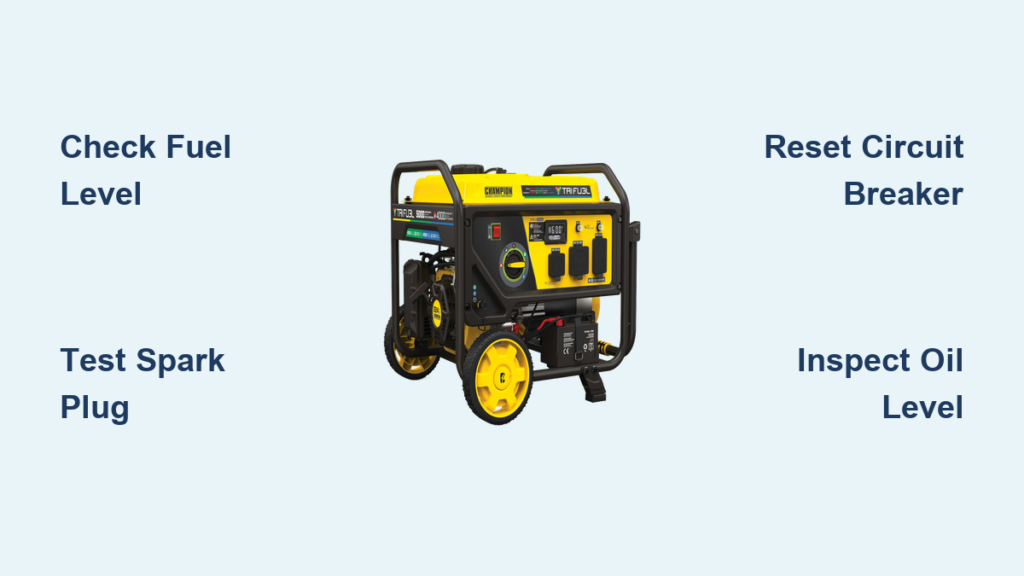
Your Champion generator won’t start when the power goes out, leaving you in the dark during a storm. You’re not alone—thousands of homeowners face this frustrating situation each year when their Champion generator fails at the worst possible moment. Most “champion generator not working” issues stem from preventable causes that you can diagnose and fix yourself without calling a technician.
This guide cuts through the confusion with specific, actionable steps to get your Champion generator running again. Whether it’s a complete failure to start, intermittent operation, or no power output, you’ll discover exactly what to check and how to fix it safely. By the end of this article, you’ll have the confidence to troubleshoot 90% of common generator problems.
Engine Won’t Start – Immediate Checks You Must Perform

Fuel System First Look
Check fuel level and quality – Your Champion generator requires fresh, clean gasoline to operate properly. If your generator sat unused for weeks, that old fuel has likely degraded. Look for signs of water contamination (cloudy appearance) or fuel that smells sour rather than sharp. Fuel older than 30 days often causes starting problems—drain the tank completely and refill with fresh gasoline treated with fuel stabilizer.
Verify fuel valve position – Many users accidentally leave the fuel valve in the “OFF” position after storage. Locate the valve (typically near the fuel tank with “ON/OFF/PRIME” settings) and ensure it’s set to “ON.” For stubborn generators, try the “PRIME” position briefly before switching to “ON,” but never leave it in PRIME while running.
Inspect fuel lines – Carefully examine the entire fuel path from tank to carburetor for cracks, kinks, or disconnections. A pinched fuel line can completely stop fuel flow. Replace any damaged lines immediately—using temporary fixes like tape creates dangerous fire hazards. While checking lines, ensure the fuel filter (if equipped) isn’t clogged with debris.
Spark Plug Assessment
Remove and inspect – Pull the spark plug wire boot firmly (don’t yank the wire), then use a 5/8″ spark plug socket to remove the plug. A healthy Champion generator spark plug shows light tan or gray deposits. Black, oily, or wet plugs indicate serious problems like oil burning or fuel flooding that must be addressed before the generator will run properly.
Test for spark – Reconnect the plug to the wire, hold the metal base against the engine block (ensuring good metal-to-metal contact), and pull the starter cord while watching for a bright blue spark. No spark means your ignition system has failed—common culprits include a bad ignition coil, sheared flywheel key, or faulty safety switch.
Clean or replace – For mildly fouled plugs, use a wire brush to clean deposits, then check the gap with a feeler gauge (typically 0.020-0.030 inches for Champion models). If the plug shows heavy carbon buildup, oil deposits, or damaged electrodes, replace it immediately with the exact model specified in your manual—using the wrong plug can damage your engine.
No Power Output Troubleshooting
Circuit Breaker Reset
Locate breaker panel – Your Champion generator’s control panel contains both a main circuit breaker and individual breakers for each outlet. Unlike household breakers, generator breakers often trip to a middle position that’s easy to miss.
Reset procedure – Push each tripped breaker fully to “OFF” (you should feel resistance), then firmly to “ON.” Many users think they’ve reset a breaker when they haven’t completed the full OFF-ON motion. After resetting, wait 30 seconds before attempting to power devices.
Test with meter – Use a multimeter set to AC voltage to check outlets—place one probe in the hot slot and the other in the neutral slot. A properly functioning Champion generator should show 115-125V. No reading indicates either a failed alternator or wiring problem requiring professional attention.
Overload Recovery
Identify overload cause – Immediately disconnect all devices—your generator likely shut down because you exceeded its continuous wattage rating. Champion generators typically shut down automatically when overloaded to prevent damage.
Cool-down period – Let the generator run without any load for 5-10 minutes to allow internal components to cool. Attempting to restart under load often causes immediate shutdown.
Prevent future overloads – Calculate your total wattage needs before connecting devices. Remember that starting watts (surge requirements) can be 2-3 times running watts. As a safety rule, never exceed 80% of your generator’s rated capacity during continuous operation.
Automatic Shutdown Issues
Low Oil Sensor Problems
Check oil level – Remove the oil dipstick, wipe clean, reinsert fully without screwing in, then check level. Your Champion generator requires oil between the min and max marks on the dipstick—running with low oil triggers automatic shutdown.
Oil quality matters – Dark, thick, or milky oil indicates contamination that can trigger false low-oil readings. Change oil immediately if it appears dirty or hasn’t been changed in over 50 hours of use. Always use the oil weight specified for your climate in the owner’s manual.
Sensor cleaning – Sometimes debris on the oil level sensor causes false readings. Locate the sensor (typically near the oil fill port), disconnect the wiring harness, and clean the sensor tip with electrical contact cleaner. Never use water or compressed air directly on the sensor.
Overheating Prevention
Airflow inspection – Remove side panels and clear debris from cooling fins and air passages using a soft brush. Grass clippings, leaves, and dust buildup restrict airflow, causing overheating shutdowns—especially after mowing or use in dusty environments.
Load management – Reduce electrical load if the generator runs hot under heavy use. If you must run near capacity, take 15-minute breaks every 2 hours to prevent heat buildup.
Ambient temperature – Operating above 90°F significantly reduces cooling efficiency. Provide shade and at least 3 feet of clearance on all sides when running in hot weather. Never operate in direct sunlight on concrete, which radiates additional heat.
Battery and Electric Start Problems
Battery Testing Procedure

Voltage check – Use a multimeter to test battery voltage with the generator off. A healthy 12V battery reads 12.6V or higher. Below 12.4V indicates insufficient charge—recharge with a smart charger before testing further.
Connection inspection – Clean corrosion from terminals using a wire brush and baking soda solution. Loose connections prevent proper current flow—tighten until you feel definite resistance, but don’t overtighten and damage terminals.
Charging system test – With the generator running, battery voltage should increase to 13.5-14.5V. No voltage increase indicates a failed alternator or regulator—critical for maintaining battery charge during extended use.
Starter Motor Diagnosis
Clicking sounds – A single loud click usually indicates a weak battery. Rapid clicking suggests poor connections. Complete silence points to safety switch issues (like the oil level sensor or neutral safety switch).
Manual bypass test – Carefully jump the starter solenoid terminals with an insulated screwdriver (only if you’re experienced with electrical systems). If the engine cranks, your starter motor works but the solenoid or control circuit has failed.
Replacement indicators – Grinding noises, slow cranking, or complete silence after confirming good battery and connections signal starter motor failure. Most Champion models use standard 12V starters that can be replaced with basic tools.
Preventive Maintenance Schedule
Daily Operations
Visual inspection – Before each use, check oil level, fuel level, and look for leaks. Address minor issues immediately—ignoring small problems leads to major failures when you need power most.
Load testing – Run your generator monthly under 50% load for 30 minutes to keep components lubricated and identify developing problems before emergencies strike.
Storage positioning – Store generators level in a dry, ventilated area. Never store with fuel in the carburetor—run until it stalls to prevent varnish buildup that clogs jets during storage.
When to Call a Professional
Electrical faults – Stop DIY repairs immediately if you find melted wires, burned components, or repeated breaker trips. These indicate serious electrical problems requiring professional diagnosis.
Internal engine damage – Metal shavings in oil, knocking sounds, or excessive smoke signal internal engine problems beyond basic maintenance. Continuing to run a damaged generator causes catastrophic failure.
Warranty considerations – Attempting repairs on generators under warranty may void coverage. Check warranty terms before proceeding with major repairs—most Champion warranties require authorized service for covered issues.
Your Champion generator represents a significant investment in reliable power. Most “champion generator not working” situations stem from simple maintenance issues you can fix yourself with basic tools. Implement the preventive maintenance schedule outlined here to avoid 90% of common problems before they occur.
Remember that generator safety is paramount—never operate indoors, always allow engines to cool before refueling, and use proper grounding procedures when powering your home. If you’re ever uncomfortable with a repair procedure or encounter unexpected complications, stop and consult an authorized Champion service center. With proper care, your Champion generator will deliver reliable power for years to come when you need it most.


