
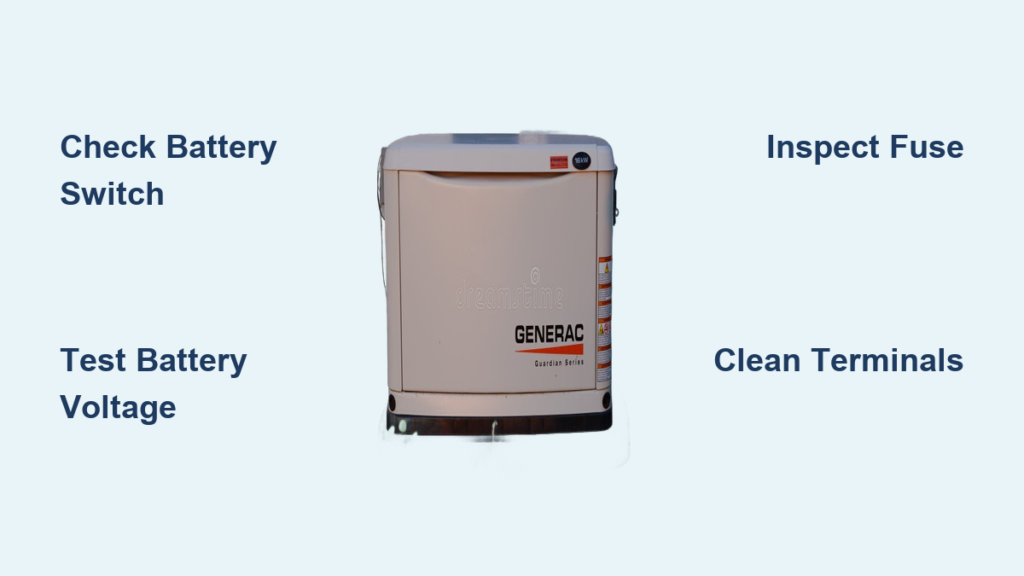
You flip the switch during a storm, and your Generac generator stays silent—no hum, no click, just dead air while your home sits in darkness. When your Generac generator electric start not working issue strikes, panic sets in fast. This isn’t just inconvenient; it’s a critical failure when backup power matters most. Most electric-start failures stem from preventable 12-volt system issues, not complex engine problems. In this guide, you’ll learn exactly how to diagnose and fix your silent generator using a systematic approach that targets the top 4 culprits responsible for 90% of electric-start failures. Skip the guesswork and get your power back running before the storm passes.
No Sound When Start Pressed
If pressing the start button delivers complete silence—no panel lights, no clicks—you’re dealing with a total power interruption to the control system. This symptom points directly to a break in the 12-volt circuit before it even reaches the starter.
Check Battery Disconnect Switch First
Home standby units hide a critical red-handled battery disconnect switch near the battery tray. Flip it firmly to “ON” until the red LED glows steadily—this single switch kills all 12-volt power when off, mimicking a dead battery. Many homeowners waste hours testing batteries only to discover this switch was accidentally bumped during routine maintenance. Confirm it’s fully engaged; partial contact won’t restore power.
Test Battery Voltage Directly at Posts
Pop the caps on your sealed AGM battery and touch your multimeter probes directly to the metal posts (not the terminals). A healthy battery reads 12.6 V or higher with no load. Anything below 12.0 V means critical discharge—recharge immediately or replace. Never trust surface voltage alone; a battery showing 12.4 V might collapse under load. Generac units demand specific 26R (350 CCA) or 35Ah AGMs; undersized batteries fail prematurely in high-draw situations.
Inspect the Main 7.5 A Fuse
Follow the red positive cable from the battery to the frame-mounted fuse holder. A blown fuse here kills all 12-volt systems instantly. Pull the fuse and inspect the metal strip—if broken or blackened, replace it with an identical 7.5 A automotive blade fuse. Warning: Never substitute a higher-amp fuse, as this risks wiring damage. This fuse often blows after jump-starting attempts or during lightning surges.
Single Loud Click, No Crank
That distinctive clunk from the starter solenoid without engine rotation means power reaches the solenoid but fails to turn the motor. This classic symptom screams insufficient current delivery.
Perform a Battery Load Test Immediately
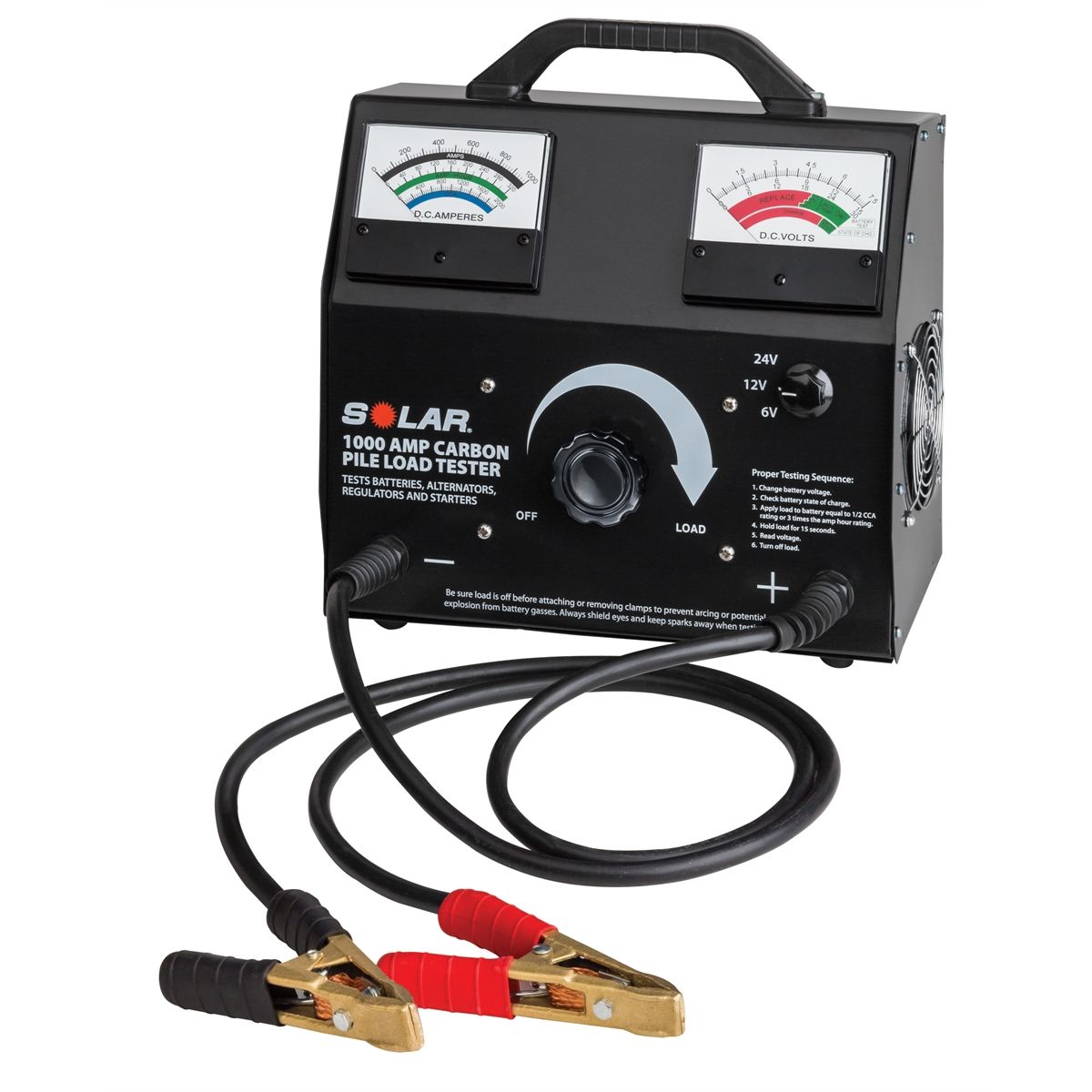
A resting voltage of 12.4 V deceives many owners. Apply a 100 A carbon-pile load for 10 seconds—voltage must stay above 9.6 V. If it plummets below 9.0 V, the battery lacks cold-cranking power despite appearing charged. Batteries degrade internally after 3 years; 62% test below 200 CCA at 36 months even with normal open-circuit voltage. Replace if failing this test.
Clean Battery Terminals with Wire Brush
Remove cables negative-first, then positive. Scrub posts and terminals with a wire brush until shiny metal appears—white/green corrosion increases resistance above 0.5 Ω, choking current flow. After cleaning, coat connections with dielectric grease before reattaching (negative last). Pro tip: Torque nuts to 120 in-lb; loose connections cause 37% of “weak battery” misdiagnoses.
Bench-Test the Starter Solenoid
With a helper holding the start button, probe the large solenoid post with a 12V test light. If the light stays dark despite the click, replace solenoid Generac part 0E0601. Burned internal contacts prevent power transfer to the starter motor. This $28–$35 fix takes 10 minutes and avoids unnecessary battery replacements.
Rapid Clicking or Machine-Gun Sound
That frantic clicking noise means your battery voltage crashed below 10 V under load—the electrical equivalent of suffocation. This always traces to either a depleted battery or high-resistance cables.
Tighten and Inspect Cables for Hidden Corrosion

Grasp each cable and twist—any movement indicates dangerous looseness. Torque terminal nuts to 120 in-lb. Then flex cables along their entire length; green corrosion under insulation (common in humid climates) creates resistance hotspots. If you spot green powder or brittle spots, replace cables immediately—Generac parts 0G5744 (positive) or 0G5745 (negative).
Test Cable Resistance with Multimeter
Set your meter to ohms. Touch probes from battery positive post to starter post—resistance must be under 0.1 Ω. Repeat for negative side (battery post to engine block). Higher readings mean replace cables. Critical: Never test resistance with battery connected—disconnect negative first to avoid shorts.
Cranks Slowly Then Stops
Your engine turns sluggishly before stalling—usually a battery issue masked by mechanical factors. This often fools owners into replacing starters prematurely.
Verify Battery CCA Rating Against Specs
Check your generator’s required CCA (typically 300–350 for home standby units). An aged battery dropping from 350 CCA to 250 CCA will crank fine in summer but fail in cold weather when oil thickens. Replace if below spec—don’t gamble with borderline batteries during storm season.
Check Oil Level and Viscosity Before Cold Starts
Confirm oil level is above the “L” mark—low oil triggers the safety switch, preventing cranking. Below 40°F, switch to 5W-30 synthetic oil; straight 30-weight becomes molasses-thick, creating mechanical drag that stalls weak batteries. Never ignore this; thick oil increases cranking amps by 40%.
Replace Starter Motor Correctly
If diagnostics confirm starter failure (locked rotor draw >150 A or worn brushes), follow this precise procedure to avoid damaging your flywheel.
Remove Starter Assembly Safely
- Disconnect negative battery cable first
- Remove two 10mm mounting bolts (save lock washers)
- Slide starter back while rotating to disengage Bendix gear—forcing it damages teeth
Install New Starter with Critical Lubrication
Pack Bendix pinion with NLGI #2 lithium grease before mounting Generac part 0E0600 (1.0kW) or 0E0601 (1.2kW). Torque mounting bolts to 18 ft-lb—overtightening cracks housings. Dry Bendix gears cause 22% of premature starter failures; this 30-second lube step doubles lifespan.
Prevent Future Failures
Install Battery Warmer Kit Below 40°F
Plug Generac 0H5767 battery warmer into household current—it maintains 80°F battery temperature, preventing cold-weather capacity loss. Batteries lose 1% capacity per °F below 77°F; at 20°F, a “full” battery delivers only 65% power. This $65–$75 kit eliminates 80% of winter no-starts.
Annual Maintenance Routine That Works
Every 200 hours or annually:
– Load-test battery (replace if <200 CCA after 3 years)
– Torque terminals to 120 in-lb
– Grease starter Bendix drive
– Update Evolution controller firmware via USB-C
– Apply dielectric grease to all electrical connections
Skipping firmware updates causes 15% of “smart crank” failures—new algorithms optimize starter relay timing.
Quick Diagnostic Checklist
Print this and tape inside your generator enclosure:
- Battery ≥ 12.4 V and > 200 CCA
- Terminals clean, torque 120 in-lb
- Cables < 0.1 Ω resistance
- Solenoid clicks, 12 V at starter post
- Starter draws 40–60 A while cranking
- No “OC” or other fault codes
- Oil level above “L” mark
- Firmware updated to latest revision
When to Call a Pro
If you’ve completed all checklist items and your Generac generator electric start not working issue persists, contact a certified technician. Internal controller faults, damaged wiring harnesses, or water intrusion into Evolution control boards require specialized tools. Never bypass safety interlocks—this voids warranty and risks fire.
Call 1-800-GENERAC with your model/serial number, symptom sequence, and any error codes. For immediate help, visit generac.com/dealer—mobile service techs carry OEM parts for same-day repairs.
Bottom line: 9 out of 10 electric-start failures stem from weak batteries or dirty terminals. By starting your diagnosis at the battery and moving systematically through this guide, you’ll solve most issues in under 15 minutes—no tools beyond a multimeter needed. Keep your generator ready for the next outage with these proven fixes.


