
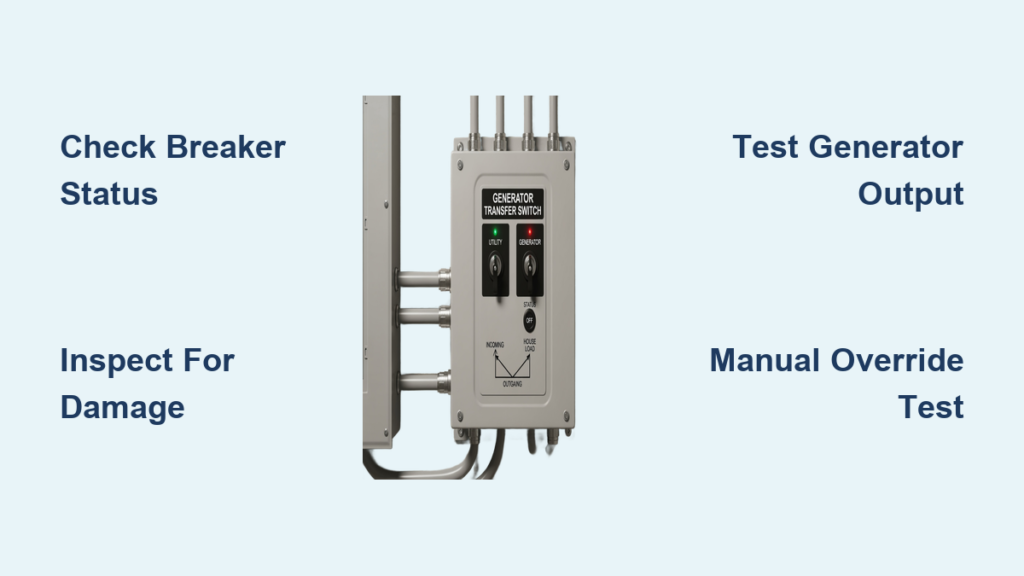
When the power goes out and your generator runs but your lights stay dark, you’re facing one of the most frustrating home emergency scenarios. That transfer switch sitting quietly in your utility room has suddenly become the critical barrier between you and reliable backup power. This guide provides essential troubleshooting steps for generator transfer switch failures, helping you determine whether you’re dealing with a simple fix or a situation requiring immediate professional attention.
A non-functional transfer switch leaves you vulnerable during power outages despite having a working generator. Many homeowners discover this problem for the first time when they actually need their backup system—after months or years of sitting idle. Understanding the warning signs and knowing how to safely assess the situation can mean the difference between restoring power quickly or enduring an unnecessary extended outage.
Recognizing Transfer Switch Failure Symptoms

Complete Power Failure During Outage
The most alarming symptom occurs when your generator runs properly but no circuits in your home receive power. This complete failure typically happens without warning during the first real power outage after a long period of inactivity. A properly functioning automatic transfer switch should engage within 30 seconds of detecting a utility power loss—any delay beyond this timeframe indicates a problem that needs immediate attention. If your essential circuits like refrigeration, heating, or medical equipment remain dead while your generator hums along, your transfer switch has likely failed to make the critical connection.
Selective Circuit Power Loss
Partial power failure presents a confusing scenario where some circuits work while others remain dead. You might find your kitchen outlets functioning but your living room lights staying dark, or your furnace operating while your well pump won’t start. This selective power loss usually indicates problems with specific circuit connections within the transfer switch rather than a complete system failure. Pay close attention to which circuits work and which don’t—this pattern provides valuable diagnostic information for electricians. If only your essential circuits function while non-essentials stay dark, check whether your transfer switch is properly configured for your prioritized loads.
Physical Switch Malfunction
Manual transfer switches sometimes get stuck between utility and generator positions, creating a dangerous no-power situation. This mechanical failure often occurs after infrequent use when components seize up. The handle may feel unusually stiff, move freely without engaging either position, or show visible misalignment with the indicator markings. Never force a stuck switch handle—this can cause internal damage that turns a simple maintenance issue into a costly replacement. If your switch handle won’t move smoothly between positions or feels loose without properly engaging, stop immediately and seek professional assistance.
Essential Initial Diagnostic Steps
Verify Breaker Status
Before assuming transfer switch failure, check both your main utility breaker and generator breaker positions. Many apparent transfer switch problems actually stem from simple tripped breakers. Look for any breaker handles sitting in the middle position between “ON” and “OFF”—this indicates a trip. To reset, firmly push the handle to “OFF” before moving it back to “ON.” Remember that both your main service panel and generator connection point have breakers that could trip independently. Check all related breakers, including any dedicated transfer switch circuit breakers that might be located elsewhere in your electrical system.
Conduct Visual Safety Inspection
Examine your transfer switch housing for any visible damage before proceeding with electrical testing. Look for warning signs like cracks in the enclosure, discoloration from overheating, or evidence of electrical arcing such as burn marks. A distinct burnt smell near the switch indicates serious internal problems requiring immediate professional attention. Never attempt repairs on equipment showing visible damage—this creates significant fire and electrocution hazards. If you notice any physical damage, shut off both utility and generator power at their sources and contact a licensed electrician immediately.
Confirm Generator Connection Integrity
Check the physical connection between your generator and transfer switch. Loose plugs, corroded terminals, or damaged cables prevent proper power transfer regardless of the switch’s internal condition. Inspect for frayed wires, bent prongs, or corrosion buildup on connection points. Ensure the generator cord is fully inserted with no gaps showing between plug and receptacle. If you find corrosion, clean connections using electrical contact cleaner specifically designed for this purpose—never use water or household cleaners on electrical components. Tighten any loose terminal screws using appropriate tools, but avoid over-tightening which can damage connections.
Critical Power Source Verification

Validate Utility Power Status
Don’t assume your transfer switch has failed without first confirming utility power status. Check if neighbors have power or use a non-generator-dependent device like a cell phone to verify if the outage affects your entire area. Test multiple outlets throughout your home with a reliable voltage tester. Some transfer switches have indicator lights showing utility power status—consult your model’s documentation if available. Remember that your transfer switch is working correctly if it doesn’t switch to generator power when utility power remains available.
Test Generator Output Independently
Start your generator and verify it’s producing proper voltage at its output receptacle using a multimeter. A standard 120V outlet should measure between 110-125V, while 240V connections should read 220-250V. No voltage at the generator output means the problem lies with your generator, not the transfer switch. Check your generator’s circuit breakers, fuel supply, and operational controls. If your generator runs but produces no voltage, consult your generator’s service manual or contact the manufacturer before proceeding further—attempting to connect a malfunctioning generator to your home electrical system creates serious hazards.
When Manual Operation Becomes Necessary
Safe Emergency Manual Transfer
Most automatic transfer switches include a manual override procedure for emergencies. Locate the manual operation lever—typically a small metal or plastic tab near the main switch handle. Shut down your generator completely before attempting manual operation. Move the override lever to the “MANUAL” position, then carefully move the main handle to the “GEN” position. Only restart your generator after confirming the switch has fully engaged with the generator circuit. This bypasses automatic controls but can restore critical power during an outage while you arrange professional service.
Recognizing When Manual Operation Fails
If the manual handle won’t move smoothly or feels jammed despite following proper procedures, stop immediately. Forcing the handle can break internal components, turning a repairable issue into a complete replacement scenario. Similarly, if the switch moves to generator position but circuits still don’t receive power, the problem likely involves internal contact failure rather than just a switching mechanism issue. Document exactly what happens during your manual operation attempt—this information proves invaluable to service technicians.
Prevention Through Proper Maintenance
Implement Regular Testing Protocol
The most effective prevention against transfer switch failure is regular testing. Most automatic transfer switches have an “exercise” mode that simulates a power outage to verify proper operation. Run this test monthly according to your manufacturer’s instructions, typically for 10-15 minutes to ensure complete system functionality. During testing, verify that all essential circuits receive power and that the switch automatically returns to utility power when simulated outage ends. Document each test result to track performance trends over time.
Maintain Clear Access and Proper Environment
Transfer switches require adequate ventilation and clearance to operate safely and reliably. Maintain at least 36 inches of clear space around all sides of the unit to prevent overheating. Keep the area free of stored items, debris, or flammable materials. Periodically inspect for dust buildup inside the enclosure (when power is off and locked out), cleaning gently with a soft brush only—never use compressed air which can force debris deeper into electrical components. Ensure the installation location remains dry and protected from direct weather exposure.
Critical Safety Considerations
Recognizing Dangerous Conditions
Certain symptoms indicate immediate hazards requiring power disconnection and professional assistance. Visible arcing, smoke, or burning smells mean you should shut off both utility and generator power at their main disconnects immediately. Discoloration on switch components, melted plastic, or unusual buzzing sounds also signal dangerous electrical faults. Never attempt to operate or repair a transfer switch showing these warning signs—continue using your generator with direct appliance connections only until professional service arrives.
Understanding When to Call Professionals
Electrical work involving transfer switches requires specialized knowledge and carries significant risks. Always call a licensed electrician if you’re uncomfortable with any testing procedure, notice any signs of damage, or if basic troubleshooting doesn’t resolve the issue. Transfer switches connect directly to your home’s main electrical panel—mistakes during repair can create electrocution hazards or fire risks affecting your entire home. Professional electricians have the proper testing equipment and training to safely diagnose and repair transfer switch problems.
Your generator transfer switch represents a critical safety component in your backup power system, not just a convenience. When it fails, methodical troubleshooting helps determine whether you’re dealing with a simple connection issue or a serious electrical problem requiring professional intervention. Start with basic visual inspections and safety checks before progressing to more complex diagnostics. Remember that electrical safety must always take precedence over restoring power quickly—when in doubt, shut everything down and call a qualified electrician. Regular testing and maintenance prevent most transfer switch failures before they leave you powerless during an actual emergency.


