Your electric car battery flashes 15% while the power outage stretches into day three. The nearest functional charging station sits 80 miles away, but your dashboard shows only 42 miles of remaining range. This isn’t just inconvenient—it’s a crisis. When grid power fails, knowing how to charge electric car with generator becomes critical survival knowledge. While generators won’t replace your home charger, they can rescue you from being stranded during extended blackouts or in remote locations where infrastructure hasn’t caught up with EV adoption.
Most drivers don’t realize standard portable generators lack the 10+ kilowatts needed for practical EV charging. Yet premium inverter models can deliver emergency power through Level 1 charging—adding crucial miles when you’re desperate. The process demands specific equipment, strict safety protocols, and realistic expectations about range gains. Let’s cut through the confusion with actionable steps that actually work when the grid goes down.
Minimum Generator Wattage for EV Charging
Why 10 Kilowatts Isn’t Optional
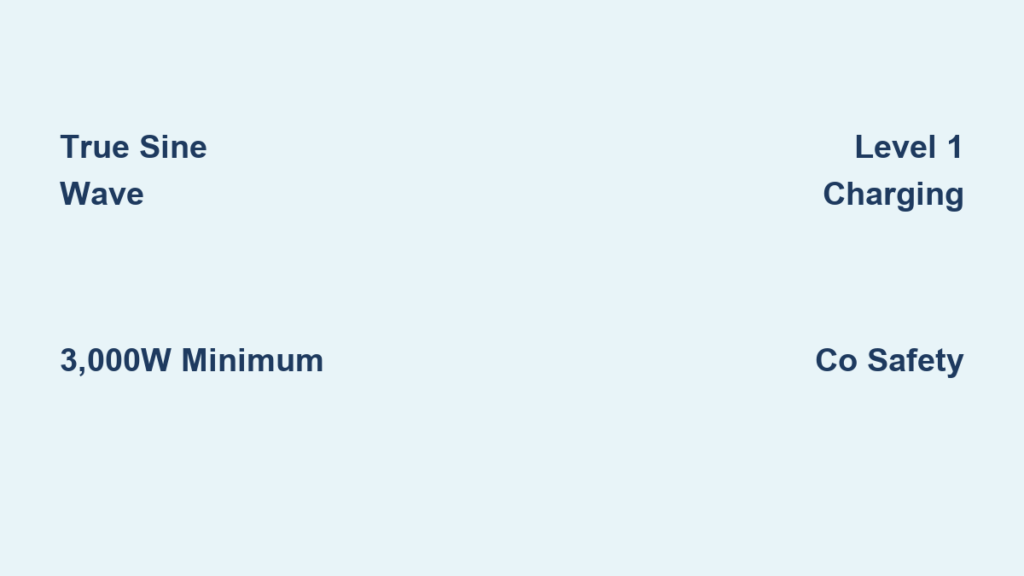
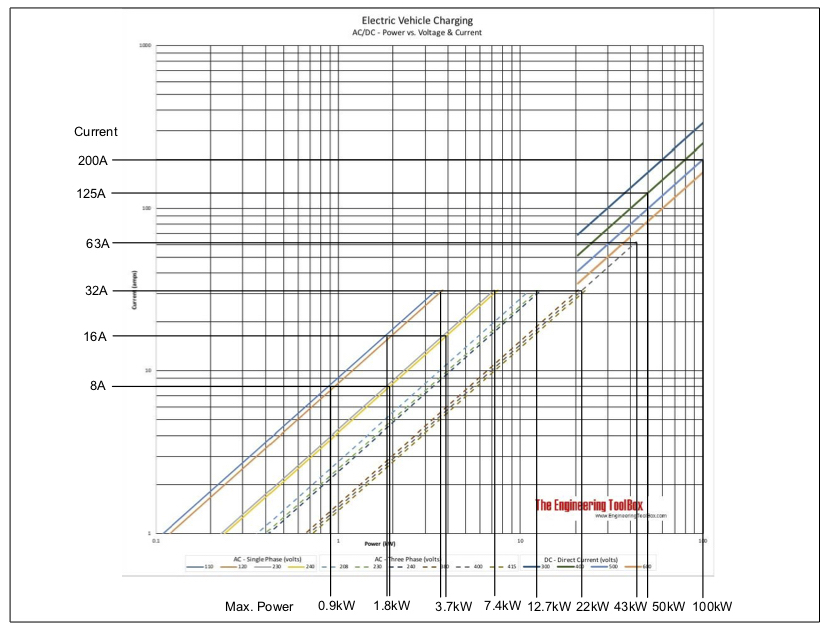
Attempting to charge your electric car with generator below 10 kilowatts delivers painfully slow results. A standard 2,000-watt portable unit adds just 1-2 miles of range per hour—meaning 10 hours of generator runtime for barely 20 miles. For meaningful mobility, target generators with at least 3,000 continuous watts to support Level 1 (120V) charging. This still translates to only 3-4 miles gained hourly, but makes emergency scenarios manageable when properly planned.
Critical reality check: Never exceed 80% of your generator’s rated capacity. A 3,000W model should only handle 2,400W during EV charging to prevent voltage drops that could damage your vehicle’s electronics.
True Sine Wave Requirement for Modern EVs
Your Tesla or Hyundai Ioniq won’t accept power from cheap generators producing “modified sine wave” electricity. This unstable output fries sensitive onboard chargers—a $5,000+ repair bill you can’t risk during an emergency. Always verify your generator specifies “True Sine Wave” output in its technical documentation. Premium inverter models like Honda EU series meet this standard, while basic conventional generators fail catastrophically.
Home Generator Cost vs. Reality
Installing a whole-home standby generator capable of Level 2 (240V) EV charging costs $20,000-$30,000—a tough sell for rare emergencies. When paired with solar panels, the investment becomes justifiable through long-term energy savings. But for most drivers, a portable inverter generator serves as practical insurance against grid failure without bankrupting your emergency fund.
Top Portable Generators That Actually Work

Honda EU3200i: Reliable Emergency Power
This 3,000-watt workhorse delivers the sweet spot between portability and performance for how to charge electric car with generator scenarios. At 8.6 hours runtime (50% load), it adds about 25 miles of range during a full tank—enough to reach safety during prolonged outages. Honda’s legendary reliability matters when your only power source is a generator in a storm. Expect to pay $2,700-$3,000, but note: its 131-pound weight requires careful transport planning.
Predator 9500 Inverter: Maximum Range Boost
Need serious emergency range? The Predator 9500’s 7,600 continuous watts delivers 18 hours of runtime and adds 50+ miles to most EVs. This brute-force solution ($2,000-$2,300) weighs 195 pounds—barely “portable” but unmatched for critical situations. Pro tip: Run it at partial load to extend runtime and reduce noise during neighborhood outages.
Westinghouse iGen4500: Budget Backup
For drivers needing basic emergency capability under $1,000, the Westinghouse iGen4500 (3,700W) offers 15 hours runtime at 50% load. While louder than premium brands (52-55 dB), its True Sine Wave output safely charges via Level 1. Just remember: this adds only 30 miles after 8 hours of operation—strictly for getting to the nearest charging station, not daily use.
Step-by-Step Generator Charging Protocol
Critical Pre-Connection Checklist
Before plugging in, verify three non-negotiable conditions:
1. Generator output quality: Confirm True Sine Wave specification in manual
2. EVSE compatibility: Use only your vehicle’s OEM Level 1 charging cable
3. Load calculation: Total draw (EVSE + generator overhead) must stay under 80% capacity
Never skip this: A voltage spike from incompatible equipment can permanently disable your car’s charging system. If your generator lacks a True Sine Wave guarantee, don’t risk it—seek alternative power.
Safe Connection Sequence
Follow this exact order to prevent electrical damage:
1. Start generator and let it stabilize for 3 minutes
2. Connect EVSE to generator (NOT vehicle first)
3. Plug EVSE into car ONLY after generator RPM stabilizes
4. Monitor dashboard for charging confirmation within 60 seconds
5. Check generator voltage with multimeter (must stay 110-120V)
Critical warning: Never operate generators indoors or in garages. Carbon monoxide poisoning kills—place units at least 20 feet from windows/doors with exhaust pointed away from structures.
Load Management During Charging
Maximize every watt during how to charge electric car with generator operations:
– Disable all vehicle systems (climate control, seats, infotainment)
– Charge only to 80% battery capacity (stops automatic after 70% on some models)
– Refuel generator during charging pauses to maintain continuous operation
– Use a kill switch timer to prevent overnight overloads
Pro tip: Place generators on rubber mats to reduce vibration-induced voltage fluctuations that trigger charging errors.
Realistic Range Expectations

The Miles-Per-Gallon Illusion
A 3,000W generator running 8 hours adds 24-32 miles of range—less than a gas car gets from one gallon of fuel. That’s 8 hours of noise, fumes, and fuel costs ($15-$20) for minimal mobility. In practice, this only solves true emergencies like hurricane evacuations where grid power is down for days.
Portability vs. Power Trade-Off
The brutal truth: generators strong enough for meaningful EV charging (7,000W+) weigh 200+ pounds—defeating “portability.” Smaller 3,000W units you can actually transport deliver barely usable range. This fundamental limitation explains why 52% of potential EV buyers cite charging anxiety as their top concern according to JD Power’s 2025 study.
Environmental Cost of Emergency Charging
Using gasoline generators to charge electric vehicles creates a sustainability paradox. One hour of generator operation produces more emissions than your EV would have avoided by using grid power for 100 miles. Reserve this method strictly for life-threatening emergencies—not convenience.
When Generator Charging Makes Sense
Valid Emergency Scenarios
Only deploy this method during:
– Natural disasters with grid outages exceeding 48 hours
– Remote work sites (construction, forestry) beyond grid reach
– Medical emergencies requiring urgent transport with no charging access
– Rural areas with sparse charging infrastructure during extreme weather
When to Avoid Generators Completely
Never use generators for:
– Daily charging routines (costs 5x more than grid power)
– Short outages under 12 hours (use battery reserve)
– Urban/suburban areas within 20 miles of functional chargers
– Vehicles requiring Level 2+ charging (most generators can’t support)
Smarter Alternatives to Generators
Home Battery Backup Systems
For frequent outages, install a Tesla Powerwall ($11,500) or similar home battery. These store grid/solar power for seamless EV charging during blackouts—no fumes, noise, or fuel costs. A single Powerwall provides 13.5kWh, adding 50-70 miles to most EVs silently and cleanly.
Strategic Charging Infrastructure
With 90% of new EV chargers now Level 2 capable, focus on:
– Installing home Level 2 charging ($500-$1,200)
– Mapping workplace/public chargers along regular routes
– Joining charging networks like Electrify America for outage priority access
Emergency Decision Checklist
Before attempting to charge electric car with generator:
– ✅ Confirm your daily range needs stay under 50 miles
– ✅ Verify local outages exceed 24 hours (check utility outage maps)
– ✅ Ensure generator produces True Sine Wave output
– ✅ Calculate fuel costs vs. potential towing expenses
– ❌ Abandon if cleaner alternatives exist (neighbors with power, public chargers)
Final Recommendations
For true emergency preparedness, keep a Honda EU3200i or equivalent 3,000W+ inverter generator specifically for EV charging. Store it with 5 gallons of stabilized fuel and practice the connection sequence quarterly. But recognize this as a last-resort lifeline—not a primary solution. Invest first in home Level 2 charging and backup battery systems that align with your EV’s environmental purpose.
Critical takeaway: Generator charging adds precious miles during disasters, but requires realistic expectations. You’re trading 8 hours of noise and $20 in fuel for 25 miles of range—enough to reach safety, not for daily use. Prioritize infrastructure solutions that keep you charged before emergencies strike, reserving generators for the 1% of scenarios where they truly save the day. When the grid fails, this knowledge won’t just get you moving—it might save your life.