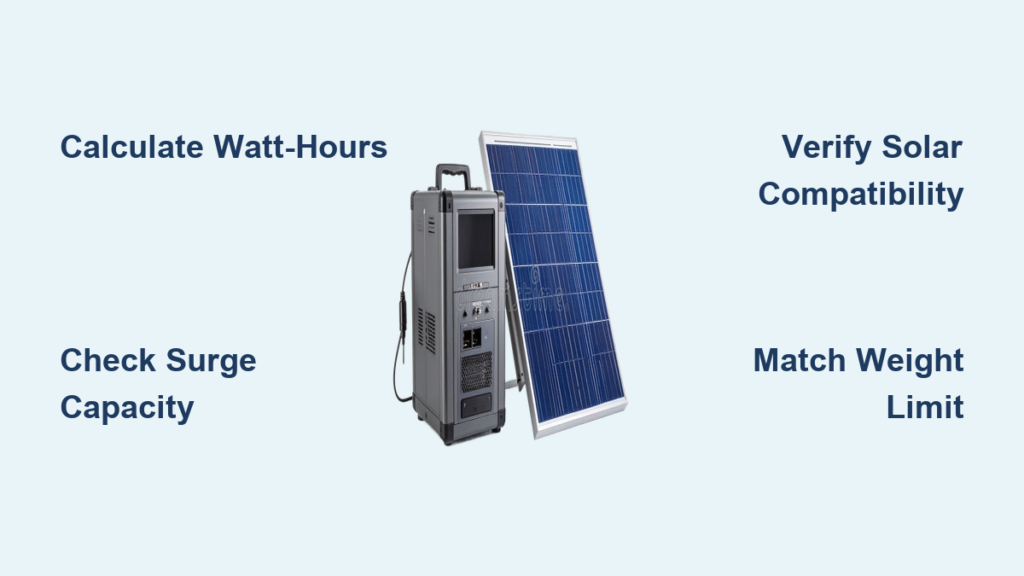
Your phone dies during a mountain camping trip as storm clouds gather. The RV refrigerator starts warming, and your CPAP machine beeps its low-power warning. This exact scenario happens to thousands of outdoor enthusiasts and homeowners every year—and it’s why mastering how to choose a solar generator is critical for reliable off-grid power. With models ranging from $200 pocket-sized units to $3,000 home backup systems, selecting the wrong capacity means either lugging unnecessary weight or facing critical power shortages. This guide cuts through marketing hype with precise calculations and real-world data to match your exact needs.
Why Solar Generators Fail Most Buyers (And How to Avoid It)
Most shoppers focus solely on wattage ratings while ignoring three critical realities: temperature impacts battery capacity by 20-30% in cold weather, cloudy days increase charging time by 300%, and motorized appliances require 2-3x their running watts for startup. A 600W mini fridge actually needs 1,800W surge capacity—exceeding many “1,000W” generator limits. Without checking both running and starting watts on device labels, your generator will shut down during critical moments.
Calculate Your True Power Requirements in 3 Steps
- List simultaneous devices: Laptop (65W) + LED lights (40W) + CPAP (60W) = 165W total
- Add 20% buffer: 165W × 1.2 = 200W minimum continuous output
- Determine capacity: 65W laptop × 8 hours = 520Wh + 60W CPAP × 10 hours = 600Wh → 1,120Wh minimum capacity
Critical mistake: Ignoring temperature effects. That 1,120Wh calculation becomes 1,300Wh in freezing conditions—always round up.
Match Generator Size to Your Actual Use Case (No Guesswork)
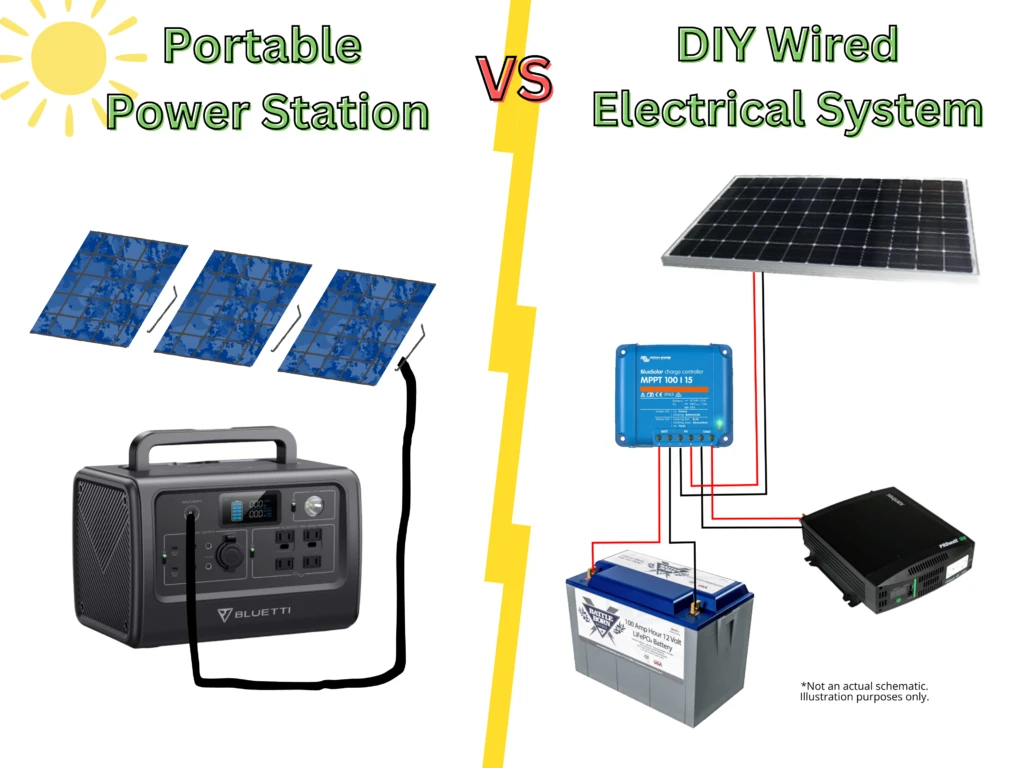
Weekend Camping Power Solution
Required: 300W/300Wh capacity
Why it works: Handles phones, tablets, and LED lighting for 2-3 days. The Anker SOLIX C300 (288Wh, 300W output) weighs just 9 lbs—lighter than your cooler. Avoid oversized units; 500Wh+ models add 15+ lbs with minimal benefit for basic device charging.
Van Life Essential System
Required: 1,200W/1,000Wh capacity
Why it works: Powers coffee makers (700W), laptops, and mini-fridges simultaneously. EcoFlow DELTA 3 Plus (1,024Wh, 1,800W output) charges to 80% in 1 hour via wall outlet. Critical check: Verify 12V DC ports for CPAP machines and TT-30R compatibility for RV hookups.
Home Backup Power Station
Required: 2,400W+/2,000Wh+ capacity
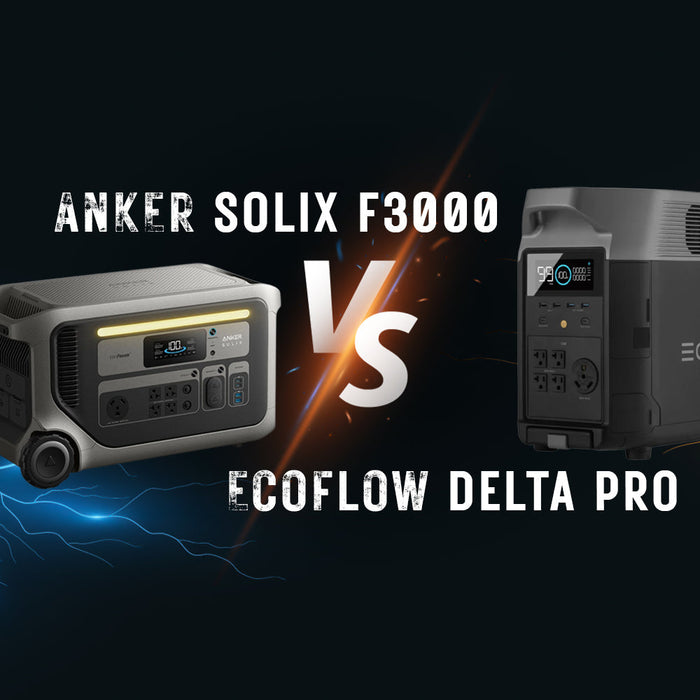
Why it works: Runs refrigerators (300-800W), medical devices, and essential circuits. EcoFlow DELTA Pro 3 (4,096Wh, 4,000W output) includes wheels and 240V outlets. Reality check: A 1,000W space heater drains a 2,000Wh unit in 80 minutes—prioritize efficiency over raw power.
Avoid These 3 Costly Solar Generator Mistakes

Oversizing for “Just in Case” Scenarios
A 4,000Wh generator weighs 110+ lbs—impractical for camping or quick home deployment. Start with your immediate needs: A 300Wh unit you actually carry beats a dusty 3,000Wh system. Pro tip: Choose expandable models like OUPES Mega 1 (starts at 1,024Wh, expands to 5.12kWh) instead of oversized single units.
Ignoring Solar Panel Compatibility
Your 200W panels won’t charge efficiently if voltage mismatches occur. Most generators require 11-28V input via XT60 connectors—Anderson ports on some models create compatibility headaches. Critical math: A 100W panel takes 11+ hours to charge a 1,000Wh unit in perfect sun; expect 2-3 days in typical weather.
Underestimating Weather Impacts
Northern climates need 3-4 days of cloudy-weather buffer. Your 1,000W solar array becomes 200W on overcast days. Solution: Prioritize larger battery capacity over extra panels—cold weather reduces battery efficiency regardless of panel size.
Top Solar Generators Compared for Real-World Use
| Model | Best For | Capacity | Continuous Output | Weight | Critical Feature |
|---|---|---|---|---|---|
| Anker SOLIX C300 | Weekend trips | 288Wh | 300W | 9.2 lbs | 5-year warranty, UPS backup |
| EcoFlow DELTA 3 Plus | Van life | 1,024Wh | 1,800W | 27.6 lbs | 1,000W solar input, 5 recharge methods |
| EcoFlow DELTA Pro 3 | Home backup | 4,096Wh | 4,000W | 113.5 lbs | Wheels, 240V outlet, expandable to 12kWh |
Key insight: Pure sine wave inverters cost 20-30% more but safely power sensitive electronics like laptops and medical devices—modified sine wave units may cause humming or damage over time.
What You Can Actually Run (Verified Data)
- 1,000Wh unit: Modem/router for 47 hours, TV + gaming console for 7 hours
- Coffee maker: 700W draw consumes 116Wh per 10-minute brew cycle
- Refrigerator: 600W mini-fridge runs 8-20 hours depending on size and ambient temperature
Charging reality: Two 100W panels take 7.5 hours for full sun charging—but plan for 14+ hours on cloudy days. Wall charging remains fastest (7 hours for 1,000Wh).
Smart Shopping Strategy That Saves $300+
- Check manufacturer bundles: Solar panels often discounted 15-25% when purchased with generators
- Compare warranty value: A $100 price difference is justified for 5-year vs 3-year coverage
- Verify port configuration: Need RV hookups? Ensure TT-30R compatibility before buying
- Prioritize brands by use case: EcoFlow for expandability, Bluetti for longevity, Anker for simplicity
Pro tip: Amazon frequently matches manufacturer prices while adding coupon codes—check both channels.
Maintenance That Doubles Your Generator’s Lifespan
Unlike gas generators requiring oil changes, solar units need minimal care:
– Store at 50-80% charge (never fully depleted)
– Top off every 3 months during storage
– Wipe panels monthly to maintain 20%+ charging efficiency
– Avoid extreme temps—garages exceed 120°F in summer, basements drop below freezing
LiFePO4 batteries (in EcoFlow/Bluetti models) deliver 3,000+ cycles—8+ years of daily use before noticeable degradation. Lithium-ion units last 500-1,000 cycles—ideal for occasional campers.
Final Decision Checklist: Choose in 60 Seconds
- List exact devices with wattage (check labels!)
- Calculate total watt-hours + 20% buffer + 15% cold-weather margin
- Set weight limit (9 lbs max for hiking, 30 lbs for van life)
- Verify solar compatibility (voltage range and connector type)
- Confirm critical ports (12V DC for CPAP, TT-30R for RVs)
- Compare warranties—5 years beats 3 years for heavy use
The perfect solar generator isn’t the most powerful—it’s the one perfectly matched to your actual needs. A 300Wh unit you use weekly beats a 3,000Wh system gathering dust. Start with your immediate requirements, choose an expandable model, and power your adventures with confidence. Pro tip: Buy 20% more capacity than calculated—battery degradation and cold weather will reduce real-world performance within 2 years.