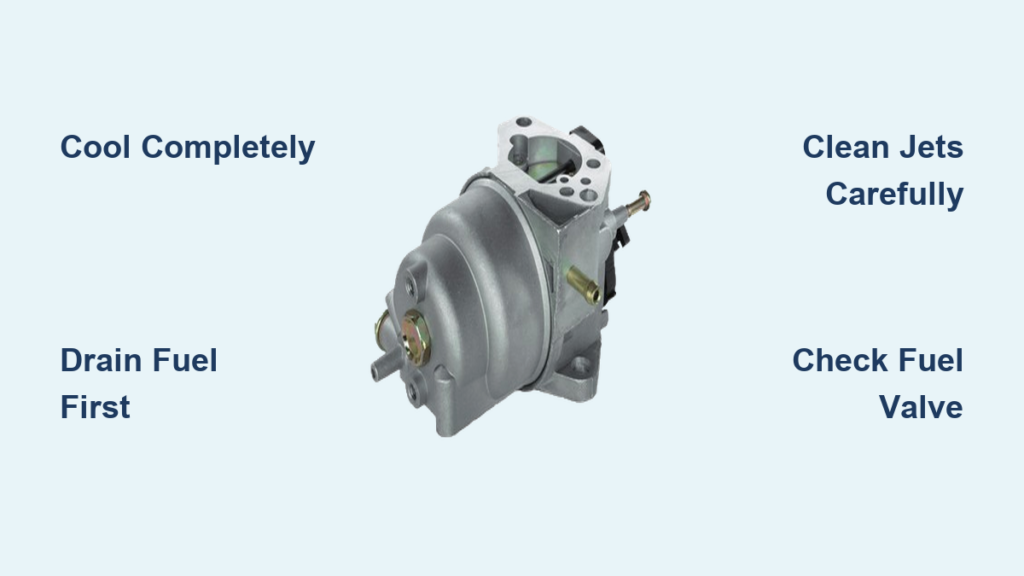
Your generator coughs and dies after weeks in the garage. You pull the starter cord repeatedly, but it won’t catch. If this sounds familiar, a clogged carburetor is likely the culprit—it causes 80% of generator starting failures. Old fuel leaves behind sticky varnish that blocks critical fuel passages, starving your engine of the gasoline it needs. This guide shows you exactly how to clean a generator carburetor yourself, saving $200+ in repair fees and restoring backup power in under two hours. You’ll learn professional techniques for disassembling, deep-cleaning, and reassembling your carburetor with common tools—no special skills required.
Ignoring carburetor maintenance leads to expensive consequences. Left uncleaned, varnish hardens into permanent blockages requiring full replacement. With proper care, your carburetor can last decades. Whether you’re prepping for storm season or reviving stored equipment, this step-by-step process works for most portable generators including Honda, Champion, and WEN models. Let’s get your power source running reliably again.
Avoid Third-Degree Burns: Mandatory 30-Minute Cooling Rule
Never touch carburetor components until your generator has cooled completely. Mufflers retain heat for hours after shutdown, causing severe burns when fuel lines are disconnected. This isn’t theoretical—emergency rooms treat dozens of generator-related burns monthly during storm seasons.
Critical Ventilation Setup
Work exclusively outdoors or in a garage with both doors fully open. Gasoline vapors sink to floor level and can ignite from a single spark. Position yourself downwind of the generator to avoid inhaling fumes. Never use fans indoors—static electricity could trigger explosions.
Fuel Valve Shutdown Sequence
Locate your brass fuel valve near the tank (consult your manual’s fuel system diagram if unsure). Turn it perpendicular to the fuel line with firm pressure until you feel resistance. Forcing it past this point damages internal seals. If your model lacks a valve, disconnect the fuel line at the carburetor instead—have rags ready for spills.
Your Carburetor Cleaning Toolkit: 7 Essential Items
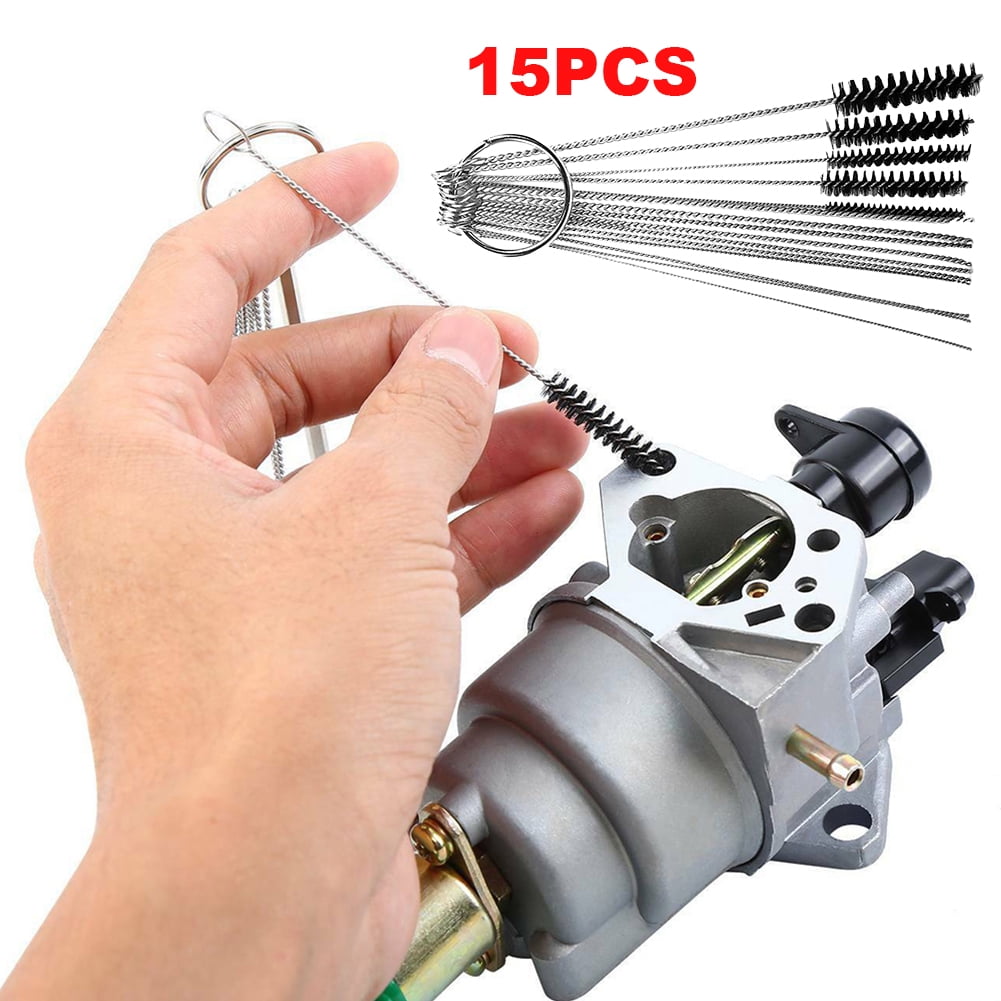
Skip unnecessary specialty tools with this field-tested kit:
– 10mm socket wrench for mounting bolts (most common size)
– Needle-nose pliers for spring clips and delicate cables
– Flat-head screwdriver for jet removal and prying
– Carburetor cleaner spray (specifically formulated—brake cleaner damages seals)
– Bread bag wire for clearing ports (softer than copper)
– Red rubber bowl gasket (prevents leaks during reassembly)
– Microfiber rags (lint-free drying)
Pro tip: Choose carb cleaner with a bendable straw nozzle. The 90-degree angle reaches side ports on tight-clearance carbs like Honda EU2200i models.
Complete Fuel Drainage: Why Skipping Causes Re-Clogs
Step 1: Valve Closure Verification
After turning the fuel valve off, tug the starter cord 3 times. If you smell gasoline, the valve isn’t fully closed—reposition it until no fumes emerge. Forcing work with fuel flowing risks dangerous spills.
Step 2: Bowl Drainage Protocol
Place a container under the carburetor’s drain screw (typically on the bowl’s bottom). Unscrew counterclockwise until fuel flows freely—this takes 45-60 seconds. Old fuel contains ethanol residues that re-clog jets if left inside. Never skip this step even with “empty” tanks.
Removing Your Generator Carburetor Without Damaging Cables
Fuel Line Disconnection Technique
For spring-clip lines: Squeeze the clip’s tabs with pliers and slide it 1/2 inch toward the fuel tank. Then twist the line gently while pulling straight off—never yank sideways. For screw-clamp lines: Loosen the Phillips screw until the clamp expands, then pull the line off.
Mounting Bolt Removal Sequence
Your carburetor attaches via two long through-bolts. Remove only the nuts with your 10mm socket—leave bolts embedded in the engine. If bolts rotate, hold them steady with a second wrench. Forcing stripped bolts requires expensive engine repairs.
Cable Position Documentation
Take three phone photos before disconnecting cables:
1. Full assembly view
2. Throttle linkage close-up
3. Choke mechanism angle
These prevent misalignment during reinstallation—a single millimeter off causes idle surges.
Bowl Removal: Handling Gasoline Spills Safely
Initial Bowl Access
Unscrew the center bowl nut counterclockwise with your 10mm socket. Keep rags under the carburetor—residual fuel will spill. If the nut sticks, tap it gently with a screwdriver handle to break sealant. Never hammer directly on brass components.
Float Component Handling
After removing the bowl, lift out the plastic float by sliding out its retaining pin. Note the brass needle valve’s position—it must move freely when reinstalled. Bending this valve during cleaning causes fuel overflow and flooding.
Jet Cleaning Precision: Unclogging Tiny Ports Without Damage

Main Jet Extraction Method
Remove the main jet from the carburetor stem using a flat-head screwdriver. Hold it to light—the center hole should show a perfect circle. If obstructed, soak it in carb cleaner for 2 minutes before proceeding.
Port Cleaning Protocol
Spray cleaner through all passages while holding the carburetor upright:
– Main jet port (center hole)
– Fuel inlet (where line connects)
– Intake throat (large air opening)
– Side emulsion ports (2-3 tiny holes near throttle plate)
Thread bread bag wire through each port using a back-and-forth motion—never rotate. Carburetor brass scratches easily, and debris pushed deeper causes permanent blockages.
Ultrasonic Cleaning: When to Use This Pro Method
Setup Requirements
Disassemble all components completely before ultrasonic cleaning. Mix powder cleaner per instructions (typically 1 packet per quart of water). Never submerge rubber seals—clean separately with spray.
Cleaning Cycle Timing
Run parts for exactly 90 seconds. Longer durations pit soft brass components. After cleaning, dry parts with compressed air—not towels—which leave fibers in microscopic ports. Missing moisture causes instant re-clogging upon restart.
Reassembly Mistakes That Cause Fuel Leaks
Seal Inspection Protocol
Examine the red rubber bowl gasket for cracks or hardening. If it doesn’t compress when pinched, replace it immediately—leaking fuel creates fire hazards. Genuine manufacturer gaskets cost under $5 and prevent 90% of post-cleaning leaks.
Float Position Verification
Reinstall the float so the needle valve moves smoothly through its full range. If resistance feels gritty, reclean the valve seat. A sticking valve causes either fuel starvation (no start) or flooding (wet spark plug).
Reinstalling Your Carburetor: Cable Routing Secrets
Mounting Alignment Check
Slide the carburetor onto through-bolts until the air intake seals fully against the engine. Misalignment here causes vacuum leaks that make engines run lean and overheat. You should feel firm resistance when properly seated.
Connection Sequence Priority
Reconnect in this exact order to prevent linkage errors:
1. Throttle cables (match your reference photos precisely)
2. Fuel line (push until you hear a click)
3. Drain tube (if equipped)
4. Air filter housing (ensure gasket compression)
First Start Protocol: Running in 60 Seconds
Fresh Fuel Requirement
Use gasoline less than 30 days old—ethanol-free preferred. Stale fuel re-clogs cleaned jets within minutes. If using ethanol-blend fuel, add stabilizer at every fill-up.
Startup Sequence
Turn fuel valve on and wait 30 seconds for the bowl to refill. Engage choke fully and pull starter cord 3 times. On the fourth pull, ease off choke slightly. Your generator should start within 6 pulls—if not, check fuel valve position.
Preventing Future Clogs: The 6-Month Maintenance Schedule
Critical Cleaning Triggers
Clean your carburetor immediately if you notice:
– Hard starting after storage
– Surging idle speeds
– Excessive fuel consumption
– Black smoke from exhaust
Storage Best Practices
Run the generator dry before long-term storage: Shut off fuel valve while running. When it stalls, the carburetor is empty. For seasonal units, add fuel stabilizer and run 5 minutes before storage—never store with untreated fuel.
Troubleshooting: 4 Common Post-Cleaning Failures
No-Start After Cleaning
Check these frequent oversights:
– Fuel valve still in off position
– Bowl nut cross-threaded causing leaks
– Throttle cable disconnected from linkage
– Air filter not fully seated
Rough Idle Fixes
If the engine runs but surges, focus on the emulsion tube above the main jet. This multi-hole component clogs easily—remove it and soak in carb cleaner for 10 minutes before reinserting.
Warranty note: WEN generators require genuine parts for coverage (call 1-800-232-1195). Other brands void warranties with non-OEM rebuild kits—check your manual first.
Your generator should now start reliably after carburetor cleaning. By following this maintenance schedule—cleaning every 6 months and using fresh fuel—you’ll prevent 90% of starting failures. Remember: a clean carburetor isn’t just about convenience; it ensures your backup power functions when lives depend on it. Keep this guide accessible for your next maintenance session, and never face a dead generator during an outage again.