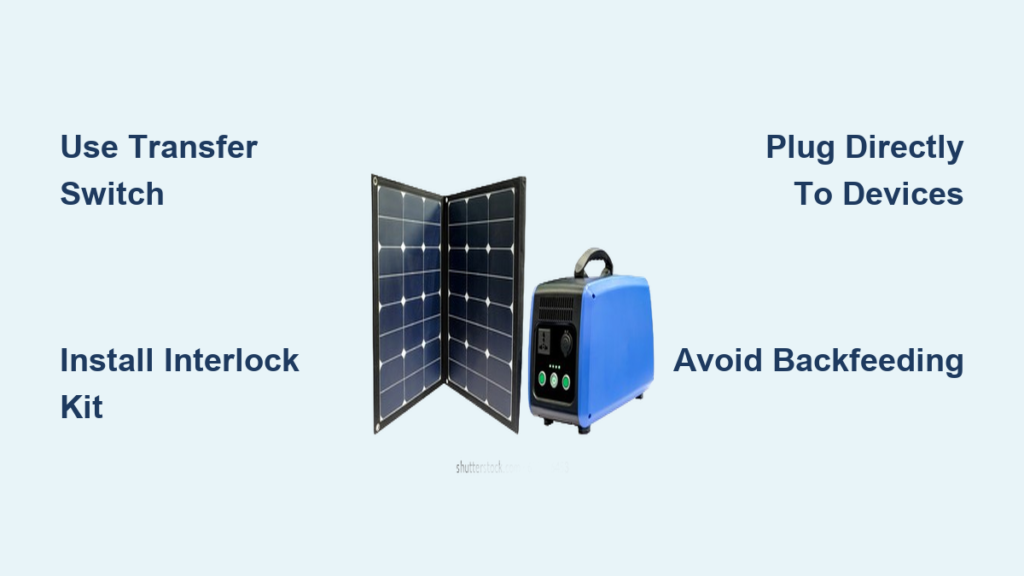
When the grid fails during a storm, having a solar generator is only valuable if you can safely connect it to power essential circuits in your home. Many homeowners mistakenly plug their solar generator directly into wall outlets, creating deadly backfeed conditions that endanger utility workers and violate electrical codes. This guide provides code-compliant methods to connect your solar generator to house circuits without risking electrocution, fire hazards, or equipment damage—whether you’re a renter needing temporary solutions or a homeowner seeking permanent installation.
The proper way to connect solar generator to house systems involves creating a physical break between utility power and generator output. Without this critical safety feature, your generator could send electricity back through the grid, potentially electrocuting utility workers repairing downed lines. All legitimate connection methods require either a transfer switch, interlock kit, or direct appliance connections that prevent backfeeding. Understanding these approaches helps you maintain power during outages while keeping your family and community safe.
Plug Essential Appliances Directly into Solar Generator
Prioritize Critical Circuits Without Electrical Modifications
The fastest method to connect solar generator to house essentials requires zero electrical work. Simply position your generator near a central location and plug refrigerators, medical equipment, or communication devices directly into its AC outlets using heavy-duty extension cords. For safe operation, select 12 AWG cords for 15-amp circuits or 10 AWG for 20-amp circuits, keeping total connected loads below 80% of your generator’s continuous rating.
Essential appliances to connect first:
– Refrigerator (600-800W running, 2,100-3,500W starting surge)
– LED lighting circuits (300-500W total)
– Phone chargers and medical devices (50-200W)
– Heating system controls (200-400W)
Avoid Cord-Related Hazards During Operation
Never run extension cords through closed doors or windows where they can become pinched and damaged. Test cords monthly for heat buildup—any warmth indicates overload conditions requiring immediate disconnection. Replace frayed or cracked cords immediately, and never connect multiple cords together to extend length. For permanent installations, run cords through weatherproof conduit between your generator and house to prevent rodent damage and weather exposure.
Install UL-Listed Manual Transfer Switch for Permanent Connection
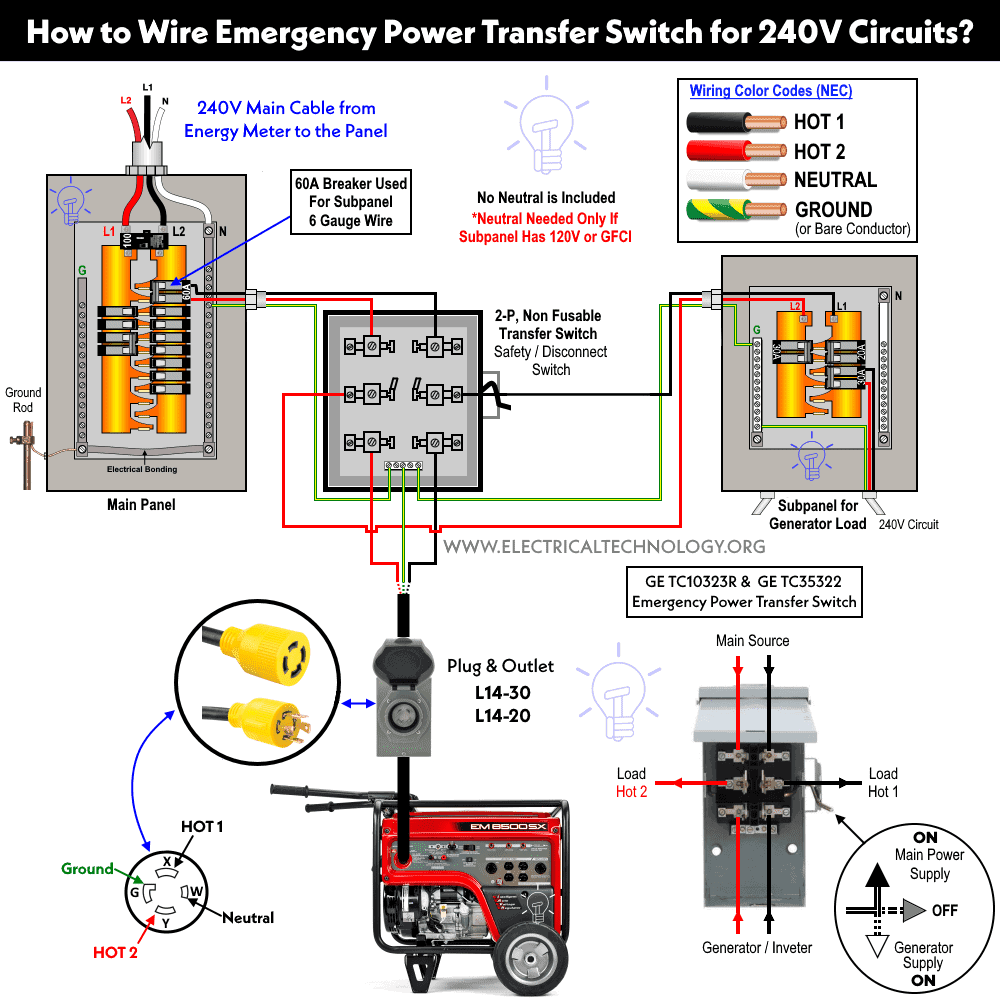
Select Correct Transfer Switch Specifications
Choose a manual transfer switch rated for your solar generator’s maximum output (typically 30-60 amps single-phase) with UL 1008 certification. The switch must physically disconnect your home from utility power before connecting to the generator—a critical safety feature preventing deadly backfeeding. Match the switch to your electrical panel manufacturer (Square D, Siemens, Eaton) to ensure proper fitment and code compliance.
Required installation components:
– Double-throw transfer switch sized for generator output
– NEMA 3R weatherproof enclosure for outdoor connections
– THHN/THWN copper conductors (8-10 AWG)
– Schedule 80 PVC conduit for weatherproof cable routing
Complete Transfer Switch Installation in 6 Steps
- Turn off main breaker and verify no voltage using a multimeter
- Mount transfer switch within 3 feet of main panel using appropriate hardware
- Install dedicated generator breaker in main panel, clearly labeled “SOLAR GENERATOR”
- Connect essential circuits to transfer switch terminals (refrigeration, lighting, medical)
- Run generator cables through weatherproof conduit to outdoor connection point
- Test operation by simulating outage with utility power off
Create Effective Circuit Prioritization Plan
Group circuits by criticality to maximize limited generator capacity:
– Tier 1 (Critical): Medical equipment, security systems, refrigeration
– Tier 2 (Important): Lighting, communication devices, heating controls
– Tier 3 (Convenient): Selected outlets for periodic device charging
Implement Cost-Effective Interlock Kit Solution
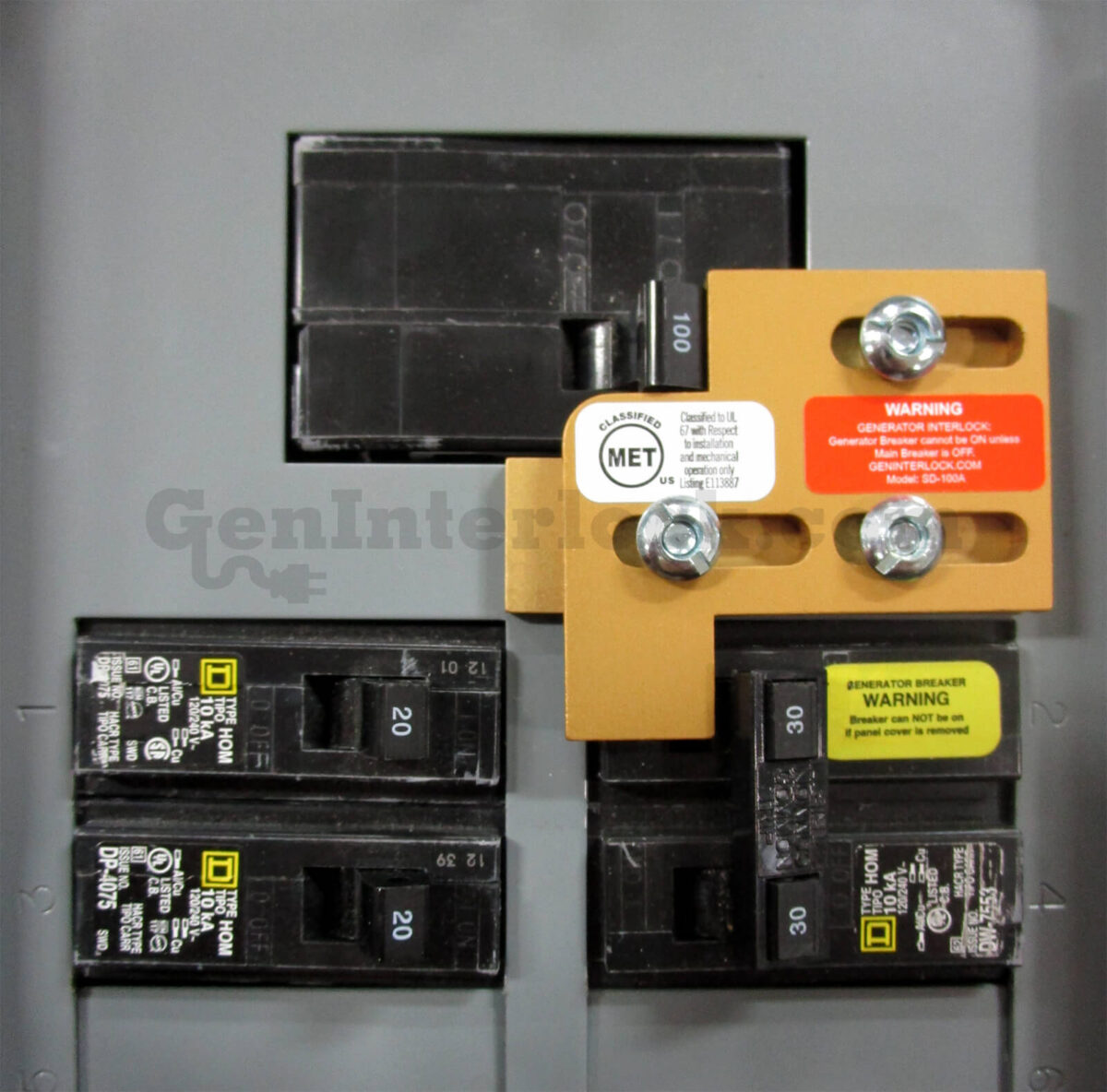
Choose Manufacturer-Specific Interlock System
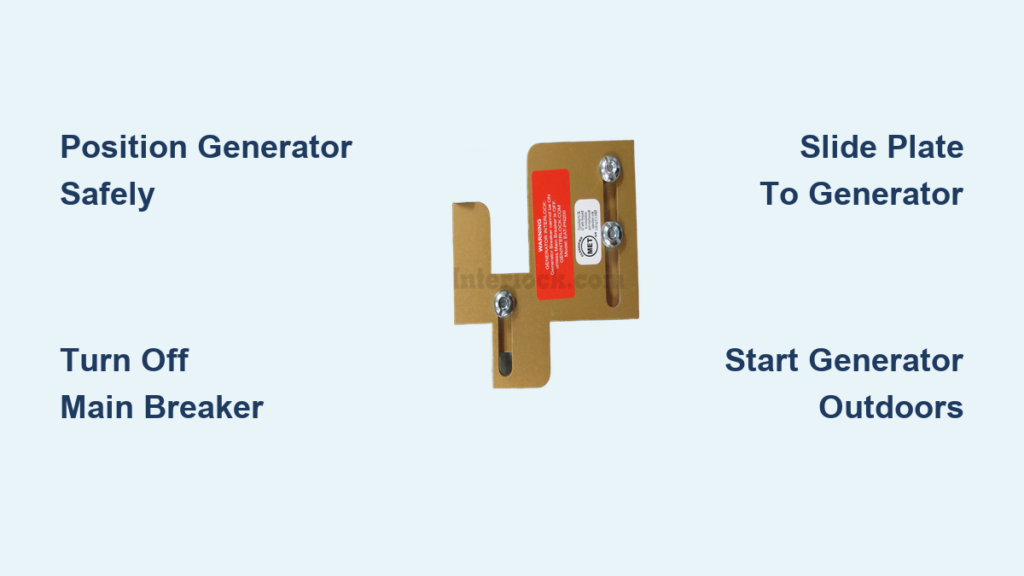
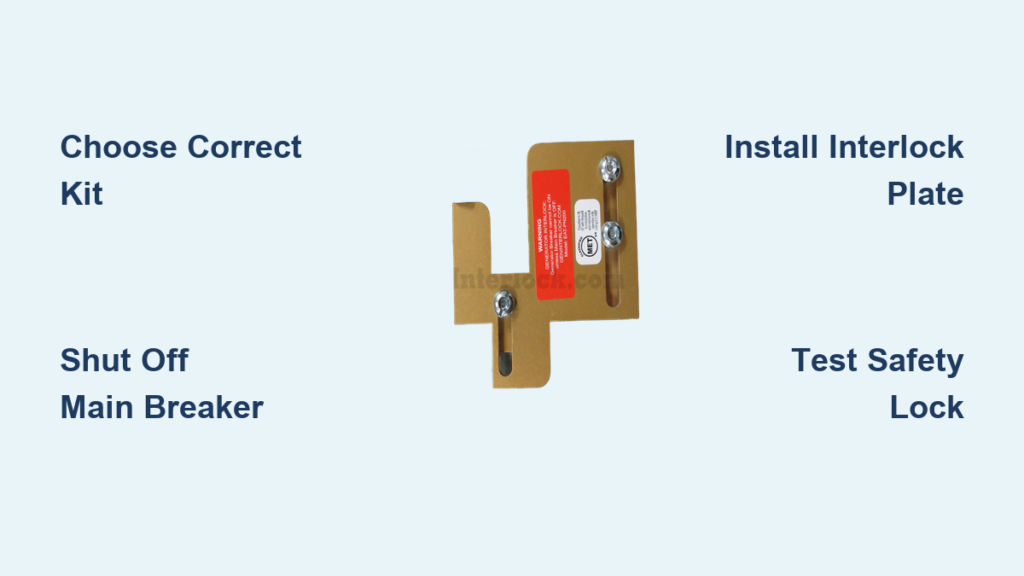
Interlock kits provide a $50-150 alternative to $300-800 transfer switches while maintaining safety. These mechanical brackets prevent both main and generator breakers from operating simultaneously. Identify your panel manufacturer and model before ordering—kits are specific to Square D HOM, Siemens P, or Eaton CH panels.
Verify Proper Interlock Function Before Use
After installation, test the interlock by attempting to turn on the generator breaker while main power is active—the interlock must physically block this action. Any binding, looseness, or incomplete disengagement requires immediate correction. Never bypass or modify the interlock mechanism, as this creates dangerous backfeed conditions.
Calculate Essential Power Requirements Before Connecting
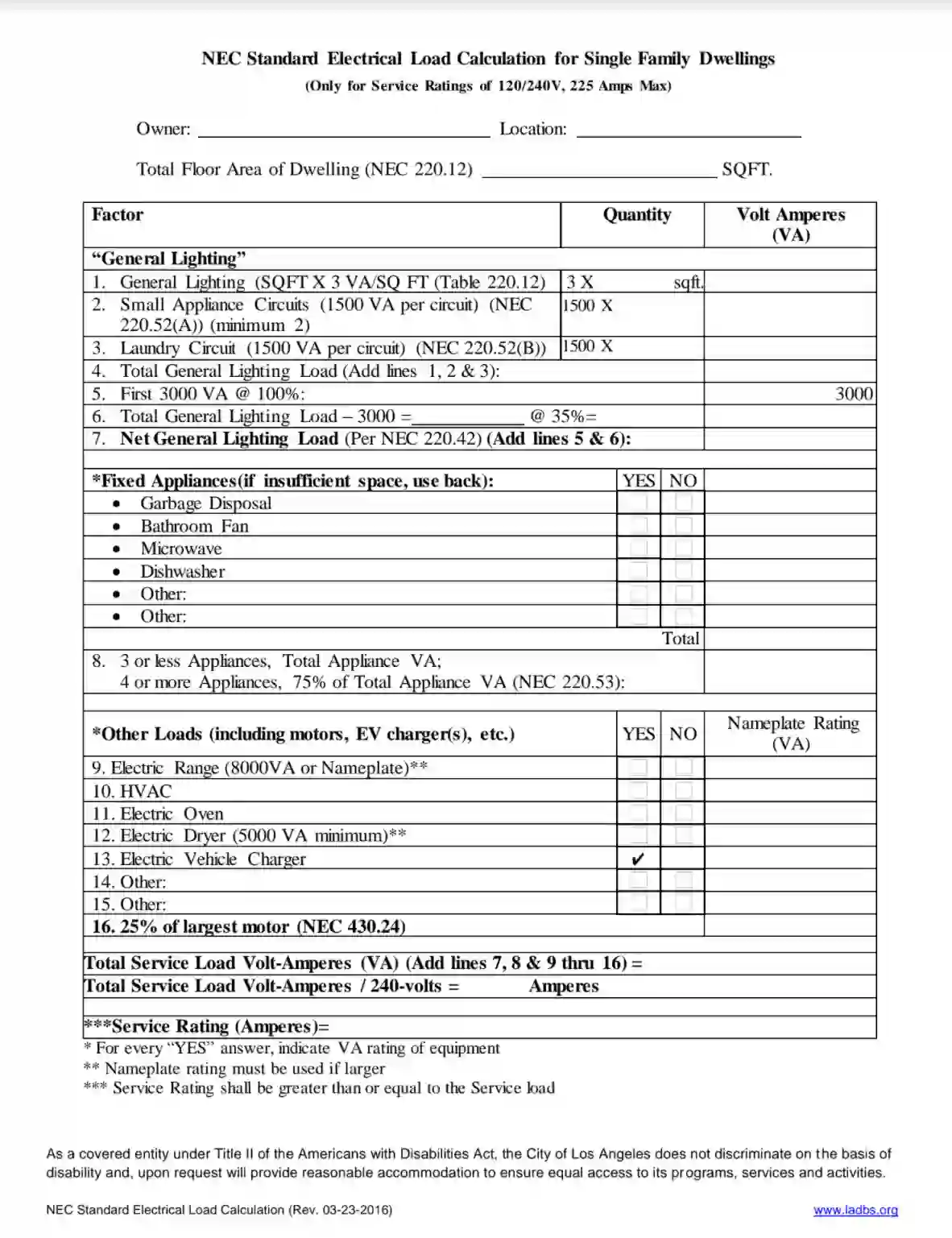
Determine Accurate Running and Surge Loads
Running watts represent continuous power needs while starting watts account for motor surges 3-7 times higher. For example, a refrigerator drawing 700W running requires 2,100-3,500W for startup. Your solar generator must handle both continuous loads and the largest motor surge simultaneously.
Sample household load calculation:
– Refrigerator: 700W running, 2,100W starting
– LED lights (10 bulbs): 100W total
– Furnace fan: 400W running, 1,200W starting
– Internet/router: 50W continuous
– Total running load: 1,250W
– Total starting surge: 3,350W
Apply Correct Generator Sizing Formula
Calculate minimum generator capacity using: Total running watts × 1.25 + Largest motor starting surge. For the example above: (1,250 × 1.25) + 2,100 = 3,662 watts minimum. This prevents overload conditions when multiple appliances start simultaneously during an outage.
Maintain Safe Weatherproof Connections Year-Round
Position Generator for Optimal Performance and Safety
Place your solar generator on a raised, level surface at least 5 feet from windows and doors. Maintain 3-foot clearance on all sides for ventilation and secure against theft with anchor bolts. Protect from direct sunlight to prevent battery overheating and efficiency loss—ideal operating temperature ranges between 40-80°F for most battery chemistries.
Protect Outdoor Connection Points from Elements
Use NEMA 3R weatherproof enclosures with drip loops in all cable runs to prevent water ingress. Apply corrosion inhibitor to all terminal connections and use UV-resistant cable ties. For permanent installations, route cables through schedule 80 PVC conduit between the generator and house connection point to prevent rodent damage and weather exposure.
Troubleshoot Common Connection Problems Immediately
Fix Voltage Drop Issues During Operation
If lights dim when refrigerator starts, you’re experiencing voltage drop from undersized wiring or excessive distance. Solutions include:
– Upgrade from 8 AWG to 6 AWG conductors
– Relocate generator closer to electrical panel
– Reduce connected loads temporarily
– Verify all connections are tight and corrosion-free
Resolve Unexpected GFCI Tripping
Ground fault circuit interrupters may nuisance trip when powered by solar generators due to modified sine wave output or neutral bonding differences. Install pure sine wave generators, isolate generator neutral from house ground, or use GFCI-compatible transfer switches to eliminate false tripping during critical outages.
Follow Critical Safety Protocols During Operation
Execute Proper Shutdown Procedure After Outage
Transitioning back to utility power requires specific steps to prevent equipment damage:
1. Turn off all connected loads at circuit level
2. Switch transfer switch/interlock to utility position
3. Wait 30-60 seconds for utility power stabilization
4. Reconnect loads gradually to prevent transformer overload
Perform Monthly Safety Inspections
Check transfer switch operation monthly by cycling through positions to prevent sticking. Inspect all cables for heat damage, cuts, or rodent chewing. Verify grounding connections annually with resistance testing below 25 ohms. Clean battery terminals with wire brush and apply anti-corrosion spray to prevent connection failures during critical outages.
Key Takeaway: The safest way to connect solar generator to house depends on your technical skills and local codes. Rental properties should use direct appliance connections, while homeowners benefit from permanent transfer switches or interlock kits. Never attempt electrical modifications beyond your skill level—when in doubt, hire a licensed electrician. Proper installation ensures your solar generator provides reliable backup power without creating dangerous conditions for you or utility workers restoring grid power. Always prioritize code compliance and safety over convenience during installation and operation.