Your backup generator coughs to life only to die 30 seconds later. Or maybe it won’t start at all despite fresh oil and a charged battery. If stale fuel’s been sitting in your generator for more than 30 days, that gummed-up carburetor is almost certainly strangling your power supply. The frustrating truth? Most “broken” generators just need a $5 can of carb cleaner and 45 minutes of your time. You’ll bypass expensive service calls and have reliable power again before lunch.
Let’s cut through the mystery. That small metal component behind your air filter controls the critical fuel-air mix your engine needs. When varnish from evaporated fuel clogs its microscopic passages, your generator chokes. But here’s the good news: 90% of carburetor issues are solvable with basic tools and this step-by-step fix. By the end of this guide, you’ll confidently diagnose, clean, and reinstall your generator’s carburetor—no mechanic required.
Why Your Generator Sputters and Dies After 30 Seconds
Hard Start Symptoms That Point to Carburetor Failure
When your generator cranks but won’t stay running, these specific behaviors confirm carburetor trouble:
– Cold start refusal requiring 10+ pull attempts before firing
– Initial startup followed by rapid stalling within 30 seconds
– Rough idle that worsens when connecting appliances
– Excessive smoke during brief operation
Critical visual evidence: Peel back your air filter—black, gummy residue coating the carburetor throat or fuel leaking from the bowl area means varnish buildup is blocking fuel flow. Cracked rubber gaskets around the carburetor body are another dead giveaway.
Quick Field Test to Confirm Carburetor Issues
Skip guessing games with this diagnostic trick:
1. Remove the air filter
2. Spray carb cleaner directly into the carburetor throat
3. Attempt startup
If the engine fires briefly then dies, you’ve confirmed a clogged carburetor. This happens because the cleaner temporarily flushes varnish from critical passages—proving fuel delivery is the root problem.
Essential Safety Steps Before Generator Carburetor Work

Never skip these life-saving precautions:
1. Flip the main circuit breaker to OFF position
2. Turn the fuel valve to OFF
3. Run the engine until it stalls (clears fuel lines)
4. Wait 15 minutes for complete engine cooldown
Non-negotiable extra step: Disconnect the spark plug wire and secure it away from the plug. One accidental recoil pull could cause severe injury. Generators store dangerous kinetic energy—treat them like loaded weapons during maintenance.
Required Tools for Generator Carburetor Repair
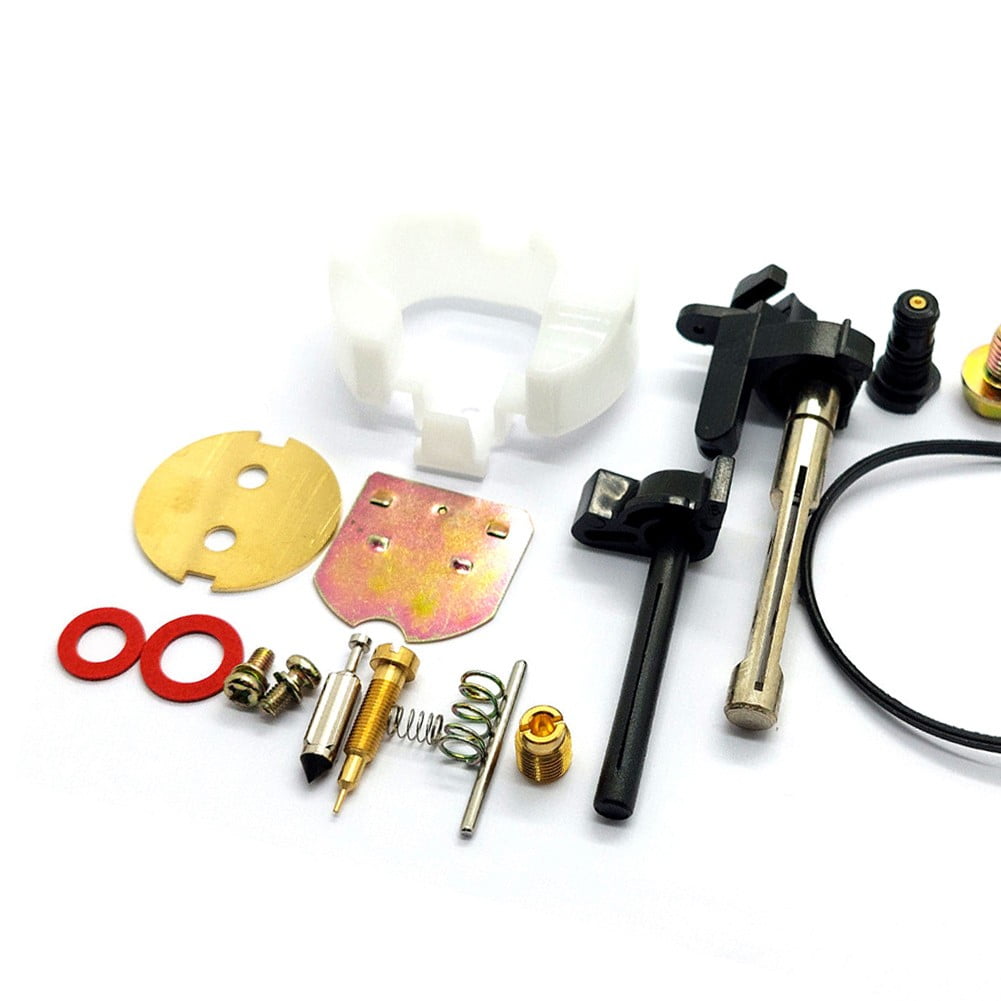
Carburetor Cleaning Kit Essentials
- Non-chlorinated carb cleaner (chlorinated types damage rubber parts)
- Precision cleaning tools: Old toothbrush, sewing needle, cotton swabs
- Replacement parts: Carburetor rebuild kit with gaskets ($8 on Amazon)
- Absorbent materials: Microfiber cloths and paper towels
Disassembly Tools by Model
- Socket set: 8mm, 10mm, and 12mm sockets cover 95% of generators
- Needle-nose pliers for spring clamp removal
- Flashlight for inspecting tiny passages
- Small container for soaking parts
Pro tip: Photograph every connection point before disassembly. Modern generators have complex linkage systems that are impossible to reassemble correctly from memory.
Locate Your Generator’s Carburetor in 30 Seconds
Exact positioning: The carburetor sits directly behind the air filter assembly on the engine’s intake side. For most Honda, Champion, and Generac models:
– Visible through the left side of the recoil starter housing
– Connected to two rubber hoses (fuel line and air box)
– Mounted on two threaded studs with a metal gasket
No engine covers to remove: Unlike lawnmowers, generator carburetors are accessible through the air filter housing—saving you 20 minutes of unnecessary disassembly.
Remove Air Filter Housing Without Damage
Step-by-Step Disassembly Sequence
- Unscrew the bottom knob counterclockwise (hand-tighten only during reassembly)
- Lift the bottom housing section while sliding the top tabs forward
- Remove the oily foam filter—place on absorbent paper immediately
- Pop off the metal safety grate with firm upward pressure on both pins
- Remove three critical nuts:
– Center nut (10mm socket)
– Top left nut (8mm socket)
– Bottom rear nut (12mm socket)
Hose Disconnection Protocol
- Left-side hose: Slide pliers under spring clamp, compress, then pull hose straight off
- Top hose: Twist gently while pulling—no clamp needed
- Fuel hose: Place rag underneath to catch residual fuel
Warning: Never force plastic tabs. If housing resists, double-check all nuts are removed—broken tabs require expensive housing replacement.
Disconnect Carburetor Without Losing Linkage Settings
Critical Connection Points
- Fuel hose: Right-side connection—compress spring clamp with pliers
- Regulating spring: Top linkage—note tension direction before removal
- Throttle rod: Right-side pivot—swing linkage fully right before lifting
Memory trick: Take three phone photos—top view, side view, and linkage close-up. Modern carburetors have precise throttle positioning that affects idle stability.
Safe Removal Technique
- Slide carburetor forward 1/4 inch along mounting studs
- Unhook regulating spring with needle-nose pliers
- Lift throttle rod off pivot pin
- Pull carburetor straight off studs—no twisting
Red flag: If carburetor resists removal, check for hidden screws. Forcing it cracks the fragile aluminum casting.
Deep Clean Carburetor Passages Like a Pro
Disassembly for Complete Access
- Remove float bowl screws (four perimeter screws—don’t strip them!)
- Lift float assembly—needle valve stays attached to float
- Remove main jet (brass screw in center—count turns for reassembly)
- Extract idle jet (smaller brass screw near throttle plate)
Targeted Cleaning Process
Soak metal parts 15 minutes in carb cleaner—never plastic components.
Critical cleaning targets:
– Main jet: Spray cleaner through center hole while poking with sewing needle
– Idle jet: Clear with guitar string—metal picks deform soft brass
– Emulsion tube: Shine light through to verify clear passage
– Float bowl: Scrub with toothbrush until varnish-free
Never do this: Insert metal objects into brass jets—they enlarge microscopic holes causing permanent flooding. Use only carb cleaner spray and compressed air (below 30 PSI).
Inspect Parts for Hidden Failures During Cleaning
Must-Check Components
- Float: Shake near ear—if you hear fuel sloshing, replace immediately
- Needle valve: Should slide smoothly in its seat—no scoring or pitting
- Gaskets: Discard if thinner than 1/16 inch or shows hardening
- Bowl surface: Corrosion pits require replacement—no seal possible
Replacement rule: Install new gaskets every time. Old gaskets leak when re-torqued, causing dangerous fuel drips. A $5 rebuild kit prevents $300 fire damage.
Reinstall Carburetor with Perfect Alignment
Step-by-Step Reassembly
- Install new bowl gasket—dry fit without screws first
- Set float height: Hold carburetor upside down—float tang should just touch needle valve
- Hand-tighten bowl screws in star pattern to prevent warping
- Slide carburetor onto studs—align with photo documentation
- Reconnect throttle rod before spring tension
Air Filter Housing Reinstallation
- Position housing over carburetor with hoses pre-routed
- Install three nuts in reverse order (center first)
- Reconnect top hose—should click into place
- Secure left hose with new spring clamp
- Snap metal grate onto pins with firm pressure
- Apply 5 drops of oil to foam filter before reinsertion
Critical check: Rotate throttle by hand—movement should feel smooth with no binding. Rough operation means linkage is misaligned.
Test Your Repair with Safe Startup Sequence
Cold Start Procedure
- Turn fuel valve ON
- Set choke to FULL CLOSED
- Pull starter cord 3 times (no more—flooding risks)
- Move choke to 1/2 OPEN position
- Pull until engine fires (usually 1-2 pulls)
- Gradually open choke over 60 seconds
Success indicators: Steady 3600 RPM idle (no surging), smooth acceleration when applying load, and stable voltage output.
Calibration Fixes for Common Issues
- Hunting idle: Turn idle speed screw clockwise 1/8 turn
- Lean surge: Counterclockwise on mixture screw (1/4 turn max)
- Fuel flooding: Check float bowl gasket for proper seating
Run time rule: Operate under 50% load for 15 minutes to verify repair before relying on backup power.
Prevent Carburetor Failures with Smart Fuel Management
Immediate Storage Protocol
- Run dry: Let generator operate until fuel exhaustion before storage
- Drain carburetor: Remove bowl screw for long-term storage (3+ months)
- Stabilize fuel: Add ethanol treatment to fresh fuel (Sea Foam SF-16)
Maintenance Schedule That Works
- Every 30 days: Run generator 30 minutes with fresh fuel
- Every 100 hours: Clean carburetor as preventive maintenance
- Every storage cycle: Replace fuel filter and inspect gaskets
Pro move: Keep a dedicated carburetor rebuild kit in your generator storage box—future you will thank present you when storms hit.
When to Replace Instead of Clean Your Generator Carburetor
Five Repair-Stop Signs
- Persistent flooding after two cleanings (bent float or worn needle)
- Cracks in carburetor body (aluminum castings can’t be repaired)
- Stripped mounting threads (requires helicoil repair kit)
- Corrosion holes in float bowl (common with ethanol fuel)
- Warped flange surface (causes unfixable fuel leaks)
Cost reality check: New carburetors cost $25-$75 for most 2000-5000W generators—less than one service call. If you’ve spent 90+ minutes fighting a stubborn carburetor, replacement is faster and more reliable.
Your generator now delivers rock-solid power when you need it most. This same process applies to pressure washers, lawn mowers, and chainsaws—mastering carburetor repair saves hundreds annually. Remember the golden rule: fresh fuel prevents 95% of carburetor issues. Keep that carb cleaner in your toolkit, but use it as a last resort—not a substitute for proper fuel management. When the grid fails next time, you’ll be the neighbor powering the block.