Power fails when winter storms knock down lines or summer heat melts transformers. Without a properly installed generator panel, you’re risking electrocution for utility workers and creating fire hazards in your home. Most DIY attempts fail inspection because they miss critical National Electrical Code requirements—especially the invisible danger of dual neutral-ground bonds that cause GFCI trips and shock risks. This guide reveals the exact steps professional electricians use to install generator panels safely, including the mechanical interlock trick that prevents lethal backfeed to the grid. You’ll learn why your generator’s neutral bond could be silently endangering your family and how to resolve it in under 30 minutes.
Critical Safety Rules for Generator Panel Installation
Ignoring these four requirements risks electrocution, fire, and failed inspections. They’re non-negotiable under NEC 702.5 and keep lineworkers safe during outages.
Prevent Lethal Backfeed with Mechanical Interlocks
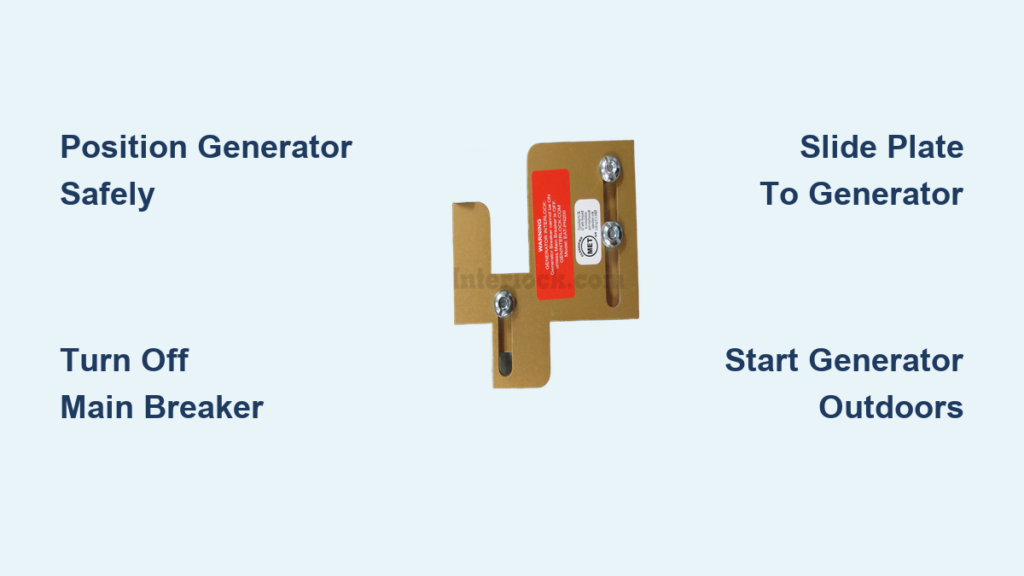
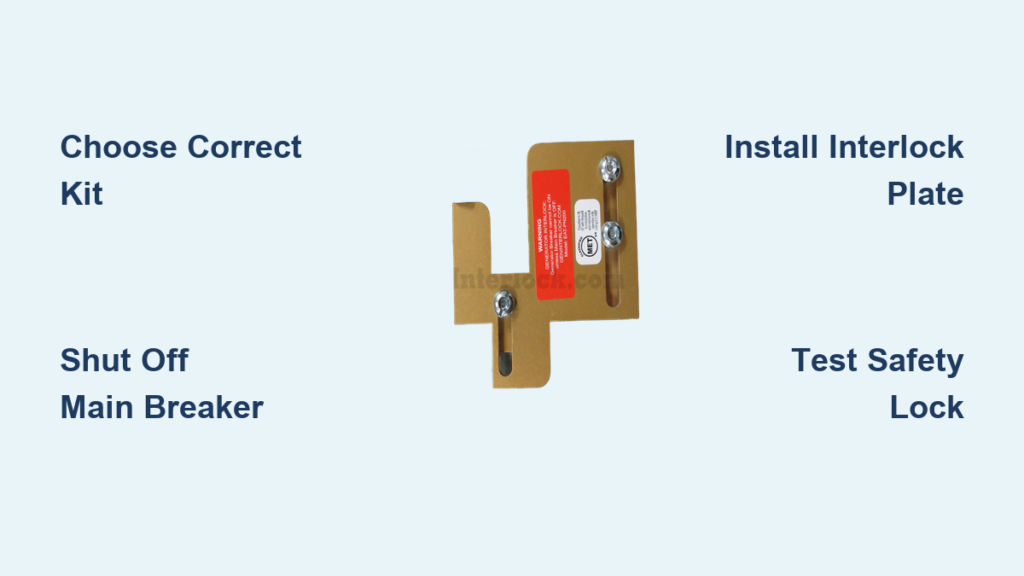
Never rely on “careful switching” alone. Your generator panel must have a positive mechanical device that physically blocks both main and generator breakers from energizing simultaneously. The Square-D HOMCGK2C interlock kit for Homeline panels creates an unbreakable barrier: slide the bracket right to power your house from utility lines, left to use generator power. Attempting both positions simultaneously is physically impossible—this isn’t a suggestion but a life-saving requirement. Test yours by trying to force both breakers ON; if the interlock allows it, replace it immediately.
Install Correct 4-Wire Connections (Not 3-Wire!)

Your generator-to-panel wiring must use four distinct conductors: black (L1 hot), red (L2 hot), white (neutral), and green/bare (ground). Using 3-wire cable creates shock hazards during faults. For 30-amp generators (up to 7,500W), run 10/4 SOOW cable through 1½-inch conduit; 50-amp units need 6/4 cable. Terminate hots under the generator breaker lugs, neutral to the isolated neutral bar, and ground to the dedicated ground bar. Verify connections with a multimeter: you should measure 120V between black/white and red/white, and 240V between black/red.
Mount Exterior Inlets 5+ Feet from Openings
Never plug generators into standard outlets. Install a NEMA L14-30 inlet like the Midwest P-3020 with male blades exposed on the house side—energized only when the generator runs. Position it at least 5 feet from windows, doors, or dryer vents to prevent deadly carbon monoxide infiltration. Drill a 2½-inch hole through your rim joist, apply silicone sealant around the weatherproof flashing, and secure the box with stainless steel screws. The inlet must sit 18+ inches above ground to avoid snow submersion during winter storms.
Fix Dual Neutral-Ground Bonds Immediately
Most generator failures stem from conflicting neutral-to-ground bonds. Your main panel has one bond, and most generators ship with another—creating dangerous current paths.
Convert Your Generator to Floating Neutral
- Locate the bond wire inside the generator’s control box (often a green wire connecting neutral terminal to frame)
- Disconnect and insulate the bond wire completely
- Verify with ohmmeter: Neutral-to-ground should read infinite resistance (open circuit)
- Relabel generator with “Floating Neutral – Requires Bond at Load”
This method works for interlock installations but requires carrying a bonding plug (L14-30P with N-G jumper) for standalone job site use. Warning: Many generators void warranties if you modify the bond—check your manual first.
Install Switching-Neutral Transfer Panel for Bonded Generators
Keep your generator’s factory bond intact by using a Reliance XRK0303D transfer panel. Unlike basic interlocks, this unit switches all three conductors (L1, L2, and neutral) simultaneously. Mount it beside your main panel, move critical circuits (refrigerator, furnace, well pump) into it, and run 4-wire cable from your exterior inlet. The transfer panel’s neutral bar becomes your single bonding point—label it clearly: “Generator neutral is switched—do not re-bond elsewhere.” This avoids GFCI trips while maintaining safety.
Essential Components Checklist for Generator Panel Setup
| Component | Critical Specs | Why It Matters |
|---|---|---|
| Interlock Kit | Model-specific (e.g., HOMCGK2C) | Prevents dual power sources |
| Generator Breaker | 2-pole HOM (30A/50A) | Handles generator input safely |
| Inlet Box | NEMA L14-30 flanged | Weatherproof connection point |
| Power Cord | 10/4 SOOW, L14-30 ends | Proper gauge prevents overheating |
| Transfer Panel | Reliance XRK0303D (if needed) | Solves neutral bond conflicts |
How to Install a Generator Panel: Step-by-Step Wiring Guide
Pre-Installation Planning (Week Before)
Verify your panel model matches the interlock kit—Square-D Homeline requires different kits than QO panels. Pull an electrical permit; most jurisdictions require inspections. On installation day, switch main breaker OFF and test all wires with a multimeter. Never assume power is off—dead wires have killed electricians.
Mount Exterior Inlet Box Correctly
- Mark location 5+ feet from openings, 18+ inches above grade
- Drill 2½-inch hole through rim joist (avoiding studs)
- Apply silicone sealant around weatherproof flashing
- Secure inlet box with #12 stainless screws
- Install rubber gasket before closing cover
Wire Generator Connections Safely
Critical step: Run 4-wire cable from inlet to panel through 1½-inch conduit. Connect:
– Black/red wires → Generator breaker lugs (torque to 45 in-lb)
– White wire → Neutral bar (verify no second bond exists)
– Green wire → Ground bar
Label all wires “Gen L1,” “Gen L2,” etc. Use a multimeter to confirm only one neutral-ground bond exists in your entire system—this prevents 90% of generator failures.
Troubleshooting Common Generator Panel Installation Errors

Generator Trips GFCI Instantly
Cause: Dual neutral-ground bonds creating stray current
Fix: Remove generator’s internal bond OR install switching-neutral transfer panel. Test with ohmmeter: neutral-ground must read open circuit.
Interlock Won’t Slide Smoothly
Cause: Generator breaker installed in wrong slot
Fix: Relocate breaker to top-right position per interlock diagram. Never force the bracket—this indicates dangerous misalignment.
Transfer Panel Circuits Dead
Cause: Neutral switch linkage not engaging
Fix: For Reliance XRK0303D panels, verify the neutral switching lever moves freely when toggling between utility/generator modes.
Pro Electrician Tips for Flawless Installation
Save inspection time: Photograph your panel wiring before starting. Label every wire with colored tape matching your circuit map—inspectors love documentation.
Avoid costly rewires: Install a 50-amp inlet and breaker even with a smaller generator. Upgrading later requires complete rewiring through walls.
Prevent corrosion: Apply dielectric grease to inlet blades annually. This $3 tube prevents oxidation that causes arcing and voltage drop.
Critical shortcut: Purchase manufacturer-specific interlock kits—universal kits often require drilling and void warranties. The Square-D HOMCGK2C installs in 15 minutes with no modifications.
Final Safety Checklist Before Powering Up
Complete these checks before connecting your generator:
– [ ] Interlock physically blocks dual power sources (test by attempting simultaneous ON)
– [ ] Single neutral-ground bond confirmed with ohmmeter
– [ ] All lugs torqued to 45 in-lb specification
– [ ] Inlet box sealed with silicone and labeled “EMERGENCY GENERATOR CONNECTION”
– [ ] Inspection sticker obtained and displayed inside panel door
– [ ] Emergency procedure sheet posted near panel
Your generator panel installation is complete only after passing inspection and operating flawlessly under load. Never skip the test sequence: run generator for 2 minutes, open main breaker, close generator breaker, then reverse the process. If your interlock allows both breakers to energize simultaneously, stop immediately—this creates lethal backfeed conditions. When in doubt, consult a licensed electrician; the $200 service call prevents $50,000 in liability if something goes wrong. With this system correctly installed, you’ll maintain power through the next outage while keeping your family and community safe.