That sudden silence when your refrigerator stops humming during a power outage sends panic through any household. Milk curdles, meat spoils, and ice cream turns to soup—all while your generator sits unused because you’re unsure how to connect it safely. Plugging your refrigerator into a generator seems simple, but one wrong move can fry sensitive electronics, trigger carbon monoxide poisoning, or destroy your appliance’s compressor.
This guide delivers the exact steps to power your refrigerator safely during outages, using only manufacturer-approved methods. You’ll discover why your generator’s surge capacity matters more than its running watts, how to avoid deadly carbon monoxide buildup, and why that extension cord in your garage could be a fire hazard. Most importantly, you’ll learn the precise connection sequence that protects both your food and your family.
Calculate Your Refrigerator’s True Power Needs
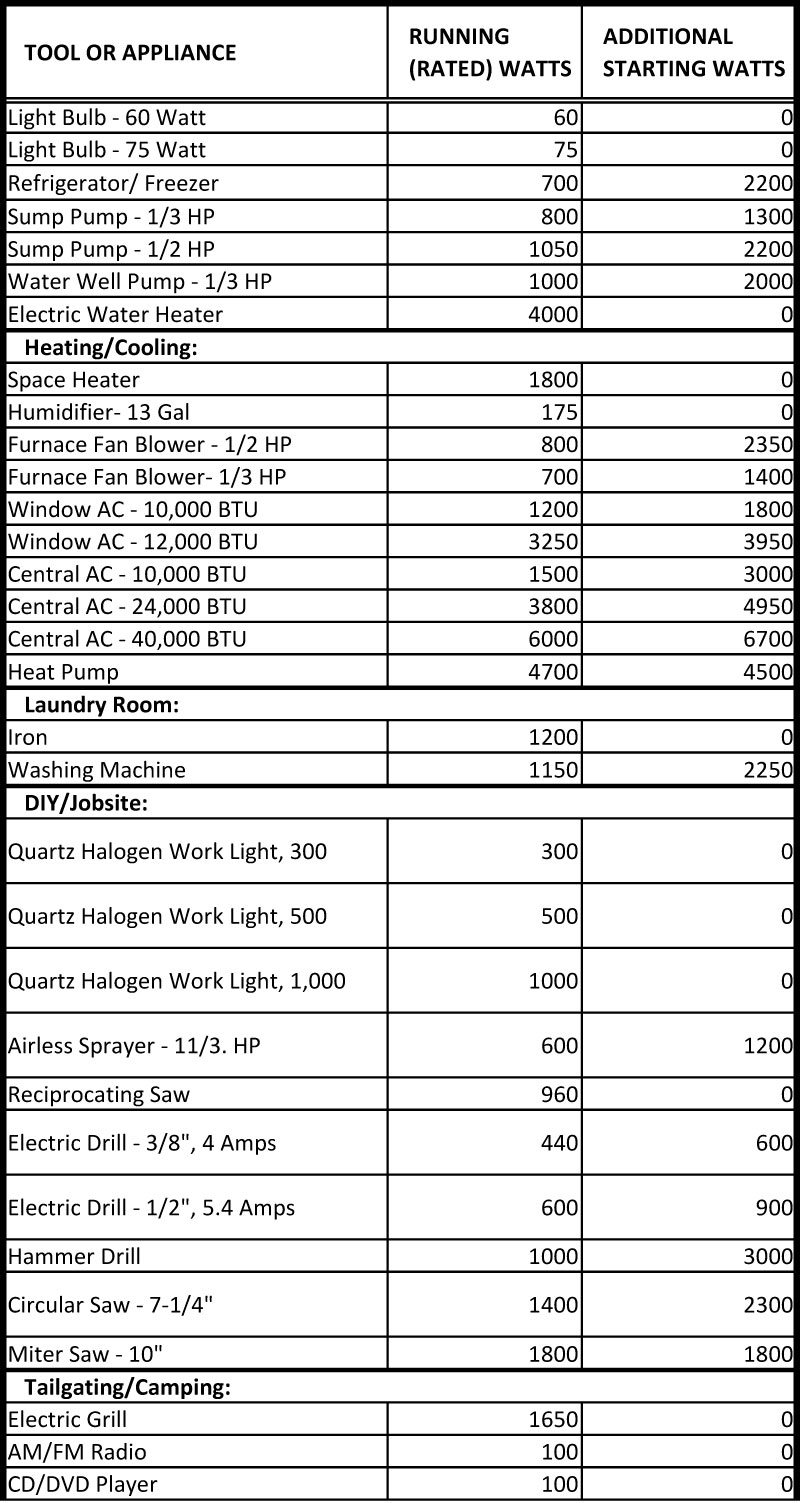
Your refrigerator’s energy guide label lies about its power requirements. While it shows 150 running watts, that compressor needs 800-1,200 starting watts when kicking on—double what most generators claim to handle. Skip this calculation and you’ll face tripped breakers or damaged compressors when the fridge cycles on.
Critical wattage facts you must know:
– Standard refrigerators need 300-600 running watts but 800-1,200 starting watts
– Compact models require 100-250 running watts and 600-800 starting watts
– Side-by-side units demand 600-800 running watts with 1,200-1,800 starting watts
Never operate below these minimums: A 2,000-watt generator is the absolute baseline for most households. This accounts for the 2-3x starting surge plus a safety buffer—smaller generators overload instantly when the compressor engages.
Choose the Right Generator Type for Modern Fridges
Today’s refrigerators with digital controls and ice makers need cleaner power than older models. Inverter generators deliver voltage within 3% stability (THD <3%), preventing microprocessor damage from “dirty” electricity. Conventional generators produce 15-25% harmonic distortion that can scramble circuit boards—always pair them with a $30 surge protector if you must use one.
Smart fuel strategy: Dual-fuel generators let you switch to propane during extended outages. Propane burns cleaner, stores indefinitely, and won’t gum up engines like stale gasoline. Keep two 20lb tanks on hand—they’ll power your fridge 16-24 hours total at 50% load.
Select the Correct Extension Cord Gauge

That flimsy 16-gauge extension cord coiled in your garage? It’s a silent refrigerator killer. Undersized cords cause voltage drop, making your compressor work harder until it fails. At 50 feet, a 16-gauge cord loses 15% voltage—enough to prevent startup.
Your non-negotiable cord specifications:
– Up to 50 feet: 12-gauge minimum (look for 12/3 or 12 AWG labeling)
– 50-100 feet: 10-gauge required (10/3 or 10 AWG)
– Always use outdoor-rated cords with “W-A” jacket rating
– Must have three-prong grounded plugs (NEMA 5-15 or 5-20)
Verify Connection Safety Before Plugging In
Don’t trust your food to a sloppy connection. Before hooking up, perform this 30-second safety check:
1. Wiggle test: Grab each plug firmly—zero movement should occur
2. Cord inspection: Run hands along entire length for nicks or exposed wires
3. Ground verification: Generator frame must connect to an 8-foot copper rod driven into soil
4. Dry check: Never use cords with moisture in plug sockets
If the cord feels warm after 10 minutes of operation, immediately disconnect—this signals dangerous voltage drop that will destroy your refrigerator.
Position Generator 20+ Feet Away From House
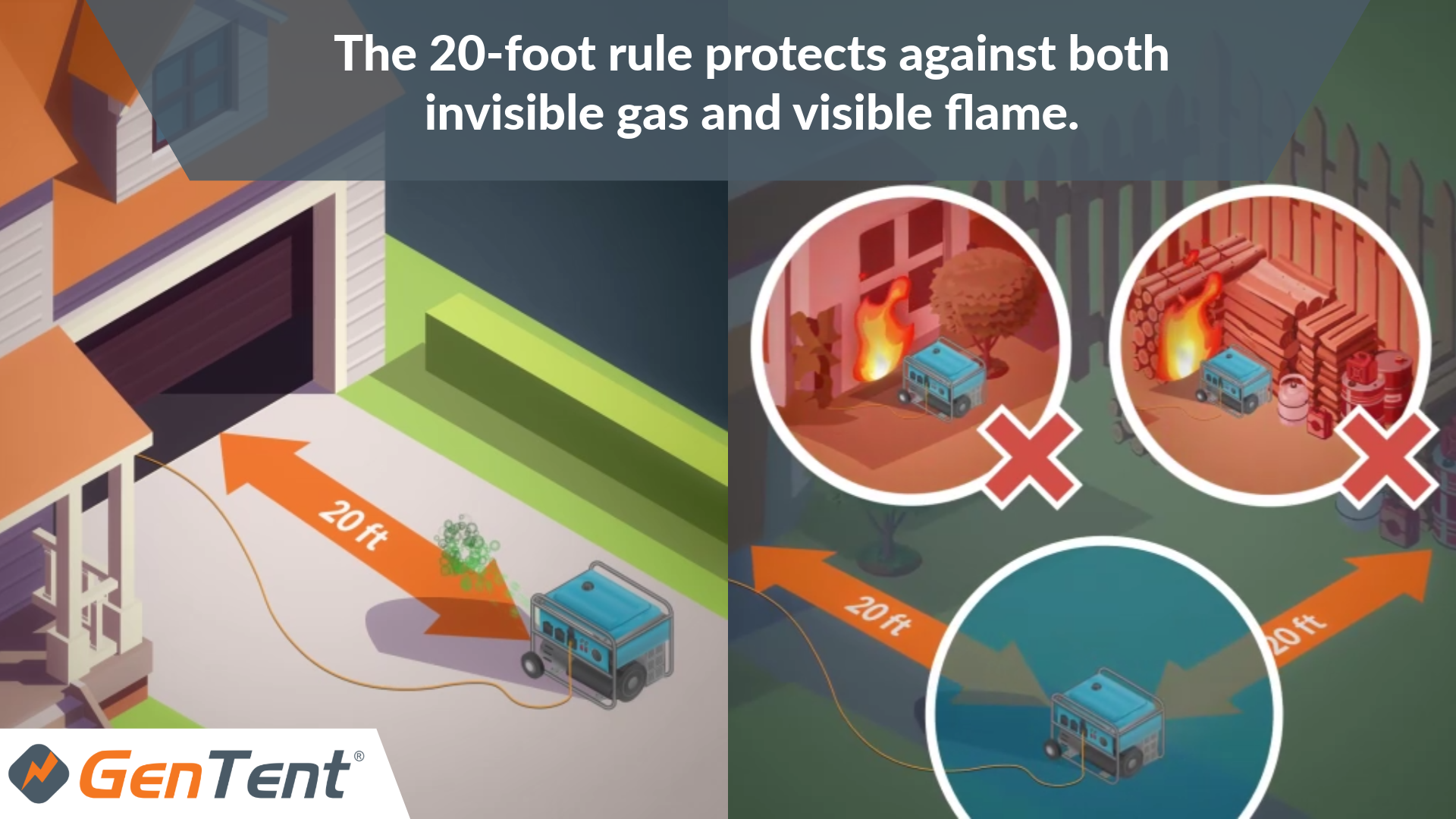
Carbon monoxide poisoning kills 300 Americans annually during power outages—often because generators sit too close to windows. Exhaust fumes travel farther than you think, seeping through tiny gaps even in well-sealed homes.
Life-saving placement rules:
– 20-foot minimum distance from all house openings (windows, doors, vents)
– Downwind positioning verified by wetting finger and holding it up
– Elevated surface 6+ inches above ground to prevent water contact
– Never in garages, basements, or under awnings—even with doors open
Critical backup: Install battery-powered CO detectors on every floor. Test them monthly and replace batteries when the power returns. If you smell exhaust near your house, shut down immediately and reposition the generator.
Follow Exact Connection Sequence
Plugging your refrigerator into a generator in the wrong order causes 70% of appliance failures. The compressor demands maximum power at startup—connecting before the generator stabilizes creates electrical chaos.
Pre-Connection Safety Checklist
Before starting the generator, verify these four items:
– Oil level at “FULL” mark on dipstick (low oil seizes engines)
– Fuel tank at least 50% full (running dry damages carburetors)
– Air filter clean and debris-free (clogged filters cause overheating)
– Refrigerator pre-chilled with water bottles frozen for thermal mass
Pro tip: Lower your fridge temperature 24 hours before predicted outages. This creates “thermal insurance” that buys you 4-6 extra hours during outages.
The 5-Step Power-Up Sequence
Execute these steps in precise order:
1. Start generator and let run unloaded for 3-5 minutes (critical stabilization period)
2. Plug extension cord into generator’s 120V outlet first
3. Connect refrigerator to the cord’s other end
4. Listen for compressor hum within 30 seconds (no sound? Wait 2 minutes before troubleshooting)
5. Verify interior light illuminates when door opens
Never reverse steps 2 and 3—plugging the fridge directly into a cold generator causes voltage spikes that fry control boards.
Monitor Temperatures Every 4 Hours
During extended outages, your refrigerator becomes a temperature battleground. Without constant monitoring, you risk food poisoning from invisible bacteria growth.
Non-negotiable temperature rules:
– Refrigerator compartment must stay at or below 40°F (4°C)
– Freezer section must remain at or below 0°F (-18°C)
– Check with appliance thermometers—built-in displays fail during outages
– Discard perishables if temps exceed 40°F for over 2 hours
Fuel conservation trick: Run generator 4 hours on, 2 hours off overnight when ambient temperatures are coolest. Your fridge’s insulation maintains safe temps during the “off” cycle if doors stay closed.
Fix Immediate Connection Failures
When your refrigerator won’t start on generator power, diagnose these common issues before calling for help.
Diagnose Generator Overload
If the generator bogs down or circuit breakers trip when the compressor engages:
– Disconnect all other appliances immediately
– Check wattage draw with a $20 Kill-A-Watt meter
– Swap to shorter, heavier cord (e.g., 25ft 10-gauge instead of 50ft 12-gauge)
– Confirm refrigerator isn’t defrosting (temporary 30% higher load)
Critical warning: Warm extension cords mean immediate danger—unplug and replace with proper gauge.
Troubleshoot Refrigerator Startup Failure
When the fridge stays silent after connection:
1. Test generator output with multimeter (must read 108-125 volts)
2. Plug lamp into same cord to verify power delivery
3. Check for clicking sounds (indicates failed start relay)
4. Attempt manual compressor spin (remove back panel and nudge fan blade)
Do not repeatedly restart the generator—compressors need 5-minute cooldown periods between attempts.
Maintain Generator During Outage
A neglected generator fails when you need it most. During extended outages, perform these checks religiously.
Every 8 hours of operation:
– Check oil level with dipstick (add if below “ADD” line)
– Clear leaves/debris from air intakes
– Inspect for fuel leaks around connections
– Wipe down exterior with dry cloth
If outage exceeds 24 hours:
– Change oil after first 5 hours (prevents carbon buildup)
– Replace air filter if visibly dirty
– Run generator at 50% load for 30 minutes after refueling
Never add fuel while generator runs—spilled gasoline ignites instantly on hot engines. Wait 15 minutes after shutdown.
Prepare Emergency Power Kit Now
Waiting for an outage to gather supplies costs you food and safety. Assemble this generator readiness kit today:
Essential components:
– 50ft 12-gauge outdoor extension cord (SPT-3 rating)
– Digital multimeter for voltage testing
– Appliance thermometers for fridge/freezer
– 20lb propane tank (if dual-fuel capable)
– Extra 5W-30 engine oil and oil filter
Smart storage practices:
– Store generator with fuel stabilizer-treated gasoline
– Keep extension cords coiled in dry plastic tub
– Rotate propane tanks every 6 months
– Exercise generator monthly with 30-minute load test
Pro tip: Calculate your total power needs using (Refrigerator running watts × 3) + other essentials. Never exceed 80% of generator capacity—e.g., a 2,000W unit handles 1,600W continuous load.
Bottom line: Safely powering your refrigerator during outages requires matching generator surge capacity to compressor demands, using properly gauged cords, and maintaining strict carbon monoxide safety. Always start the generator before connecting appliances, monitor temperatures hourly during critical periods, and never position the unit closer than 20 feet from your home. By following these precise steps, you’ll protect both your food investment and your family’s health until utility power returns. Keep your emergency kit ready—next outage won’t wait for you to prepare.