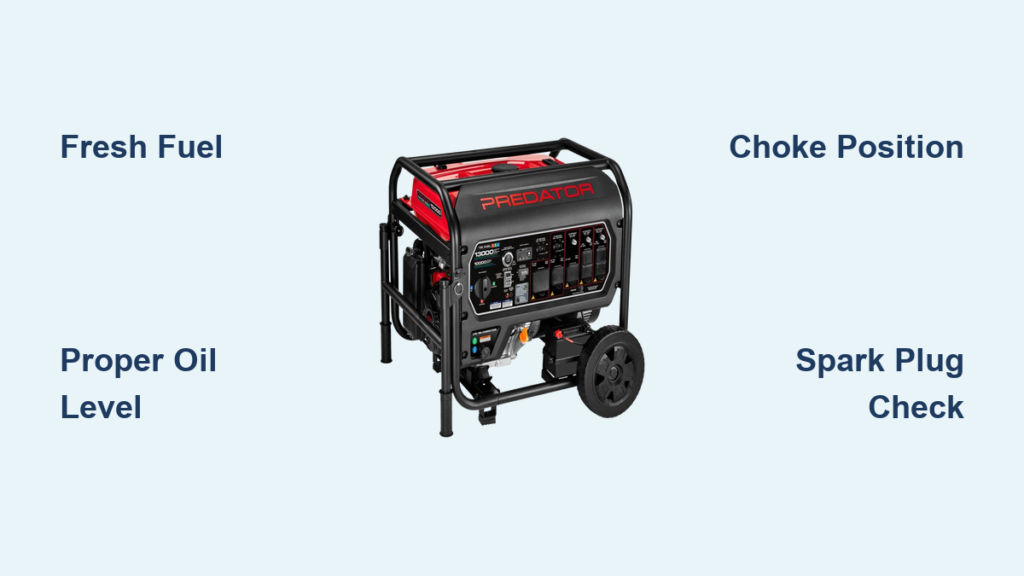
Your Predator generator sits idle in the garage, ready to power your home during the next outage—but when you pull the cord or turn the key, nothing happens. This frustrating scenario affects thousands of homeowners each year as they struggle with a simple process that should take just minutes. Whether you’re preparing for storm season or troubleshooting a stubborn engine, this guide delivers exactly how to start your Predator generator safely and reliably every single time.
You’ll discover the precise steps for both manual and electric start models, avoid costly mistakes that damage engines, and learn professional techniques that make starting effortless—even in freezing temperatures. No more guessing about choke positions or fuel requirements. By the end of this guide, you’ll confidently start your Predator generator in under five minutes when the power goes out.
Position Your Predator Generator Safely Before Starting
Critical Placement Requirements for Safe Operation
Place your Predator generator on level ground outdoors with minimum 20 feet clearance from windows, doors, or vents. Carbon monoxide builds rapidly in enclosed spaces and can be fatal within minutes—never operate your generator indoors, in garages, or partially enclosed areas. Choose a stable, dry surface like concrete driveways or packed gravel that can support the generator’s full weight. Ensure adequate clearance around the unit for proper air circulation, with at least 3 feet of space on all sides for maintenance access and cooling.
Critical warning: Operating your generator too close to building openings causes 80% of carbon monoxide poisoning incidents during power outages. Always position your unit downhill from your home if possible, as carbon monoxide rises with warm exhaust.
Pre-Start Visual Inspection Checklist
Conduct a thorough visual inspection before attempting to start your Predator generator. Check for fuel leaks around the tank, fuel lines, and carburetor connections. Look for oil drips beneath the engine and inspect electrical connections for damage or corrosion. Remove debris from the air filter housing and verify the filter is clean and properly seated. Confirm that all safety guards are in place and secure.
Pro tip: Keep a dedicated inspection checklist taped to your generator’s fuel tank. Mark each item as you check it to prevent skipped steps during emergencies.
Prepare Your Predator Generator’s Fuel System Correctly
Selecting the Right Fuel for Reliable Starting
Use fresh unleaded gasoline with 87+ octane and maximum 10% ethanol (E10). Premium fuel or higher ethanol blends damage your engine and void the warranty. Gasoline older than 30 days forms gum deposits that clog the carburetor—mark your calendar when you add fuel to track freshness. For storage exceeding 30 days, add fuel stabilizer following manufacturer ratios before filling the tank.
Common mistake: Using E15 or E85 ethanol blends causes rubber component deterioration in the fuel system. Always verify the ethanol percentage at the pump.
Proper Fueling Technique for Predator Generators
Turn the fuel valve to “OFF” before refueling and let the engine cool 15 minutes if recently used. Remove the fuel cap slowly to release pressure buildup. Fill to 95% capacity—about 1/2 inch below the filler neck—to allow for expansion. Wipe spills immediately with a dry cloth and ensure the cap is securely tightened. Never overfill, as excess fuel can leak onto hot engine components.
Set Up Your Predator Generator’s Oil System
Add Oil Before First Use (Critical Step)
Predator generators ship without oil—running without oil destroys the engine in under 2 minutes. Remove the dipstick, wipe clean, and reinsert without threading. Check the level and add SAE 10W-30 for general use or SAE 5W-30 below 40°F until oil reaches the full mark (typically 20-37 ounces depending on model). Use high-quality detergent oil classified as “For Service SF, SG, SH, SJ” or higher.
Warning: Overfilling causes oil to enter the air filter or exhaust system, creating excessive smoke. Add oil gradually and recheck frequently.
Start Manual (Recoil) Predator Generator Models

Cold Start Preparation Sequence
Turn the fuel valve to “ON.” Move the choke lever fully left to “CLOSED” position for cold engines. Turn the engine switch to “ON.” These three steps are critical—missing any prevents starting. For warm starts above 60°F, leave the choke in “OPEN” position.
Effective Recoil Pull Technique
Hold the generator frame firmly with your left hand. Grasp the recoil handle and pull slowly until resistance increases, then pull sharply with full arm motion. Allow the rope to retract slowly—never let it snap back. Repeat 1-3 times for cold starts. Once running, gradually move the choke to “OPEN” as the engine warms.
Expert note: Pulling partially or jerking the cord damages the recoil mechanism. Always complete the full pull and gentle retraction.
Start Electric Start Predator Generator Models
Verify Battery Readiness
Check battery voltage shows 12.4+ volts using a multimeter. Clean corroded terminals with a wire brush and tighten connections (hand-tight plus 1/4 turn). Ensure proper grounding according to National Electrical Code requirements before starting.
Electric Start Sequence for Reliable Ignition
Turn fuel valve “ON.” Set choke to “CLOSED” for cold engines. Turn key to “START” for maximum 5 seconds. Allow 10-15 seconds between attempts to prevent starter damage. Once running, release key to “ON” and gradually open choke. Below 40°F, use SAE 5W-30 oil and consider a battery warmer.
First Minutes After Starting Your Predator Generator
Essential Warm-Up Period
Let the engine run 3-5 minutes at no load before connecting devices. Listen for unusual knocking, grinding, or excessive vibration. Check for fuel or oil leaks around connections and verify exhaust smoke is minimal (light gray is normal; black indicates rich mixture).
Gradual Load Connection Process
Start with your smallest device first. Add additional loads one at a time, waiting 2-3 minutes between connections. Never exceed the generator’s rated wattage—check your owner’s manual for specific limits. Verify output voltage remains within 110-125 volts using a voltmeter before connecting sensitive electronics.
Fix Predator Generator Starting Problems Fast
Engine Won’t Start: Fuel System Solutions
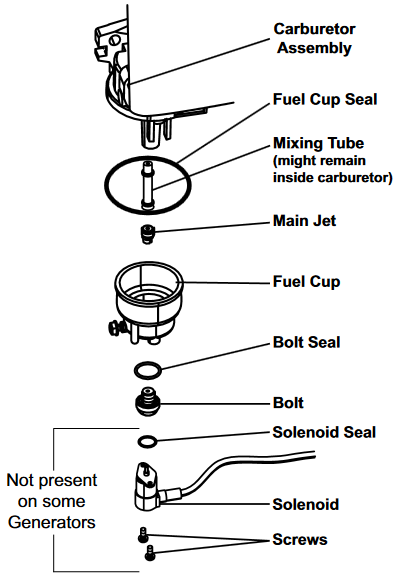
Check fuel valve is “ON” and tank has fresh fuel. Inspect fuel lines for kinks or cracks. If stored with fuel, drain old gas and refill. A clogged carburetor from stale fuel causes 70% of starting failures—consider professional cleaning if basic steps fail.
No Spark Diagnosis and Fix
Check spark plug gap (0.028-0.031 inches). Ground the plug against the engine block while pulling the starter—look for blue spark. Replace if no spark appears or if electrodes are worn. Ensure engine switch is in “ON” position.
Flooded Engine Recovery Method
Remove spark plug and pull starter rope 5-6 times to clear excess fuel. Reinstall plug and try starting with throttle fully open and choke open. This clears 90% of flooded engine situations.
Cold Weather Starting Tips for Predator Generators

Oil and Fuel Adjustments Below 40°F
Switch to SAE 5W-30 oil for easier cold starts. Use fuel additive to prevent line freezing below 20°F. Allow 8-10 minutes warm-up time before connecting loads in freezing conditions. For electric start models, keep the battery on a maintainer during cold storage.
High Altitude Operation Considerations
Above 3,000 feet, expect 3% power loss per 1,000 feet. High-altitude jet kits are available from Predator dealers for extended operation. Adjust choke position slightly richer at higher elevations.
Monthly Maintenance for Reliable Predator Generator Starts
Oil Change and Filter Schedule
Change oil after first 20 hours (break-in), then every 100 hours or 6 months. Clean or replace air filter every 50 hours in dusty conditions. Check spark plug gap every 100 hours, replacing annually.
Proper Storage Preparation
For storage over 30 days, run the generator dry to empty the carburetor. Change oil, add fuel stabilizer to fresh gas, and store in a dry location. Remove spark plug, add one tablespoon oil to cylinder, pull starter slowly, then reinstall plug.
Emergency Shutdown Procedures
Normal Shutdown Sequence
Disconnect all loads first. Let engine run 3-5 minutes at no load to cool. Turn engine switch “OFF,” then close fuel valve. This prevents 90% of starting problems after storage.
Emergency Stop Protocol
Turn engine switch immediately to “OFF” in emergencies. Never move a running generator. Allow complete cooling before investigating issues.
Predator Generator Won’t Start? Quick Checklist
- Fuel fresh and valve open? (Most common issue)
- Oil at proper level? (Triggers automatic shutoff)
- Choke in correct position? (Closed for cold starts)
- Spark plug clean and gapped? (0.028-0.031 inches)
- Air filter unobstructed? (Critical for combustion)
Final tip: Starting your Predator generator becomes effortless when you follow these exact steps consistently. Fresh fuel, proper oil level, and correct choke position solve 95% of starting issues. Keep this guide with your generator—you’ll be powering your home in under five minutes when the next outage hits.