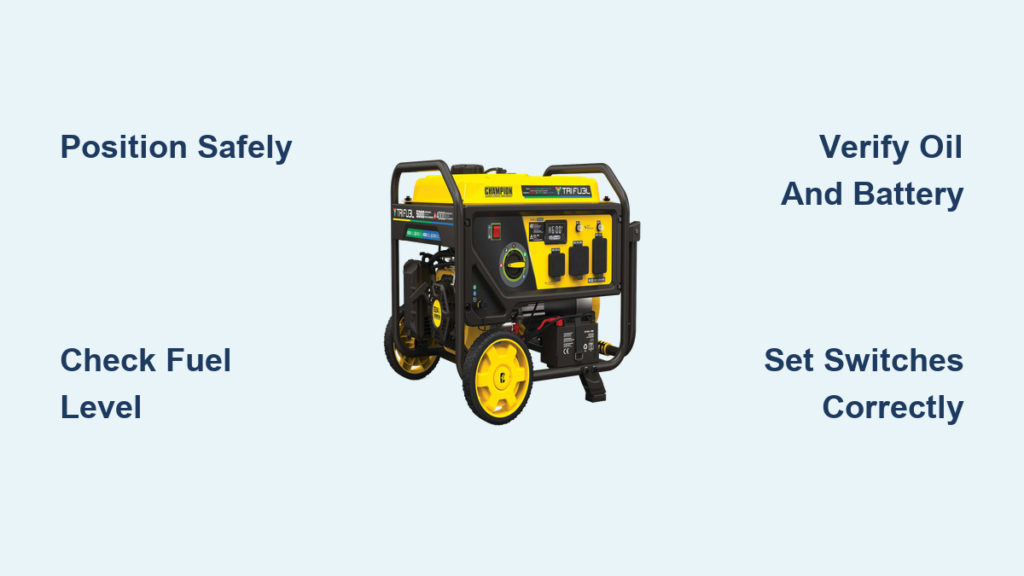
That moment when the power goes out and you need backup electricity fast—only to stand there wondering how to turn on your Champion generator. Whether you’re a first-time owner or just need a refresher, knowing the exact startup sequence prevents frustrating delays when you need power most. This guide cuts through the confusion with model-specific instructions that work for all Champion generators, from basic pull-start units to advanced dual-fuel models.
When your home loses power during a storm or worksite electricity fails, every minute counts. Your Champion generator holds the solution—but only if you know the precise steps to activate it safely and efficiently. Following this sequence correctly ensures reliable power within minutes while protecting your investment from preventable damage.
Position Your Champion Generator for Safe Operation
Create a Secure Starting Environment
Place your generator on firm, level ground at least 20 feet from any building, window, or door to prevent carbon monoxide poisoning. Never operate under overhangs, in garages, or enclosed spaces where deadly exhaust fumes can accumulate. Check for puddles, wet grass, or snow—moisture and electricity create dangerous hazards you must avoid.
Maintain 3 feet of clearance on all sides for proper airflow and cooling. Before attempting to turn on your Champion generator, verify wind direction to ensure exhaust blows away from structures. Keep a Class B fire extinguisher within easy reach and wear safety glasses plus hearing protection throughout the startup process.
Verify Fuel System Readiness Before Starting
Confirm Correct Fuel Type and Level
Your Champion requires fresh fuel—gas older than 30 days causes 70% of starting failures. For gasoline models, use unleaded 87 octane with maximum 10% ethanol content. Check the sight gauge to ensure fuel sits between minimum and maximum marks. Never top off completely; leave room for expansion as fuel heats during operation.
For propane models, verify your tank has minimum 20% fuel remaining and check certification date (valid 12 years from manufacture). Inspect fuel lines for cracks, leaks, or rodent damage before attempting to turn on your Champion generator. Ensure the fuel cap vent opens properly to prevent vacuum lock that stops fuel flow.
Complete Essential Pre-Start System Checks

Check Oil Level and Condition Immediately
Park your generator on level ground and check oil with the dipstick—level must reach the upper mark. Most Champion models use 10W-30 oil for temperatures between -10°F and 100°F. Low oil triggers automatic shutdown, so verify before each start. If oil appears milky, you have coolant contamination requiring professional service before startup.
For electric start models, ensure battery voltage reads minimum 12.4V DC. Clean any corrosion from terminals with a wire brush and confirm the spark plug wire connects firmly. Check that all circuit breakers are in the “ON” position—many users mistakenly leave these off when trying to turn on their Champion generator.
Set Control Panel Switches Correctly for Startup
Configure All Settings Before Powering On
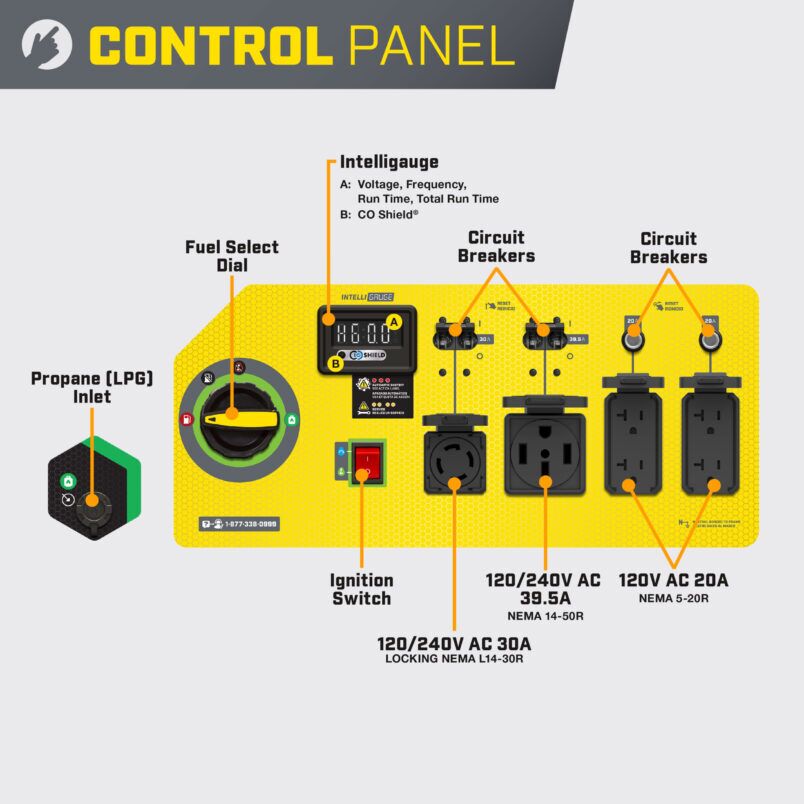
Turn the fuel valve to “ON” and set the choke lever to “CLOSED” for cold starts below 50°F. Ensure the engine switch sits in the “ON” position and disable Eco-mode during startup—it reduces engine speed that prevents proper voltage buildup. All outlet breakers should remain “OFF” until the generator reaches operating speed.
If your model has a fuel selector switch (dual-fuel units), verify it matches your fuel source—gasoline or propane. Incorrect fuel selection is a common reason why users can’t turn on their Champion generator successfully. Double-check these settings before attempting to start.
Start Recoil Models with Proper Pull Technique
Execute the Manual Start Sequence Correctly
Move the fuel valve to “ON” and close the choke fully. Pull the starter grip slowly until you feel resistance, then return it gently. Now pull with a rapid, full-arm motion—expect 2-6 pulls maximum. Never yank or jerk the cord, as this damages the recoil mechanism. If the engine doesn’t catch after 6 pulls, wait 30 seconds to prevent flooding.
Once the engine catches, gradually open the choke over 30-60 seconds as it warms. Listen for steady running without surging or sputtering. Check for any fuel, oil, or exhaust leaks around connections. The voltage display should show stable readings within 60 seconds of starting.
Activate Electric Start Models Without Battery Issues
Follow the Correct Electric Start Procedure
Ensure your battery shows 12.6V minimum before attempting to turn on your Champion generator. Turn the fuel valve “ON” and set the choke to “CLOSED” for cold starts. Turn the engine switch to “START” and hold for maximum 5 seconds per attempt. Wait 10 seconds between attempts to prevent starter damage—continuous cranking overheats the motor.
Once running, gradually open the choke and release the key to “ON.” If equipped with remote start, verify the battery disconnect switch is “ON” and press and hold the remote button for 2-3 seconds. Wait for the engine to reach operating speed before connecting any loads to avoid voltage drops.
Switch to Propane on Dual-Fuel Models Properly
Convert Fuel Sources Without Leaks
Close the gasoline fuel valve completely before switching to propane. Connect your propane hose to the tank and regulator, checking all connections with leak detection solution. Open the propane tank valve slowly, counterclockwise—never force it. Set the fuel selector switch to “PROPANE” and close the choke completely for cold starts.
Start using your preferred method (recoil or electric) and allow a 30-second warm-up before load application. Monitor for gas odor indicating leaks—if detected, shut down immediately and recheck connections. Never attempt to turn on your Champion generator with propane if you smell gas.
Fix Common No-Start Problems Immediately
Diagnose Engine Cranks But Won’t Fire
Check fuel supply first—empty tanks and closed valves cause most starting failures. Verify fuel freshness and ensure the fuel valve isn’t accidentally shut. If the engine sounds flooded (strong fuel smell), open the choke fully and crank briefly to clear excess fuel. Never keep the choke closed too long during startup.
Inspect ignition components—remove and check the spark plug for fouling or looseness. Ensure the plug wire seats firmly. The kill switch must be in “ON” position (not “OFF”) for starting. A faulty ignition coil often mimics fuel problems—you’ll hear normal cranking but no combustion.
Resolve Electric Start Failures Quickly
Test battery voltage—anything below 12V needs charging or replacement. Clean corroded terminals and check the main fuse. If the oil level is low, the low-oil shutdown prevents cranking as a safety feature. Many users waste time troubleshooting electrical issues when simply adding oil solves the problem.
Apply Loads Safely After Successful Startup
Follow the Correct Power-Up Sequence
Allow 3-5 minutes of no-load operation for proper warm-up. Monitor voltage stability—it should read within 5% of rated voltage (120V or 240V depending on model). Frequency must stabilize at 60 Hz before connecting appliances. Skipping this step damages sensitive electronics when you turn on your Champion generator.
Start with your largest motor loads first, applying power in 25% increments of the generator’s capacity. Wait 30 seconds between each load addition to prevent voltage drops. Never exceed 90% of rated capacity for continuous operation—overloading triggers automatic shutdown.
Monitor Critical Parameters After Starting
Identify Warning Signs Requiring Shutdown
Watch for the oil pressure light—it should extinguish within 10 seconds. Any unusual noises, visible leaks, or excessive smoking requires immediate shutdown. Normal engine temperature ranges 180-220°F; higher triggers automatic shutdown. Fuel consumption should be 0.5-1.0 gallons per hour at 50% load—if significantly higher, investigate.
If voltage fluctuates more than 5% under load, reduce connected devices immediately. High temperature warnings often indicate blocked cooling fins—clean debris after allowing the generator to cool completely. Never ignore warning lights when you turn on your Champion generator.
Perform Essential Maintenance for Reliable Starts
Daily Pre-Start Routine Prevents Failures
Check oil level and condition before each use. Inspect the air filter for dirt or damage—clogged filters restrict airflow causing hard starting. Verify fuel quality and battery voltage on electric start models. Clear debris from cooling fins to prevent overheating that triggers shutdowns.
Run your Champion under 50% load for 30 minutes weekly. This prevents fuel system issues and keeps the battery charged. Test safety shutdown systems monthly by simulating low oil conditions. Proper maintenance ensures your generator starts reliably when you need to turn on your Champion generator most.