When the power fails during a severe storm, your Generac generator springs to life within seconds—keeping refrigerators humming, sump pumps running, and lights on. As the top residential backup power solution chosen by 80% of homeowners, Generac systems deliver peace of mind when you need it most. But a botched installation can turn this essential safety device into a fire hazard or leave you stranded during outages. This guide reveals exactly how to install a Generac generator correctly, covering critical permit requirements, site selection secrets, and safety protocols professionals won’t skip. You’ll learn why 90% of installation failures stem from improper fuel connections or transfer switch errors—and how to avoid these costly pitfalls.
Schedule Your Free Generac Dealer Consultation Before Buying
Get Custom Power Calculations During Home Assessment
Never purchase a generator before an on-site dealer visit. Authorized Generac dealers conduct free consultations where they calculate your exact wattage needs by auditing all critical appliances. They’ll determine whether you need partial backup (covering essentials like refrigerators and medical equipment) or whole-house coverage based on your circuit panel layout. During this assessment, your dealer maps your property’s gas line proximity and electrical panel location—factors that can save thousands in installation costs. They also explain fuel options: natural gas for convenience (no refueling), propane for extended outages, or diesel for maximum power density in rural areas.
Review Realistic Installation Timelines Upfront
Ask your dealer for a detailed project calendar during this consultation. Most homeowners are shocked to learn that permit approvals alone take 2-4 weeks in many municipalities. Your dealer should outline the entire sequence: foundation preparation (3-7 days), electrical/gas work (1 day), and final inspections (1-2 weeks). They’ll also flag potential delays like HOA restrictions or complex electrical panels that require utility company coordination. This upfront transparency prevents the #1 frustration homeowners report: unexpected 6-week waits after paying deposits.
Select Your Generator Installation Location Correctly

Meet Minimum Clearance Requirements to Prevent Fires
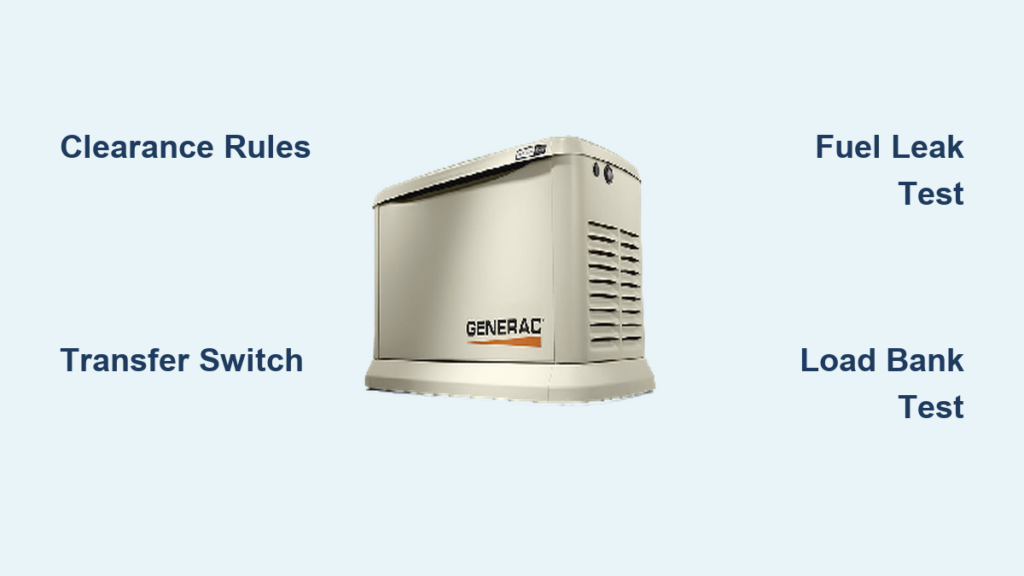
Your Generac must sit at least 5 feet from all windows, doors, and vents to prevent deadly carbon monoxide infiltration. Maintain 3 feet of clearance on all sides for airflow—reducing overheating risks that cause 30% of premature generator failures. Position the unit within 15 feet of your natural gas meter whenever possible; each additional foot of gas line adds $25-$50 to installation costs. Never place it under roof overhangs where rain could drip into the exhaust or near shrubs that could block airflow during high winds.
Build a Foundation That Prevents Costly Repairs
Skip the pea gravel shortcut for permanent installations. Generac requires a 4-inch-thick concrete pad extending 6 inches beyond the unit’s footprint on all sides. This prevents sinking during heavy rains that could misalign fuel lines—a top cause of leaks. In frost-prone areas, dig the pad 12 inches below grade to avoid heaving. For sloped yards, create a level platform with retaining walls; generators must operate within 5 degrees of level to prevent oil starvation. Your dealer will verify local codes—some coastal regions mandate elevated pads 12 inches above grade.
Install Critical Safety Components First
Mount the Transfer Switch Within 3 Feet of Your Electrical Panel
This component prevents backfeeding that could electrocute utility workers—a legal requirement in all 50 states. Position the transfer switch within 3 feet of your main electrical panel to minimize wire runs. Crucially: Shut off the main breaker before any wiring begins. Connect the switch to dedicated circuits using 60-amp breakers sized for your generator’s output. Test the automatic switchover by simulating an outage; the generator should activate within 10 seconds and transfer loads within 30 seconds. If delays exceed this, your wiring likely has undersized conductors.
Connect Fuel Lines Using Leak-Proof Methods Only
Natural gas installations require an 8-foot vertical rise before any horizontal runs to prevent condensation in lines. For propane systems, install an automatic shutoff valve within 5 feet of the generator. Never use Teflon tape on gas fittings—professionals use pipe dope rated for fuel gas. After connections, conduct a 24-hour pressure test: Apply 20 PSI of air pressure, then monitor for drops. Any pressure loss means leaks requiring disassembly. Your dealer will perform this test before final connections—a step DIYers often skip, causing 22% of fuel-related installation failures.
Avoid These 3 Costly Installation Mistakes

Mistake #1: Ignoring Local Permit Requirements
Skipping permits risks failed inspections that delay activation for months. In California, generators require Title 24 energy compliance forms. Texas mandates separate electrical and gas permits. Your dealer handles these, but verify they’ve pulled permits before work begins—unpermitted installations void warranties and complicate home sales. Always request copies of issued permits; municipalities charge $500+ in retroactive fees for unpermitted work.
Mistake #2: Using Incorrect Electrical Conduit
PVC conduit fails under generator heat exposure, causing 15% of electrical faults. Generac requires liquid-tight flexible metal conduit (LFMC) rated for 90°C. Size the conduit based on wire gauge: 1.5-inch diameter for 200-amp services. Seal all conduit entries with waterproof fittings—moisture intrusion causes 40% of control board failures. Professionals use silicone sealant at all conduit-to-panel connections, a detail often missed in rushed installations.
Mistake #3: Skipping Load Bank Testing
Dealers who skip load bank testing miss critical issues like voltage fluctuations. During this test, technicians apply 100% of the generator’s rated load for 30 minutes while monitoring output. Voltage must stay within ±5% of 240V; deviations indicate faulty wiring or undersized components. This test catches problems before final inspection—preventing the #1 reason for failed municipal inspections. Always demand proof of load bank results before signing off.
Complete Your Installation with Final Validation Steps
Conduct Multi-Stage Operational Testing
First, run a dry test without load for 15 minutes to verify oil pressure and coolant temps. Then simulate a power outage: Shut off the main breaker to trigger automatic startup. Confirm the generator reaches operating temperature within 5 minutes. Next, apply incremental loads (start with 25%, then 50%, 75%, and 100%) while checking voltage stability. Finally, test the “return to utility” sequence when grid power restores—this must happen within 60 seconds without flickering lights. Document all test results; your dealer should provide this report.
Schedule Your First Maintenance Within 20 Hours
Generac requires an oil and filter change after the first 20 operating hours—a step 65% of homeowners forget. During this service, technicians check for loose connections caused by initial vibration and verify battery charge levels. Set a calendar alert for this milestone; skipping it voids warranty coverage for engine damage. Also register your unit online within 30 days using the serial number—delays here complicate future service claims.
Final Note: Your Generac generator installation represents a critical home safety system—not a DIY project. Professional installation prevents the carbon monoxide risks that send 1,000+ homeowners to emergency rooms annually. Remember that proper site clearance, leak-proof fuel connections, and certified electrical work aren’t optional—they’re what separate reliable backup power from dangerous failures. By following this guide’s protocols, you’ll ensure your investment delivers decades of storm-proof protection. Test your system monthly using the built-in exercise cycle, and never ignore maintenance alerts—your family’s safety depends on it when the grid fails.