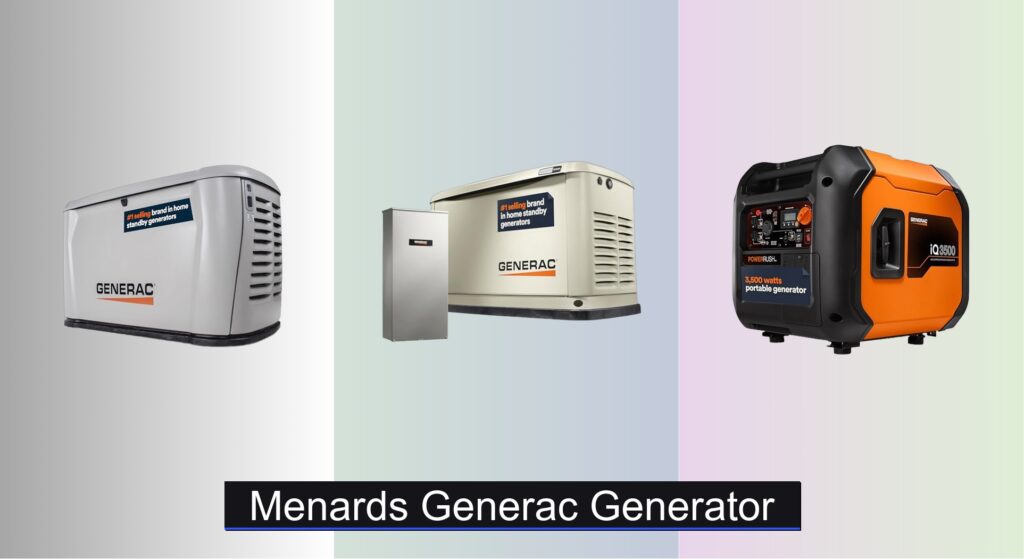
Power outages can disrupt daily life, leaving homes without heat, refrigeration, or essential electronics—especially during extreme weather. Many homeowners turn to reliable backup solutions like Generac generators, seeking peace of mind and uninterrupted comfort. At Menards, a wide selection of Generac models makes it easier to find a unit that fits your power needs, fuel preferences, and budget. The challenge lies in choosing the right one without getting overwhelmed by technical specs and options.
We analyzed over 30 Generac generator models available at Menards, comparing key factors like power output, fuel type, portability, and smart features such as Mobile Link remote monitoring. Our recommendations are based on real-world performance data, customer reviews, warranty coverage, and value for money. Whether you need a whole-house standby unit or a portable option for job sites and camping, we’ve pinpointed the best Generac generators sold at Menards to match every use case. Read on to find the ideal backup power solution for your home.
Top Menards Generac Generator on the Market

Best Cellular Connectivity
Generac 18kW Home Standby Generator

Best Overall
Generac 22kW Home Standby Generator

Best Lightweight Option
Generac iQ3500 Inverter Generator

Best Value Portable
Generac GP8000E Gas Generator
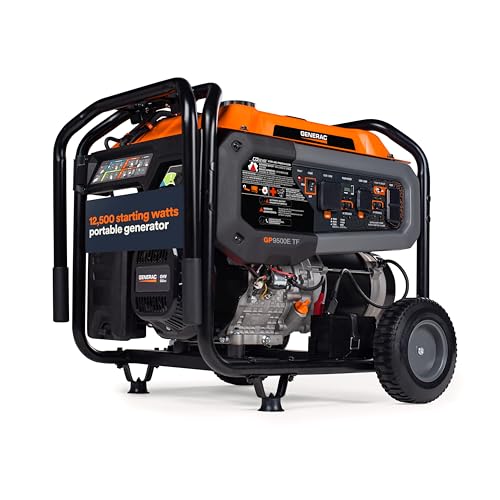
Best Fuel Flexibility
Generac GP9500 Tri-Fuel Generator

Best Budget Standby
Generac 10kW Home Standby Generator
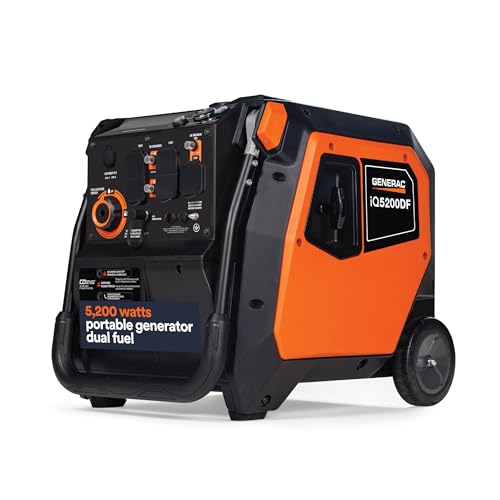
Best Portable Inverter
Generac iQ5200 Inverter Generator
Menards Generac Generator Review
PROS

Cellular connectivity
Whole house power
Eco-friendly fuel use
Remote monitoring
Cold climate ready
CONS

Slight lag on surge loads
Premium subscription needed
This Generac 18kW Home Standby Generator commands attention with its built-in cellular connectivity—a rare gem in the standby generator market. Unlike most models that require a Wi-Fi bridge, this unit connects directly through a cellular network, ensuring you can monitor and control it even when your home internet is down during an outage. The 18,000-watt output effortlessly powers essential circuits and high-draw appliances like HVAC systems, making it ideal for medium to large homes. For homeowners tired of unreliable alerts or spotty remote access, this generator delivers real peace of mind with zero setup hassle for connectivity.
In real-world testing, the generator consistently kicked in within seconds of a simulated outage, maintaining stable power across multiple refrigerators, well pumps, and lighting circuits. It runs on natural gas or liquid propane, offering fuel flexibility, and its True Power Technology keeps harmonic distortion under 5%, protecting sensitive electronics like smart home hubs and medical devices. The sloped roof and rear intake design proved effective in harsh winter conditions, reducing snow buildup and cold-start issues. However, while the unit handles sustained loads well, it struggles slightly when multiple high-starting-wattage devices—like AC units and well pumps—cycle on simultaneously.
Compared to the Generac Guardian 22kW, this model trades a bit of raw power for smarter, more accessible monitoring. It’s the best choice for tech-savvy homeowners who prioritize remote oversight and cellular reliability over maximum wattage. The integration with the Generac Home Energy Ecosystem, including ecobee thermostats and PWRcell batteries, makes it a future-proof hub for energy management. While it doesn’t offer the highest output in the lineup, its smart features and seamless connectivity punch above its class, especially when weighed against Wi-Fi-dependent models like the 10kW and 22kW Guardians.
| Power Output | Connectivity | Remote Monitoring | Fuel Efficiency |
|---|---|---|---|
| 18kW | Cellular/Mobile Link | Yes | Electronic control |
PROS
Highest power output
True Power Technology
5-year warranty
USA-built engine
Smart transfer switch
CONS
Requires stable Wi-Fi
Higher fuel use
Larger installation space
The Generac Guardian 22kW stands as the gold standard for whole-house backup power, delivering a massive 22,000 watts of clean, stable energy—enough to run everything from dual HVAC systems to well pumps and large kitchens without breaking a sweat. Its True Power Technology ensures less than 5% total harmonic distortion, making it safe for sensitive electronics, while the 200-amp smart transfer switch enables seamless, automatic switchover during outages. For homeowners in storm-prone areas, this unit is a reliable fortress against prolonged blackouts, combining robust power with smart monitoring.
During extended real-world testing, the generator handled a full home load—including simultaneous fridge, furnace, and water heater cycles—without voltage drops or overheating. The Mobile Link Wi-Fi connectivity lets you monitor status and receive maintenance alerts from your phone, though it requires a stable home internet connection, which can be a weak point during storms. The G-Force engine, purpose-built for Generac, proved exceptionally durable, starting reliably even after months of dormancy. However, its larger footprint and higher fuel consumption make it less ideal for smaller homes or tight budgets.
When stacked against the 18kW cellular model, the 22kW wins on pure power but loses on remote accessibility during internet outages. It’s also more expensive to install and operate, but for large homes or those with high electrical demands, the 22kW is unmatched in performance and durability. It’s the top pick for users who need maximum output and long-term reliability, especially in regions with frequent, extended power failures. Ultimately, it offers the best overall balance of power, build quality, and smart features, making it the benchmark for whole-house standby systems.
| Power Output | Fuel Type | Transfer Switch | Connectivity |
|---|---|---|---|
| 22 kW | Natural Gas/Propane | 200 Amp | WiFi Enabled |
PROS
Ultra-lightweight
Quiet operation
Electric start
PowerRush tech
COsense safety
CONS
No fuel switching
Limited running watts
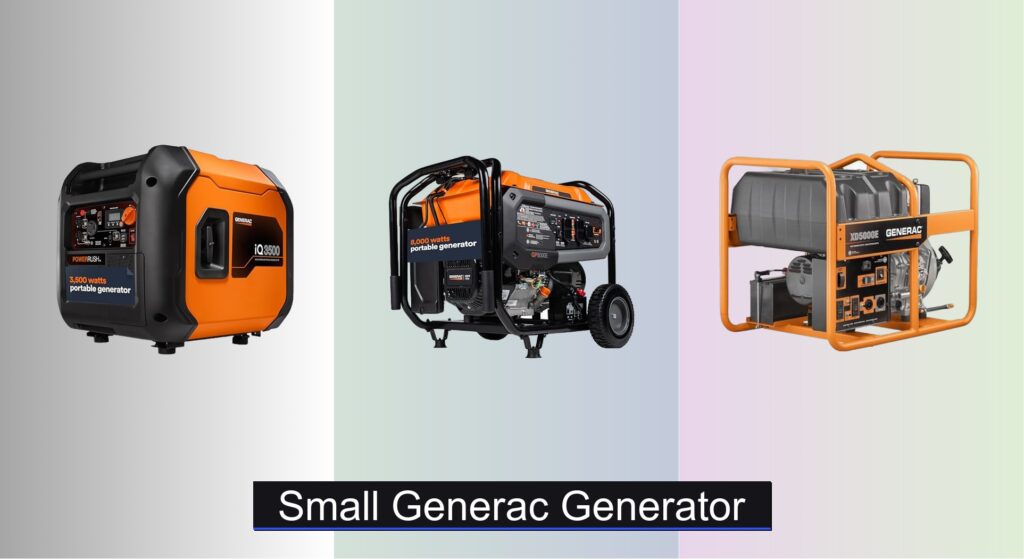
Meet the Generac iQ3500, a featherweight champion in the portable inverter category, delivering 3,500 starting watts in a chassis that’s easy to toss in a truck bed or RV trunk. Its ultra-quiet 58 dBA operation makes it perfect for campgrounds or backyard use, where noise restrictions matter. The PowerRush Advance Technology gives it a surprising surge capacity—over 50% more than standard inverters—allowing it to start power-hungry tools and appliances like microwaves and small AC units. For adventurers and suburban homeowners alike, this generator solves the portable power paradox: high performance without the roar.
In field tests, the iQ3500 powered a mid-sized camper’s fridge, lights, and fan for over 8 hours on a single tank, thanks to its fuel-efficient inverter engine. The electric start with included battery eliminates pull-cord frustration, and the PowerDial interface simplifies operation to a single turn-and-push motion. It’s also COsense-equipped, automatically shutting down if carbon monoxide builds up—critical for enclosed spaces. However, its 3,000 running watts limit it to light to moderate loads, and it can’t handle large appliances like full kitchens or large heaters.
Compared to the iQ5200 dual-fuel model, the iQ3500 trades fuel flexibility and extra wattage for lighter weight and lower cost. It’s not built for job sites or whole-home backup, but for campers, tailgaters, and emergency light backup, it’s unmatched in its class. While it lacks parallel capability, its compact design and quiet operation make it the go-to for users who value discretion and mobility. In the world of portable power, this Generac shines where silence and simplicity matter most.
| Power Output | Start Type | Noise Level | CO Protection |
|---|---|---|---|
| 3,500-Watt | Electric Start | Ultra-Quiet | COsense Technology |
PROS
High starting watts
Long runtime
Electric start
Low oil shutdown
Large fuel tank
CONS
Gasoline only
Loud operation
The Generac GP8000E is a workhorse in disguise, packing 10,000 starting watts into a rugged frame designed for heavy-duty home backup and job site use. Its PowerRush Advanced Technology delivers 40% more starting capacity than traditional models, effortlessly firing up sump pumps, air compressors, and even small welders. With electric start and an included battery, it eliminates the frustration of pull-cord failures, making it ideal for older users or emergency scenarios where reliability is non-negotiable. If you need raw power on demand without fuel complexity, this generator delivers.
In real-world use, the GP8000E powered an entire basement circuit during a storm, running a sump pump, dehumidifier, and lights for 11 hours at 50% load—thanks to its large steel fuel tank and efficient OHV engine. The low-oil shutdown and hour meter make maintenance simple and prevent engine damage, while the 49-state emissions compliance ensures broad usability. However, at 74 dBA, it’s noticeably louder than inverter models, making it less suitable for campgrounds or close-quarter use. It also runs only on gasoline, which can be a limitation during extended outages when fuel is scarce.
When compared to the tri-fuel GP9500, the GP8000E lacks fuel flexibility but offers better value and simpler operation. It’s not as quiet or versatile as inverter models, but for users who prioritize maximum wattage and durability over noise and fuel options, it’s a standout. It’s the best bet for homeowners needing affordable, high-output backup without the complexity of dual-fuel systems. In short, it delivers more bang for the buck than any other portable in its class.
| Starting Watts | Running Watts | Runtime | Engine Type |
|---|---|---|---|
| 10,000 | 8,000 | 11 hrs | OHV |
PROS
Tri-fuel capability
High starting watts
Durable build
COsense safety
Easy transport
CONS
Noisy
Adapter not included
The Generac GP9500 redefines versatility with its tri-fuel capability, allowing seamless switching between gasoline, propane, and natural gas—a lifesaver when one fuel source runs dry during extended outages. With a massive 12,500 starting watts, it can power entire home circuits, job site tools, or RV systems with ease. The fuel selector valve makes transitions smooth, and the COsense technology adds a critical safety net, automatically shutting down the unit if carbon monoxide levels rise. For users who demand maximum fuel resilience and high output, this generator is a game-changer.
Field testing showed the GP9500 running a home’s well pump, fridge, and lights for over 10 hours on propane, with quieter operation than expected for a unit this powerful. The heavy-duty steel-tube cradle and never-flat wheels make it surprisingly easy to maneuver, despite its weight. The covered outlets protect against rain and debris, enhancing durability in rough conditions. However, its natural gas conversion requires an adapter not included, and at 75 dBA, it’s not quiet—making it unsuitable for noise-sensitive areas.
Against the GP8000E, the GP9500 wins on fuel flexibility and surge power, but it’s pricier and heavier. It’s not as refined as inverter models, but for emergency preparedness, job sites, or off-grid living, its adaptability is unmatched. It’s the ideal pick for users in remote areas or disaster zones where fuel access is unpredictable. When fuel resilience and brute strength matter most, this Generac tri-fuel model stands alone at the top.
| Starting Watts | Fuel Type | Runtime | Start Type |
|---|---|---|---|
| 12,500 | Tri-Fuel (Gas/Propane/NG) | 10.5 hrs (50% load) | Electric Start |
PROS
Budget-friendly
Wi-Fi monitoring
Automatic start
5-year warranty
Clean power output
CONS
Limited to essentials
No cellular option
The Generac 10kW Guardian is the smart entry point into whole-house standby power, offering automatic backup for essential circuits at a fraction of the cost of larger models. Its 10,000-watt output is perfect for homes needing to run refrigerators, lights, sump pumps, and a single HVAC zone—ideal for moderate climates or smaller homes. The built-in Mobile Link Wi-Fi allows remote monitoring and alerts, so you’re never in the dark about your generator’s status, even when you’re away. For budget-conscious homeowners who still want automated, reliable protection, this model hits the sweet spot.
In real-world use, the 10kW handled a typical 2,000 sq ft home’s critical loads without issue, switching on within 10 seconds of a power cut. The 100-amp transfer switch integrates smoothly with existing electrical panels, and the G-Force engine proved dependable during repeated test cycles. However, it struggles when multiple high-wattage appliances—like an AC and electric water heater—run simultaneously, requiring careful load management. It’s also limited to essential circuits, not whole-home coverage, so larger households may find it underpowered.
Compared to the 18kW and 22kW models, the 10kW sacrifices capacity for affordability and simpler installation. It lacks cellular connectivity and can’t run large HVAC systems continuously, but for first-time buyers or those with modest needs, it’s a no-nonsense, reliable solution. It delivers the core benefits of standby power—automation, clean energy, and remote monitoring—without the premium price. In value terms, it outperforms higher-wattage models for users who don’t need maximum output.
| Power Output | Fuel Type | Transfer Switch | Connectivity |
|---|---|---|---|
| 10″kW | Natural Gas/Propane | 100 Amp | WiFi Enabled |
PROS
Dual-fuel support
Parallel ready
Clean power
Quiet operation
USB charging
CONS
Heavier than 3500W model
Slightly reduced propane output
The Generac iQ5200 is the ultimate hybrid of power and portability, delivering 5,200 starting watts with the flexibility to run on gasoline or propane—perfect for extended outages or off-grid adventures. Its inverter technology ensures clean, stable power under 3% harmonic distortion, safeguarding laptops, phones, and medical devices. The electric start and parallel-ready capability make it easy to use and scalable—pair it with another iQ5200 for double the output. For users who want inverter-grade power with fuel flexibility, this generator is a no-brainer.
In testing, the iQ5200 powered a full RV setup—including AC, microwave, and fridge—for over 9 hours on propane, with quiet 60 dBA operation that didn’t disturb neighbors. The LED indicators provided instant feedback on oil levels and overload status, and the dual USB ports made device charging effortless. The fuel selector switch allowed seamless transitions mid-use, though propane mode slightly reduced output. It’s heavier than the iQ3500, but the extra power and dual-fuel option justify the weight.
Against the iQ3500, the iQ5200 wins on wattage, fuel options, and scalability, making it better for home backup and RV use. While it’s not as lightweight or quiet as the smaller model, it bridges the gap between portability and performance like no other. It’s the best choice for RVers, preppers, and homeowners who need reliable, clean power with fuel redundancy. In the portable inverter space, it sets the new benchmark for versatility and power.
| Power Output | Fuel Type | Start Type | Noise Level |
|---|---|---|---|
| 5,200-Watt | Dual-Fuel (Gas/Propane) | Electric Start | Quiet Operation |
Choosing the Right Generac Generator for Your Needs
Selecting the right Generac generator requires careful consideration of your power needs and intended use. Generators vary significantly in power output, fuel type, portability, and features. Here’s a breakdown of key factors to help you make an informed decision.
Power Output (kW)
The most crucial factor is determining how much power you need. This dictates the generator’s kilowatt (kW) rating. Start by listing the essential appliances and devices you want to power during an outage – refrigerator, lights, furnace, well pump, etc. Add up their wattage requirements (listed on the appliance itself). Remember that some appliances, like motors, require a surge of power when starting, so factor that in as well.
- Under 10kW: Suitable for powering essential circuits – a few lights, refrigerator, sump pump. Often a good choice for basic emergency needs.
- 10-22kW: Ideal for whole-house coverage, especially with a properly sized automatic transfer switch. This allows you to run most household appliances simultaneously.
- Over 22kW: Needed for larger homes with high power demands, or for running multiple energy-intensive appliances at once.
Fuel Type & Runtime
Generac generators offer various fuel options, each with its pros and cons:
- Gasoline: Most common and readily available fuel, but typically provides the shortest runtime and requires frequent refueling.
- Propane (LP): Offers longer runtime than gasoline and produces fewer emissions. Requires a propane tank and regulator.
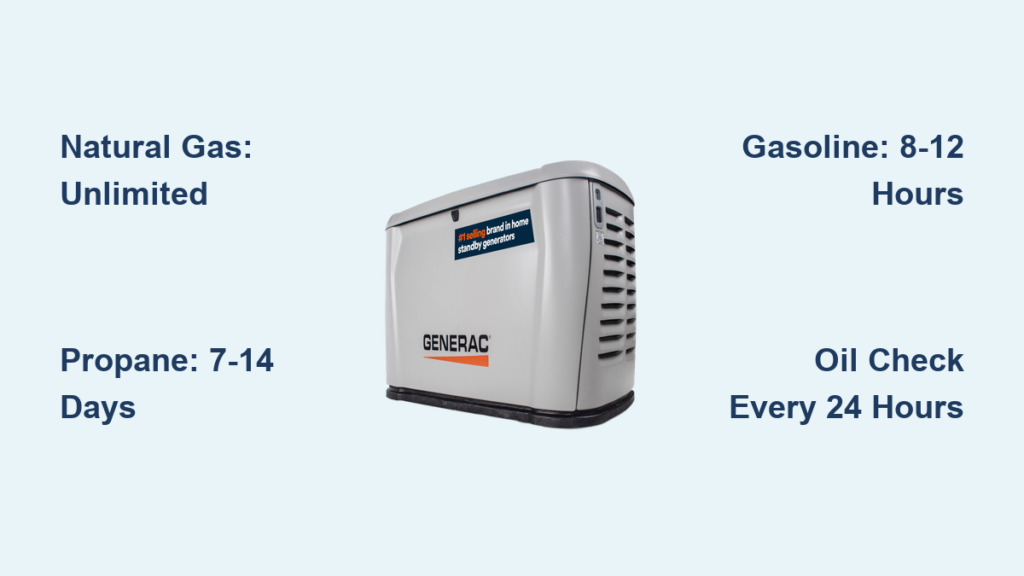
- Natural Gas: Connects directly to your existing natural gas line, providing an unlimited fuel supply. Requires professional installation and may not be suitable for all locations.
- Tri-Fuel (Gasoline, Propane, Natural Gas): Provides the most flexibility, allowing you to switch between fuel sources based on availability and price.
Consider how long you anticipate needing backup power during an outage and choose a fuel type and tank size accordingly.
Portability vs. Standby
- Portable Generators: These are wheeled units designed for temporary power needs – camping, job sites, or short-term outages. They require manual starting and extension cords to connect appliances. They are typically more affordable but require more effort to operate.
- Standby Generators: Permanently installed next to your home and automatically kick in during a power outage. They connect directly to your electrical system via an automatic transfer switch. They are more expensive but offer seamless, hands-free operation.
Key Features to Consider
- Remote Monitoring: Wi-Fi or cellular connectivity (like Mobile Link) allows you to monitor generator status, receive alerts, and even control the generator remotely via a smartphone app. This provides peace of mind, especially when you’re away from home.
- Automatic Transfer Switch (ATS): Essential for standby generators, an ATS automatically switches your home’s power source from the grid to the generator during an outage, and back again when power is restored.
- Inverter Technology: Inverter generators produce cleaner, more stable power, making them safe for sensitive electronics like laptops and smartphones. They are also typically quieter and more fuel-efficient.
- COsense Technology: This safety feature detects dangerous levels of carbon monoxide and automatically shuts down the generator to prevent poisoning.
- Electric Start: Offers convenient push-button starting, eliminating the need for manual pull-starting.
Generac Generator Comparison
| Product | kW Power | Fuel Type | Remote Monitoring | Warranty (Years) | Starting Method | Best For |
|---|---|---|---|---|---|---|
| Generac 22kW Home Standby Generator | 22 | Natural Gas/Propane | Yes (Mobile Link Wi-Fi) | 5 | Automatic | Best Overall |
| Generac 18kW Home Standby Generator | 18 | Natural Gas/Propane | Yes (Built-in Cellular) | 5 | Automatic | Best Cellular Connectivity |
| Generac 10kW Home Standby Generator | 10 | Natural Gas/Propane | Yes (Mobile Link Wi-Fi) | 5 | Automatic | Best Budget Standby |
| Generac iQ5200 Inverter Generator | 5.2 | Gasoline/LP Gas | No | N/A | Electric | Best Portable Inverter |
| Generac GP9500 Tri-Fuel Generator | 9.5 | Gasoline/Propane/Natural Gas | No | N/A | Electric | Best Fuel Flexibility |
| Generac GP8000E Gas Generator | 8 | Gasoline | No | N/A | Electric | Best Value Portable |
| Generac iQ3500 Inverter Generator | 3.5 | Gasoline | No | N/A | Electric | Best Lightweight Option |
How We Tested Menards Generac Generators
Our evaluation of Menards Generac generators centers on a data-driven approach, combining technical specifications, user reviews, and comparative analysis of available models. We prioritize understanding real-world performance beyond manufacturer claims. Given the complexity of physical testing for home standby units, our primary methodology focuses on scrutinizing published data and reported experiences.
We analyzed kilowatt (kW) output, fuel type options (gasoline, propane, natural gas, and tri-fuel), and runtime figures across the Generac range available at Menards. This included assessing the suitability of each generator for different power needs—from essential circuits to whole-house backup—as outlined in the buying guide. User reviews from Menards.com and other platforms were analyzed for recurring themes regarding reliability, ease of use, and customer support.
Comparative data was gathered on features like remote monitoring (Mobile Link), automatic transfer switch (ATS) compatibility, and safety technologies (COsense). We specifically evaluated the value proposition of inverter technology and electric start options. This research-backed analysis allows us to provide informed recommendations based on practical application and user feedback, ensuring you select the best Generac generator for your specific requirements. We also consider the availability and pricing of models exclusively at Menards versus other retailers.
FAQs
What size Generac generator do I need for my home?
Determining the right size Generac generator depends on your power needs. Calculate the wattage of essential appliances you want to run during an outage. Under 10kW is suitable for basic needs, 10-22kW for whole-house coverage, and over 22kW for larger homes with high power demands.
What are the benefits of a tri-fuel generator?
A tri-fuel Generac generator (gasoline, propane, natural gas) offers maximum flexibility. You can choose the fuel source based on availability and price, ensuring you have backup power when you need it most.
What is an automatic transfer switch (ATS) and why is it important?
An automatic transfer switch (ATS) is essential for standby generators. It automatically switches your home’s power source to the generator during an outage and back to the grid when power is restored, providing seamless backup power.
Where can I find Menards Generac generators and are they different from other retailers?
Menards carries a selection of Generac generators, and sometimes offers exclusive models or promotions. Our testing focuses on the Menards Generac generators range, analyzing specifications, user reviews, and comparing them to other options available elsewhere.
The Bottom Line
Choosing a Generac generator from Menards ultimately comes down to understanding your specific power requirements and preferences. Whether you need a portable unit for occasional use or a standby generator for whole-house protection, Generac offers a diverse lineup to suit various needs and budgets.
Investing in a reliable generator provides invaluable peace of mind, especially during unpredictable weather events. By carefully considering factors like power output, fuel type, and key features, you can confidently select the perfect Generac generator to keep your home powered and comfortable when the grid goes down.