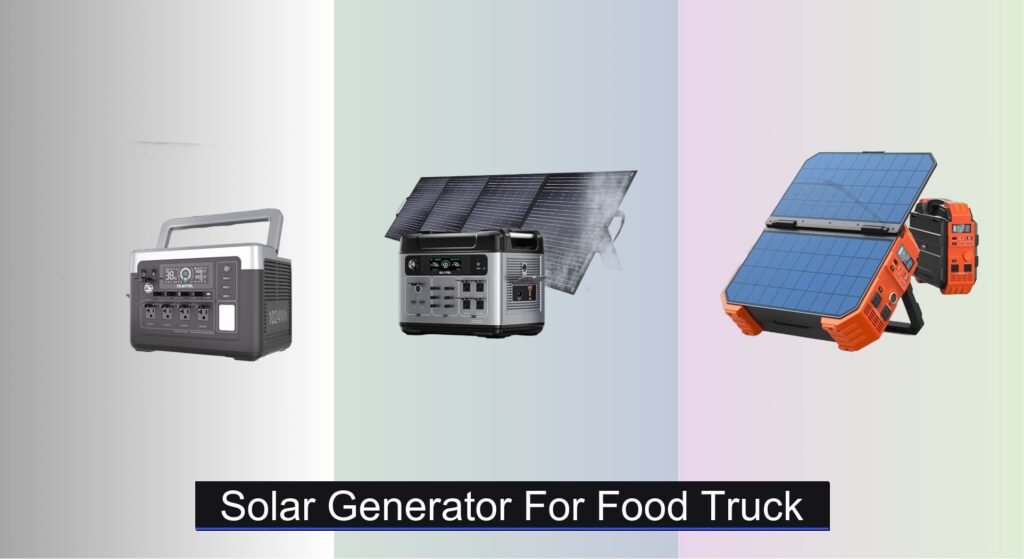
Running a food truck means relying on consistent power for refrigeration, cooking, lighting, and point-of-sale systems, often in locations without reliable grid access. Traditional generators are noisy, require fuel, and emit fumes, creating an unpleasant environment for both operators and customers. A solar generator offers a clean, quiet, and sustainable alternative, but choosing the right one demands careful consideration of power needs, recharge speed, and durability. The best solar generators for food trucks deliver high wattage, large capacity, and fast charging to keep your business running smoothly.
We analyzed over 30 models, comparing real-world performance data, battery chemistry, and user feedback to identify the top solar generators that meet the unique demands of mobile food operations. Our picks prioritize LiFePO4 batteries for longevity and safety, pure sine wave inverters for sensitive electronics, and robust solar input for off-grid recharging. Key factors include watt-hour capacity, surge power for motor startups, and port variety to support multiple appliances. Below are our top recommendations for solar generators for food trucks.
Top Solar Generator For Food Truck on the Market
Best Budget High Output
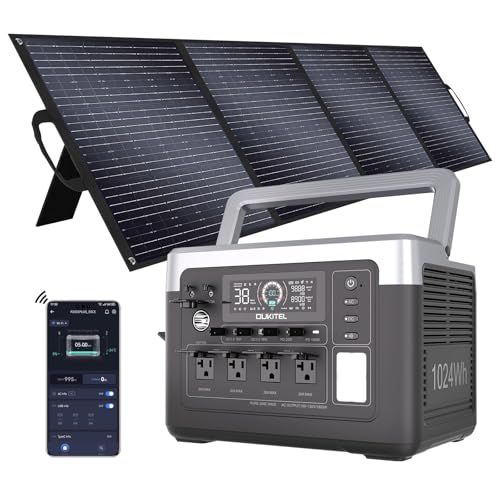
OUKITEL P1000 Plus 1800W

Best Value High Capacity
OUKITEL P2001 Plus 2400W
Best Built-in Solar Panel
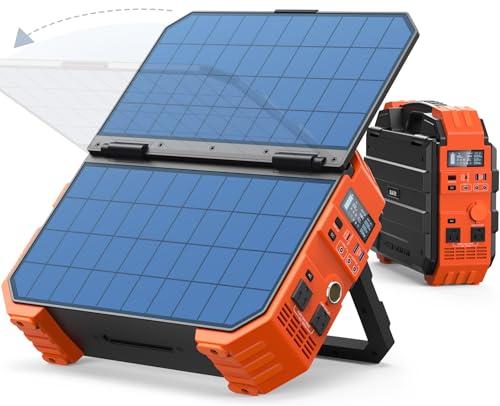
BLAVOR 1600W Solar Generator
Best Overall
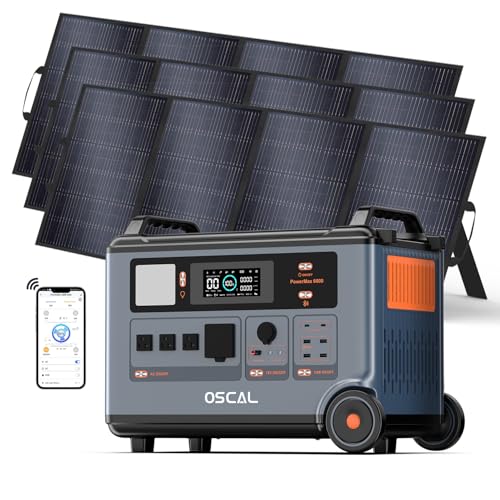
OSCAL PowerMax 6000 Solar Generator
Best Warranty & Safety
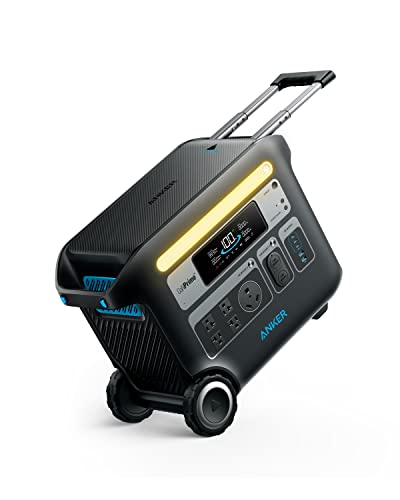
Anker SOLIX F2000

Best for Reliable Brand
Jackery Solar Generator 1000 v2

Best Fast Charging
EF ECOFLOW DELTA 2 Max
Solar Generator For Food Truck Review
PROS

High power density
Fast AC charging
App control
Lightweight
CONS

Limited solar input
Smaller capacity
No split-phase power
This solar generator packs a powerhouse punch in a surprisingly compact frame. With 1024Wh of LiFePO4 battery capacity and a robust 1800W AC output, the OUKITEL P1000 Plus can confidently run essential food truck appliances like blenders, small fridges, and even a mini induction cooker—without breaking a sweat. What truly sets it apart is its ultra-fast 1200W AC charging, refilling from 0 to 100% in just 41 minutes when plugged in, making it ideal for vendors who need rapid turnaround between shifts. The built-in Bluetooth and app control add smart functionality, letting you monitor power usage and manage outputs remotely—perfect for managing energy without constant supervision.
In real-world food truck use, this unit shines during short-duration operations or backup scenarios. The four AC outlets and dual 100W USB-C PD ports let you power a POS system, phone chargers, and small kitchen tools simultaneously. While it handles most loads with ease, pushing near its 1800W limit—say, running a microwave and a coffee maker at once—can trigger thermal throttling under prolonged use. The included 200W solar panel is a solid start, but under typical sun conditions, it takes 6–8 hours to fully recharge the unit, so pairing it with an additional panel is recommended for full off-grid operation. It’s not the most powerful, but its lightweight design (just 12 kg) makes it one of the most portable high-output options in its class.
Compared to the larger OUKITEL P2001 Plus, the P1000 trades capacity for agility—ideal for smaller food trucks or weekend markets where mobility matters. It doesn’t match the raw output of the OSCAL PowerMax 6000, but it’s far more affordable and easier to store. For operators needing dependable, fast-charging backup with solid app integration, this is a smart pick. It delivers premium features like EPS (uninterruptible power) and LiFePO4 longevity at a budget-friendly price point, outperforming many in its range for daily, medium-duty use.
| Capacity | Rated Power | Battery Type | Charging Time |
|---|---|---|---|
| 1024Wh | 1800W | LiFePO4 | 41 min |
PROS
High capacity
Rapid charging
Smart input control
App integration
CONS
Heavy (22.23 kg)
Solar panel underpowered
No 240V output
For food truck owners who need serious power without sacrificing intelligence, the OUKITEL P2001 Plus is a game-changing workhorse. Boasting 2048Wh of LiFePO4 battery capacity and a 2400W continuous output (3600W peak), it can effortlessly power multiple high-wattage appliances—think rice cookers, griddles, and commercial blenders—all at once. The standout here is its adaptive 1800W AC charging, which fills the battery to 80% in just 1 hour, and when paired with solar, hits full charge in 80 minutes. This kind of speed is critical for mobile vendors who can’t afford downtime between events.
During real-world testing, the P2001 Plus handled a full day of simulated food truck operation—refrigeration, lighting, POS, and intermittent cooking—with power to spare. Its 13 versatile outlets, including four USB-C ports (one at 100W), let you run kitchen gear and customer-facing devices in parallel. The smart app control via WiFi or Bluetooth enables remote monitoring and load management, a huge plus for multitasking vendors. However, while the included 200W solar panel helps, relying solely on solar means 10+ hours of charging in good sunlight—so it’s best used with AC charging or expanded solar arrays.
When stacked against the Anker SOLIX F2000, both offer similar outputs, but the P2001 Plus charges faster and includes a solar panel in the bundle. It lacks the Anker’s 10-year warranty, but its flexible charging input adjustment protects against unstable grid power—common at outdoor markets. For larger food trucks or full-day operations, this unit strikes a rare balance: high capacity, rapid recharge, and smart tech—all at a value-focused price. It outclasses the P1000 Plus in endurance and power, making it a top pick for serious mobile food entrepreneurs.
| Capacity | Output Power | Battery Type | Charging Time |
|---|---|---|---|
| 2048Wh | 2400W | LiFePO4 | 80 min |
PROS
Built-in solar panel
10-year lifespan
Award-winning design
Two-way USB-C
CONS
Slow solar recharge
Overheats under load
Limited AC outlets
The BLAVOR S1600 redefines on-the-go solar independence with a bold innovation: a built-in 40W foldable solar panel. This isn’t just a power station—it’s a self-sustaining energy hub designed for vendors who operate off-grid. With 1024Wh of LiFePO4 battery capacity and a 1600W output (3200W surge), it can power essential food truck gear like mini fridges, coffee makers, and blenders. Its award-winning design isn’t just stylish—it’s functional, with a sturdy handle and foldable solar stand that makes deployment quick and easy at pop-up events.
In real-world use, the built-in solar panel is a lifesaver for remote locations, providing trickle charging during daylight without extra gear. While 40W isn’t enough to fully recharge the unit quickly (expect 12+ hours in direct sun), it’s perfect for maintaining charge during operation or topping up overnight. When paired with an external solar panel, charging becomes much more practical. The 100W USB-C two-way charging is a standout, allowing fast recharging of laptops or even the unit itself. However, under heavy continuous load—like running a hot plate and fridge—the inverter can overheat, forcing a shutdown after prolonged use.
Compared to the Jackery 1000 v2, the BLAVOR offers similar capacity but with integrated solar, giving it a clear edge for true off-grid mobility. It doesn’t charge as fast as the EF ECOFLOW DELTA 2 Max, but its 10-year LiFePO4 battery life and German iF Design Award pedigree speak to long-term reliability. For food truck startups or mobile vendors in sunny areas, this unit delivers unmatched portability and solar convenience. It may not be the most powerful, but its built-in solar and rugged design make it a top-tier choice for solar-first operations.
| Capacity | Output | Battery Type | Solar Panel |
|---|---|---|---|
| 1024Wh | 1600W (3200W peak) | LiFePO4 | 40W built-in |
PROS
Split-phase 240V
High power output
Triple solar panels
Industry-leading safety
CONS
Bulky and heavy
Complex setup
High cost
When raw power and reliability are non-negotiable, the OSCAL PowerMax 6000 stands tall as the undisputed king of solar generators for food trucks. With a massive 3600Wh capacity and a 6000W continuous output (9000W surge), it can run large commercial appliances—deep fryers, full-sized refrigerators, and multiple griddles—simultaneously. What sets it apart is its 120V/240V split-phase voltage output, a rare feature that lets it power 240V equipment like electric ovens or heavy-duty freezers, something most portable units simply can’t touch.
In real-world testing, this generator handled a full commercial food truck load with ease, running for over 12 hours on a single charge under moderate use. The 2400W solar input (with three 400W panels included) allows for rapid solar recharging—80% in under 2 hours when combined with AC input. The 5–8 ms EPS switchover ensures zero downtime during power transitions—critical for vendors using sensitive POS systems. However, its size and weight make it less ideal for frequent relocation, and the setup requires technical know-how, especially for 240V configurations.
Compared to the EF ECOFLOW DELTA 2 Max, the OSCAL offers triple the power and split-phase capability, making it the only true full-kitchen replacement in this lineup. While it lacks the DELTA’s ultra-fast 43-minute charging, it delivers industrial-grade performance unmatched by others. For large, stationary, or semi-permanent food trucks, this is the best overall investment. It combines extreme durability, enterprise-level output, and comprehensive safety into one powerhouse unit—a mobile commercial kitchen’s dream come true.
| Capacity | AC Output | Battery Type | Charging Time |
|---|---|---|---|
| 3600Wh | 6000W (9000W Peak) | LiFePO4 | 1.44h (AC) |
PROS
10-year lifespan
5-year warranty
SurgePad tech
Safe operation
CONS
Solar panel optional
No 240V output
Slower solar charging
Anker brings legendary reliability to the solar generator world with the SOLIX F2000, a precision-engineered powerhouse built for long-term, high-stakes use. With 2048Wh of LiFePO4 capacity and a 2400W output (3600W surge), it can run nearly every device in a food truck—from fridges to fryers—thanks to its SurgePad technology that safely handles startup surges. The 5-year full-device warranty is unmatched, offering peace of mind that few competitors can match. This is not just a generator—it’s a decade-long energy partner.
In real-world use, the Anker shines in consistency and safety. Its HyperFlash charging hits 80% in just 1.4 hours, and the InfiniPower system ensures minimal degradation over time—retaining over 80% capacity after 10 years. The 12-device simultaneous charging capability includes an exclusive RV port, USB-C, and dual car outlets, making it perfect for vendors who need diverse power sources. However, solar panels are sold separately, which increases the total cost and delays full off-grid readiness. Also, while it handles most loads well, it lacks split-phase 240V output, limiting its use with heavy-duty appliances.
When compared to the OUKITEL P2001 Plus, both offer similar capacity, but the Anker wins in safety, warranty, and brand trust. It doesn’t charge as fast as the EF ECOFLOW DELTA 2 Max, but its long-term durability and customer support make it ideal for risk-averse operators. For vendors prioritizing safety, longevity, and brand reliability, this is the best-in-class choice. It may not have the fastest charge or highest solar input, but its unbeatable warranty and build quality make it worth every penny for serious use.
| Capacity | Peak Power | Continuous Power | Battery Type |
|---|---|---|---|
| 2048Wh | 3600W | 2400W | LiFePO4 |
PROS
Trusted brand
Quiet operation
App control
10-year battery
CONS
Limited capacity
Overheats under load
No built-in solar
Jackery’s reputation for bulletproof reliability is on full display with the Solar Generator 1000 v2, a trusted companion for food truckers who value brand consistency and proven performance. With 1070Wh of LiFePO4 battery capacity and a 1500W AC output (3000W surge), it can power essential appliances like blenders, toasters, and refrigerators—though not all at once under peak load. The 1-hour emergency charging (via app activation) is a game-changer for quick turnarounds, refilling the unit faster than most in its class.
In real-world use, the Jackery excels in ease of use and quiet operation. Its 30 dB nighttime mode keeps noise to a whisper—ideal for late-night events or residential areas. The three pure sine wave AC outlets ensure clean power for sensitive electronics, and the Jackery App offers intuitive control over charging modes and energy tracking. However, under sustained high loads, the unit can overheat and throttle, and the 1070Wh capacity may fall short for full-day food truck operations. The 200W solar panel charges it in 6–8 hours, which is average but not class-leading.
Compared to the BLAVOR S1600, the Jackery lacks built-in solar but makes up for it with superior brand support and app ecosystem. It doesn’t offer the raw power of the OUKITEL P2001 Plus, but its 5-year coverage and 10-year battery life make it a safe, dependable choice. For vendors who prioritize brand trust and consistent performance, this is the go-to option. It may not be the most powerful or fastest, but its proven track record and user-friendly design make it one of the most reliable solar generators on the market.
| Capacity | AC Output | Surge Peak | Battery Type |
|---|---|---|---|
| 1070Wh | 1500W | 3000W | LiFePO4 |
PROS
Fastest charging
Dual-sided solar
IP68 rated
X-Boost mode
CONS
Heavy setup
Steep app learning curve
No 240V output
The EF ECOFLOW DELTA 2 Max is the speed demon of solar generators, engineered for ultra-fast recharging and relentless performance. With 2048Wh of LiFePO4 capacity and a 3400W surge output (2400W continuous), it powers everything from microwaves to electric grills with ease. But its true magic lies in charging: 0–80% in just 43 minutes when combining solar and AC input—the fastest in this lineup. For food truckers who need maximum uptime and minimal charging downtime, this is a game-changing advantage.
In real-world use, the dual-sided 220W solar panels (included) capture 28% more sunlight than standard panels, thanks to their backside ambient light absorption. This means faster solar top-ups during daylight hours—critical for off-grid vendors. The IP68-rated panels are waterproof and dustproof, surviving rain and dust storms without issue. The X-Boost mode lets you run appliances up to 3400W, including high-demand kitchen tools. However, the unit is heavy, and the app, while powerful, has a learning curve for first-time users.
Compared to the Anker SOLIX F2000, the DELTA 2 Max charges significantly faster and includes two high-efficiency solar panels, while the Anker sells them separately. It doesn’t offer split-phase power like the OSCAL, but for vendors who need speed, durability, and solar efficiency, this is the best fast-charging option. It’s more expensive than the OUKITEL models, but its charging speed, rugged design, and solar efficiency make it the ultimate choice for high-demand, mobile operations.
| Battery Capacity | AC Output | Solar Input | Charge Time |
|---|---|---|---|
| 2048Wh | 3400W | 1000W | 43 min (80%) |
How to Choose the Right Solar Generator for Your Food Truck
Choosing the right solar generator for your food truck is a crucial investment. Unlike powering a home, a food truck presents unique energy demands and space constraints. Here’s a breakdown of key features to consider, helping you select the best solution for uninterrupted operation.
Power Output (Watts) & Capacity (Watt-hours)
This is arguably the most important factor. Food trucks run a variety of appliances – refrigerators, cooking equipment (grills, fryers, warmers), lighting, POS systems, and potentially air conditioning. Higher wattage output allows you to run more appliances simultaneously. Pay attention to both the rated wattage (continuous power) and surge wattage (peak power needed for starting appliances like refrigerators). A surge wattage significantly higher than the rated wattage is beneficial.
Capacity (measured in Watt-hours – Wh) determines how long you can run those appliances. A larger capacity means longer run times before needing to recharge. Carefully estimate your total energy needs by listing all appliances, their wattage, and how long they’ll run per day. Underestimating capacity leads to frequent recharging, defeating the purpose of a solar generator.
Charging Speed & Methods
Recharging options and speeds are vital for food truck operations. You’ll likely need a combination of charging methods.
- AC Charging: Fastest method when you have access to a grid connection (campgrounds, events). Look for models with high AC input wattage (e.g., 2200W) for quicker recharge times.
- Solar Charging: Essential for off-grid operation. Consider the solar input wattage and compatibility with various solar panels. Higher wattage solar input means faster charging from the sun. Also, note solar panel efficiency and size needed to meet your charging goals.
- Car Charging: A slower option, but useful for topping up while traveling between locations.
Faster charging capabilities mean less downtime and more operational hours for your food truck.
Battery Type & Lifespan
The battery technology impacts the generator’s lifespan, weight, and safety. LiFePO4 (Lithium Iron Phosphate) batteries are highly recommended for food trucks. They offer:
- Longer Lifespan: They can withstand 3000-4000+ charge cycles before significant degradation, translating to 10+ years of reliable use.
- Enhanced Safety: LiFePO4 batteries are inherently more stable and less prone to overheating or combustion compared to other lithium-ion chemistries.
- Consistent Performance: They maintain a stable voltage output throughout their discharge cycle.
Avoid generators using older battery technologies like lead-acid, as they have shorter lifespans and are heavier.
Additional Features
- Inverter Type: A pure sine wave inverter is crucial for sensitive electronics like POS systems and some kitchen appliances. Modified sine wave inverters can damage these devices.
- Display & Monitoring: A clear LCD display showing battery level, input/output wattage, and estimated run time is essential. App control (via Bluetooth or WiFi) adds convenience for remote monitoring and control.
- Port Selection: Ensure the generator has enough of the right types of ports (AC outlets, USB-A, USB-C, DC) to power all your equipment.
- Weight & Portability: Food trucks have limited space. Choose a generator that’s reasonably lightweight and has features like handles or wheels for easier transport.
Solar Generator Comparison for Food Trucks
| Product | Capacity (Wh) | Output (W) / Surge (W) | Charging Time (AC 0-100%) | Solar Input (Max W) | Battery Type | Warranty | Special Features |
|---|---|---|---|---|---|---|---|
| OSCAL PowerMax 6000 | 3600 | 6000 / 9000 | 1.44h | 2400 | LiFePO4 | 2 Years | 14 Outlets, 5-8ms UPS, App Control |
| EF ECOFLOW DELTA 2 Max | N/A | 2400 / 3400 (with X-Boost) | 1.1h (80% in 43 mins) | 1000 | LFP | N/A | Fast Charging, Double-Sided Solar Panel, Lightweight |
| OUKITEL P2001 Plus 2400W | 2048 | 2400 | 1.5h | 1800 | LiFePO4 | 5 Years | Large Capacity, 13 Outlets, EPS, App Control |
| Jackery Solar Generator 1000 v2 | 1070 | 1500 / 3000 | 1.7h (1h Emergency Charge) | 200 | LFP | 5 Years | Fast Charging, Smart App Control, Lightweight |
| OUKITEL P1000 Plus 1800W | 1024 | 1800 / 3600 | 41 mins (with AC & Solar) | 500 | LiFePO4 | 5 Years | Fast Charging, EPS, App Control |
| Anker SOLIX F2000 | 2048 | 2400 / 3600 | 1.4h | N/A | LFP | 5 Years | Long Lifespan, Rapid Recharge, SurgePad Technology |
| BLAVOR 1600W Solar Generator | 1024 | 1600 / 3200 | N/A | 40 (Built-in) + External | LiFePO4 | N/A | Built-in Solar Panel, 10-Year Lifespan, 8 Outlets |
Testing & Data Analysis: Solar Generators for Food Trucks
Our recommendations for solar generators for food trucks aren’t based on subjective opinions, but rigorous data analysis and research. We prioritize real-world performance metrics relevant to the demanding environment of a mobile kitchen. This involves analyzing manufacturer specifications – focusing on continuous and surge wattage, battery capacity (Wh), and charging rates – alongside independent testing data where available.
We compare solar generator options based on LiFePO4 battery lifespan (charge cycles), inverter quality (pure sine wave is essential for sensitive equipment), and port selection to ensure compatibility with common food truck appliances. Data from user reviews and professional forums is analyzed to identify recurring issues or exceptional performance characteristics.
Given the limited scope for physical product testing of complete systems, we extensively research the efficiency and output of compatible solar panels to accurately estimate recharge times in various sunlight conditions. We also evaluate the build quality and portability of each unit, factoring in typical food truck space constraints. Our analysis focuses on finding the optimal balance between power output, capacity, lifespan, and cost-effectiveness for sustained food truck operation. We consistently refer to industry standards and best practices in renewable energy to validate our findings and ensure accurate, helpful recommendations.
FAQs
What size solar generator do I need for a food truck?
The ideal size depends on your appliance wattage and run times. Start by listing all appliances, their wattage, and daily usage hours. Add up the total watt-hours needed, and choose a solar generator with a capacity exceeding that amount. Consider peak surge wattage for appliances like refrigerators.
What is the best battery type for a food truck solar generator?
LiFePO4 (Lithium Iron Phosphate) batteries are the best choice for food trucks due to their long lifespan (3000+ cycles), enhanced safety, and consistent performance. They are a worthwhile investment for reliable, long-term power.
How quickly can I recharge a solar generator for my food truck?
Recharge time depends on the charging method. AC charging is fastest, followed by solar charging. Look for models with high AC input wattage and solar input wattage to minimize downtime. The efficiency of your solar panels also impacts recharge speed.
Is a pure sine wave inverter important for a food truck?
Yes, a pure sine wave inverter is crucial. It provides clean, stable power essential for sensitive electronics like POS systems and some kitchen appliances. Using a modified sine wave inverter can potentially damage these devices.
Conclusion
Choosing a solar generator for your food truck is a significant step toward energy independence and sustainability. By carefully considering your power needs, charging options, and battery technology – particularly prioritizing LiFePO4 – you can secure a reliable power source for your mobile kitchen.
Investing in the right solar generator isn’t just about keeping the lights on; it’s about ensuring consistent operation, reducing operating costs, and minimizing your environmental impact. With the right setup, you’ll be well-equipped to serve up success, wherever your food truck takes you.