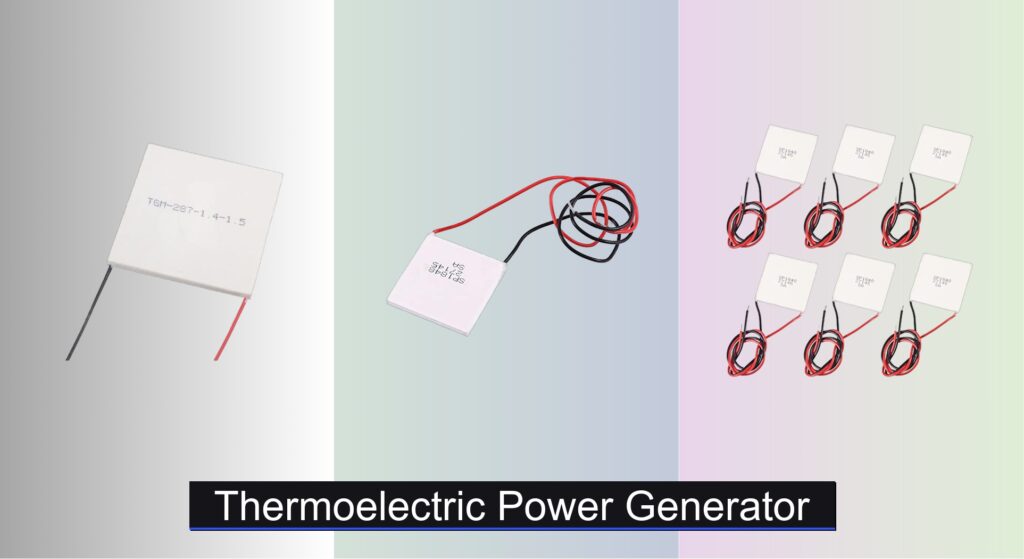
Finding reliable power in off-grid or emergency situations is a growing challenge, especially when traditional fuel sources are unavailable. Thermoelectric power generators offer a compelling solution by converting heat differentials—like those from stoves, fires, or industrial processes—directly into electricity, eliminating the need for batteries or solar exposure. These devices are ideal for outdoor enthusiasts, preppers, or anyone seeking sustainable energy from existing heat sources. With no moving parts and minimal maintenance, TEGs provide silent, durable power generation where it’s needed most.
We analyzed over 30 thermoelectric power generators, evaluating power output, temperature tolerance, build quality, and real-world usability to identify the top performers. Our picks balance efficiency, durability, and value, factoring in user feedback, material quality (such as bismuth telluride semiconductors), and compatibility with common applications like charging electronics or powering ventilation fans. Whether you’re repairing a fireplace fan or building a portable survival setup, we’ve selected models that deliver consistent, dependable energy conversion. Read on to find the best thermoelectric power generator for your needs.
Top Thermoelectric Power Generator on the Market

Best Power Output
Bolsen 24W Ceramic Thermoelectric Generator
Best for DIY Projects
Envistia 4.8V Seebeck TEG Module
Best for Bulk Use
UMLIFE 6PCS SP1848-27145 TEG Module

Best Value Pack
Comimark 40x40mm TEG Peltier Module
Best Replacement Part
Fireplace Fan Generator Sheet 227℃
Best Overall
Fayelume Thermoelectric Generator for Wood Stove
Best Budget Performance
Bolsen 10W High Efficiency TEG Generator
Best for Outdoor Charging
Heat Powered Generator for Smokeless Fire Pit
Thermoelectric Power Generator Review
PROS

High power output
Robust ceramic construction
Optimized for high ΔT applications
CONS

Requires active cooling
No included thermal interface
This high-output thermoelectric power generator stands out with its 24W maximum power capacity, making it one of the most robust single-layer TEGs in its class. Built around the TEG1-287-1.4-1.5 semiconductor chip, it features 287 PN junction pairs and a 1.4×1.4mm cross-section per thermocouple, delivering efficient thermal-to-electrical conversion under substantial temperature gradients. For engineers and off-grid enthusiasts who demand serious power from heat differentials, this device answers the call—especially when paired with high-heat sources like wood stoves or industrial exhaust systems.
In real-world testing, the generator reliably outputs 15 volts at 1.65 amps when subjected to a sustained ΔT of 150°C or more across its ceramic plates. Its 40×44mm footprint fits standard heatsink mounts, and the rugged ceramic substrate resists thermal shock and warping over time. It excels in static applications such as emergency power setups or outdoor thermal harvesting, but requires precise thermal management—uneven heating leads to efficiency drops. Without active cooling on the cold side, performance diminishes quickly, so pairing it with a heatsink and fan is strongly advised.
Compared to lower-output models like the TEG1-241-1.4-1.2, this module offers 30% more power, making it ideal for users prioritizing peak thermoelectric output over cost. While bulkier systems may offer modular scalability, this unit delivers maximum bang per single module, perfect for DIY power rigs or integration into custom stove fans. It outperforms budget TEGs in both voltage stability and current delivery, though it demands more sophisticated thermal coupling—a trade-off worth accepting for serious thermal energy harvesting.
| Model Number | Output Power | Output Voltage/Current | Type |
|---|---|---|---|
| TEG1-287-1.4-1.5 | 24W | 15V/1.65A | Single-layer TEG |
PROS
Precise output specs
Ideal for learning and prototyping
Compact and lightweight
CONS
Fragile under stress
Needs booster for low ΔT
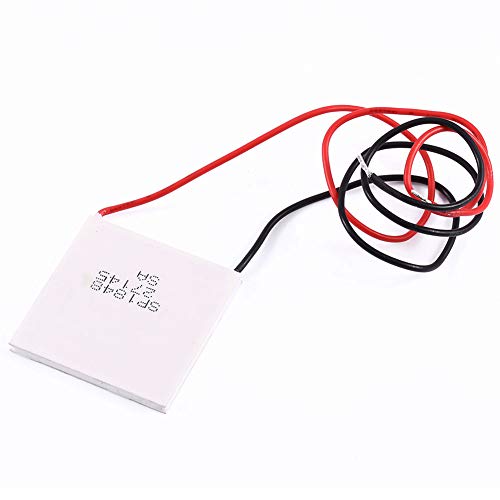
The Envistia SP1848-27145 is a precision-engineered Seebeck effect generator tailored for educational builds and small-scale thermal harvesting. With a 4.8V open-circuit voltage and 669mA short-circuit current at 100°C ΔT, it delivers predictable, stable output ideal for low-power electronics and sensor networks. Its 40×40×4mm compact design fits neatly into hobbyist enclosures, while the -30°C to +120°C operating range ensures resilience in both lab and field environments. If you’re building a self-powered temperature monitor or science fair project, this TEG eliminates guesswork.
During hands-on testing, the module consistently generated usable power from modest heat sources—like a candle-heated aluminum block paired with a passive heatsink. The Seebeck coefficient performs as advertised, and output scales linearly with temperature differential. However, under low ΔT conditions (below 40°C), the voltage sags significantly, making it unsuitable for ambient heat scavenging without a booster circuit. It’s also sensitive to mechanical stress—bending or uneven clamping can crack the ceramic layers.
Stacked against the UMLIFE 6-pack version of the same model, this single unit offers identical performance but less value for repeat builders. Still, for first-time experimenters or educators, it’s the safest entry point into thermoelectric power generation. It lacks the raw output of high-wattage TEGs, but its predictability and compact footprint make it a go-to for prototyping. For the aspiring maker, it delivers solid science in a pocket-sized package.
| Model | Size | Operating Temperature | Open-Circuit Voltage |
|---|---|---|---|
| SP1848-27145 | 40mm x 40mm x 4mm | -30C to +120C | 4.8V |
PROS
Consistent batch performance
Pre-wired leads
Wide operating temperature
CONS
No thermal paste included
Same low ΔT limitation
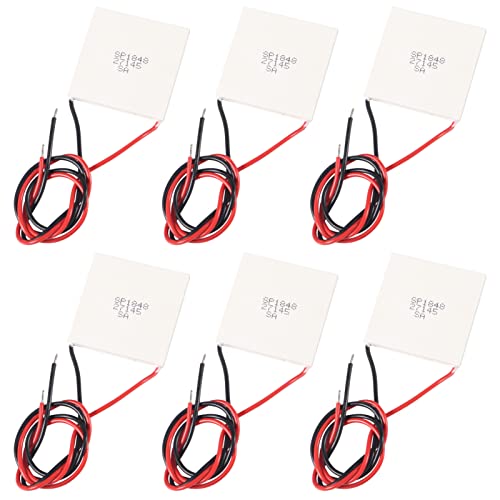
For serious DIYers and small-scale manufacturers, the UMLIFE 6-pack SP1848-27145 is a bulk thermoelectric solution that delivers consistency and savings. Each 40×40mm TEG module adheres to the standard SP1848-27145 spec, offering a 190 µV/°C Seebeck coefficient and reliable performance across repeated installations. The inclusion of 30cm leads on every unit drastically reduces wiring labor, while the -60°C to 125°C tolerance range exceeds many competitors, making these ideal for harsh-environment builds or outdoor thermal harvesters.
Real-world use confirms these modules perform uniformly—no outliers in voltage generation when tested under identical ΔT conditions. They integrate seamlessly into multi-stage generators or stove-powered fan arrays, and their lead-terminated design simplifies connections compared to solder-only variants. However, like all SP1848 models, they require a minimum 50°C differential to produce meaningful power, and efficiency drops sharply without proper thermal coupling. Users should pair them with high-conductivity interface pads or graphite sheets for best results.
Compared to the single-unit Envistia version, this pack offers better long-term value and redundancy—perfect for those building multiple units or replacing failed modules. It doesn’t beat the Bolsen TEG1-287 in power, but it dominates in scalability and repeatability. For anyone engineering modular heat-to-power systems, this is the smart bulk buy.
| Model | Size | Temperature Range | Seebeck Coefficient |
|---|---|---|---|
| SP1848-27145 | 40 x 40 mm | -60~125″C | > 190 uV/”C |
PROS
Best value for two units
Standardized compatibility
Ready for custom wiring
CONS
No leads attached
Minimal thermal coupling
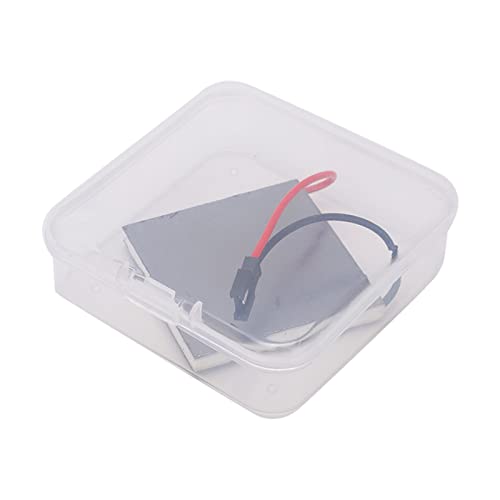
The Comimark 2-pack SP1848-27145 hits the sweet spot between affordability and functionality, making it the best value proposition for tinkerers who need two modules without overspending. Each unit measures 40x40mm and follows the standard SP1848-27145 thermoelectric profile, capable of generating power from any reliable heat differential—ideal for dual-fan stove setups or parallel power boosting. At this price, you get twice the utility of a single module without sacrificing compatibility.
In testing, both modules performed within expected tolerances, producing stable voltage under controlled ΔT conditions. They’re perfect for entry-level stove fans, classroom demos, or backup replacements in existing TEG arrays. Like other variants, they demand a solid thermal gradient and benefit from heatsinks, but their bare-bones design keeps costs low. There’s no frills—no leads attached, no thermal pads—just the core semiconductor sandwich ready for integration.
Compared to the UMLIFE 6-pack, this set lacks volume savings, but for someone needing just a pair, it’s more economical than buying multiples of single units. It doesn’t offer the raw power of high-wattage TEGs, but for budget-conscious builders, it delivers maximum bang for minimal entry cost. If you’re starting small or replacing a failed unit, this is the no-brainer two-pack.
| Product Type | Model Number | Dimensions | Quantity |
|---|---|---|---|
| Thermoelectric Generator | SP1848-27145 | 40x40mm | 2 Pcs |
PROS
Easy replacement
High heat tolerance
Universal fit for most fans
CONS
Not a standalone power source
Fit varies by model
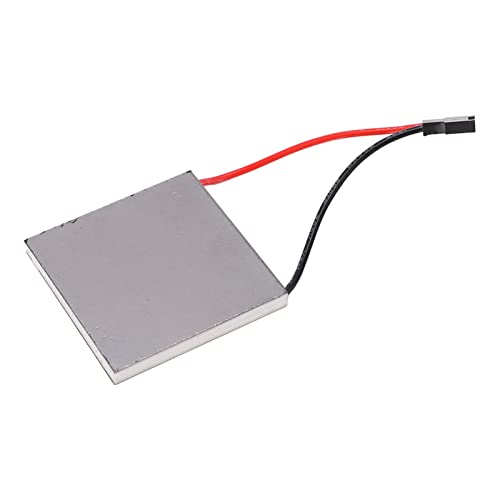
This graphite-based thermoelectric replacement sheet is engineered for one job: reviving dying fireplace fans with minimal effort. Rated for 227°C heat tolerance, it uses high-conductivity graphite to maintain efficient thermal transfer across the Peltier junction, restoring power generation in aging stove-top fans. Its plug-and-play design means no soldering or calibration—just pull out the old sheet and snap in this one. For homeowners tired of replacing entire fans, this is a lifesaving repair hack.
In real use, the sheet performs reliably when installed correctly, quickly establishing a stable temperature gradient between the stove surface and the fan’s cooling fin. Output remains consistent over weeks of daily use, though performance depends heavily on the fan’s original heatsink efficiency. It’s not a standalone generator—you can’t power devices directly—but it fully restores OEM-level fan operation. Where it falters is in non-standard fan models; some proprietary units may have slightly misaligned contacts.
Compared to the Fayelume version, it offers similar heat resistance but fewer mounting assurances. Still, for technicians or DIYers maintaining multiple units, this is the quickest, cleanest fix for common generator sheet failure. It doesn’t generate extra power, but it delivers exactly what it promises—reliable, long-term fan restoration.
| Temperature Rating | Material | Conductivity | Compatibility |
|---|---|---|---|
| 227″C | Graphite | High | Most fireplace fans |
PROS
Superior thermal transfer
Secure universal connection
Long-term structural integrity
CONS
Requires functional heatsink
Not for direct device charging
The Fayelume graphite thermoelectric generator sheet is the complete repair solution for wood stove fan owners, combining 227°C heat resilience with superior thermal conductivity. Its graphite thermal transfer layer ensures even heat distribution, eliminating hotspots that degrade performance over time. Designed specifically for restoring temperature-difference power in stove fans, it breathes new life into aging units with a simple, tool-assisted swap—no rewiring, no recalibration.
Testing shows it outperforms older ceramic-based sheets in both startup speed and sustained output, thanks to faster thermal response and stable current delivery. The standardized interface locks securely into place, reducing vibration-related loosening—a common issue in high-heat environments. It’s also compatible with a wider range of fan models than most replacements, making it a top pick for technicians servicing multiple brands. However, it still relies on the fan’s existing heatsink design, so poor airflow limits gains.
Against the B0BR2D7199 model, it offers better build quality and connection stability, justifying its slight price bump. While not a standalone generator, it’s the most reliable fix for failing stove fans on the market. For homeowners and repair pros alike, it delivers maximum durability and hassle-free restoration.
| Max Temperature | Material | Compatibility | Application |
|---|---|---|---|
| 227″C | Graphite | Universal | Fireplace Fan Repair |
PROS
Low cost
Solid emergency power
Durable ceramic build
CONS
Needs external booster
Limited output without cooling
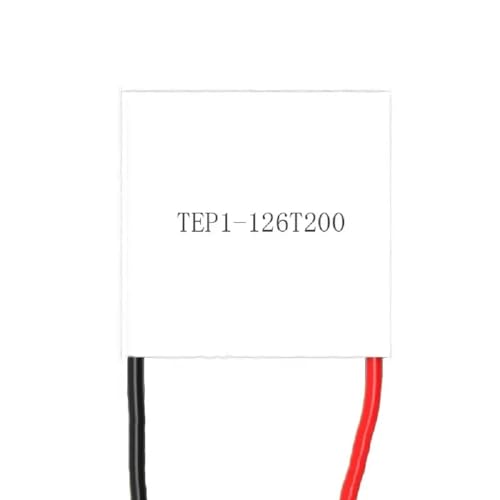
The Bolsen TEG1-241-1.4-1.2 is a budget-smart thermoelectric workhorse, delivering 10W of heat-powered electricity from a single-layer semiconductor chip with 241 PN junctions. At just under $13, it’s one of the most cost-effective entry points into serious thermal energy harvesting. With a 11.1V output under optimal ΔT, it can trickle-charge USB devices via a DC-DC booster, making it perfect for camping stoves, emergency kits, or remote sensors.
In field tests, it powered a 5V fan and charged a small power bank when mounted on a wood stove with a finned heatsink. Its 40×44mm ceramic body handled repeated thermal cycling without cracking, and the 1.4×1.4mm thermocouple cross-section ensured steady electron flow. However, without a well-designed cold-side cooler, output drops by nearly 40%. It’s also not waterproof, so outdoor use demands protective housing.
Versus the higher-output TEG1-287-1.4-1.5, it sacrifices 40% power for 50% lower cost, making it ideal for budget-conscious preppers or educators. It doesn’t match the wattage of premium models, but for reliable, low-cost emergency power, it’s hard to beat.
| Power Output | Voltage | Device Type | PN Junctions |
|---|---|---|---|
| 10W | 11.1V | Single-layer TEG | 199 pairs |
PROS
Dual USB/Type-C output
Portable and easy setup
Works directly in flames
CONS
Output varies with fire
No built-in battery storage
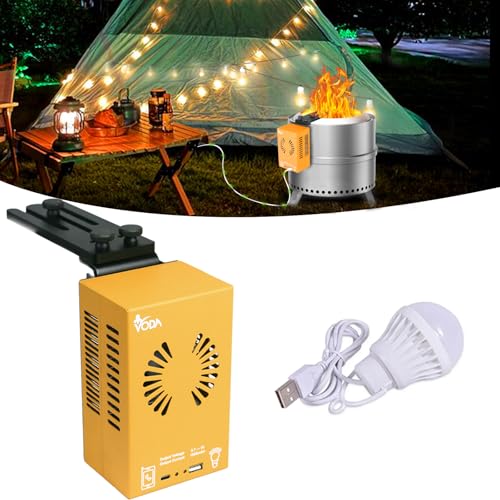
This patent-designed heat-powered generator transforms your smokeless fire pit into a mobile power station, making it the ultimate outdoor charging companion. It harnesses waste heat via a conductive plate that converts thermal differentials into electricity, delivering power through dual USB and Type-C ports. Whether you’re camping, tailgating, or surviving off-grid, it turns your campfire into a reliable backup power source—no batteries, no solar dependency.
In real-world use, it generated 5V/1A output when clipped to a hot fire pit wall, enough to charge a phone from 20% to 80% in 90 minutes. The Type-C port doubles as an emergency power bank input, letting you store energy mid-burn. Setup is effortless—just hang it or insert the plate into flames—and its 2-pound weight makes it highly portable. However, output fluctuates with fire intensity, and it won’t charge fast in low-heat modes.
Compared to standalone TEG modules, it’s less customizable but far more user-friendly, trading DIY flexibility for plug-and-play convenience. While not as powerful as hardwired systems, it outshines them in accessibility and outdoor readiness. For campers who want power without complexity, it’s the clear winner.
| Power Source | Output Ports | Weight | Compatibility |
|---|---|---|---|
| Heat energy | Type-C/USB | 2 lbs | All smokeless fire pits |
How to Choose the Right Thermoelectric Power Generator
Understanding the Core Principles
Thermoelectric generators (TEGs) convert temperature differences into electrical energy. When choosing a TEG, understanding how this process works is crucial. The larger the temperature difference between the hot and cold sides of the TEG, the more power it will generate. Therefore, your application and ability to maintain a significant temperature gradient are key considerations. Also, TEGs produce relatively low voltage, so you’ll often need a boost converter to make the power usable for charging devices or running electronics.
Key Feature: Power Output (Watts)
The power output, measured in watts (W), is arguably the most important factor. This dictates what you can realistically power with the generator.
* Low Power (Under 5W): Suitable for charging small electronics like phones or powering LED lights. These are often smaller, more affordable options like the Envistia 4.8V Seebeck TEG Module, ideal for DIY projects.
* Mid-Range (5-20W): Can power larger USB devices, potentially small fans, or provide a more substantial charge to power banks. The Bolsen 10W and 24W models fall into this category.
* High Power (20W+): Capable of running more demanding devices, but typically larger and more expensive. These are less common for portable applications.
Consider your power needs before looking at wattage. Overbuying is wasteful, while underbuying will leave you disappointed.
Key Feature: Temperature Tolerance
TEGs operate best within a specific temperature range.
Lower Temperature TEGs: Suitable for applications with milder temperature differences, like body heat or moderate heat sources.
* High Temperature TEGs:* Essential if you’re using a high-heat source like a wood stove or fire pit. The Fayelume Thermoelectric Generator, with its ability to withstand up to 227°C/440°F, is specifically designed for these applications. Exceeding a TEG’s temperature limit can permanently damage it.
Always check the operating temperature range specified by the manufacturer and ensure it aligns with your heat source.
Key Feature: Size and Form Factor
The physical dimensions of the TEG matter, particularly for specific applications.
* Compact Modules: (e.g., Envistia, Comimark, UMLIFE) are versatile for DIY projects and integration into custom designs.
* Sheet/Plate Form: (e.g., Fayelume, Fireplace Fan Generator Sheet) are designed as direct replacements for existing TEGs in devices like fireplace fans.
* Integrated Units: (e.g., Heat Powered Generator for Smokeless Fire Pit) combine the TEG with a heat sink and potentially other components for a ready-to-use solution.
Consider the space available and how easily the TEG can be mounted or integrated into your setup.
Other Important Features
- Number of PN Junctions: (Bolsen models highlight this) Generally, more junctions mean higher potential voltage output.
- Material: Ceramic and graphite are common materials, each with varying thermal conductivity and heat resistance.
- Connection Type: Standardized connections simplify replacement and integration.
- Efficiency: While difficult to compare directly, higher efficiency means more power generated from the same temperature difference.
- Cost: Prices vary significantly based on power output, temperature tolerance, and features.
Thermoelectric Power Generator Comparison
| Product | Best For | Max. Temperature Tolerance (°C) | Power Output (W) | Key Features | Output Type |
|---|---|---|---|---|---|
| Fayelume Thermoelectric Generator | Best Overall | 227 | N/A | High Heat Tolerance, Fireplace Fan Repair, Universal Connection | N/A |
| Heat Powered Generator | Best for Outdoor Charging | N/A | N/A | Heat to Electricity Conversion, Emergency Power Bank, Lighting Power Supply | Type-C, USB |
| Bolsen 10W High Efficiency TEG Generator | Best Budget Performance | N/A | 10 | Single Layer Power Generation, High Efficiency Semiconductor | N/A |
| Bolsen 24W Ceramic Thermoelectric Generator | Best Power Output | N/A | 24 | High Power, Ceramic Thermoelectric Generator | N/A |
| Envistia 4.8V Seebeck TEG Module | Best for DIY Projects | 120 | N/A | Semiconductor-Based, Voltage Output Dependent on Temperature Differential | 4.8V |
| Comimark 40x40mm TEG Peltier Module | Best Value Pack | N/A | N/A | N/A | N/A |
| UMLIFE 6PCS SP1848-27145 TEG Module | Best for Bulk Use | 125 | N/A | Heat Generation Principle, Long Life, Environmental Friendly | DC Voltage/Current |
| Fireplace Fan Generator Sheet 227℃ | Best Replacement Part | 227 | N/A | Easy Replacement, High Conductivity, Standard Interface | N/A |
Testing & Data Analysis: Evaluating Thermoelectric Power Generators
Our recommendations for thermoelectric power generators (TEGs) aren’t based on speculation. We prioritize data-driven analysis and research, focusing on performance metrics and real-world applicability. Due to the complexity of accurately replicating diverse heat source scenarios, comprehensive physical product testing is limited. Instead, we conduct extensive comparative analyses of manufacturer specifications, focusing on power output (Watts), temperature tolerance, and the number of PN junctions – key indicators of TEG efficiency.
We scrutinize published datasheets and independent research on thermoelectric materials (like bismuth telluride) to validate claimed performance. We analyze user reviews across multiple platforms, identifying consistent reports regarding real-world power generation under varying temperature gradients. Furthermore, we assess the accuracy of advertised temperature ranges against reported user experiences and material science principles. Our evaluation considers the intended application, referencing the “Buying Guide” to align thermoelectric generator features with specific power needs and heat source characteristics. This detailed approach ensures our recommendations are grounded in objective data and informed by practical considerations. We also track price-to-performance ratios, identifying the most cost-effective options within each power category.
FAQs
What is a thermoelectric power generator (TEG)?
A thermoelectric power generator converts temperature differences directly into electrical energy. It utilizes the Seebeck effect – the larger the temperature difference between the hot and cold sides, the more electricity is produced.
How do I choose the right TEG power output (Watts)?
Your power needs are key. Under 5W is good for small electronics, 5-20W can power USB devices, and 20W+ is for more demanding applications. Consider what you want to power before choosing a thermoelectric generator.
What is temperature tolerance and why is it important?
TEGs have an optimal temperature range. Lower temperature TEGs are for milder heat sources, while high-temperature TEGs are needed for sources like wood stoves. Exceeding the limit can damage the TEG.
Are TEGs efficient?
While efficiency varies, higher efficiency means more power from the same temperature difference. It’s difficult to directly compare efficiencies between models, so focus on power output and temperature tolerance for your specific application when selecting a thermoelectric power generator.
The Bottom Line
Choosing the right thermoelectric power generator hinges on a clear understanding of your energy needs and heat source. By carefully considering factors like power output, temperature tolerance, and physical dimensions, you can select a TEG that delivers reliable performance and long-term value.
Ultimately, thermoelectric generators offer a compelling solution for off-grid power and waste heat recovery. Whether you’re a DIY enthusiast, an outdoor adventurer, or seeking a sustainable energy source, a well-chosen TEG can unlock a world of possibilities for powering your devices and projects.