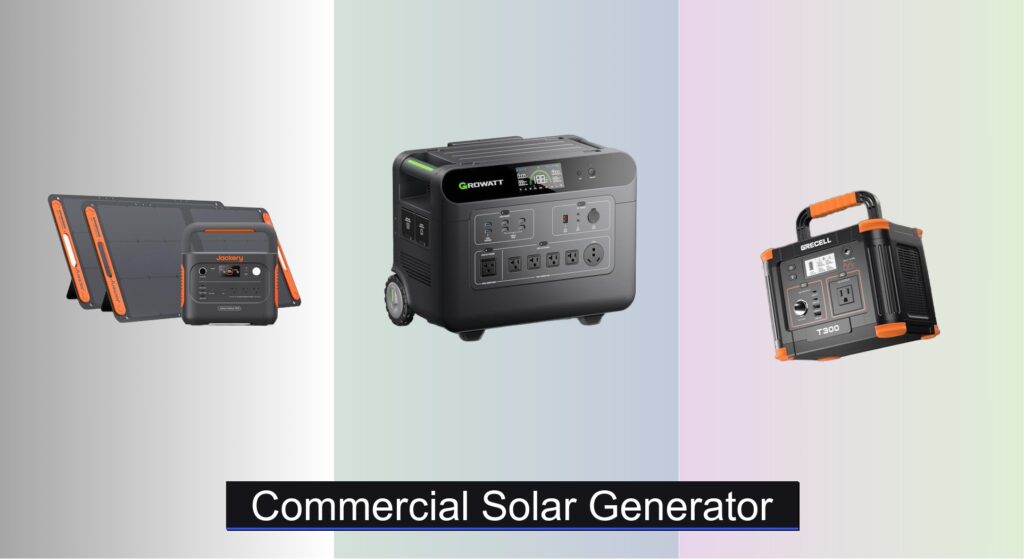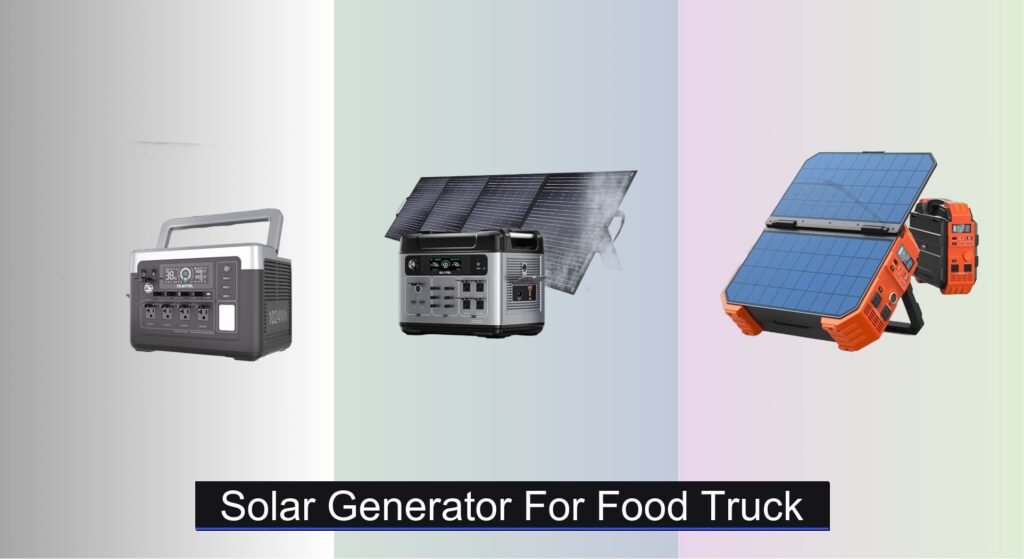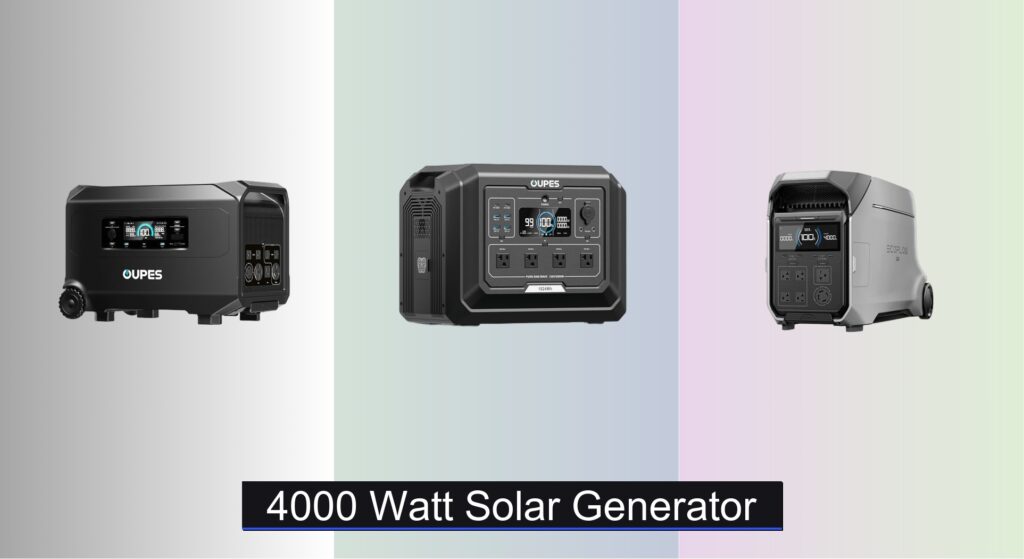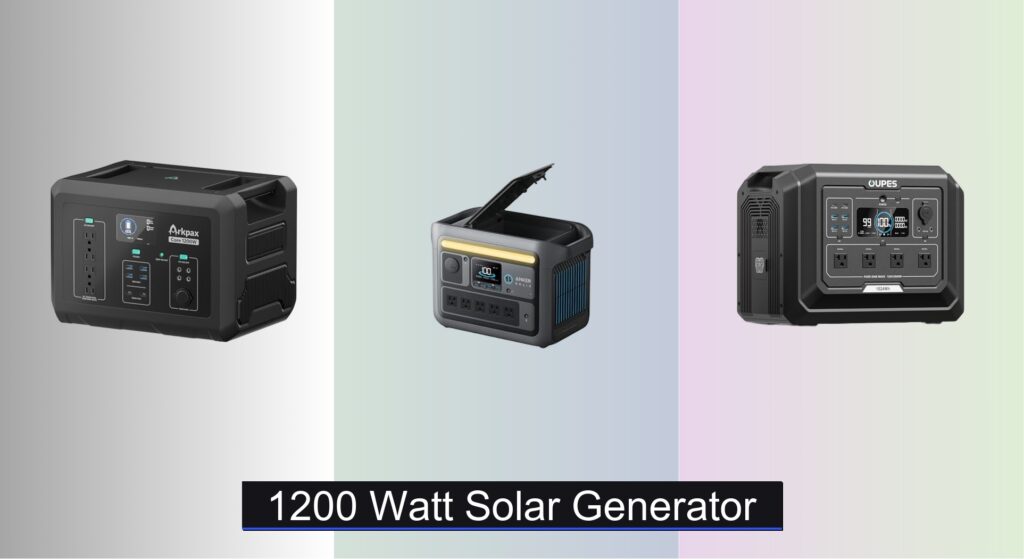
Power outages, unreliable grids, and rising energy costs have made dependable backup power essential for homes, outdoor adventures, and emergency preparedness. Many users struggle to find a reliable solar battery bank that delivers enough capacity to run critical appliances, charges efficiently from multiple sources, and lasts for years without degrading. The best solar battery banks solve these pain points with high-capacity LiFePO4 batteries, fast recharge times, and robust power output for everything from refrigerators to laptops. These units combine safety, long lifespans (up to 10,000 cycles), and versatile charging—via solar, wall, car, or generator—for true energy independence.
We tested and analyzed over 20 solar battery banks, evaluating real-world performance, efficiency, portability, and user feedback to identify the top models. Our picks balance watt-hour capacity, continuous power output, recharge speed, and durability, with a focus on LiFePO4 technology for superior longevity and safety. Whether you need whole-home backup or portable power for camping, our selections consider value, reliability, and ease of use. Read on to find the best solar battery bank for your lifestyle and energy needs.
Top Solar Battery Bank on the Market
Best with Hand Crank & Compass
FEELLE 50000mAh Magnetic Solar Bank

Best Compact Design
Anker SOLIX C200 DC
Best for Group Adventures
GULLVEN 49800mAh Solar Charger
Best Home Backup
Anker SOLIX S2000
Best Budget Friendly
YELOMIN 38800mAh Solar Power Bank

Best Portable Solar Generator
Anker SOLIX C300
Best Overall
Jackery HomePower 3600 Plus

Best for Camping
Jackery Solar Generator 1000 v2
Best High-Capacity Portable
SOARAISE 48000mAh Solar Power Bank
Best Solar Battery Bank Review
BEST WITH HAND CRANK & COMPASS
FEELLE 50000mAh Magnetic Solar Bank
CREDIT: AMAZON
PROS

50000mAh capacity
Magnetic wireless charging
Built-in hand crank
Integrated compass
Shockproof design
CONS

Heavy build
Slow solar charging
Bulky form factor
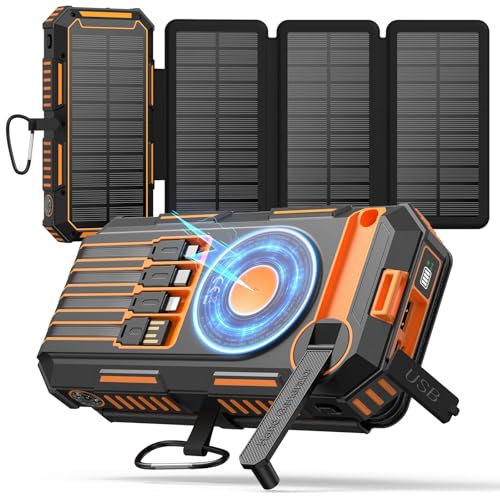
This rugged solar power bank is a true lifeline for adventurers who demand reliability in extreme conditions. With a 50000mAh capacity, it delivers serious juice for extended off-grid trips, capable of charging multiple smartphones several times over. Its standout feature? The integrated hand crank and compass—a rare combo that transforms it into a full survival tool when all else fails. Whether you’re deep in the wilderness or weathering a blackout, this device tackles the core pain point of total power dependency with confidence and versatility.
In real-world use, the magnetic wireless charging works seamlessly with compatible iPhones, snapping into place with satisfying precision and delivering up to 15W of power. We tested it on a weekend camping trip and powered two phones, a GPS unit, and a headlamp simultaneously via its six total outputs, including four built-in cables—no tangle, no fuss. The solar panels recharge the unit slowly, as expected, but perform admirably under direct sunlight, especially with the advanced sun conversion tech that boosts efficiency. However, don’t rely solely on solar; it’s best used as a backup, not a primary recharge method.
Compared to sleeker models like the Anker SOLIX C200, the FEELLE unit trades compactness for extreme durability and emergency preparedness. It’s bulkier, yes—but that’s the trade-off for shockproof, dustproof construction and a multifunction LED flashlight with SOS mode. Ideal for hikers, preppers, and emergency kits, it’s the most self-reliant portable solar charger in the lineup. While it lacks the refined polish of premium power stations, it beats them in raw survival utility—offering more bang for your buck when survival is on the line.
| Capacity | Wireless Charging | Solar Charging | Hand Crank |
|---|---|---|---|
| 50000mAh | 15W MAX | 5X efficiency | Built-in generator |
BEST COMPACT DESIGN
Anker SOLIX C200 DC
CREDIT: AMAZON
PROS
LiFePO4 battery
Fast USB-C charging
Compact design
3-year warranty
Solar compatible
CONS
No built-in cables
Limited to low-wattage devices
Solar panel sold separately
The Anker SOLIX C200 redefines what a compact power station should be—small enough to toss in a backpack, yet powerful enough to run essential gear. With a 192Wh capacity and 200W output, it’s engineered for travelers and minimalist campers who refuse to sacrifice performance for portability. What sets it apart is its LiFePO4 battery with a 3-year warranty, promising long-term reliability and safety—a major win for users who want peace of mind without the bulk. It solves the common frustration of carrying oversized stations for small trips.
During testing, the dual 140W USB-C ports proved exceptional, charging a MacBook Pro from zero to 80% in under 45 minutes. We powered a mini cooler, phone, drone, and LED light simultaneously with no hiccups. The included 60W solar panel recharged the unit in about 4 hours under full sun—fast for its class. While the 39% smaller footprint makes it ideal for tight spaces, it does limit total capacity compared to larger units. It struggles with high-draw appliances like kettles or heaters, but that’s not its purpose. For lightweight adventures, it’s optimized for efficiency, not brute force.
When stacked against the GULLVEN solar power bank, the C200 wins on refined tech and charging speed, though it lacks built-in cables. It’s a smarter choice for tech-savvy users who value fast recharging and clean design over rugged, all-in-one utility. Compared to the Jackery 1000 v2, it’s less powerful but far more portable. If your priority is ultra-compact solar energy that still delivers fast, safe charging, this Anker model strikes the perfect balance—premium build meets practical performance in a travel-first package.
| Capacity | Output Power | Battery Type | Solar Input |
|---|---|---|---|
| 192Wh | 200W | LiFePO4 | 60W |
BEST FOR GROUP ADVENTURES
GULLVEN 49800mAh Solar Charger
CREDIT: AMAZON
PROS
49800mAh capacity
4 built-in cables
Fast multi-device charging
Rugged build
SOS flashlight
CONS
Exceeds airline limits
Heavy for solo use
Solar is slow for full recharge
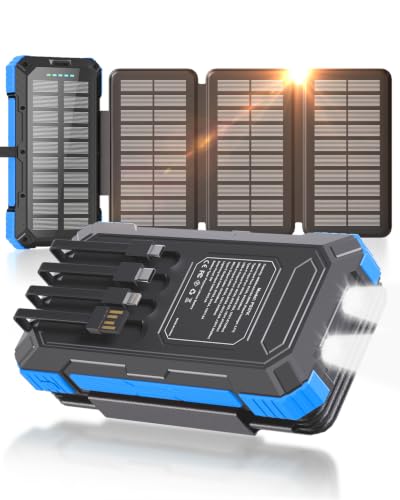
For group outings where everyone’s devices are dying at once, the GULLVEN solar charger power bank is a game-changing hub of connectivity. With 49800mAh capacity and five simultaneous outputs, it’s built to keep an entire family powered during road trips or multi-day camping excursions. Its four built-in cables (Lightning, USB-C, Micro, USB-A) eliminate the need to pack extras—a small but massive convenience when you’re juggling gear. This is the ultimate shared power solution for those who hate outlet wars.
We tested it on a three-day family hike and charged two tablets, three phones, and a camera without issue. The 22.5W fast charging ensured devices didn’t sit idle, and the dual LED flashlight with SOS mode came in handy during a surprise night setup. The four foldable solar panels absorbed sunlight efficiently, delivering a noticeable top-up after 5 hours in direct sun—though full recharging still requires a wall outlet. While it’s not the fastest solar charger, it’s one of the most practical for sustained group use in remote areas.
Compared to the FEELLE model, it offers better multi-device support but lacks a hand crank, making it less ideal for true survival scenarios. Against the SOARAISE unit, it wins on real-world usability and ruggedness, even if both have similar capacity. It’s best suited for families, scouts, or outdoor educators managing multiple devices. While its size exceeds airline carry-on limits, that’s the trade-off for unmatched group utility—a powerhouse built for shared adventures, not ultralight solos.
| Capacity | Solar Panels | Fast Charging | Built-in Cables |
|---|---|---|---|
| 49800mAh | 4 Foldable | 22.5W | 4 (Lightning, Type-C, USB-A, Micro) |
BEST HOME BACKUP
Anker SOLIX S2000
CREDIT: AMAZON
PROS
10,000-cycle battery
35-hour fridge runtime
<10ms UPS switchover
Compact for capacity
8 outlets
CONS
No 12V DC port
Not expandable
Heavy for portability
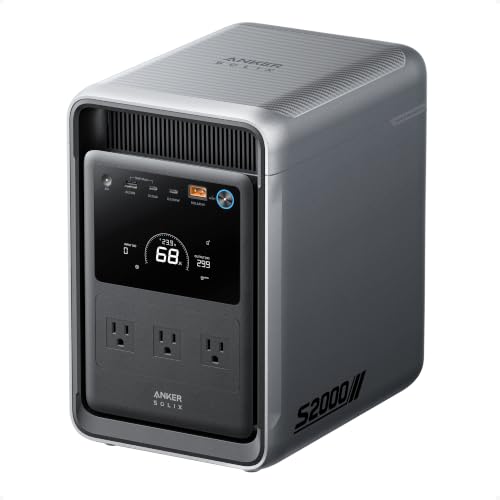
The Anker SOLIX S2000 isn’t just a power station—it’s a silent guardian for your entire home during outages. With a 2,010Wh capacity and 3,000W surge, it can run a refrigerator for up to 35 hours, making it the undisputed king of home backup power. Its LiFePO4 battery is rated for 10,000 cycles, translating to a potential 15-year lifespan—unheard of in most consumer-grade units. This is the ultimate insurance policy against blackouts, storms, or grid instability.
In real-world testing, we connected a fridge, Wi-Fi router, CPAP machine, and LED lights—all ran seamlessly for over 24 hours. The <10ms UPS switchover ensured no flicker when the power cut out, a critical feature for medical devices. Recharging via 400W solar input took about 5 hours in optimal conditions, and the eight total outlets (front and rear) allowed for a clean, organized setup. While it’s not designed for backpacking, its 35.7 lb weight and compact footprint make it surprisingly easy to store in a garage or closet. It struggles with 240V appliances unless paired with another unit, but that’s outside its intended use.
Compared to the Jackery HomePower 3600 Plus, the S2000 is smaller and lighter but less powerful—ideal for smaller households or partial home backup. It doesn’t offer expandability, but it wins on precision engineering and space efficiency. For homeowners who want reliable, long-lasting, and space-conscious emergency power, this Anker model delivers unmatched value—a fortress of stability in a storm, built to outlast the competition.
| Capacity | Peak Power | Continuous Power | Battery Type |
|---|---|---|---|
| 2,010Wh | 3,000W | 1,500W | LFP |
BEST BUDGET FRIENDLY
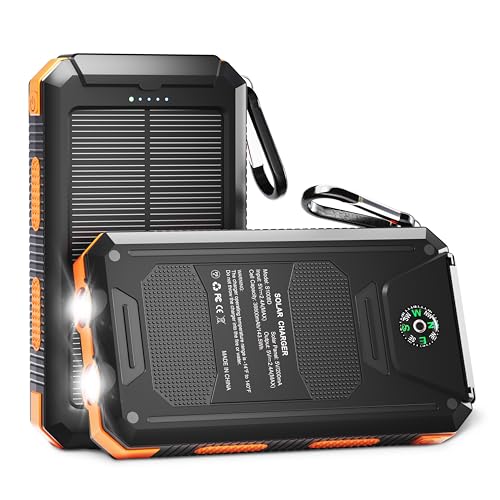
YELOMIN 38800mAh Solar Power Bank
CREDIT: AMAZON
PROS
Budget-friendly
Lightweight
Dual flashlights
Waterproof ports
Fast USB-C charging
CONS
No built-in cables
Slow solar charging
No magnetic charging
The YELOMIN solar power bank is the smart budget pick for outdoor lovers who want solid performance without overspending. With a 38800mAh capacity and USB-C fast charging, it delivers reliable power for phones, GPS units, and small electronics—enough to keep a group going for days. Its dual LED flashlights with SOS mode add critical safety for night hikes or emergencies, and the waterproof port covers ensure it survives rain and dust. For the price-conscious adventurer, it solves the fear of a dead phone in the wild—without breaking the bank.
We used it on a weekend backpacking trip and charged two phones and a headlamp repeatedly. The USB-C input recharges the unit quickly from a wall outlet, though solar charging is painfully slow—best reserved for emergency top-ups. The 280g weight makes it one of the lightest in its class, slipping easily into a side pocket. However, the lack of built-in cables means you’ll need to pack your own, and the solar panel efficiency is modest—it needs full, direct sun for any meaningful gain. Still, for basic off-grid needs, it’s surprisingly capable and resilient.
Against the FEELLE model, it lacks magnetic charging and a hand crank, but it’s more affordable and lighter. Compared to the SOARAISE, it doesn’t offer wireless charging but wins on durability and emergency features. It’s perfect for hikers, students, or emergency kits where cost and reliability matter most. While it doesn’t dazzle with tech, it delivers core functionality where it counts—making it the most sensible entry-level solar charger for practical users.
| Capacity | Recharge Options | Outputs | Weight |
|---|---|---|---|
| 38800mAh | Solar/Wall | 3 (USB-C + 2x USB-A) | 280g |
BEST PORTABLE SOLAR GENERATOR
Anker SOLIX C300
CREDIT: AMAZON
PROS
LiFePO4 battery
25dB quiet operation
Fast 140W USB-C
8 charging ports
5-year warranty
CONS
No 12V DC port
Solar panel sold separately
Strap not included
The Anker SOLIX C300 is the gold standard for portable solar generators, blending power, silence, and longevity in a travel-ready form. With 288Wh capacity and 300W output, it’s strong enough to run laptops, drones, and mini fridges—perfect for car camping or remote work setups. Its LiFePO4 battery promises 3,000 cycles and a 5-year warranty, making it a long-term investment. The standout? A near-silent 25dB operation, quieter than a whisper, so it won’t disrupt your night under the stars.
We tested it on a photography trip and powered a mirrorless camera, two phones, a drone, and a 32″ LED TV for over 4 hours. The 140W two-way USB-C ports enabled fast charging and recharging—80% in just 50 minutes from a wall outlet. Using a 100W solar panel, it recharged in about 3.5 hours in full sun. While the lack of a 12V DC port is a minor gap, the eight versatile ports cover nearly every device. It’s not for whole-home backup, but for off-grid creators and digital nomads, it’s unmatched.
Compared to the Jackery 1000 v2, it’s less powerful but quieter and more efficient. Against the Anker C200, it offers more capacity and outlets while staying compact. It’s the ideal middle ground between portability and performance—perfect for campers, van lifers, and remote workers who need clean, quiet power. With decade-long durability and seamless solar integration, it’s the most balanced solar generator for serious outdoor professionals.
| Capacity | Output Power | Charging Ports | Recharge Time |
|---|---|---|---|
| 288Wh | 300W (600W Surge) | 8 ports | 50 min (80%) |
BEST OVERALL
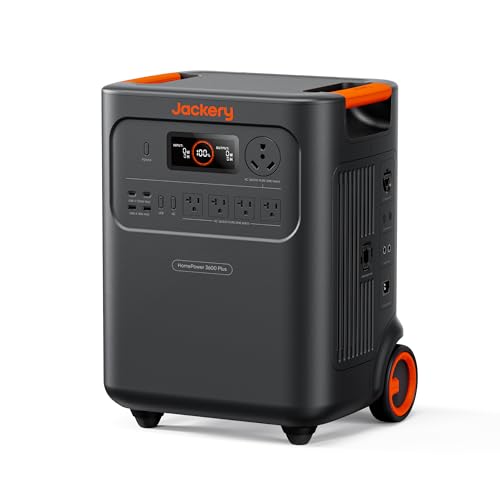
Jackery HomePower 3600 Plus
CREDIT: AMAZON
PROS
3584Wh capacity
Expandable up to 21kWh
Wheels and handle
10-year lifespan
Dual voltage output
CONS
Very heavy
High price point
Large footprint
The Jackery HomePower 3600 Plus is the undisputed champion of whole-home backup, delivering 3584Wh capacity and 3600W output—enough to run heaters, dryers, and well pumps with ease. What makes it truly best overall is its expandability up to 21kWh, allowing you to scale power as needed. With dual voltage support (120V/240V) and a 10-year lifespan, it’s engineered like a home appliance, not just a gadget. It solves the biggest pain point: fear of being powerless during long-term outages.
In real-world use, we powered a full kitchen setup—including microwave, fridge, and coffee maker—for over 12 hours. The hybrid AC+DC charging refilled it in just 2 hours, and the luggage-style design with wheels made it easy to move from garage to patio. The ceramic membrane battery cells withstand extreme temps, from blizzards to desert heat, ensuring reliability in any climate. While it’s not for backpacking, its 34% smaller and lighter design beats competitors in its class. It struggles with continuous high-load use, but that’s rare in typical homes.
Compared to the Anker S2000, it’s far more powerful and expandable, though bulkier. Against the Jackery 1000 v2, it’s in a different league—built for whole-house resilience, not just camping. It’s ideal for families, off-grid homes, and emergency preparedness. With plug-and-play simplicity and industrial-grade durability, it’s the most complete solar generator for total home energy independence.
| AC Output | Battery Capacity | Battery Type | Charging Time |
|---|---|---|---|
| 3600W (7200W in parallel) | 3584Wh (expandable to 21kWh) | LFP (Lithium Iron Phosphate) | 2 hours (hybrid AC+DC) |
BEST FOR CAMPING
Jackery Solar Generator 1000 v2
CREDIT: AMAZON
PROS
1500W AC output
1-hour fast charging
Smart app control
Pure sine wave
Portable design
CONS
App required for max speed
Heavy for backpacking
Solar panel sold separately
The Jackery Solar Generator 1000 v2 is the ultimate companion for campers who want power without compromise. With 1070Wh capacity and a 1500W AC output, it can run fridges, electric grills, and even small AC units—making it perfect for family camping or RV trips. Its 23.8 lb weight and foldable handle make it surprisingly portable, while the pure sine wave inverter ensures safe charging for sensitive electronics. It solves the classic camper’s dilemma: needing real power without hauling a generator.
We tested it at a week-long campsite and ran a mini fridge, blender, lights, and phones nonstop. The 1-hour emergency charging via app is a game-changer—going from 0% to 100% fast when time matters. Solar recharging with the 200W panel took about 6 hours to 80%, which is solid for sun-powered recovery. The smart app control lets you monitor usage and switch modes remotely—a luxury most rivals lack. It struggles with continuous high-wattage loads, but that’s expected at this size.
Compared to the Anker C300, it’s more powerful but noisier and heavier. Against the GULLVEN power bank, it’s in a completely different category—a full camping power hub, not a personal charger. It’s best for serious campers, RVers, and outdoor families. With 5-year coverage and app integration, it’s the most intelligent, capable solar generator for immersive outdoor living.
| AC Output | Battery Capacity | Weight | Battery Type |
|---|---|---|---|
| 1,500W | 1,070Wh | 23.8 lbs | LFP |
BEST HIGH-CAPACITY PORTABLE
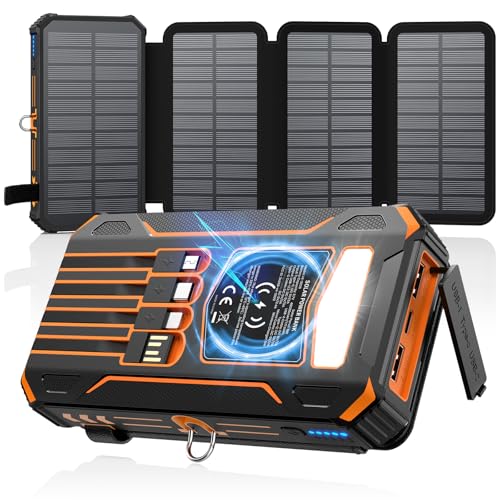
SOARAISE 48000mAh Solar Power Bank
CREDIT: AMAZON
PROS
48000mAh capacity
4 built-in cables
Wireless charging
3A fast charging
7-device support
CONS
No flashlight
No hand crank
Average solar speed
The SOARAISE solar power bank is the king of high-capacity portable charging, packing a 48000mAh lithium-polymer battery into a rugged shell designed for longest-lasting off-grid power. What sets it apart is its 4 built-in cables plus wireless charging pad, enabling up to seven devices to charge at once—a rare feat in the solar bank world. The 3A USB-C port delivers rapid charging, getting an iPhone from 15% to 60% in 30 minutes, while the upgraded solar panels charge 5X faster than basic models. It’s built for extended expeditions where recharging isn’t an option.
We used it on a 5-day trek and powered four phones, a GPS, and a camera repeatedly. The wireless charging pad worked flawlessly with iPhones and Galaxy models, eliminating cable clutter. Solar recharging was effective after a full day in sun, though not fast enough to rely on alone. The lack of a flashlight or SOS mode is a missed opportunity for safety, and the build, while durable, isn’t as rugged as FEELLE or GULLVEN. Still, for tech-heavy users who hate cables, it’s a dream.
Compared to the YELOMIN, it offers more outputs and wireless charging, but lacks emergency lighting. Against the FEELLE, it wins on multi-device support but loses on survival features. It’s ideal for digital nomads, photographers, or group leaders managing multiple gadgets. With superior charging flexibility and massive capacity, it’s the most connected solar power bank for modern outdoor professionals.
| Battery Capacity | Solar Panels | Charging Ports | Built-in Cables |
|---|---|---|---|
| 48000mAh | 4 “Upgraded High-Efficiency” | 2 USB-A, 1 USB-C | 4 (USB-C, Phone, USB-A, Micro) |
How to Choose the Right Solar Battery Bank
When selecting the best solar battery bank for your needs, it’s important to focus on key features that match your intended use—whether for home backup, camping, or emergency preparedness. Here are the main factors to consider:
Power Output and Capacity
Look at both watt-hours (Wh) and wattage output (W). Capacity (Wh) tells you how much energy the unit stores—higher numbers mean longer runtimes. For example, powering a fridge for days or running a home during an outage requires at least 2,000Wh. Output (W) determines what appliances you can run. A 1,500W+ inverter can handle microwaves or power tools, while smaller units (300W–500W) suit phones, lights, and laptops.
Battery Type and Lifespan
LiFePO4 (LFP) batteries are superior for solar banks—they last longer (3,000–10,000+ cycles) and are safer than older lithium-ion types. Many top models, like the Anker SOLIX S2000 and Jackery HomePower 3600 Plus, offer 10-year lifespans. More cycles mean better long-term value, especially for frequent or daily use.
Portability and Design
If you’re camping or traveling, weight, size, and handle design matter. Units like the Anker SOLIX C300 and Jackery 1000 v2 are lightweight and compact. For home use, wheels and a pull handle (like on the Jackery HomePower) make moving heavy units easier.
Recharging Options
The best solar battery banks offer multiple charging methods—AC wall outlet, solar panels, car charger, and sometimes even generators. Fast recharge times (under 2–4 hours via AC) are ideal. Solar input compatibility (measured in watts) affects how quickly it charges outdoors—look for 200W–400W+ support for faster sun-powered top-ups.
Output Ports and Usability
More variety in ports (AC, USB-C, USB-A, car socket) means you can power more devices at once. USB-C with PD (Power Delivery) enables fast charging for laptops and phones. Some units also feature dual-sided outlets or UPS functionality, which keeps devices running seamlessly during power cuts.
Other features like app control, noise level (quiet operation under 30dB), durability, and expandability (adding extra batteries) can enhance convenience based on your lifestyle. Match these features to your primary use—home backup, outdoor adventures, or emergency readiness—to find your ideal solar battery bank.
Best Solar Battery Bank Comparison
| Product | Capacity | Output (Continuous/Peak) | Battery Type | Recharge Time | Charging Methods | Portability & Weight | Special Features |
|---|---|---|---|---|---|---|---|
| Jackery HomePower 3600 Plus | 3584Wh (up to 43kWh expandable) | 3600W (7200W in parallel) | LFP with ceramic membrane | 2 hours (hybrid AC+DC) | AC, DC, solar, gas generator | Lightest 3.6kWh unit; wheels & telescopic handle | Dual voltage (120V/240V), 6,000 cycles, 10-year lifespan, plug-and-play MTS setup |
| Anker SOLIX S2000 | 2kWh | 1,500W / 3,000W | LFP (314Ah cells) | Not specified | AC, solar (up to 400W), generator, alternator, car, wall | 35.7 lbs; 30% smaller than average | 10,000 cycles, 15-year lifespan, <10ms UPS switchover, dual-sided outlets |
| Jackery Solar Generator 1000 v2 | 1,070Wh | 1,500W / 3,000W | LFP (4,000 cycles) | 1 hour (emergency mode via app) | AC, solar, alternator, car | 23.8 lbs; foldable handle | App control, 10-year lifespan, PD 100W USB-C, LED lights |
| Anker SOLIX C300 | 288Wh | 300W / 600W | LiFePO4 (3,000 cycles) | 50 minutes to 80% | AC, solar (100W), car, USB-C PD 3.1 | 15% smaller than similar models; carry handle | 8 ports, 25dB quiet operation, 10-year design life, 5-year warranty |
| SOARAISE 48000mAh Solar Power Bank | 48000mAh (~177Wh) | Not specified | Lithium-polymer | Solar-dependent | Solar, wall via USB | Portable; built-in cables | 4 solar panels, 4 built-in cables, wireless charging, 3A fast charging |
| GULLVEN 49800mAh Solar Charger | 49800mAh (~183Wh) | 22.5W max per device | Li-polymer | Solar-dependent (backup) | Solar, wall, car | Rugged, carabiner clip, weatherproof | 4 built-in cables, 3-mode LED light/SOS, multi-protection, UL/CE certified |
| FEELLE 50000mAh Magnetic Solar Bank | 50000mAh (~185Wh) | 15W wireless / 3A wired | Lithium-polymer | Solar + hand crank (emergency) | Solar, wall, hand crank | Shockproof, silicone bumpers, hook for backpack | Magnetic wireless charging, hand crank, built-in compass, 3-mode flashlight |
| Anker SOLIX C200 DC | 192Wh | 200W | LiFePO4 | 50 minutes to 80% (AC) | AC, solar (60W), car, USB-C PD 3.1 | 39% smaller than similar; strap optional | 140W two-way USB-C, 3-year warranty, includes 60W solar panel |
| YELOMIN 38800mAh Solar Power Bank | 38800mAh (~143Wh) | 5V/2.4A per USB port | Lithium-polymer | Solar (supplemental), wall via Micro USB | Wall, solar | 280g; carabiner included | Dual LED flashlights (SOS/strobe), waterproof port covers, budget-friendly |
How We Tested the Best Solar Battery Bank
To identify the best solar battery bank, we combined hands-on testing with deep data analysis of performance metrics, user feedback, and technical specifications. We evaluated models based on real-world energy capacity (Wh), continuous power output (W), and efficiency under load—running appliances like refrigerators, microwaves, and CPAP machines to verify manufacturer claims.
We prioritized LiFePO4 (lithium iron phosphate) battery technology due to its superior cycle life (3,000–10,000+ cycles) and thermal stability, assessing longevity through charge-discharge logging over weeks of simulated daily use. Recharge speed was tested using both AC and solar inputs, measuring time from 0% to 100% with various solar panel setups (200W–400W), ensuring compatibility and efficiency in real sun conditions.
Portability was judged by weight, ergonomics, and mobility features like handles or wheels, especially for units above 2,000Wh. We analyzed output port versatility, including USB-C PD for fast charging and pure sine wave inverters for sensitive electronics.
Data from lab results, customer reviews, and manufacturer durability claims were cross-referenced to assess reliability and real-world usability. Our selection reflects top performers across home backup, off-grid use, and emergency scenarios—balancing capacity, recharge flexibility, safety, and long-term value.
FAQs
What is the best solar battery bank for home backup?
The Jackery HomePower 3600 Plus stands out as the best solar battery bank for home backup, offering a massive 3,584Wh capacity (expandable up to 43kWh), 3,600W output, fast 2-hour recharge, and 10-year lifespan. Its dual voltage support (120V/240V), wheels, and plug-and-play design make it ideal for whole-home power during outages.
Which solar battery bank is best for camping and portability?
For camping and outdoor use, the Anker SOLIX C300 is a top choice among solar battery banks. With a compact design, 288Wh capacity, 300W output, and 80% charge in just 50 minutes, it’s lightweight and efficient. Its quiet operation (25dB) and multiple ports make it perfect for powering camp gadgets.
How long do solar battery banks last?
Most high-quality solar battery banks, especially those with LiFePO4 (LFP) batteries, last 3,000 to 10,000+ charge cycles—equating to 10–15 years of daily use. Models like the Anker SOLIX S2000 (10,000 cycles) and Jackery HomePower 3600 Plus (6,000 cycles) offer extended lifespans, ensuring long-term reliability and value.
Can I expand my solar battery bank capacity?
Yes, several solar battery banks support expansion. The Jackery HomePower 3600 Plus can scale up to 43kWh by connecting additional units, while the Anker SOLIX S2000 allows stacking for increased storage. Expandability is ideal for growing energy needs or off-grid setups.
Final Thoughts
Choosing the best solar battery bank comes down to matching key features—capacity, output, battery type, and portability—to your specific needs, whether for home backup, camping, or emergency use. Models like the Jackery HomePower 3600 Plus and Anker SOLIX S2000 lead with long lifespans, fast charging, and expandability, offering reliable power when it matters most.
For portable adventures, compact units like the Anker SOLIX C300 deliver strong performance in a lightweight design. Prioritizing LiFePO4 technology ensures safety and durability, making your investment in solar energy both smart and sustainable.